In Vivo Pharmacology, Merck & Co, Kenilworth, New Jersey, USA.
Genetics and Genomics, Merck & Co., West Point, Pennsylvania, USA.
J Neuroinflammation. 2018 Sep 6;15(1):256. doi: 10.1186/s12974-018-1265-7.
Alzheimer's disease (AD) is a chronic neurodegenerative disease with pathological hallmarks including the formation of extracellular aggregates of amyloid-beta (Aβ) known as plaques and intracellular tau tangles. Coincident with the formation of Aβ plaques is recruitment and activation of glial cells to the plaque forming a plaque niche. In addition to histological data showing the formation of the niche, AD genetic studies have added to the growing appreciation of how dysfunctional glia pathways drive neuropathology, with emphasis on microglia pathways. Genomic approaches enable comparisons of human disease profiles between different mouse models informing on their utility to evaluate secondary changes to triggers such as Aβ deposition.
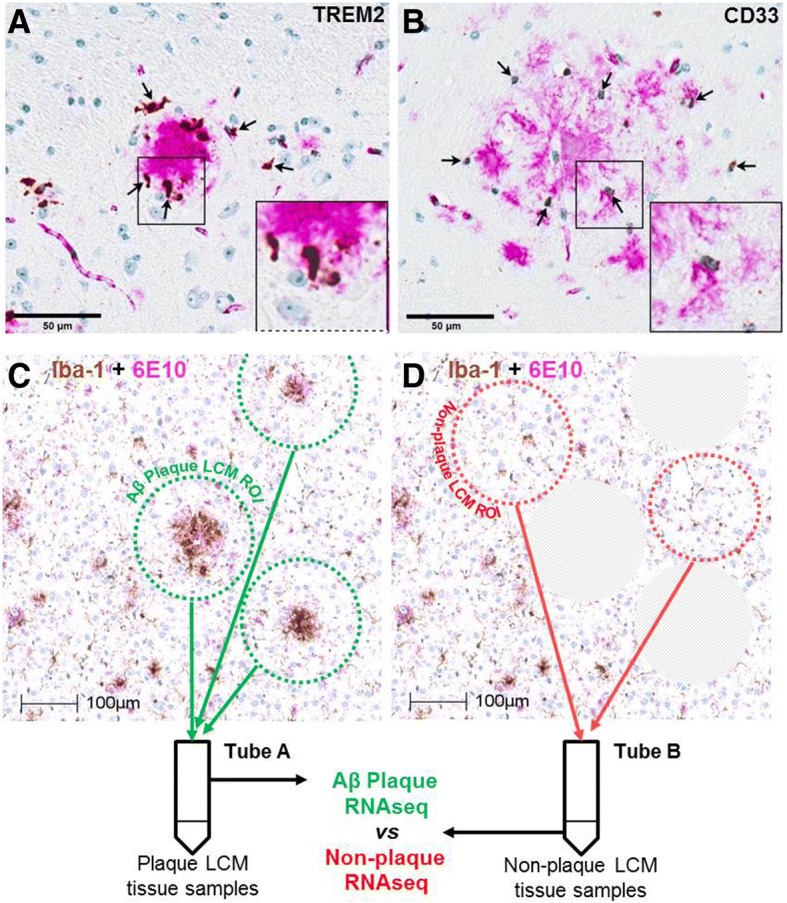
In this study, we utilized two animal models of AD to examine and characterize the AD-associated pathology: the Tg2576 Swedish APP (KM670/671NL) and TgCRND8 Swedish plus Indiana APP (KM670/671NL + V717F) lines. We used laser capture microscopy (LCM) to isolate samples surrounding Thio-S positive plaques from distal non-plaque tissue. These samples were then analyzed using RNA sequencing.
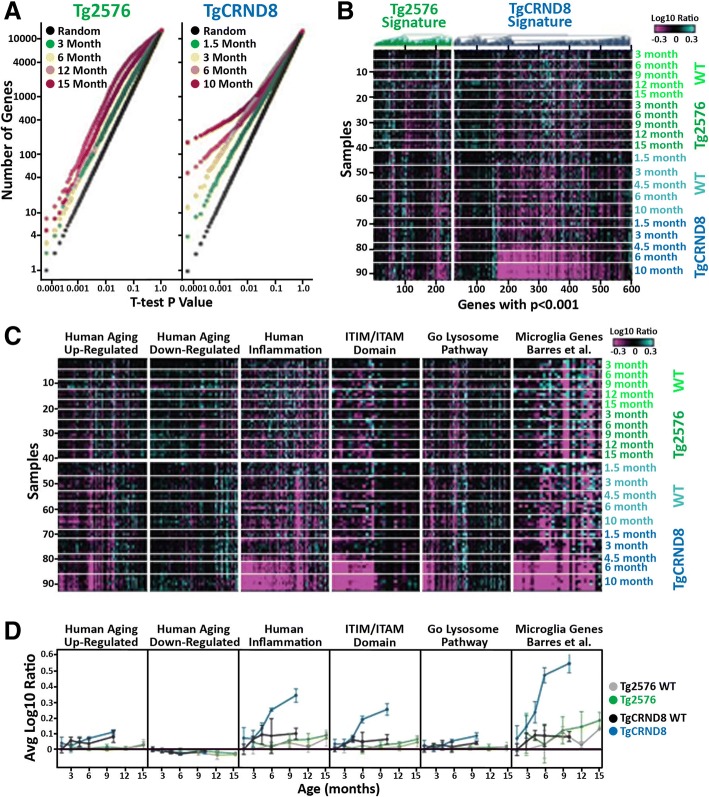
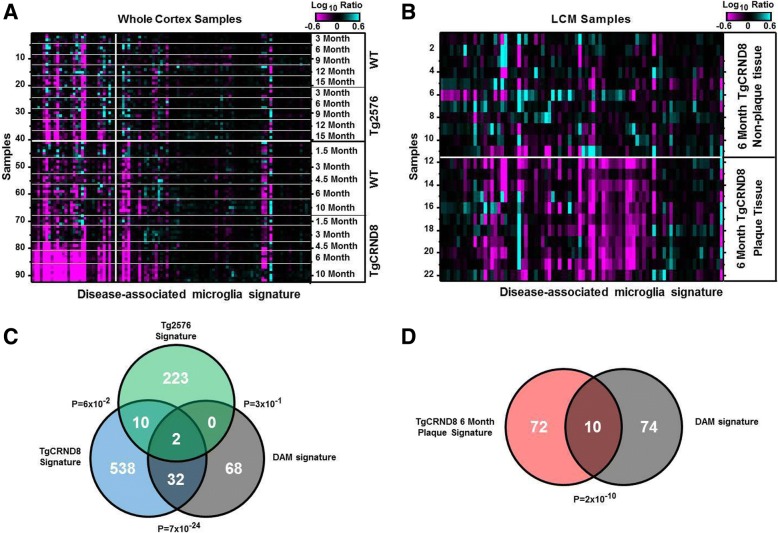
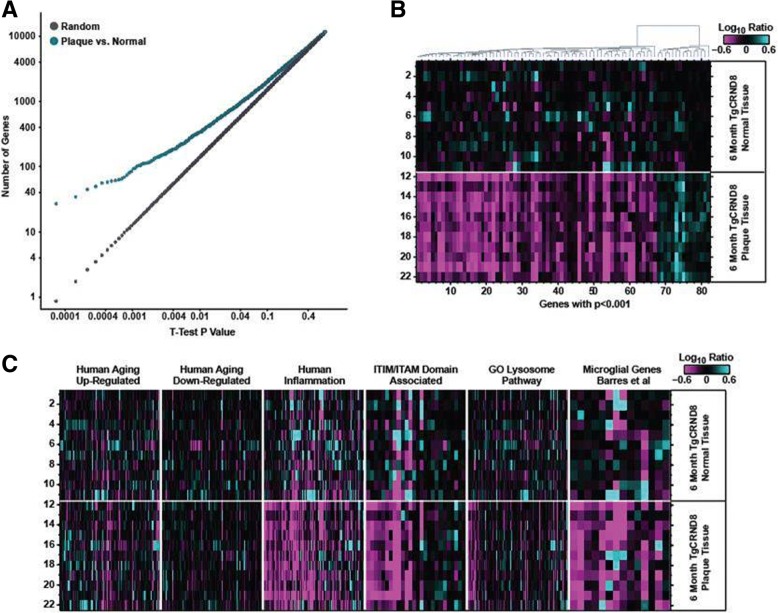
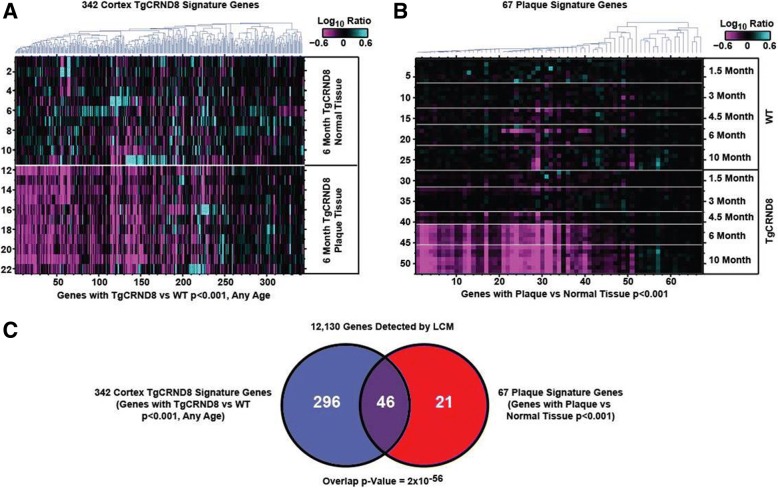
We determined age-associated transcriptomic differences between two similar yet distinct APP transgenic mouse models, known to differ in proportional amyloidogenic species and plaque deposition rates. In Tg2576, human AD gene signatures were not observed despite profiling mice out to 15 months of age. TgCRND8 mice however showed progressive and robust induction of lysomal, neuroimmune, and ITIM/ITAM-associated gene signatures overlapping with prior human AD brain transcriptomic studies. Notably, RNAseq analyses highlighted the vast majority of transcriptional changes observed in aging TgCRND8 cortical brain homogenates were in fact specifically enriched within the plaque niche samples. Data uncovered plaque-associated enrichment of microglia-related genes such as ITIM/ITAM-associated genes and pathway markers of phagocytosis.
This work may help guide improved translational value of APP mouse models of AD, particularly for strategies aimed at targeting neuroimmune and neurodegenerative pathways, by demonstrating that TgCRND8 more closely recapitulates specific human AD-associated transcriptional responses.
阿尔茨海默病(AD)是一种慢性神经退行性疾病,其病理学特征包括细胞外淀粉样β(Aβ)聚集物的形成,这些聚集物被称为斑块,以及细胞内 tau 缠结。与 Aβ 斑块形成同时发生的是神经胶质细胞向斑块的募集和激活,形成斑块龛。除了组织学数据显示龛的形成外,AD 遗传研究也增加了对神经胶质功能障碍途径如何驱动神经病理学的认识,重点是小胶质细胞途径。基因组方法使我们能够比较不同小鼠模型的人类疾病谱,从而了解它们在评估 Aβ 沉积等触发因素的继发变化方面的效用。
在这项研究中,我们利用两种 AD 动物模型来检查和描述 AD 相关的病理学:Tg2576 瑞典 APP(KM670/671NL)和 TgCRND8 瑞典加印第安纳 APP(KM670/671NL + V717F)品系。我们使用激光捕获显微镜(LCM)从 Thio-S 阳性斑块的远端非斑块组织中分离出周围的样本。然后,我们使用 RNA 测序对这些样本进行分析。
我们确定了两种类似但又不同的 APP 转基因小鼠模型之间与年龄相关的转录组差异,这些模型已知在淀粉样蛋白形成物种和斑块沉积率方面存在差异。在 Tg2576 中,尽管对 15 个月大的小鼠进行了 profiling,但并未观察到人类 AD 基因特征。然而,TgCRND8 小鼠表现出进行性和强大的溶酶体、神经免疫和 ITIM/ITAM 相关基因特征的诱导,与先前的人类 AD 大脑转录组研究重叠。值得注意的是,RNAseq 分析突出表明,在老化的 TgCRND8 皮质脑匀浆中观察到的绝大多数转录变化实际上仅在斑块龛样本中特异性富集。数据揭示了斑块相关的 microglia 相关基因的富集,如 ITIM/ITAM 相关基因和吞噬作用的途径标志物。
这项工作可能有助于指导 AD APP 小鼠模型的改进转化价值,特别是对于旨在靶向神经免疫和神经退行性途径的策略,因为它表明 TgCRND8 更能重现特定的人类 AD 相关转录反应。