Institute of Plant Sciences, University of Bern, Bern, Switzerland.
Plant Cell Environ. 2019 Mar;42(3):959-971. doi: 10.1111/pce.13443. Epub 2018 Oct 16.
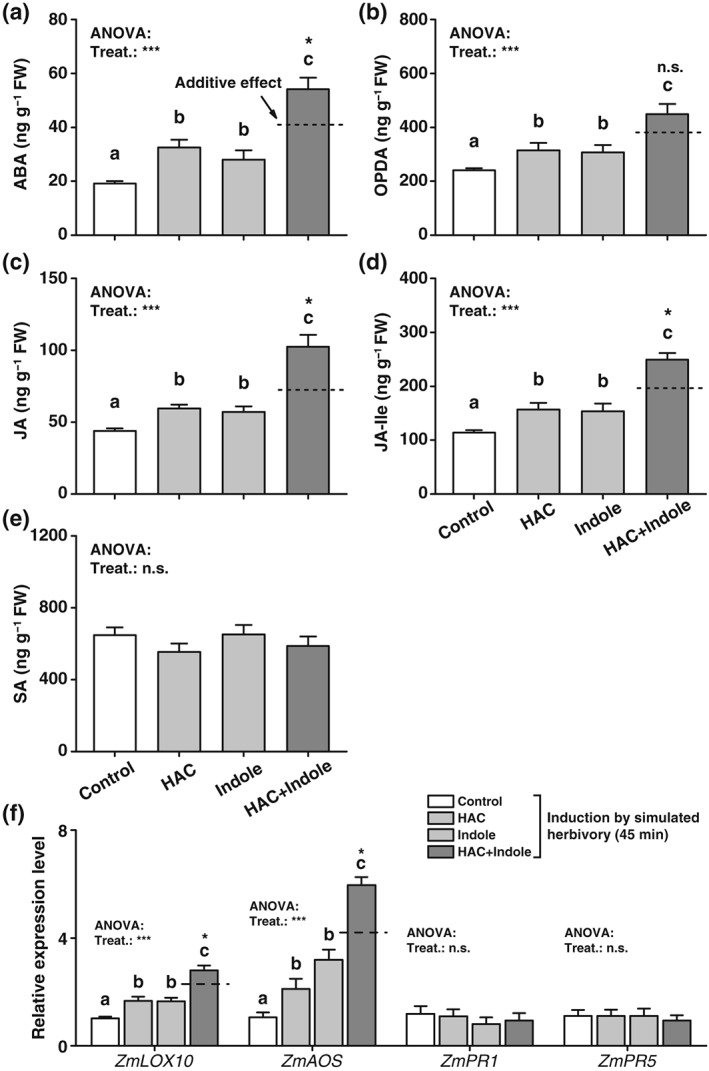
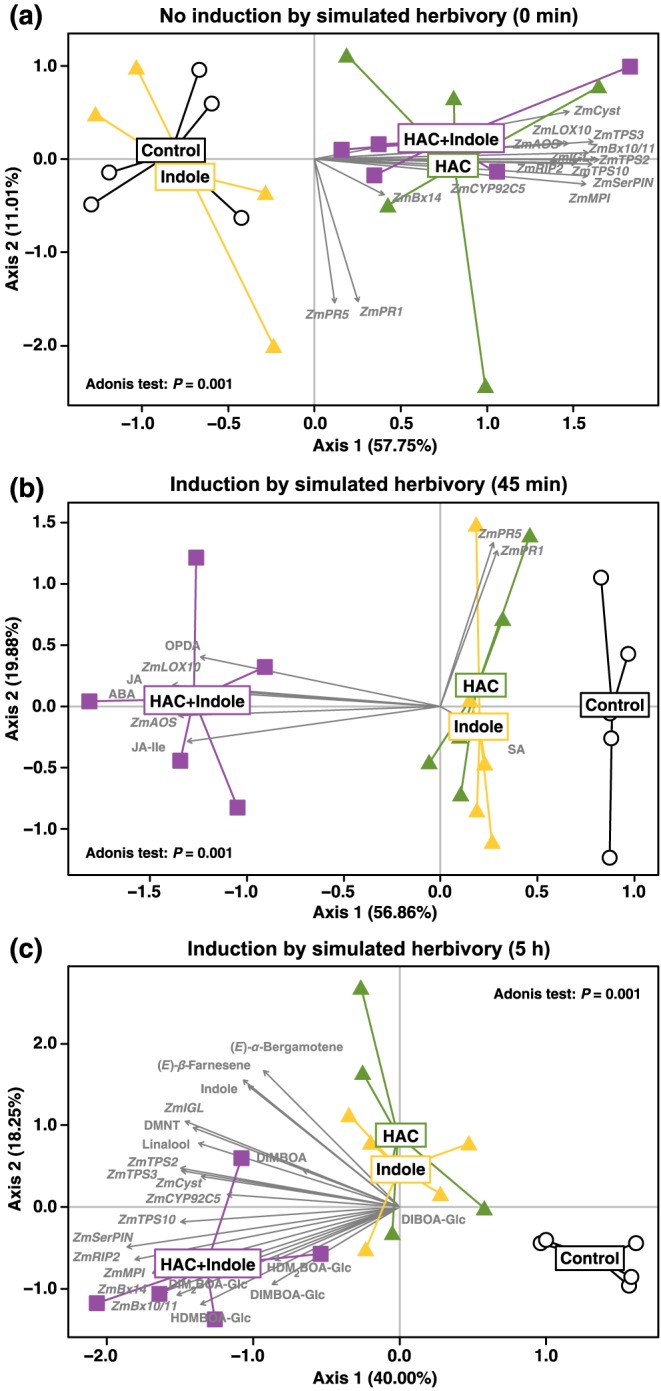
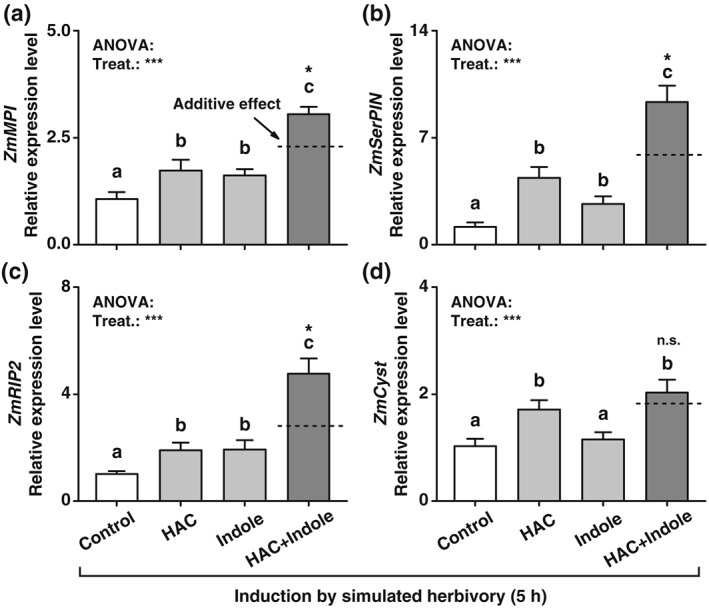
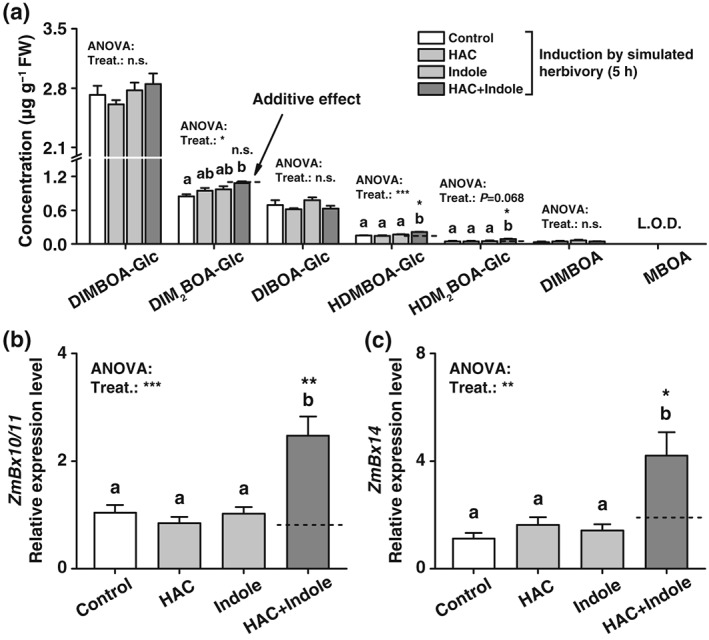
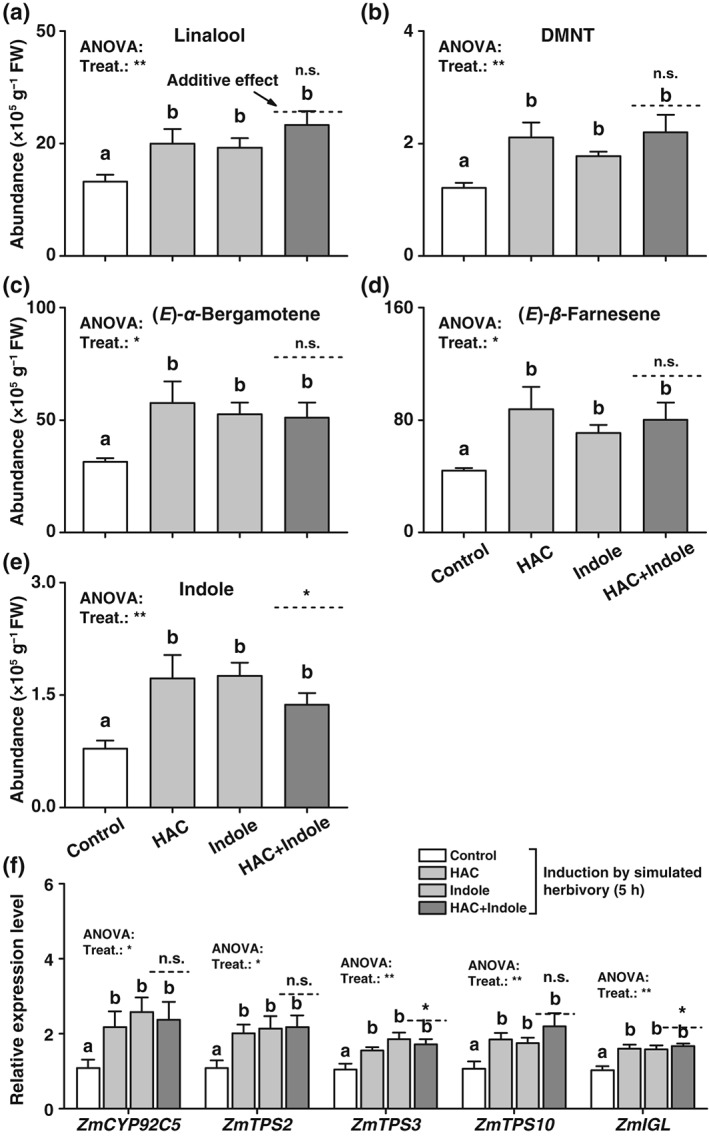
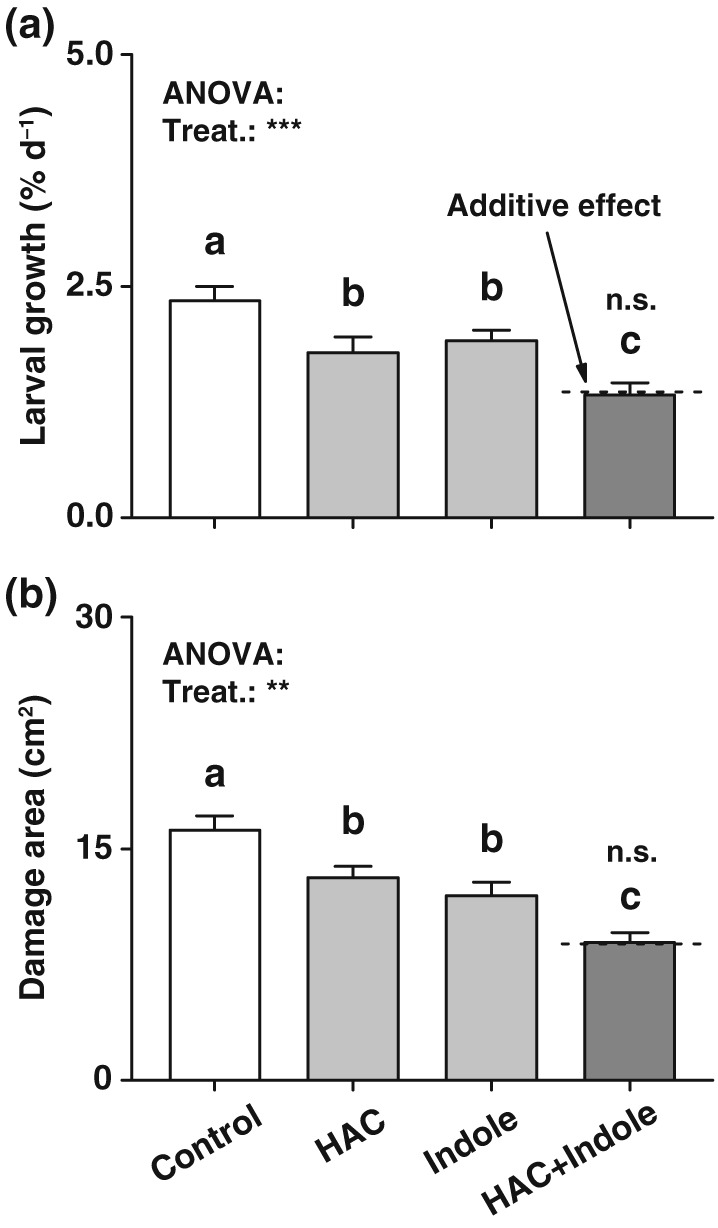
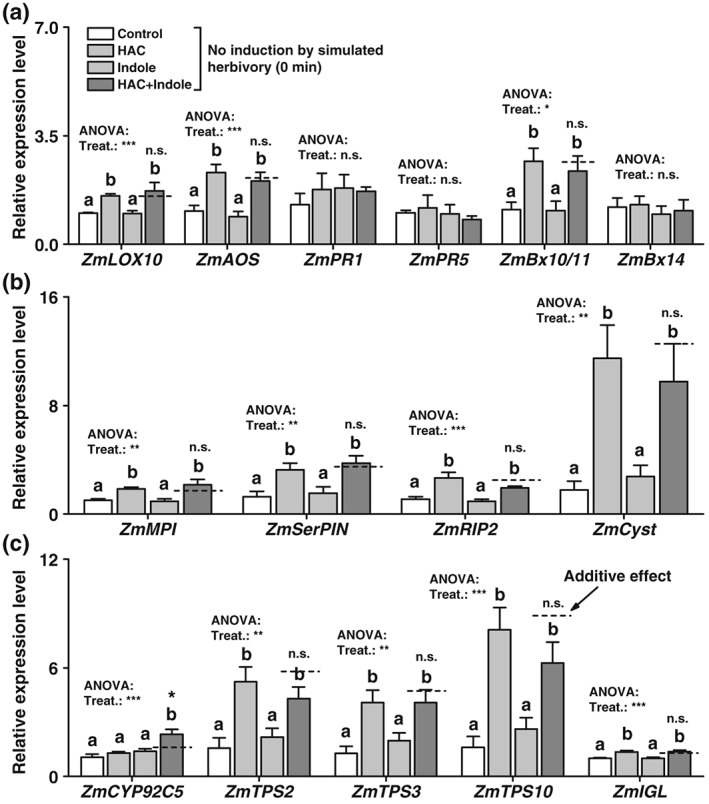
Plants can use induced volatiles to detect herbivore- and pathogen-attacked neighbors and prime their defenses. Several individual volatile priming cues have been identified, but whether plants are able to integrate multiple cues from stress-related volatile blends remains poorly understood. Here, we investigated how maize plants respond to two herbivore-induced volatile priming cues with complementary information content, the green leaf volatile (Z)-3-hexenyl acetate (HAC) and the aromatic volatile indole. In the absence of herbivory, HAC directly induced defence gene expression, whereas indole had no effect. Upon induction by simulated herbivory, both volatiles increased jasmonate signalling, defence gene expression, and defensive secondary metabolite production and increased plant resistance. Plant resistance to caterpillars was more strongly induced in dual volatile-exposed plants than plants exposed to single volatiles.. Induced defence levels in dual volatile-exposed plants were significantly higher than predicted from the added effects of the individual volatiles, with the exception of induced plant volatile production, which showed no increase upon dual-exposure relative to single exposure. Thus, plants can integrate different volatile cues into strong and specific responses that promote herbivore defence induction and resistance. Integrating multiple volatiles may be beneficial, as volatile blends are more reliable indicators of future stress than single cues.
植物可以利用诱导挥发物来检测被食草动物和病原体攻击的邻居,并启动它们的防御机制。已经确定了几个单独的挥发物启动线索,但植物是否能够整合来自与应激相关的挥发物混合物的多个线索仍然知之甚少。在这里,我们研究了玉米植物如何对两种具有互补信息含量的食草动物诱导挥发物启动线索做出反应,即绿叶挥发物(Z)-3-己烯基乙酸酯(HAC)和芳香挥发物吲哚。在没有草食性的情况下,HAC 直接诱导防御基因表达,而吲哚没有作用。在模拟草食性诱导下,两种挥发物都增加了茉莉酸信号转导、防御基因表达以及防御性次生代谢产物的产生,并提高了植物的抗性。与单独暴露于单一挥发物的植物相比,双重暴露于挥发性物质的植物对毛毛虫的抗性更强。与单独暴露于单一挥发物相比,双重暴露于挥发性物质的植物的诱导防御水平显著高于个体挥发物的相加效应预测值,除了诱导植物挥发物产生外,与单独暴露相比,双重暴露没有增加。因此,植物可以将不同的挥发物线索整合到强大而特异的反应中,促进对食草动物的防御诱导和抗性。整合多种挥发物可能是有益的,因为与单一线索相比,挥发物混合物是未来应激更可靠的指标。