LAQV, REQUIMTE, Departamento de Química, Faculdade de Ciências e Tecnologia, Universidade Nova de Lisboa, 2829-516 Caparica, Portugal.
LAQV, REQUIMTE, Departamento de Química, Faculdade de Ciências e Tecnologia, Universidade Nova de Lisboa, 2829-516 Caparica, Portugal.
Redox Biol. 2018 Oct;19:274-289. doi: 10.1016/j.redox.2018.08.020. Epub 2018 Aug 30.
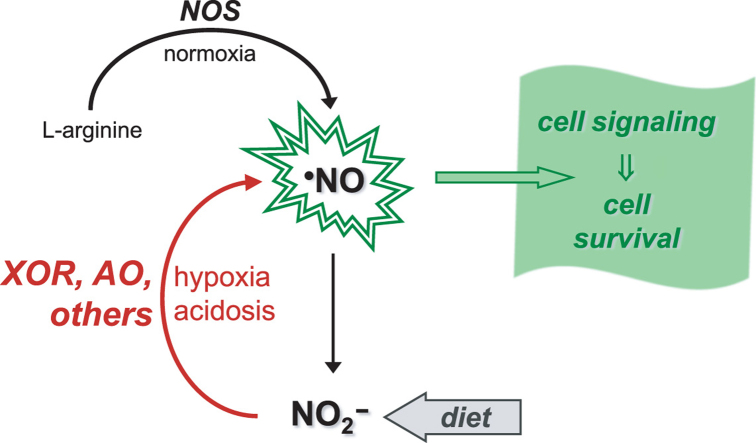
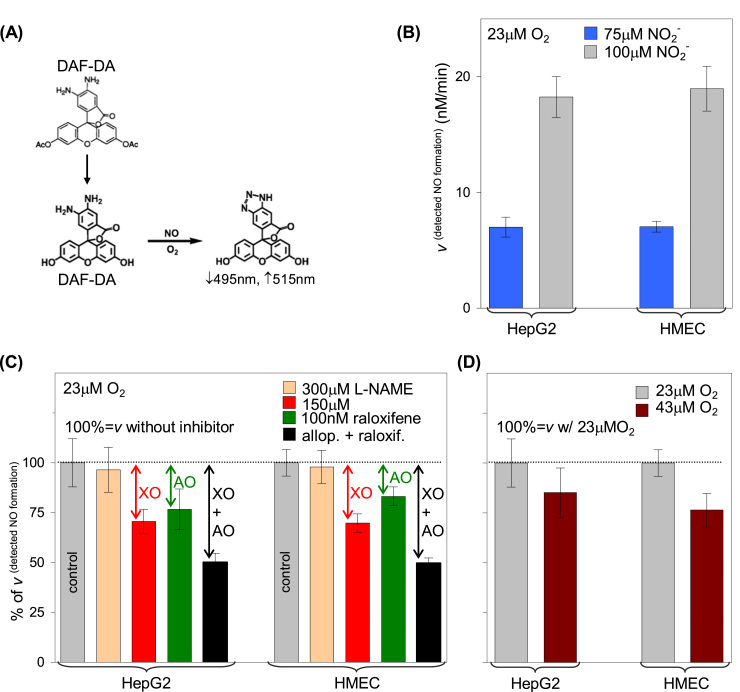
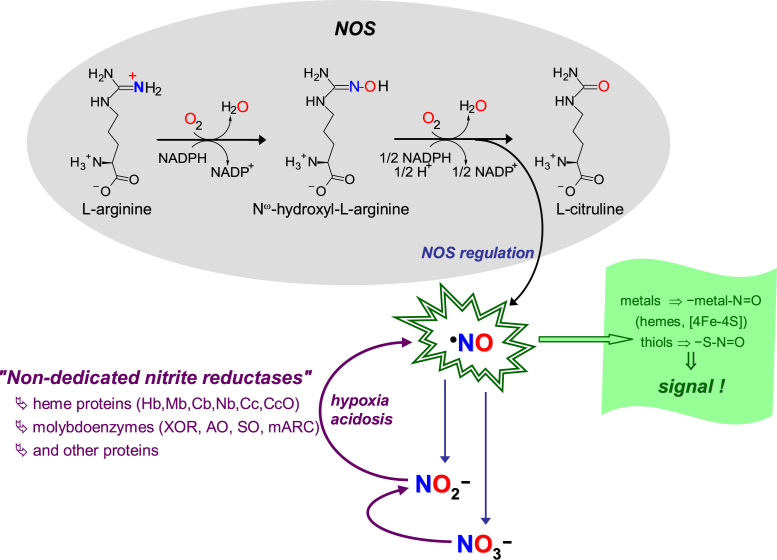
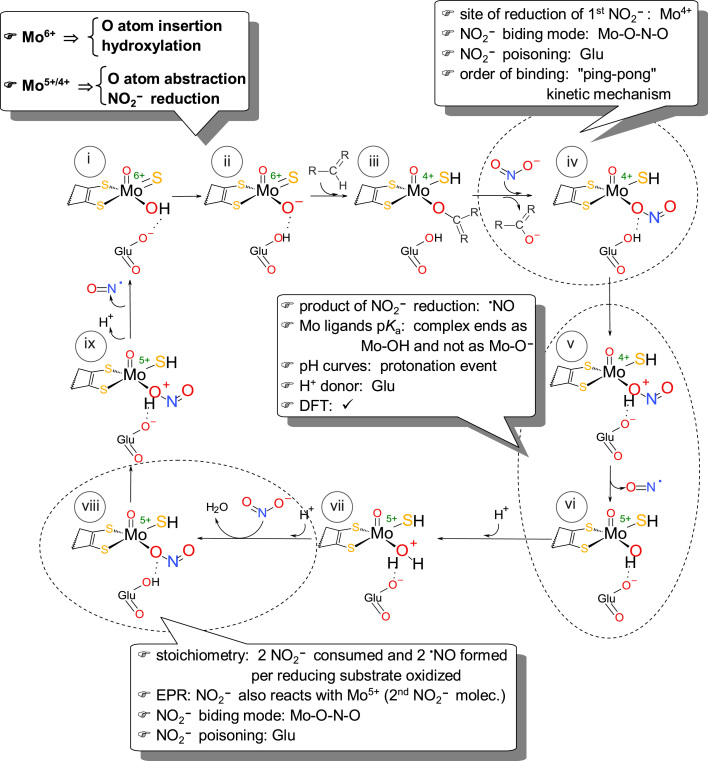
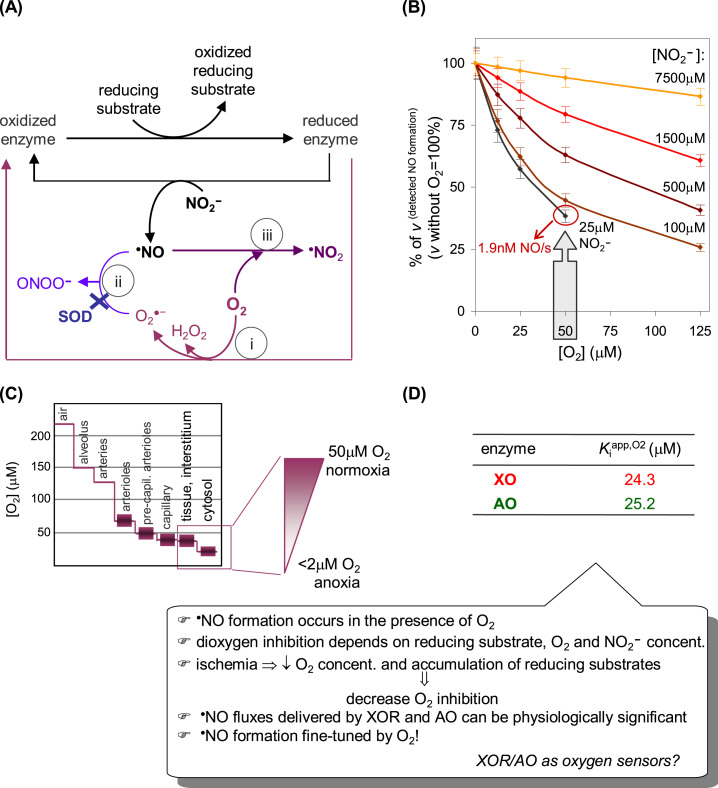
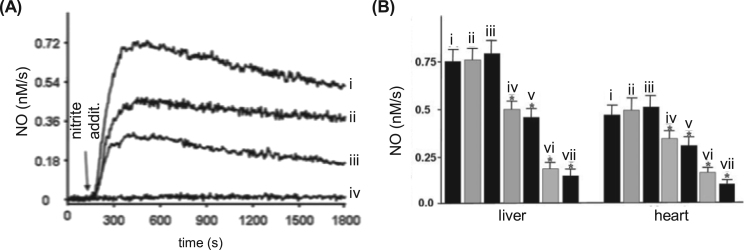
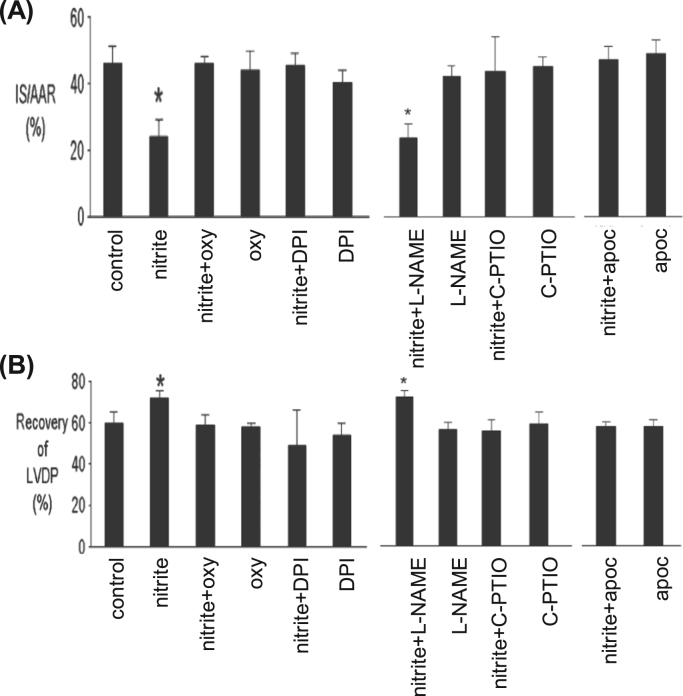
Nitric oxide radical (NO) is a signaling molecule involved in several physiological and pathological processes and a new nitrate-nitrite-NO pathway has emerged as a physiological alternative to the "classic" pathway of NO formation from L-arginine. Since the late 1990s, it has become clear that nitrite can be reduced back to NO under hypoxic/anoxic conditions and exert a significant cytoprotective action in vivo under challenging conditions. To reduce nitrite to NO, mammalian cells can use different metalloproteins that are present in cells to perform other functions, including several heme proteins and molybdoenzymes, comprising what we denominated as the "non-dedicated nitrite reductases". Herein, we will review the current knowledge on two of those "non-dedicated nitrite reductases", the molybdoenzymes xanthine oxidoreductase and aldehyde oxidase, discussing the in vitro and in vivo studies to provide the current picture of the role of these enzymes on the NO metabolism in humans.
一氧化氮自由基 (NO) 是一种参与多种生理和病理过程的信号分子,一种新的硝酸盐-亚硝酸盐-NO 途径已经作为从 L-精氨酸形成“经典”NO 途径的生理替代途径出现。自 20 世纪 90 年代末以来,人们已经清楚地认识到,在缺氧/缺氧条件下,亚硝酸盐可以被还原回 NO,并在挑战性条件下在体内发挥显著的细胞保护作用。为了将亚硝酸盐还原为 NO,哺乳动物细胞可以使用存在于细胞中执行其他功能的不同金属蛋白,包括几种血红素蛋白和钼酶,这构成了我们称之为“非专用亚硝酸盐还原酶”的物质。在此,我们将回顾两种“非专用亚硝酸盐还原酶”,即黄嘌呤氧化还原酶和醛氧化酶的最新知识,讨论体外和体内研究,以提供这些酶在人类 NO 代谢中的作用的最新情况。