Roberts Justin T, Patterson Dillon G, King Valeria M, Amin Shivam V, Polska Caroline J, Houserova Dominika, Crucello Aline, Barnhill Emmaline C, Miller Molly M, Sherman Timothy D, Borchert Glen M
Department of Biology, University of South Alabama, Mobile, AL 36688-0002, USA.
Department of Pharmacology, USA College of Medicine, Mobile, AL 36688-0002, USA;
Processes (Basel). 2018 May;6(5). doi: 10.3390/pr6050042. Epub 2018 Apr 25.
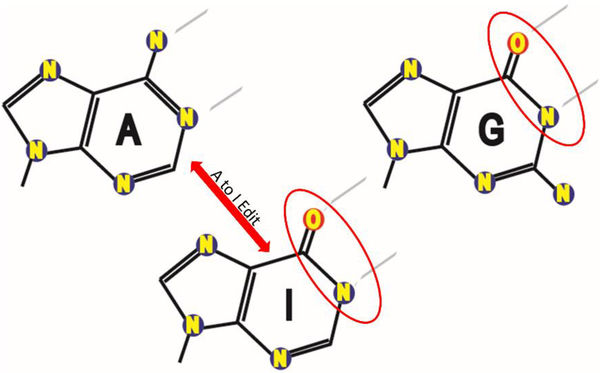
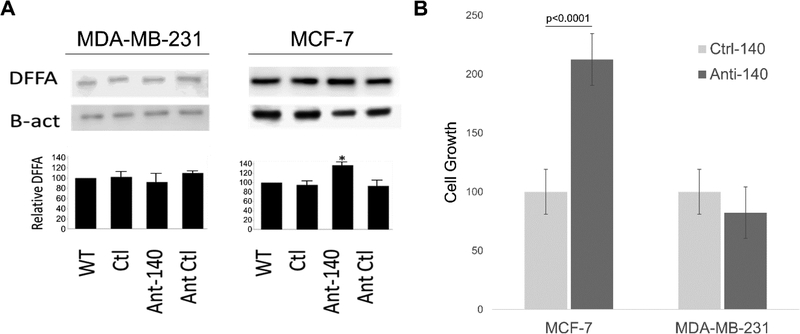
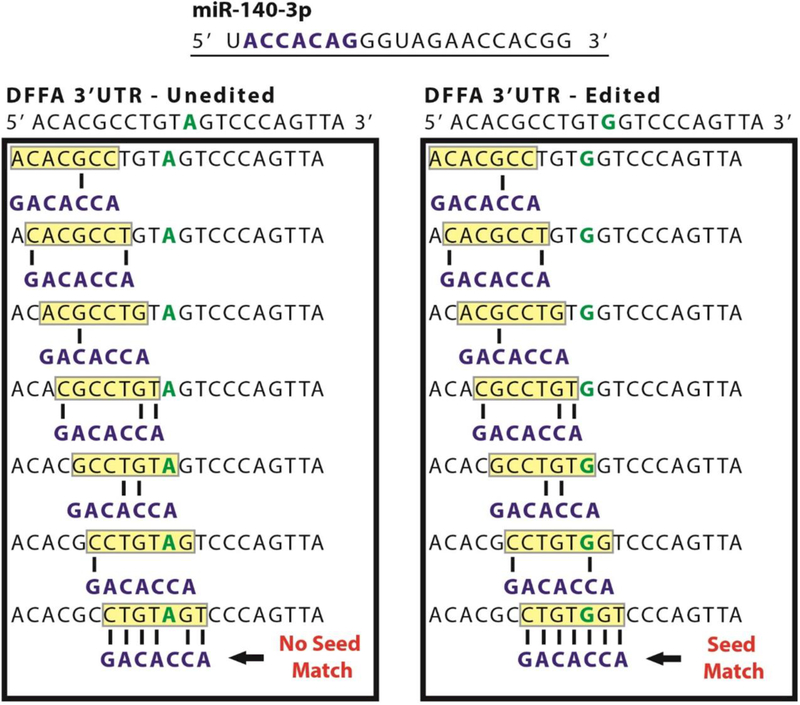
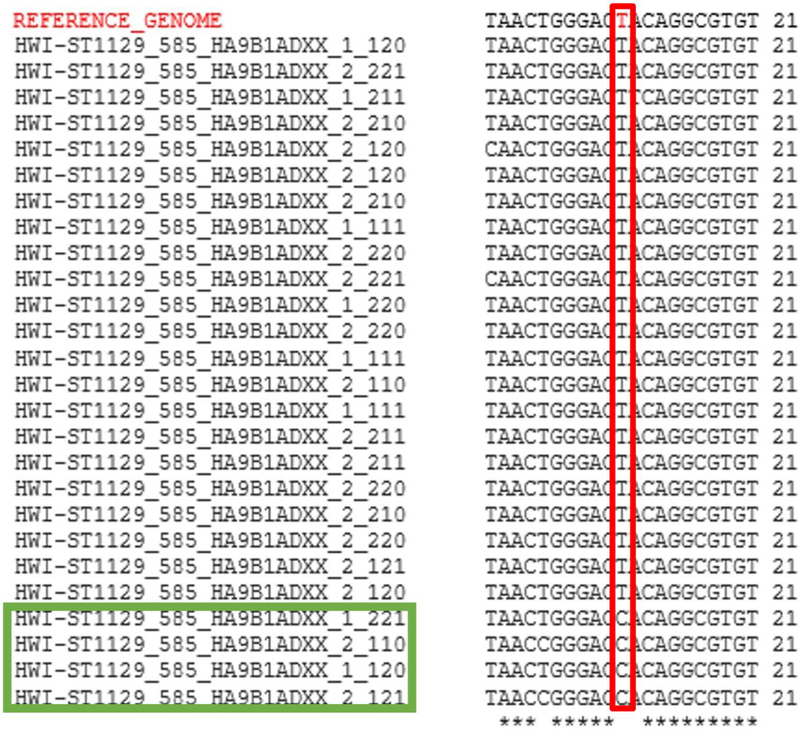
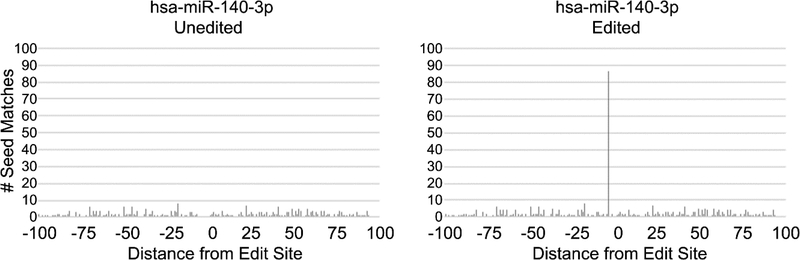
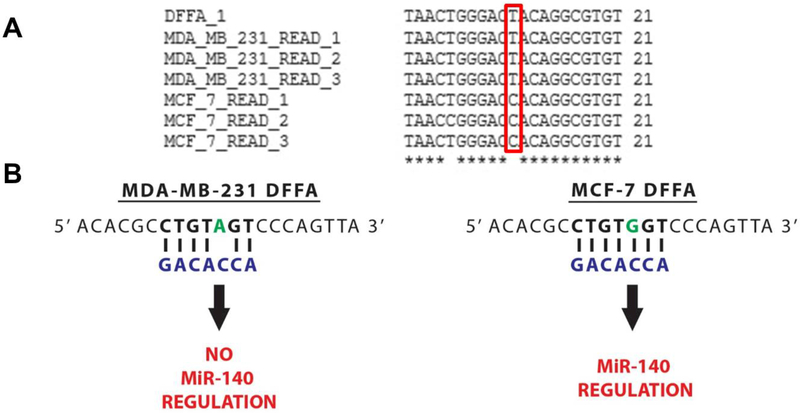
RNA editing by RNA specific adenosine deaminase acting on RNA (ADAR) is increasingly being found to alter microRNA (miRNA) regulation. Editing of miRNA transcripts can affect their processing, as well as which messenger RNAs (mRNAs) they target. Further, editing of target mRNAs can also affect their complementarity to miRNAs. Notably, ADAR editing is often increased in malignancy with the effect of these RNA changes being largely unclear. In addition, numerous reports have now identified an array of miRNAs that directly contribute to various malignancies although the majority of their targets remain largely undefined. Here we propose that modulating the targets of miRNAs via mRNA editing is a frequent occurrence in cancer and an underappreciated participant in pathology. In order to more accurately characterize the relationship between these two regulatory processes, this study examined RNA editing events within mRNA sequences of two breast cancer cell lines (MCF-7 and MDA-MB-231) and determined whether or not these edits could modulate miRNA associations. Computational analyses of RNA-Seq data from these two cell lines identified over 50,000 recurrent editing sites within human mRNAs, and many of these were located in 3' untranslated regions (UTRs). When these locations were screened against the list of currently-annotated miRNAs we discovered that editing caused a subset (~9%) to have significant alterations to mRNA complementarity. One miRNA in particular, miR-140-3p, is known to be misexpressed in many breast cancers, and we found that mRNA editing allowed this miRNA to directly target the apoptosis inducing gene in MCF-7, but not in MDA-MB-231 cells. As these two cell lines are known to have distinct characteristics in terms of morphology, invasiveness and physiological responses, we hypothesized that the differential RNA editing of in these two cell lines could contribute to their phenotypic differences. Indeed, we confirmed through western blotting that inhibiting miR-140-3p increases expression of the protein product in MCF-7, but not MDA-MB-231, and further that inhibition of miR-140-3p also increases cellular growth in MCF-7, but not MDA-MB-231. Broadly, these results suggest that the creation of miRNA targets may be an underappreciated function of ADAR and may help further elucidate the role of RNA editing in tumor pathogenicity.
由作用于RNA的RNA特异性腺苷脱氨酶(ADAR)介导的RNA编辑越来越多地被发现会改变微小RNA(miRNA)的调控。miRNA转录本的编辑会影响其加工过程,以及它们所靶向的信使RNA(mRNA)。此外,靶mRNA的编辑也会影响它们与miRNA的互补性。值得注意的是,ADAR编辑在恶性肿瘤中通常会增加,而这些RNA变化的影响在很大程度上尚不清楚。此外,现在有许多报道已经鉴定出一系列直接导致各种恶性肿瘤的miRNA,尽管它们的大多数靶标在很大程度上仍未明确。在这里,我们提出通过mRNA编辑来调节miRNA的靶标在癌症中是一种常见现象,并且是病理学中一个未被充分认识的参与者。为了更准确地表征这两个调控过程之间的关系,本研究检查了两种乳腺癌细胞系(MCF-7和MDA-MB-231)mRNA序列中的RNA编辑事件,并确定这些编辑是否可以调节miRNA的结合。对来自这两种细胞系的RNA-Seq数据进行的计算分析在人类mRNA中鉴定出超过50,000个反复出现的编辑位点,其中许多位于3'非翻译区(UTR)。当根据当前注释的miRNA列表筛选这些位置时,我们发现编辑导致一部分(约9%)mRNA互补性发生显著改变。特别是一种miRNA,即miR-140-3p,已知在许多乳腺癌中表达异常,并且我们发现mRNA编辑使得这种miRNA能够在MCF-7细胞中直接靶向凋亡诱导基因,但在MDA-MB-231细胞中则不能。由于已知这两种细胞系在形态、侵袭性和生理反应方面具有不同的特征,我们推测这两种细胞系中该基因的差异RNA编辑可能导致了它们的表型差异。确实,我们通过蛋白质印迹法证实,抑制miR-140-3p会增加MCF-7细胞中该蛋白产物的表达,但不会增加MDA-MB-231细胞中的表达,并且进一步抑制miR-140-3p也会增加MCF-7细胞的生长,但不会增加MDA-MB-231细胞的生长。总体而言,这些结果表明,miRNA靶标的产生可能是ADAR一个未被充分认识的功能,并且可能有助于进一步阐明RNA编辑在肿瘤致病性中的作用。