Alramadan Mohammed J, Magliano Dianna J, Almigbal Turky H, Batais Mohammed Ali, Afroz Afsana, Alramadhan Hesham J, Mahfoud Waad Faozi, Alragas Adel Mehmas, Billah Baki
Department of Epidemiology and Preventive Medicine, School of Public Health and Preventive Medicine, Monash University, Melbourne, Australia.
Baker Heart and Diabetes Institute, Melbourne, VIC, Australia.
BMC Endocr Disord. 2018 Sep 10;18(1):62. doi: 10.1186/s12902-018-0292-9.
The aim of this study was to assess inadequate glycaemic control and its associated factors among people with type 2 diabetes in Saudi Arabia.
A cross-sectional study design was used. Adults with type 2 diabetes attending diabetes centres in Riyadh, Hofuf and Jeddah cities were interviewed and their anthropometrics were measured. Their medical records were also reviewed to collect information related to recent lab tests, medications, and documented comorbidities. Multivariable logistic regression were used for data analysis.
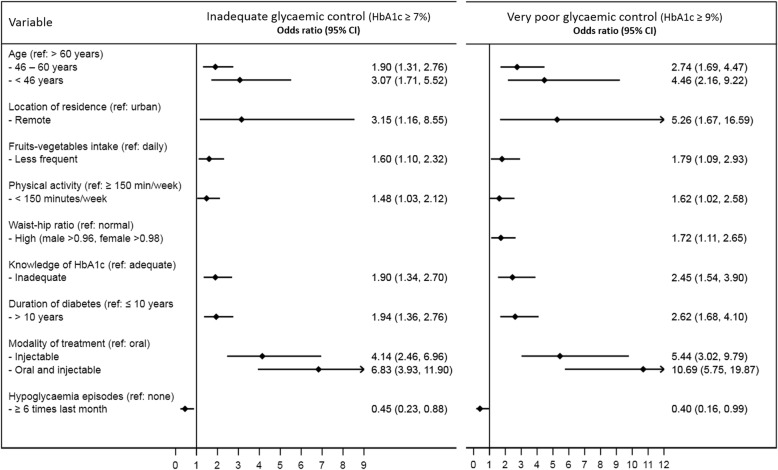
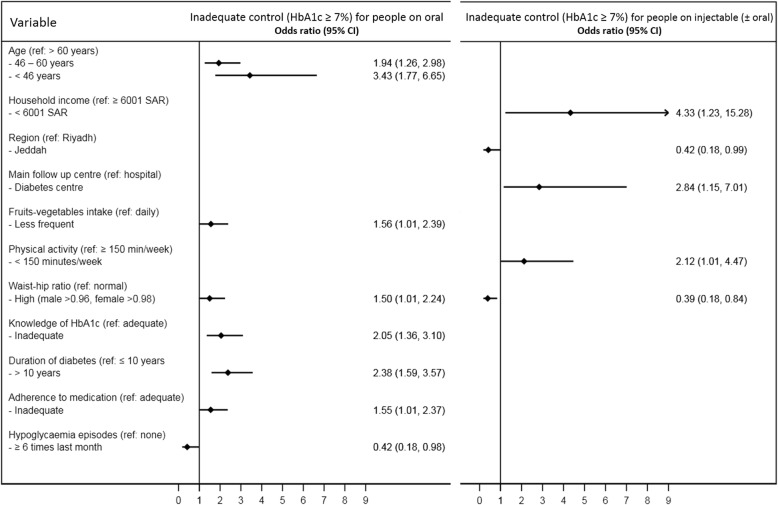
A total of 1111 participants were recruited in the study. Mean age was 57.6 (±11.1) years, 65.2% of the participants were females, and mean HbA1c was 8.5 ± 1.9%. About three-fourths of participants had inadequate glycaemic control (≥ 7%). Multivariable analysis showed that age ≤ 60 years, longer duration of diabetes, living in a remote location, low household income, low intake of fruits and vegetable, low level of physical activity, lack of knowledge about haemoglobin A1c, high waist-hip ratio, low adherence to medication, and using injectable medications were independent risk factors for inadequate glycaemic control.
Inadequate glycaemic control is prevalent among people with type 2 diabetes in Saudi Arabia. In order to improve glycaemic control diabetes management plan should aim at controlling the modifiable risk factors which include low intake of fruits and vegetable, low level of physical activity, lack of knowledge about haemoglobin A1c, high waist-hip ratio, and low adherence to medications.
本研究旨在评估沙特阿拉伯2型糖尿病患者血糖控制不佳情况及其相关因素。
采用横断面研究设计。对利雅得、胡富夫和吉达市糖尿病中心的成年2型糖尿病患者进行访谈并测量其人体测量学指标。还查阅他们的病历以收集与近期实验室检查、用药及记录的合并症相关的信息。采用多变量逻辑回归进行数据分析。
本研究共招募了1111名参与者。平均年龄为57.6(±11.1)岁,65.2%的参与者为女性,平均糖化血红蛋白(HbA1c)为8.5±1.9%。约四分之三的参与者血糖控制不佳(≥7%)。多变量分析显示,年龄≤60岁、糖尿病病程较长、居住在偏远地区、家庭收入低、水果和蔬菜摄入量低、身体活动水平低、对糖化血红蛋白缺乏了解、腰臀比高、用药依从性低以及使用注射药物是血糖控制不佳的独立危险因素。
沙特阿拉伯2型糖尿病患者中血糖控制不佳情况普遍存在。为改善血糖控制,糖尿病管理计划应旨在控制可改变的危险因素,包括水果和蔬菜摄入量低、身体活动水平低、对糖化血红蛋白缺乏了解、腰臀比高以及用药依从性低。