• 文献检索
  • 文档翻译
  • 深度研究
  • 学术资讯
  • Suppr Zotero 插件Zotero 插件
  • 邀请有礼
  • 套餐&价格
  • 历史记录
应用&插件
Suppr Zotero 插件Zotero 插件浏览器插件Mac 客户端Windows 客户端微信小程序
定价
高级版会员购买积分包购买API积分包
服务
文献检索文档翻译深度研究API 文档MCP 服务
关于我们
关于 Suppr公司介绍联系我们用户协议隐私条款
关注我们

Suppr 超能文献

核心技术专利:CN118964589B侵权必究
粤ICP备2023148730 号-1Suppr @ 2026

文献检索

告别复杂PubMed语法,用中文像聊天一样搜索,搜遍4000万医学文献。AI智能推荐,让科研检索更轻松。

立即免费搜索

文件翻译

保留排版,准确专业,支持PDF/Word/PPT等文件格式,支持 12+语言互译。

免费翻译文档

深度研究

AI帮你快速写综述,25分钟生成高质量综述,智能提取关键信息,辅助科研写作。

立即免费体验

颅内动脉瘤壁面剪应力预测的真实世界变异性:2015年国际动脉瘤计算流体动力学挑战赛

Real-World Variability in the Prediction of Intracranial Aneurysm Wall Shear Stress: The 2015 International Aneurysm CFD Challenge.

作者信息

Valen-Sendstad Kristian, Bergersen Aslak W, Shimogonya Yuji, Goubergrits Leonid, Bruening Jan, Pallares Jordi, Cito Salvatore, Piskin Senol, Pekkan Kerem, Geers Arjan J, Larrabide Ignacio, Rapaka Saikiran, Mihalef Viorel, Fu Wenyu, Qiao Aike, Jain Kartik, Roller Sabine, Mardal Kent-Andre, Kamakoti Ramji, Spirka Thomas, Ashton Neil, Revell Alistair, Aristokleous Nicolas, Houston J Graeme, Tsuji Masanori, Ishida Fujimaro, Menon Prahlad G, Browne Leonard D, Broderick Stephen, Shojima Masaaki, Koizumi Satoshi, Barbour Michael, Aliseda Alberto, Morales Hernán G, Lefèvre Thierry, Hodis Simona, Al-Smadi Yahia M, Tran Justin S, Marsden Alison L, Vaippummadhom Sreeja, Einstein G Albert, Brown Alistair G, Debus Kristian, Niizuma Kuniyasu, Rashad Sherif, Sugiyama Shin-Ichiro, Owais Khan M, Updegrove Adam R, Shadden Shawn C, Cornelissen Bart M W, Majoie Charles B L M, Berg Philipp, Saalfield Sylvia, Kono Kenichi, Steinman David A

机构信息

Simula Research Laboratory and Center for Cardiological Innovation, Lysaker, Norway.

University of Oslo, Oslo, Norway.

出版信息

Cardiovasc Eng Technol. 2018 Dec;9(4):544-564. doi: 10.1007/s13239-018-00374-2. Epub 2018 Sep 10.

DOI:10.1007/s13239-018-00374-2
PMID:30203115
原文链接:https://pmc.ncbi.nlm.nih.gov/articles/PMC6290689/
Abstract

PURPOSE

Image-based computational fluid dynamics (CFD) is widely used to predict intracranial aneurysm wall shear stress (WSS), particularly with the goal of improving rupture risk assessment. Nevertheless, concern has been expressed over the variability of predicted WSS and inconsistent associations with rupture. Previous challenges, and studies from individual groups, have focused on individual aspects of the image-based CFD pipeline. The aim of this Challenge was to quantify the total variability of the whole pipeline.

METHODS

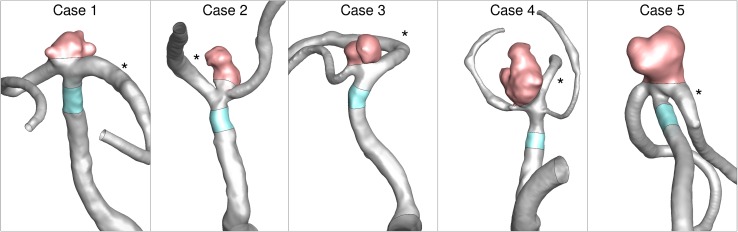
3D rotational angiography image volumes of five middle cerebral artery aneurysms were provided to participants, who were free to choose their segmentation methods, boundary conditions, and CFD solver and settings. Participants were asked to fill out a questionnaire about their solution strategies and experience with aneurysm CFD, and provide surface distributions of WSS magnitude, from which we objectively derived a variety of hemodynamic parameters.

RESULTS

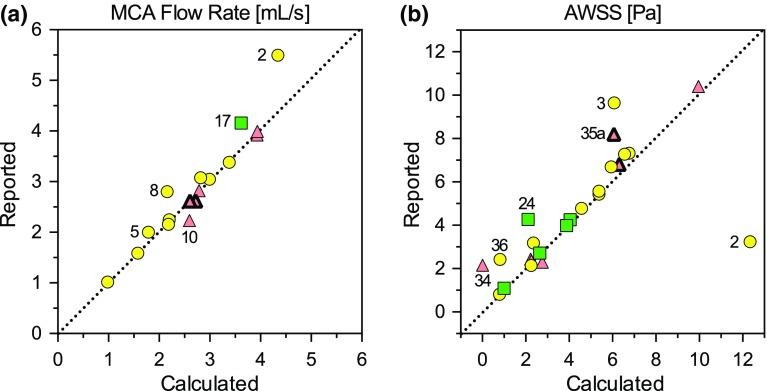
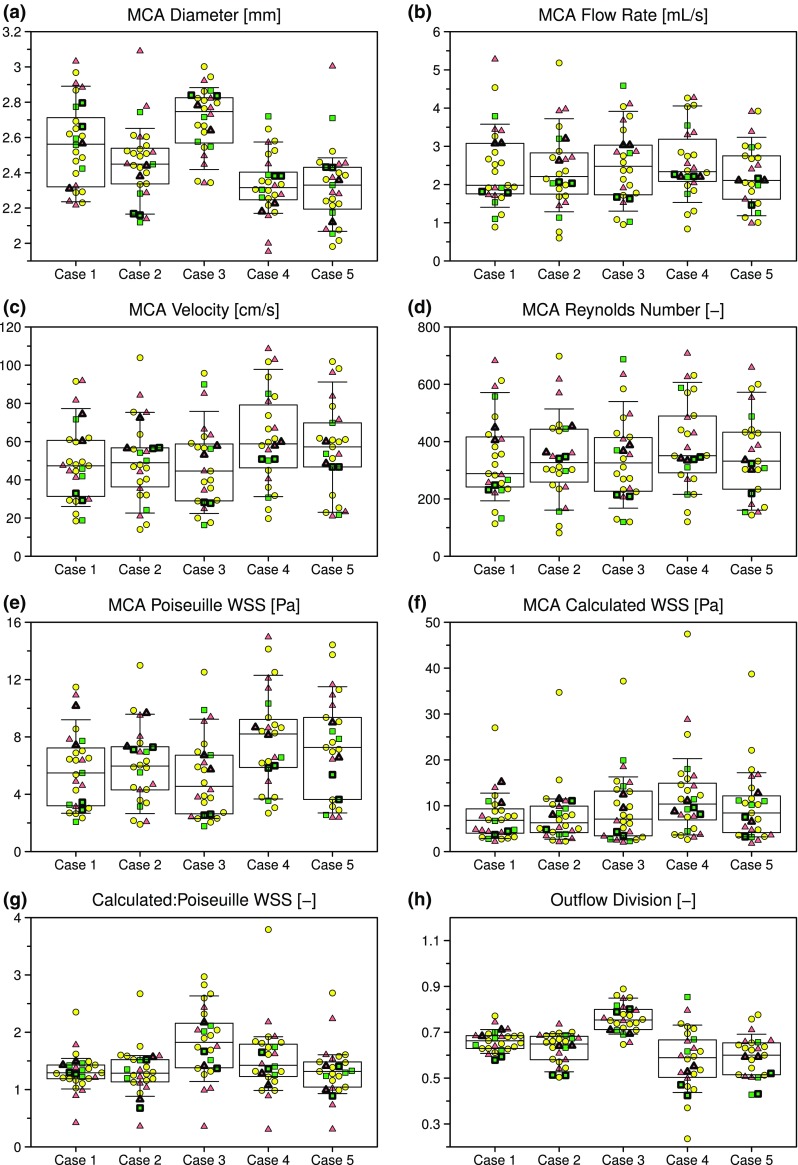
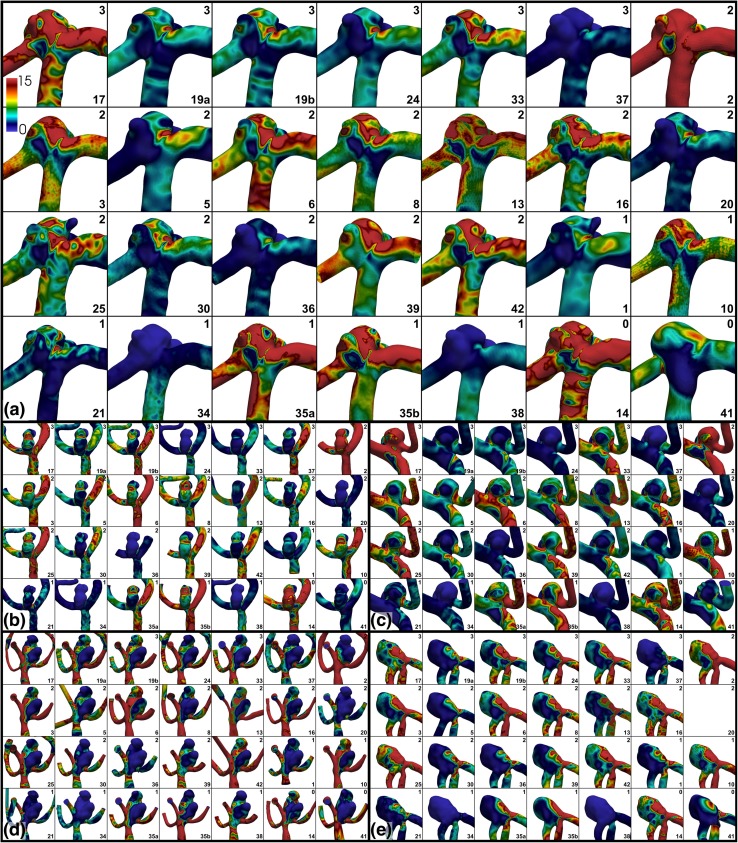
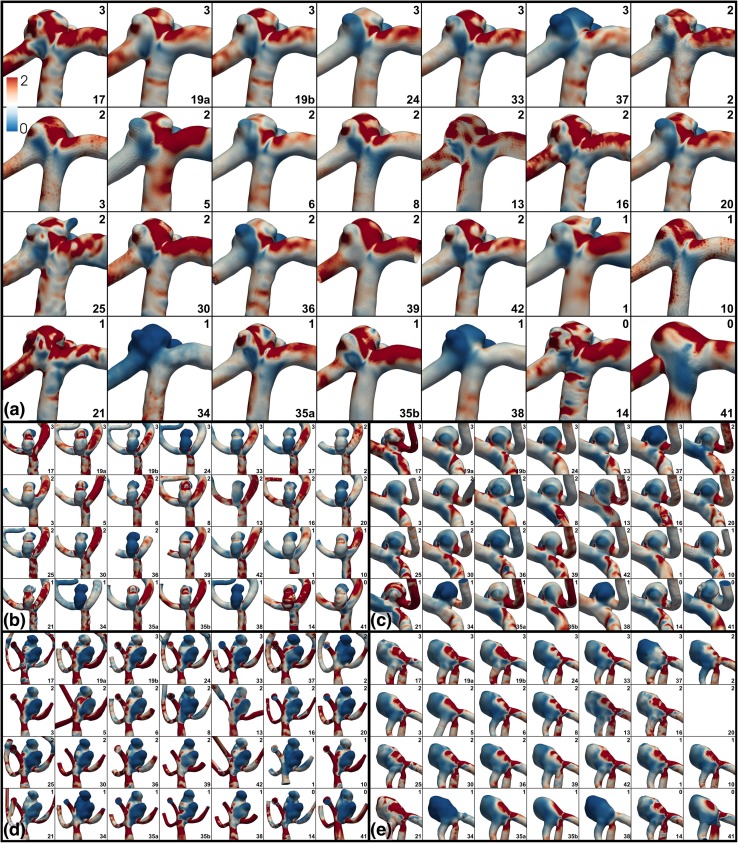
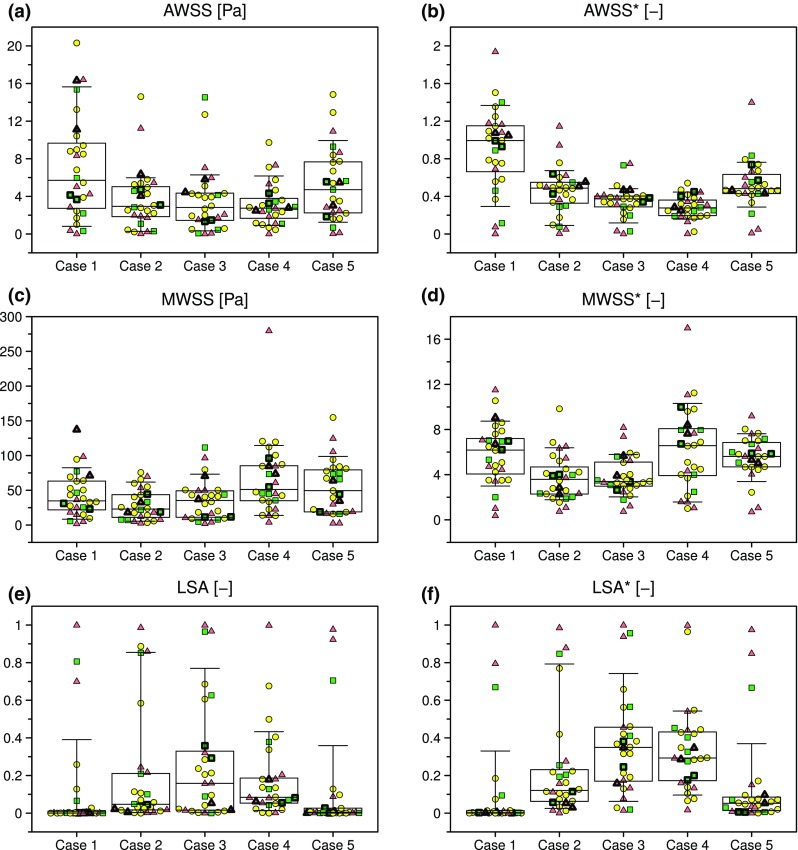
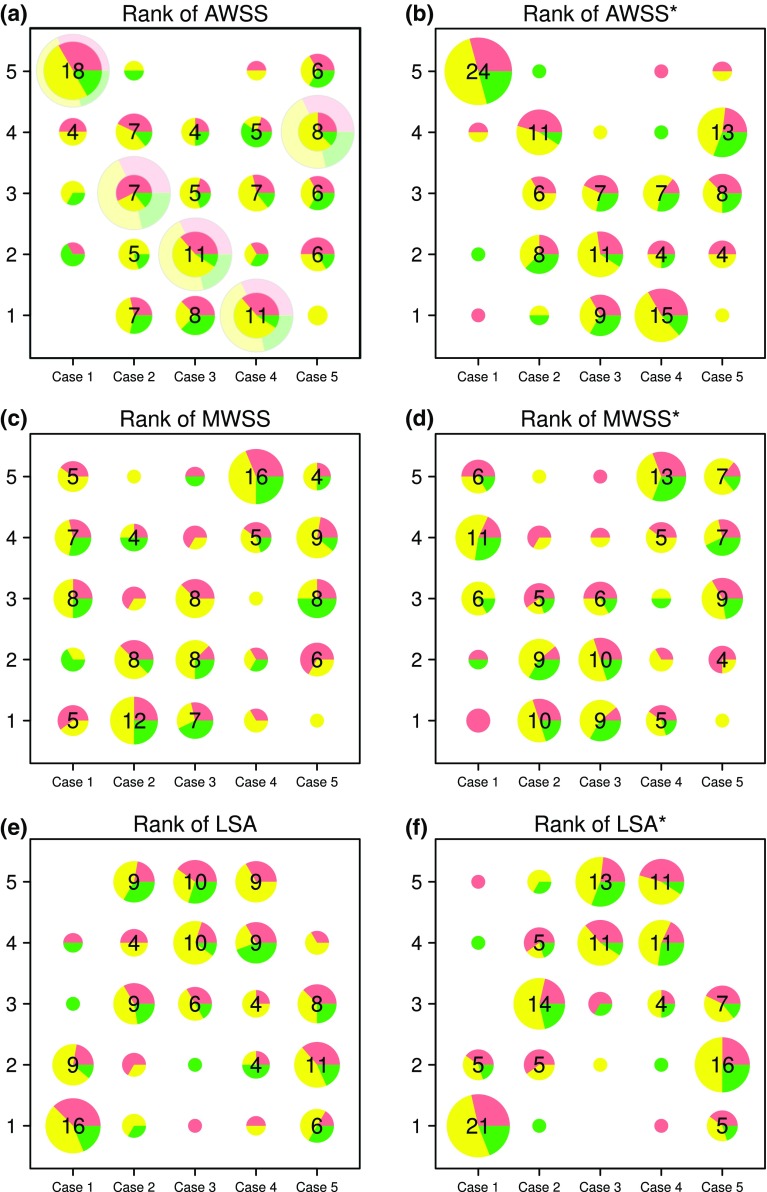
A total of 28 datasets were submitted, from 26 teams with varying levels of self-assessed experience. Wide variability of segmentations, CFD model extents, and inflow rates resulted in interquartile ranges of sac average WSS up to 56%, which reduced to < 30% after normalizing by parent artery WSS. Sac-maximum WSS and low shear area were more variable, while rank-ordering of cases by low or high shear showed only modest consensus among teams. Experience was not a significant predictor of variability.

CONCLUSIONS

Wide variability exists in the prediction of intracranial aneurysm WSS. While segmentation and CFD solver techniques may be difficult to standardize across groups, our findings suggest that some of the variability in image-based CFD could be reduced by establishing guidelines for model extents, inflow rates, and blood properties, and by encouraging the reporting of normalized hemodynamic parameters.

摘要

目的

基于图像的计算流体动力学(CFD)被广泛用于预测颅内动脉瘤壁面切应力(WSS),尤其是旨在改善破裂风险评估。然而,人们对预测的WSS的变异性以及与破裂的不一致关联表示担忧。先前的挑战以及个别研究团队的研究都集中在基于图像的CFD流程的各个方面。本次挑战赛的目的是量化整个流程的总体变异性。

方法

向参与者提供了五个大脑中动脉动脉瘤的三维旋转血管造影图像数据集,参与者可以自由选择其分割方法、边界条件以及CFD求解器和设置。要求参与者填写一份关于其求解策略和动脉瘤CFD经验的问卷,并提供WSS大小的表面分布,我们据此客观地得出了各种血流动力学参数。

结果

共提交了28个数据集,来自26个团队,这些团队的自我评估经验水平各不相同。分割、CFD模型范围和流入率的广泛变异性导致瘤腔平均WSS的四分位间距高达56%,在通过母动脉WSS进行归一化后降至<30%。瘤腔最大WSS和低切应力区域的变异性更大,而按低切应力或高切应力对病例进行排序在各团队之间仅显示出适度的一致性。经验并不是变异性的显著预测因素。

结论

颅内动脉瘤WSS的预测存在广泛变异性。虽然分割和CFD求解器技术可能难以在不同团队之间实现标准化,但我们的研究结果表明,通过建立模型范围、流入率和血液属性的指导原则,并鼓励报告归一化的血流动力学参数,可以减少基于图像的CFD中的一些变异性。
https://cdn.ncbi.nlm.nih.gov/pmc/blobs/1c7b/6290689/bfd4bb1d6b0b/13239_2018_374_Fig9_HTML.jpg
https://cdn.ncbi.nlm.nih.gov/pmc/blobs/1c7b/6290689/07fec7e9ff7c/13239_2018_374_Fig1_HTML.jpg
https://cdn.ncbi.nlm.nih.gov/pmc/blobs/1c7b/6290689/a6e524dfe97f/13239_2018_374_Fig2_HTML.jpg
https://cdn.ncbi.nlm.nih.gov/pmc/blobs/1c7b/6290689/279cee751d84/13239_2018_374_Fig3_HTML.jpg
https://cdn.ncbi.nlm.nih.gov/pmc/blobs/1c7b/6290689/ff0282b189e9/13239_2018_374_Fig4_HTML.jpg
https://cdn.ncbi.nlm.nih.gov/pmc/blobs/1c7b/6290689/bd2b94011594/13239_2018_374_Fig5_HTML.jpg
https://cdn.ncbi.nlm.nih.gov/pmc/blobs/1c7b/6290689/f9c2f0c550fd/13239_2018_374_Fig6_HTML.jpg
https://cdn.ncbi.nlm.nih.gov/pmc/blobs/1c7b/6290689/90a53cfea9b3/13239_2018_374_Fig7_HTML.jpg
https://cdn.ncbi.nlm.nih.gov/pmc/blobs/1c7b/6290689/2515aa6bf7ff/13239_2018_374_Fig8_HTML.jpg
https://cdn.ncbi.nlm.nih.gov/pmc/blobs/1c7b/6290689/bfd4bb1d6b0b/13239_2018_374_Fig9_HTML.jpg
https://cdn.ncbi.nlm.nih.gov/pmc/blobs/1c7b/6290689/07fec7e9ff7c/13239_2018_374_Fig1_HTML.jpg
https://cdn.ncbi.nlm.nih.gov/pmc/blobs/1c7b/6290689/a6e524dfe97f/13239_2018_374_Fig2_HTML.jpg
https://cdn.ncbi.nlm.nih.gov/pmc/blobs/1c7b/6290689/279cee751d84/13239_2018_374_Fig3_HTML.jpg
https://cdn.ncbi.nlm.nih.gov/pmc/blobs/1c7b/6290689/ff0282b189e9/13239_2018_374_Fig4_HTML.jpg
https://cdn.ncbi.nlm.nih.gov/pmc/blobs/1c7b/6290689/bd2b94011594/13239_2018_374_Fig5_HTML.jpg
https://cdn.ncbi.nlm.nih.gov/pmc/blobs/1c7b/6290689/f9c2f0c550fd/13239_2018_374_Fig6_HTML.jpg
https://cdn.ncbi.nlm.nih.gov/pmc/blobs/1c7b/6290689/90a53cfea9b3/13239_2018_374_Fig7_HTML.jpg
https://cdn.ncbi.nlm.nih.gov/pmc/blobs/1c7b/6290689/2515aa6bf7ff/13239_2018_374_Fig8_HTML.jpg
https://cdn.ncbi.nlm.nih.gov/pmc/blobs/1c7b/6290689/bfd4bb1d6b0b/13239_2018_374_Fig9_HTML.jpg

相似文献

1
Real-World Variability in the Prediction of Intracranial Aneurysm Wall Shear Stress: The 2015 International Aneurysm CFD Challenge.颅内动脉瘤壁面剪应力预测的真实世界变异性:2015年国际动脉瘤计算流体动力学挑战赛
Cardiovasc Eng Technol. 2018 Dec;9(4):544-564. doi: 10.1007/s13239-018-00374-2. Epub 2018 Sep 10.
2
Multiple Aneurysms AnaTomy CHallenge 2018 (MATCH): Phase I: Segmentation.2018年多发性动脉瘤解剖挑战(MATCH):第一阶段:分割
Cardiovasc Eng Technol. 2018 Dec;9(4):565-581. doi: 10.1007/s13239-018-00376-0. Epub 2018 Sep 6.
3
Local hemodynamics at the rupture point of cerebral aneurysms determined by computational fluid dynamics analysis.通过计算流体动力学分析确定脑动脉瘤破裂点的局部血液动力学。
Cerebrovasc Dis. 2012;34(2):121-9. doi: 10.1159/000339678. Epub 2012 Aug 1.
4
The Computational Fluid Dynamics Rupture Challenge 2013--Phase II: Variability of Hemodynamic Simulations in Two Intracranial Aneurysms.2013年计算流体动力学破裂挑战赛——第二阶段:两个颅内动脉瘤血流动力学模拟的变异性
J Biomech Eng. 2015 Dec;137(12):121008. doi: 10.1115/1.4031794.
5
Inter-patient variations in flow boundary conditions at middle cerebral artery from 7T PC-MRI and influence on Computational Fluid Dynamics of intracranial aneurysms.7T PC-MRI 中大脑中动脉血流边界条件的患者间差异及其对颅内动脉瘤计算流体动力学的影响。
Comput Biol Med. 2020 May;120:103759. doi: 10.1016/j.compbiomed.2020.103759. Epub 2020 Apr 15.
6
Errors in power-law estimations of inflow rates for intracranial aneurysm CFD.颅内动脉瘤计算流体动力学流入率的幂律估计中的误差。
J Biomech. 2018 Oct 26;80:159-165. doi: 10.1016/j.jbiomech.2018.09.006. Epub 2018 Sep 13.
7
A study of wall shear stress in 12 aneurysms with respect to different viscosity models and flow conditions.研究了 12 个动脉瘤在不同粘度模型和流动条件下的壁切应力。
J Biomech. 2013 Nov 15;46(16):2802-8. doi: 10.1016/j.jbiomech.2013.09.004. Epub 2013 Sep 16.
8
Intracranial bypass for giant aneurysms treatment assessed by computational fluid dynamics (CFD) analysis.基于计算流体动力学(CFD)分析评估颅内旁路手术治疗巨大动脉瘤。
Sci Rep. 2024 Sep 16;14(1):21548. doi: 10.1038/s41598-024-72591-w.
9
Quantitative characterization of the hemodynamic environment in ruptured and unruptured brain aneurysms.定量分析破裂和未破裂脑动脉瘤的血流动力学环境。
AJNR Am J Neuroradiol. 2011 Jan;32(1):145-51. doi: 10.3174/ajnr.A2419. Epub 2010 Dec 2.
10
Inflow Hemodynamics of Intracranial Aneurysms: A Comparison of Computational Fluid Dynamics and 4D Flow Magnetic Resonance Imaging.颅内动脉瘤的血流动力学:计算流体动力学与 4D 流磁共振成像的比较。
J Stroke Cerebrovasc Dis. 2021 May;30(5):105685. doi: 10.1016/j.jstrokecerebrovasdis.2021.105685. Epub 2021 Mar 1.

引用本文的文献

1
AI-powered automated model construction for patient-specific CFD simulations of aortic flows.用于主动脉血流患者特异性计算流体动力学模拟的人工智能驱动的自动模型构建。
Sci Adv. 2025 Sep 5;11(36):eadw2825. doi: 10.1126/sciadv.adw2825.
2
Predictive modeling and machine learning show poor performance of clinical, morphological, and hemodynamic parameters for small intracranial aneurysm rupture.预测建模和机器学习表明,临床、形态学和血流动力学参数对小型颅内动脉瘤破裂的预测效果不佳。
Sci Rep. 2025 Jul 5;15(1):24051. doi: 10.1038/s41598-025-08478-1.
3
Accuracy of computational fluid dynamics indices of unruptured cerebral aneurysms with 3 T magnetic resonance angiography.

本文引用的文献

1
Better Than Nothing: A Rational Approach for Minimizing the Impact of Outflow Strategy on Cerebrovascular Simulations.优于无:一种最小化流出策略对脑血管模拟影响的合理方法。
AJNR Am J Neuroradiol. 2018 Feb;39(2):337-343. doi: 10.3174/ajnr.A5484. Epub 2017 Dec 21.
2
Vessel calibre and flow splitting relationships at the internal carotid artery terminal bifurcation.颈内动脉终末分叉处的血管口径和血流分裂关系。
Physiol Meas. 2017 Nov 1;38(11):2044-2057. doi: 10.1088/1361-6579/aa92bf.
3
Robustness of common hemodynamic indicators with respect to numerical resolution in 38 middle cerebral artery aneurysms.
3T磁共振血管造影术评估未破裂脑动脉瘤的计算流体动力学指标的准确性
Neuroradiology. 2025 Jun 13. doi: 10.1007/s00234-025-03667-1.
4
Fast simulation of hemodynamics in intracranial aneurysms for clinical use.用于临床的颅内动脉瘤血流动力学快速模拟。
Acta Neurochir (Wien). 2025 Mar 3;167(1):56. doi: 10.1007/s00701-025-06469-9.
5
Key influencers in an aneurysmal thrombosis model: A sensitivity analysis and validation study.动脉瘤血栓形成模型中的关键影响因素:一项敏感性分析与验证研究。
APL Bioeng. 2025 Feb 11;9(1):016107. doi: 10.1063/5.0223753. eCollection 2025 Mar.
6
CFD investigations of a shape-memory polymer foam-based endovascular embolization device for the treatment of intracranial aneurysms.用于治疗颅内动脉瘤的基于形状记忆聚合物泡沫的血管内栓塞装置的计算流体动力学研究
Biomech Model Mechanobiol. 2025 Feb;24(1):281-296. doi: 10.1007/s10237-024-01910-x. Epub 2024 Nov 25.
7
Intracranial aneurysm CTA images and 3D models dataset with clinical morphological and hemodynamic data.颅内动脉瘤 CTA 图像及三维模型数据集,包含临床形态学和血流动力学数据。
Sci Data. 2024 Nov 12;11(1):1213. doi: 10.1038/s41597-024-04056-8.
8
CFD investigations of a shape-memory polymer foam-based endovascular embolization device for the treatment of intracranial aneurysms.用于治疗颅内动脉瘤的基于形状记忆聚合物泡沫的血管内栓塞装置的计算流体动力学研究。
Res Sq. 2024 Oct 18:rs.3.rs-5014601. doi: 10.21203/rs.3.rs-5014601/v1.
9
Credibility assessment of in silico clinical trials for medical devices.医疗器械计算机模拟临床试验的可信度评估
PLoS Comput Biol. 2024 Aug 8;20(8):e1012289. doi: 10.1371/journal.pcbi.1012289. eCollection 2024 Aug.
10
: a comprehensive fluid-structure interaction study of 101 intracranial aneurysms.101例颅内动脉瘤的综合流固耦合研究
Front Bioeng Biotechnol. 2024 Jun 24;12:1433811. doi: 10.3389/fbioe.2024.1433811. eCollection 2024.
38例大脑中动脉动脉瘤常见血流动力学指标相对于数值分辨率的稳健性
PLoS One. 2017 Jun 13;12(6):e0177566. doi: 10.1371/journal.pone.0177566. eCollection 2017.
4
Does the DSA reconstruction kernel affect hemodynamic predictions in intracranial aneurysms? An analysis of geometry and blood flow variations.DSA 重建核是否会影响颅内动脉瘤的血流动力学预测?对几何形状和血流变化的分析。
J Neurointerv Surg. 2018 Mar;10(3):290-296. doi: 10.1136/neurintsurg-2017-012996. Epub 2017 May 2.
5
Cerebral aneurysm blood flow simulations are sensitive to basic solver settings.脑动脉瘤血流模拟对基本求解器设置很敏感。
J Biomech. 2017 May 24;57:46-53. doi: 10.1016/j.jbiomech.2017.03.020. Epub 2017 Apr 3.
6
On the quantification and visualization of transient periodic instabilities in pulsatile flows.关于脉动流中瞬态周期性不稳定性的量化与可视化
J Biomech. 2017 Feb 8;52:179-182. doi: 10.1016/j.jbiomech.2016.12.037. Epub 2016 Dec 31.
7
Fluid-Structure Simulations of a Ruptured Intracranial Aneurysm: Constant versus Patient-Specific Wall Thickness.破裂颅内动脉瘤的流固耦合模拟:恒定壁厚与患者特异性壁厚对比
Comput Math Methods Med. 2016;2016:9854539. doi: 10.1155/2016/9854539. Epub 2016 Sep 18.
8
Non-Newtonian versus numerical rheology: Practical impact of shear-thinning on the prediction of stable and unstable flows in intracranial aneurysms.非牛顿流变学与数值流变学:剪切变稀对颅内动脉瘤稳定和不稳定血流预测的实际影响。
Int J Numer Method Biomed Eng. 2017 Jul;33(7). doi: 10.1002/cnm.2836. Epub 2016 Nov 9.
9
Reproducibility of image-based computational models of intracranial aneurysm: a comparison between 3D rotational angiography, CT angiography and MR angiography.颅内动脉瘤基于图像的计算模型的可重复性:三维旋转血管造影、CT血管造影和MR血管造影之间的比较
Biomed Eng Online. 2016 May 6;15(1):50. doi: 10.1186/s12938-016-0163-4.
10
Flow Instability Detected by High-Resolution Computational Fluid Dynamics in Fifty-Six Middle Cerebral Artery Aneurysms.通过高分辨率计算流体动力学检测56例大脑中动脉动脉瘤的血流不稳定性
J Biomech Eng. 2016 Jun;138(6):061009. doi: 10.1115/1.4033477.