Department of Anesthesiology, Section on Critical Care, Department of Medicine, Section on Molecular Medicine, Wake Forest School of Medicine, Winston-Salem, NC, 27157, USA.
Department of Internal Medicine, Wake Forest School of Medicine, Winston-Salem, NC, USA.
Inflammation. 2019 Feb;42(1):156-169. doi: 10.1007/s10753-018-0881-9.
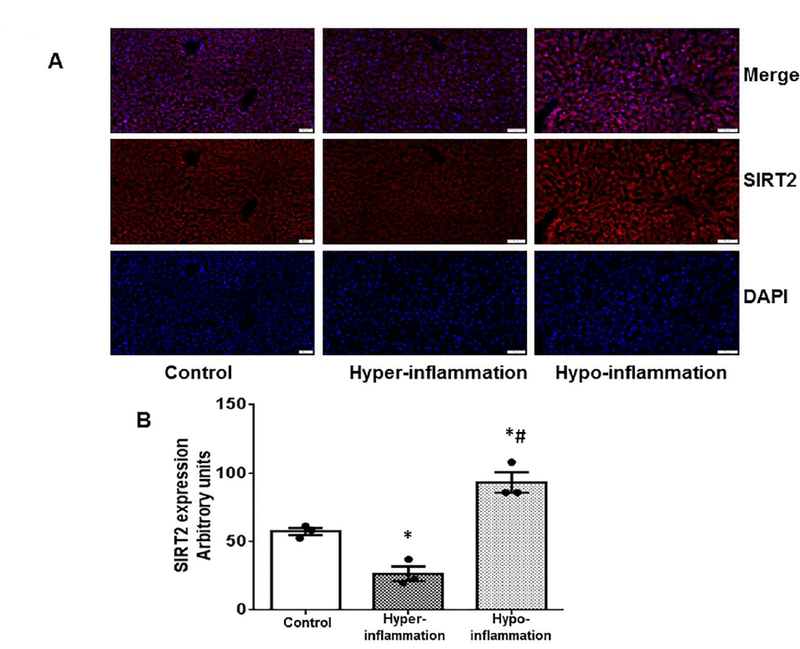
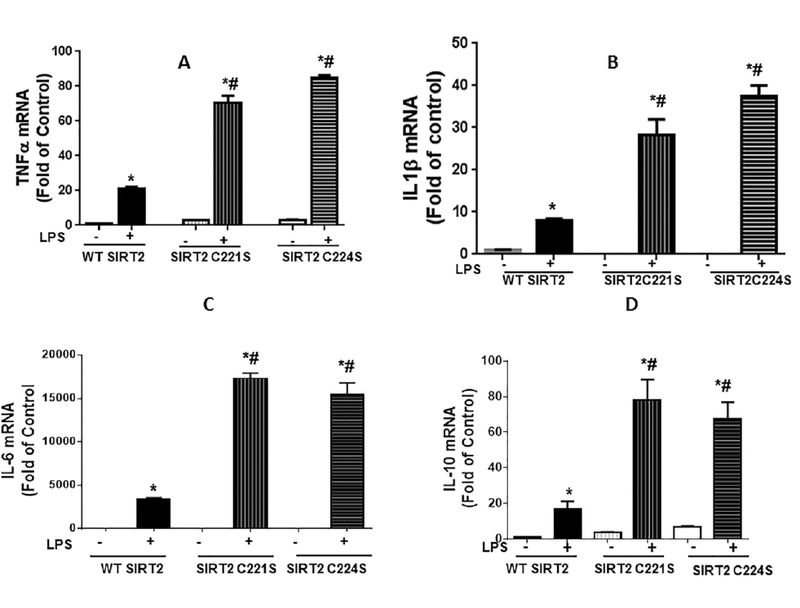
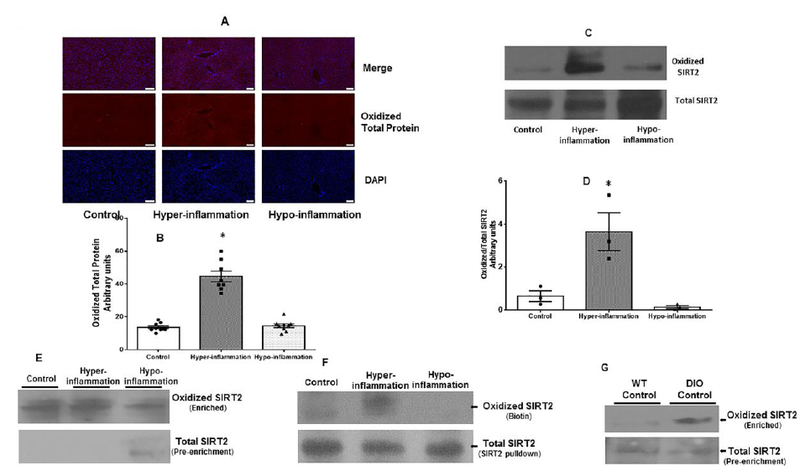
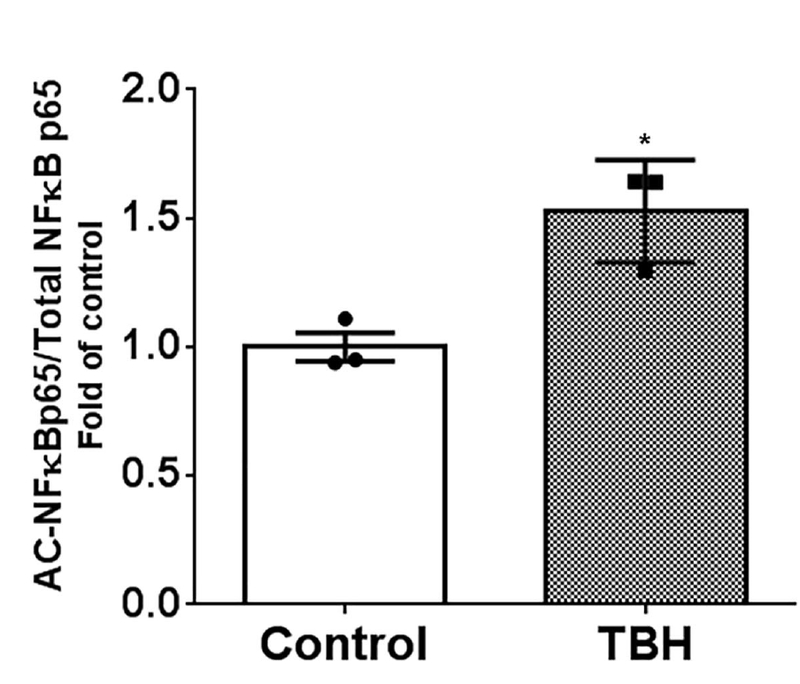
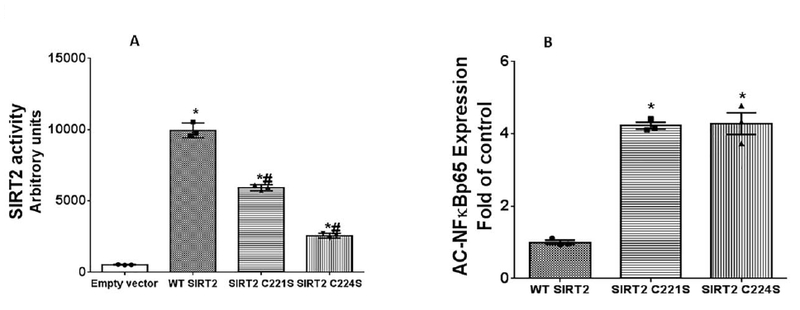
Obesity increases morbidity and mortality in acute illnesses such as sepsis and septic shock. We showed previously that the early/hyper-inflammatory phase of sepsis is exaggerated in obese mice with sepsis; sirtuin 2 (SIRT2) modulates sepsis inflammation in obesity. Evidence suggests that obesity with sepsis is associated with increased oxidative stress. It is unknown whether exaggerated hyper-inflammation of obesity with sepsis modulates the SIRT2 function in return. We showed recently that SIRT6 oxidation during hyper-inflammation of sepsis modulates its glycolytic function. This study tested the hypothesis that increased oxidative stress and direct SIRT2 oxidation exaggerate hyper-inflammation in obesity with sepsis. Using spleen and liver tissue from mice with diet-induced obesity (DIO) we studied oxidized vs. total SIRT2 expression during hyper- and hypo-inflammation of sepsis. To elucidate the mechanism of SIRT2 oxidation (specific modifications of redox-sensitive cysteines) and its effect on inflammation, we performed site-directed mutations of redox-sensitive cysteines Cys221 and Cys224 on SIRT2 to serine (C221S and C224S), transfected HEK293 cells with mutants or WT SIRT2, and studied SIRT2 enzymatic activity and NFĸBp65 deacetylation. Finally, we studied the effect of SIRT2 mutation on LPS-induced inflammation using RAW 264.7 macrophages. In an inverse relationship, total SIRT2 decreased while oxidized SIRT2 expression increased during hyper-inflammation and SIRT2 was unable to deacetylate NFĸBp65 with increased oxidative stress of obesity with sepsis. Mechanistically, both the mutants (C221S and C224S) show decreased (1) SIRT2 enzymatic activity, (2) deacetylation of NFĸBp65, and (3) anti-inflammatory activity in response to LPS vs. WT SIRT2. Direct oxidation modulates SIRT2 function during hyper-inflammatory phase of obesity with sepsis via redox sensitive cysteines.
肥胖症会增加脓毒症和感染性休克等急性疾病的发病率和死亡率。我们之前曾表明,肥胖症小鼠的脓毒症早期/过度炎症期更为明显;SIRT2(沉默信息调节因子 2)调节肥胖症中的脓毒症炎症。有证据表明,肥胖症合并脓毒症与氧化应激增加有关。目前尚不清楚肥胖症合并脓毒症的过度炎症是否会反过来调节 SIRT2 的功能。我们最近表明,脓毒症过度炎症期间 SIRT6 的氧化会调节其糖酵解功能。本研究检验了以下假设:即肥胖症合并脓毒症的氧化应激增加和 SIRT2 直接氧化会加剧过度炎症。我们使用饮食诱导肥胖(DIO)小鼠的脾和肝组织,研究了脓毒症高和低炎症期间氧化型与总 SIRT2 表达。为了阐明 SIRT2 氧化的机制(氧化还原敏感半胱氨酸的特定修饰)及其对炎症的影响,我们对 SIRT2 上的氧化还原敏感半胱氨酸 Cys221 和 Cys224 进行了定点突变,将突变体或 WT SIRT2 转染至 HEK293 细胞,并研究了 SIRT2 的酶活性和 NFκBp65 脱乙酰化。最后,我们使用 RAW 264.7 巨噬细胞研究了 SIRT2 突变对 LPS 诱导的炎症的影响。相反,在高炎症期,总 SIRT2 减少,而氧化型 SIRT2 表达增加,并且由于肥胖症合并脓毒症的氧化应激增加,SIRT2 无法使 NFκBp65 脱乙酰化。从机制上讲,与 WT SIRT2 相比,两种突变体(C221S 和 C224S)均表现出(1)SIRT2 酶活性降低,(2)NFκBp65 脱乙酰化减少,以及(3)对 LPS 的抗炎活性降低。氧化还原敏感半胱氨酸调节肥胖症合并脓毒症过度炎症期的 SIRT2 功能。