Jiangsu Provincial Key Laboratory of Crop Genetics and Physiology, Yangzhou University, Yangzhou 225009, China.
Int J Mol Sci. 2018 Sep 11;19(9):2716. doi: 10.3390/ijms19092716.
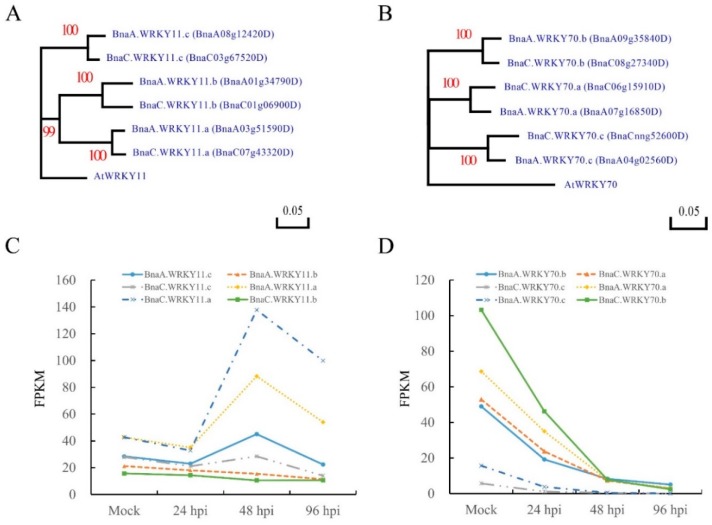
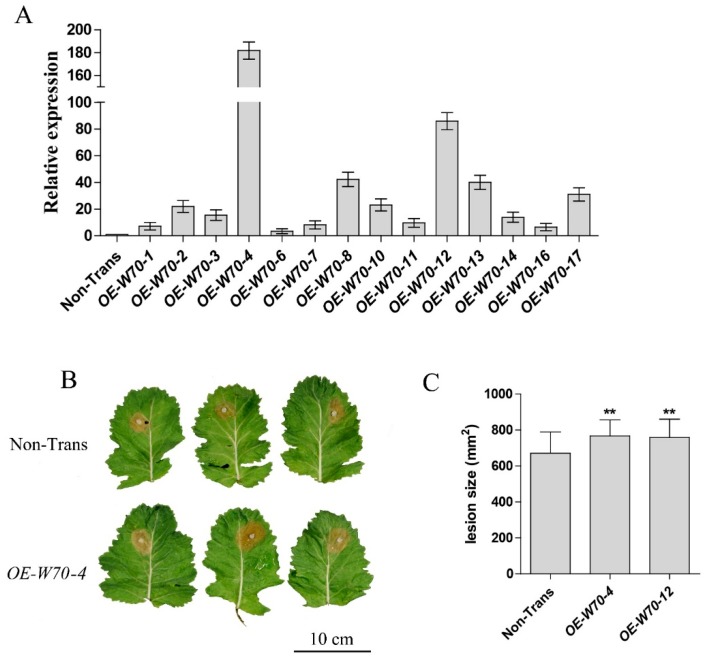
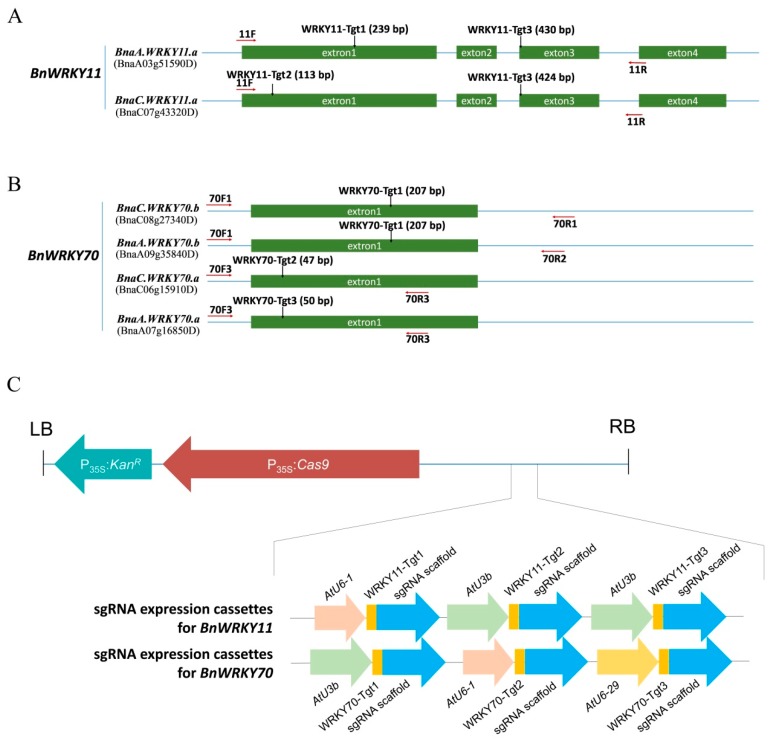
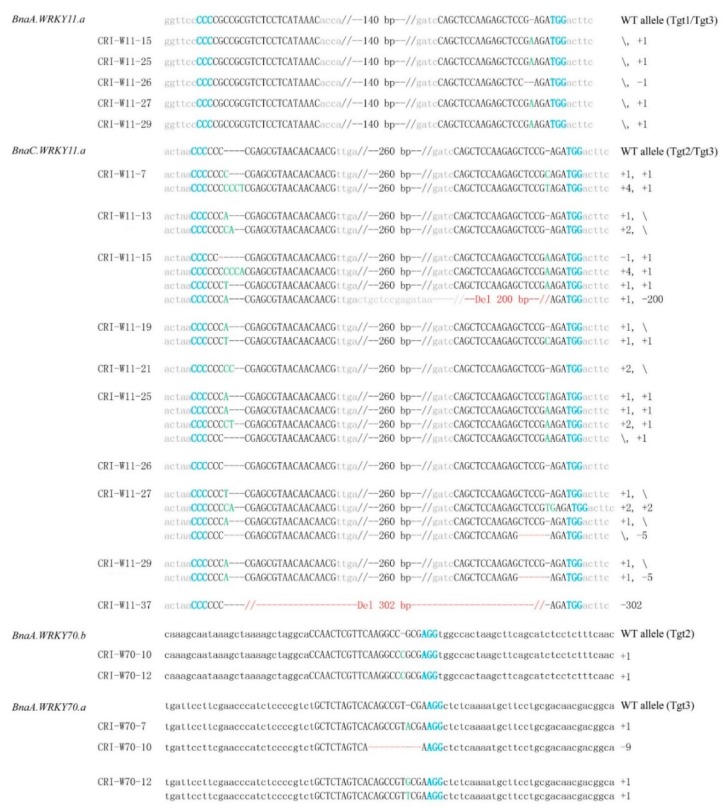
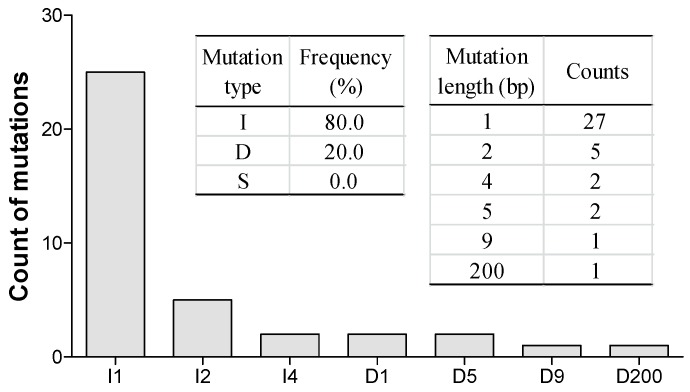
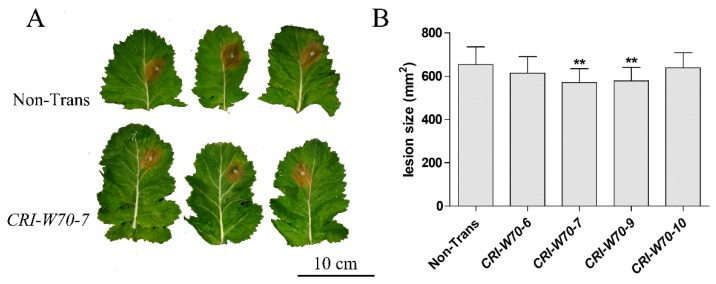
Targeted genome editing is a desirable means of basic science and crop improvement. The clustered, regularly interspaced, palindromic repeat (CRISPR)/Cas9 (CRISPR-associated 9) system is currently the simplest and most commonly used system in targeted genomic editing in plants. Single and multiplex genome editing in plants can be achieved under this system. In , and genes were involved in JA- and SA-induced resistance to pathogens, in rapeseed ( L.), and genes were found to be differently expressed after inoculated with the pathogenic fungus, (Lib.) de Bary. In this study, two Cas9/sgRNA constructs targeting two copies of and four copies of were designed to generate and mutants respectively. As a result, twenty-two and eight independent transformants (T₀) were obtained, with the mutation ratios of 54.5% (12/22) and 50% (4/8) in and transformants respectively. Eight and two plants with two copies of mutated and were obtained respectively. In T₁ generation of each plant examined, new mutations on target genes were detected with high efficiency. The vast majority of mutants showed editing in three copies of in examined T₁ plants. mutants exhibited enhanced resistance to , while mutants showed no significant difference in resistance when compared to non-transgenic plants. In addition, plants that overexpressed showed increased sensitivity when compared to non-transgenic plants. Altogether, our results demonstrated that may function as a regulating factor to negatively control the resistance and CRISPR/Cas9 system could be used to generate germplasm in with high resistance against .
靶向基因组编辑是基础科学和作物改良的理想手段。成簇规律间隔短回文重复序列(CRISPR)/Cas9(CRISPR 相关 9)系统是目前植物靶向基因组编辑中最简单和最常用的系统。在该系统下可以实现植物的单靶和多靶基因组编辑。在甘蓝型油菜( L.)中, 和 基因参与了茉莉酸(JA)和水杨酸(SA)诱导的对病原体的抗性,在接种病原菌 (Lib.)de Bary 后,发现 和 基因的表达水平存在差异。本研究设计了针对 和 两个拷贝的两个 Cas9/sgRNA 构建体,分别用于产生 和 突变体。结果,获得了 22 个 和 8 个 独立转化体(T₀),其中 和 转化体的突变率分别为 54.5%(12/22)和 50%(4/8)。获得了 8 株和 2 株含有两个拷贝突变 和 的植株。在每个被检测的植物的 T₁ 代中,都能高效地检测到靶基因的新突变。大多数 突变体在被检测的 T₁ 植物中表现出 3 个拷贝的编辑。 突变体对 的抗性增强,而 突变体对 的抗性与非转基因植物相比没有显著差异。此外,过表达 的植株与非转基因植株相比表现出更高的敏感性。总的来说,我们的研究结果表明, 可能作为一个负调控因子来控制 抗性,CRISPR/Cas9 系统可以用来产生对 具有高抗性的油菜遗传资源。