Life Sciences Institute, Zhejiang University, Hangzhou, 310058, Zhejiang, China.
Innovation Center for Cell Signaling Network, Zhejiang University, Hangzhou, 310058, Zhejiang, China.
Cell Res. 2018 Oct;28(10):1013-1025. doi: 10.1038/s41422-018-0084-9. Epub 2018 Sep 12.
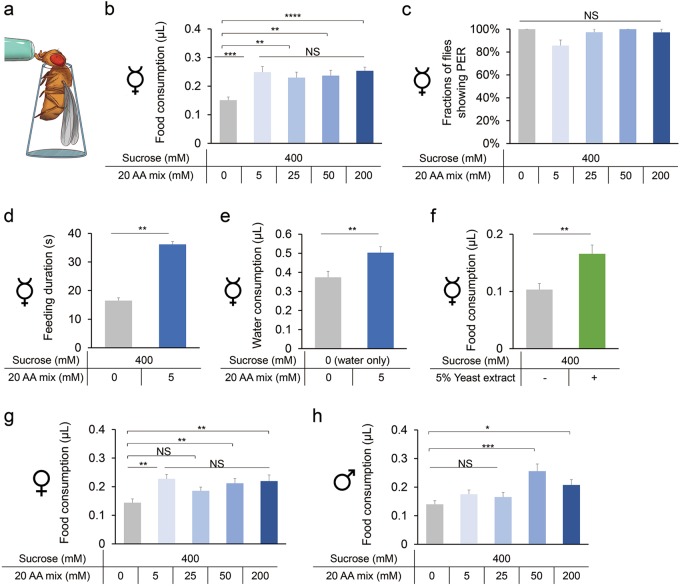
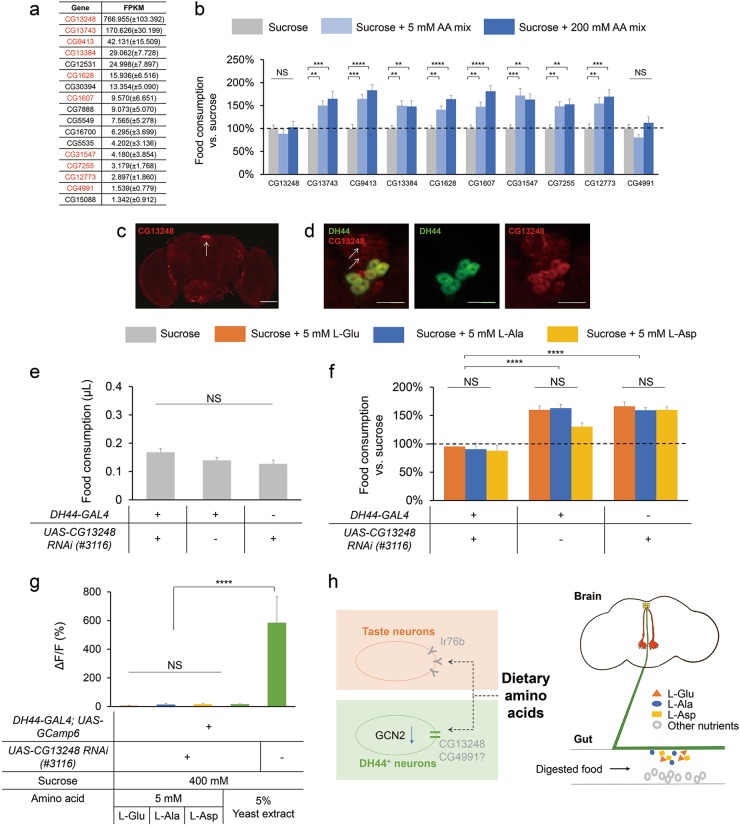
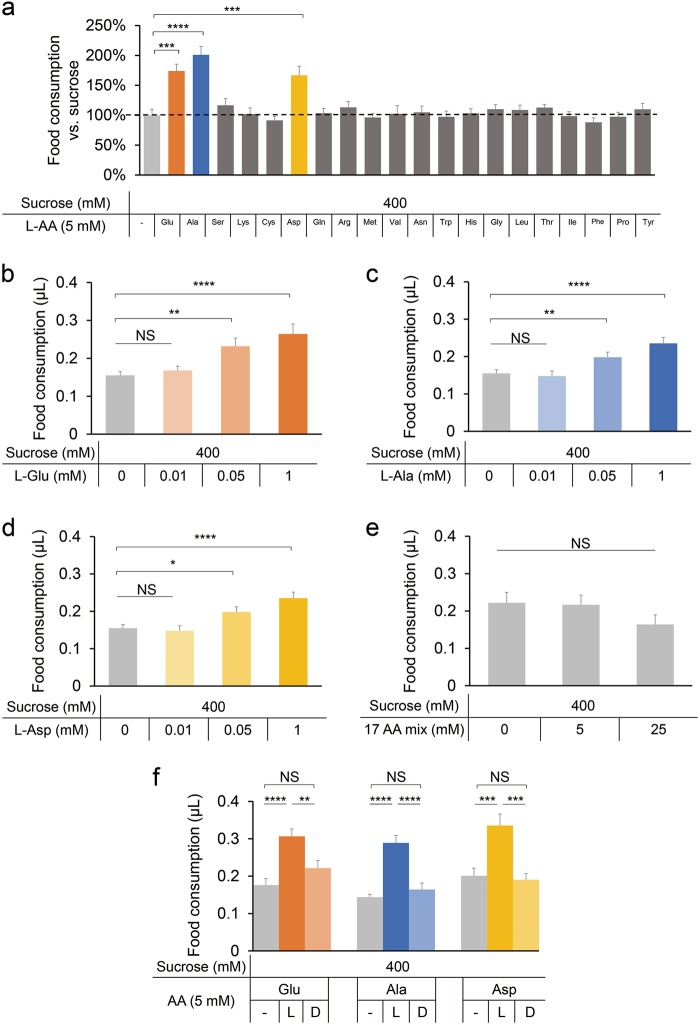
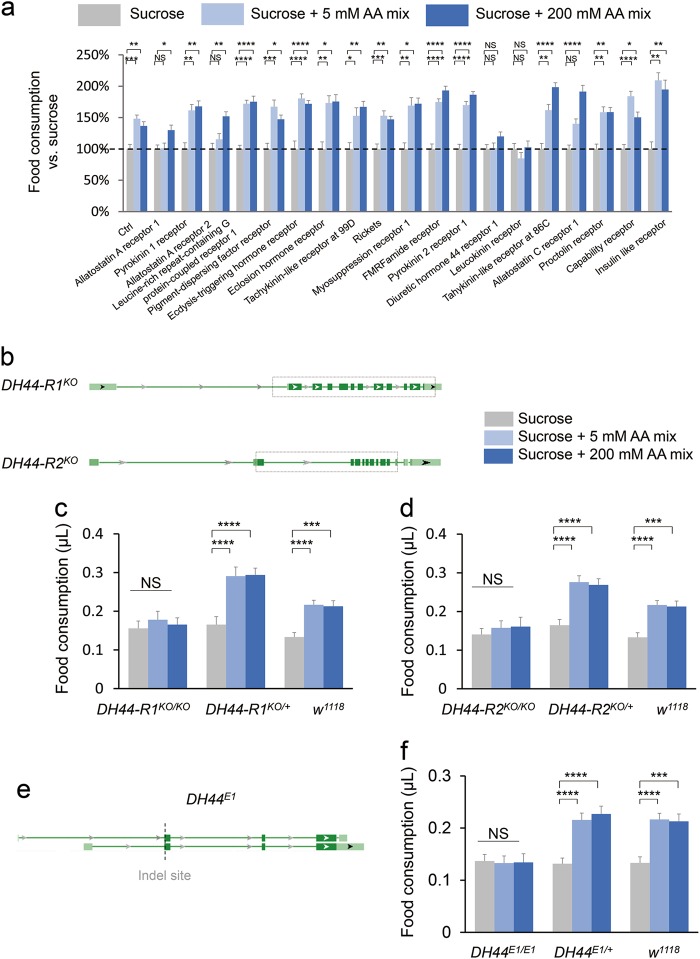
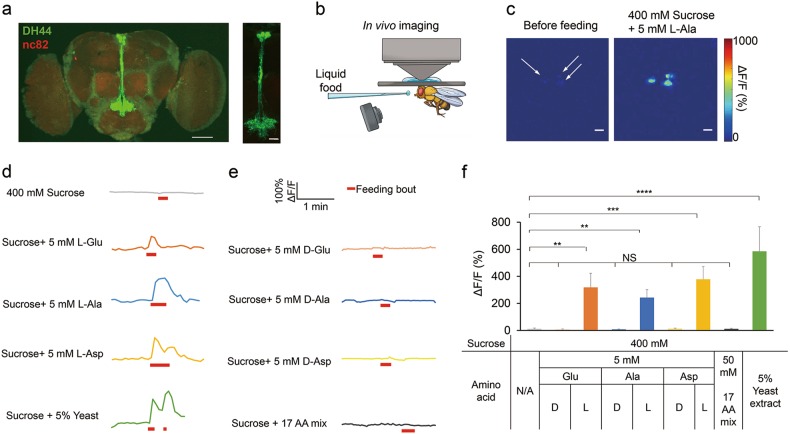
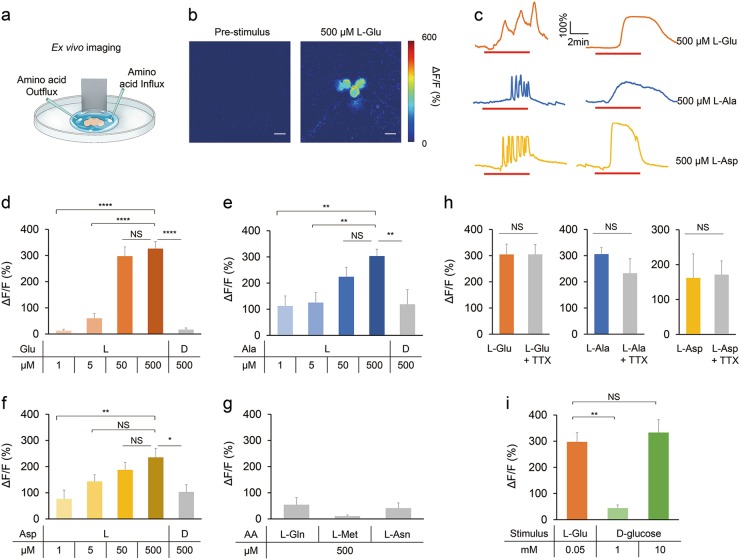
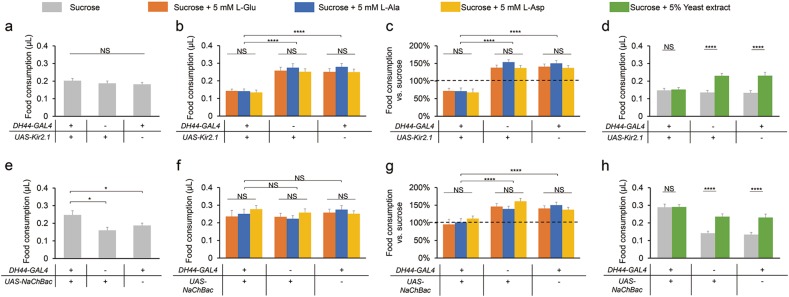
Adequate protein intake is crucial for the survival and well-being of animals. How animals assess prospective protein sources and ensure dietary amino acid intake plays a critical role in protein homeostasis. By using a quantitative feeding assay, we show that three amino acids, L-glutamate (L-Glu), L-alanine (L-Ala) and L-aspartate (L-Asp), but not their D-enantiomers or the other 17 natural L-amino acids combined, rapidly promote food consumption in the fruit fly Drosophila melanogaster. This feeding-promoting effect of dietary amino acids is independent of mating experience and internal nutritional status. In vivo and ex vivo calcium imagings show that six brain neurons expressing diuretic hormone 44 (DH44) can be rapidly and directly activated by these amino acids, suggesting that these neurons are an amino acid sensor. Genetic inactivation of DH44 neurons abolishes the increase in food consumption induced by dietary amino acids, whereas genetic activation of these neurons is sufficient to promote feeding, suggesting that DH44 neurons mediate the effect of dietary amino acids to promote food consumption. Single-cell transcriptome analysis and immunostaining reveal that a putative amino acid transporter, CG13248, is enriched in DH44 neurons. Knocking down CG13248 expression in DH44 neurons blocks the increase in food consumption and eliminates calcium responses induced by dietary amino acids. Therefore, these data identify DH44 neuron as a key sensor to detect amino acids and to enhance food intake via a putative transporter CG13248. These results shed critical light on the regulation of protein homeostasis at organismal levels by the nervous system.
足够的蛋白质摄入对于动物的生存和健康至关重要。动物如何评估潜在的蛋白质来源并确保饮食中氨基酸的摄入,在蛋白质平衡中起着关键作用。通过使用定量喂养实验,我们表明三种氨基酸,L-谷氨酸(L-Glu)、L-丙氨酸(L-Ala)和 L-天冬氨酸(L-Asp),但不是它们的 D-对映体或其他 17 种天然 L-氨基酸的组合,能迅速促进果蝇的食物摄取。这种饮食氨基酸的促食作用与交配经验和内部营养状况无关。体内和体外钙成像显示,表达利尿激素 44(DH44)的六个脑神经元可以被这些氨基酸迅速而直接地激活,这表明这些神经元是一种氨基酸感受器。DH44 神经元的遗传失活消除了饮食氨基酸引起的食物摄入量增加,而这些神经元的遗传激活足以促进进食,这表明 DH44 神经元介导了饮食氨基酸促进食物摄取的作用。单细胞转录组分析和免疫染色显示,一种假定的氨基酸转运蛋白 CG13248,在 DH44 神经元中富集。在 DH44 神经元中敲低 CG13248 的表达,会阻止食物摄入量的增加,并消除饮食氨基酸引起的钙反应。因此,这些数据表明 DH44 神经元作为一种关键的传感器,可以通过一种假定的转运蛋白 CG13248 来检测氨基酸并增强食物摄取。这些结果揭示了神经系统在机体水平上对蛋白质平衡的调控作用。