Feng Xin, Li Ming-Hui, Xia Jing, Deng Ba Da J, Ruan Ling-Yu, Xing Yue-Xiao, Chen Cheng, Wang Jun-Song, Zhong Ge-Jia
Institute for Tibetan Medicine, China Tibetology Research Center, Beijing, China.
Center for Molecular Metabolism, Nanjing University of Science and Technology, Nanjing, China.
Front Pharmacol. 2018 Aug 29;9:965. doi: 10.3389/fphar.2018.00965. eCollection 2018.
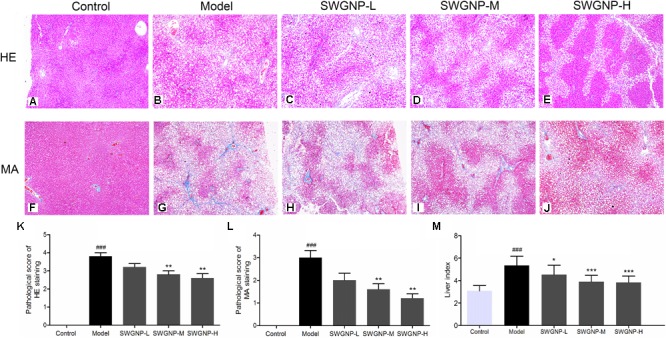
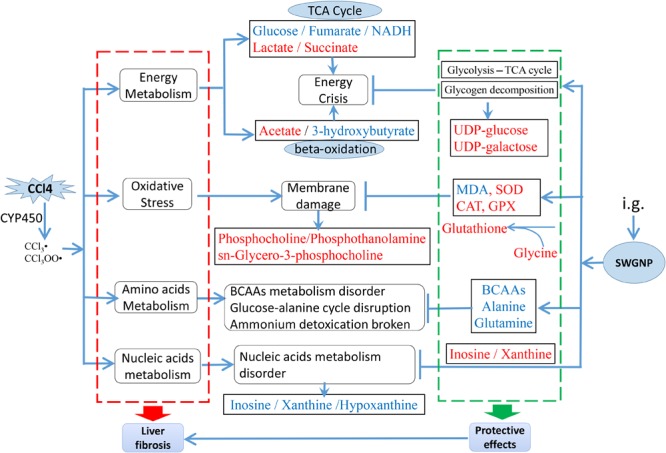
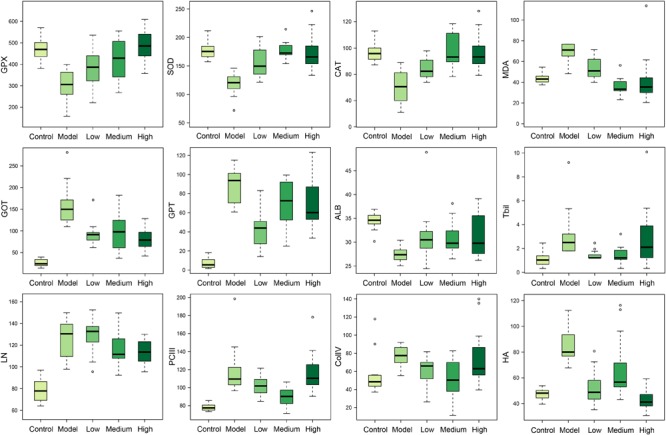
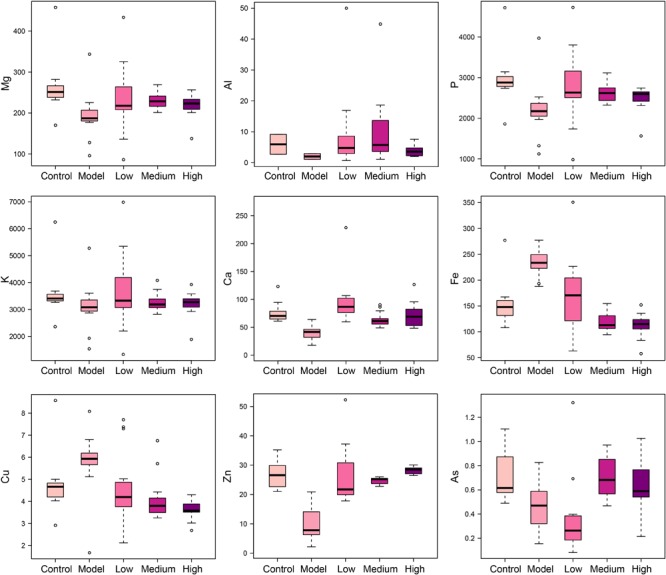
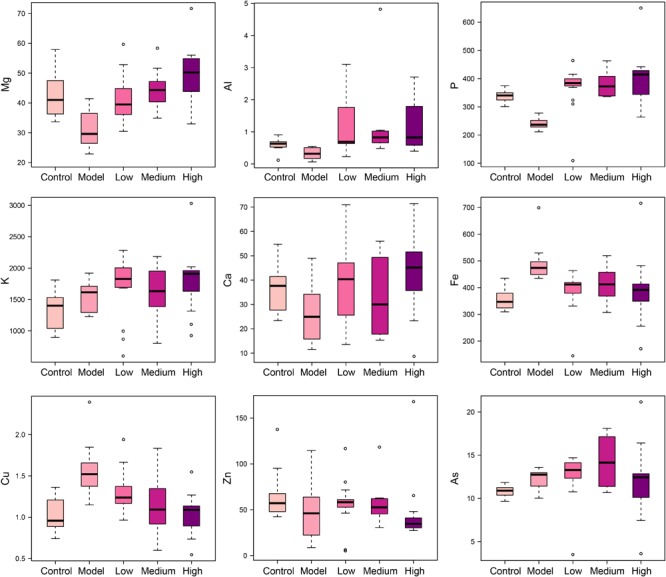
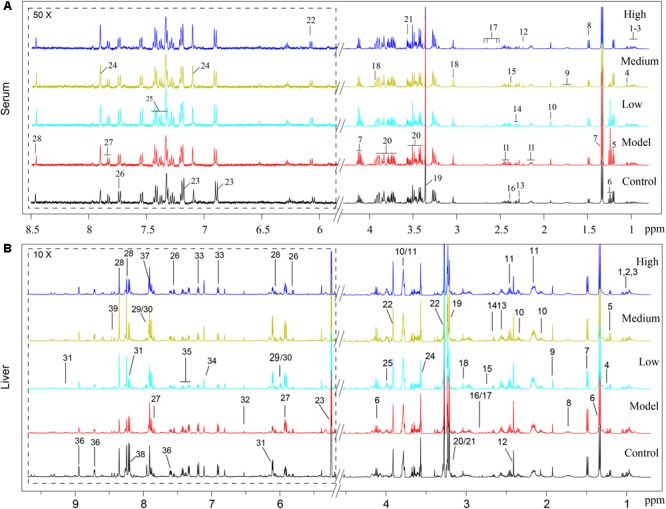
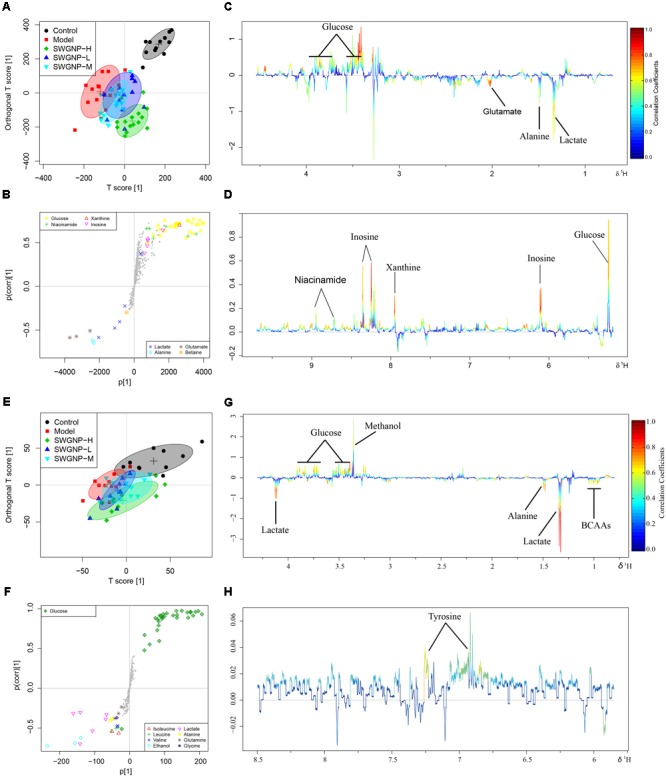
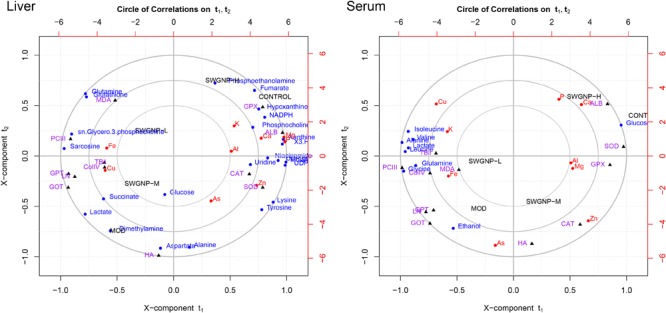
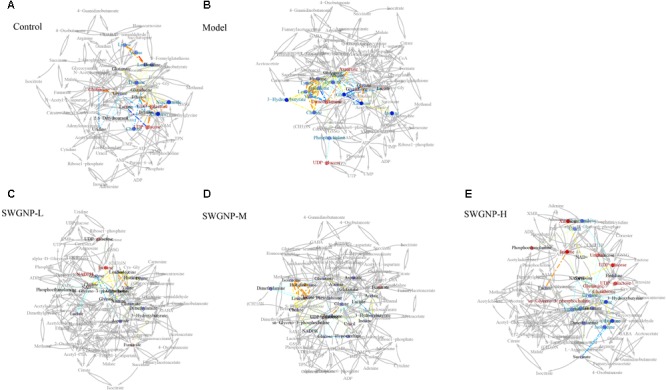
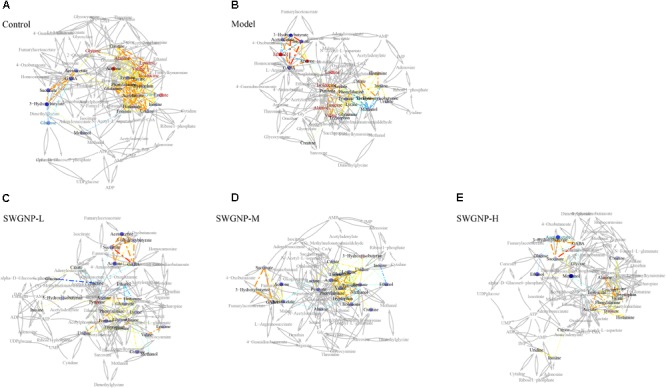
Liver fibrosis is a severe health problem, threatening the life quality and causing death, raising great concerns worldwide. Shi-Wei-Gan-Ning-Pill (SWGNP) is a traditional Tibetan recipe used to treat hepatic injuries; however, its hepatoprotective mechanism has not yet fully clarified. In this study, histological staining, biochemical assays, and elements determination were applied to evaluate the anti-fibrotic efficacy of SWGNP on a carbon tetrachloride (CCl) induced hepato-fibrosis rat model. NMR-based metabolomics combined with orthogonal partial least squares-discriminant analysis (OPLS-DA), canonical regression analysis, and correlation networks analysis was used to characterize the potential biomarkers as well as metabolic pathways associated with the hepatoprotective activity of SWGNP. The results showed that SWGNP could significantly attenuate the pathological changes and decrease the levels of fibrosis markers (ColIV, HA, LN, and PCIII), and regulate the disordered elements distribution. Multivariate analysis and correlation network analysis revealed that SWGNP could protect rats against CCl-induced liver fibrosis through anti-oxidation, repairing the impaired energy metabolisms and reversing the disturbed amino acids and nucleic acids metabolisms. In conclusion, this integrated metabolomics approach provided new insights into the mechanism of the hepatoprotective effect of SWGNP in liver fibrosis disease.
肝纤维化是一个严重的健康问题,威胁着生活质量并可导致死亡,引起了全球的广泛关注。十味肝宁丸(SWGNP)是一种用于治疗肝损伤的传统藏药配方;然而,其保肝机制尚未完全阐明。在本研究中,应用组织学染色、生化分析和元素测定来评估SWGNP对四氯化碳(CCl)诱导的肝纤维化大鼠模型的抗纤维化疗效。基于核磁共振的代谢组学结合正交偏最小二乘法判别分析(OPLS-DA)、典型回归分析和相关网络分析,用于表征与SWGNP保肝活性相关的潜在生物标志物以及代谢途径。结果表明,SWGNP可显著减轻病理变化,降低纤维化标志物(ColIV、HA、LN和PCIII)水平,并调节紊乱的元素分布。多变量分析和相关网络分析表明,SWGNP可通过抗氧化、修复受损的能量代谢以及逆转紊乱的氨基酸和核酸代谢来保护大鼠免受CCl诱导的肝纤维化。总之,这种综合代谢组学方法为SWGNP在肝纤维化疾病中的保肝作用机制提供了新的见解。