Costa Marco, Frumento Sergio, Nese Mattia, Predieri Iacopo
Department of Psychology, University of Bologna, Bologna, Italy.
Department of Surgery, Medical, Molecular, and Critical Area Pathology, University of Pisa, Pisa, Italy.
Front Psychol. 2018 Aug 28;9:1580. doi: 10.3389/fpsyg.2018.01580. eCollection 2018.
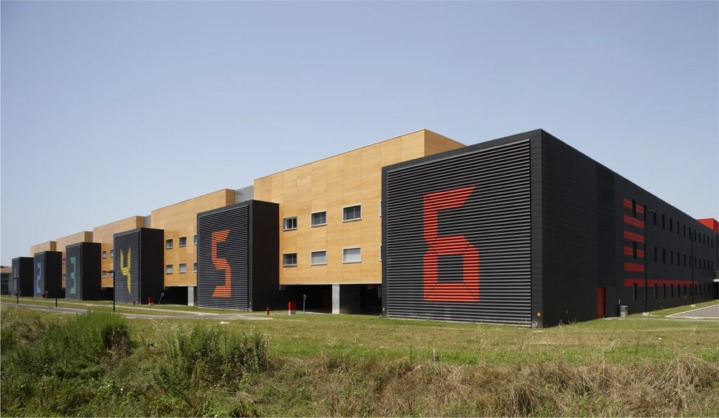
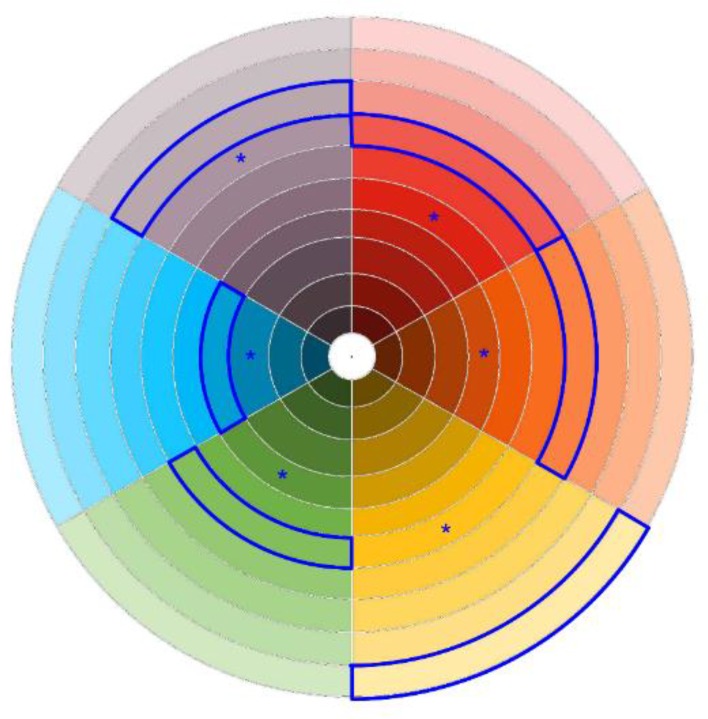
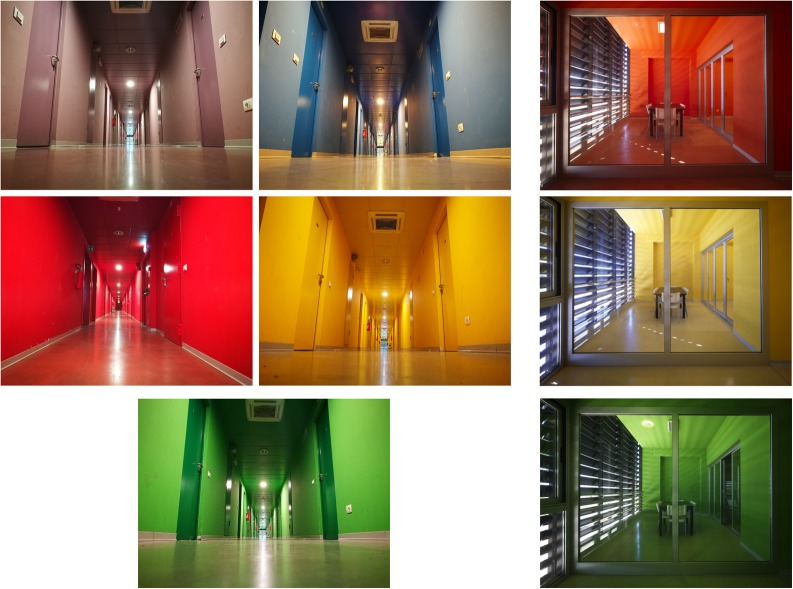
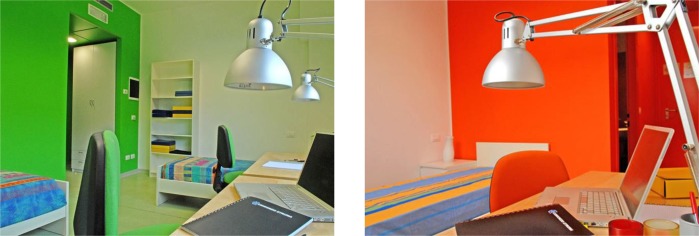
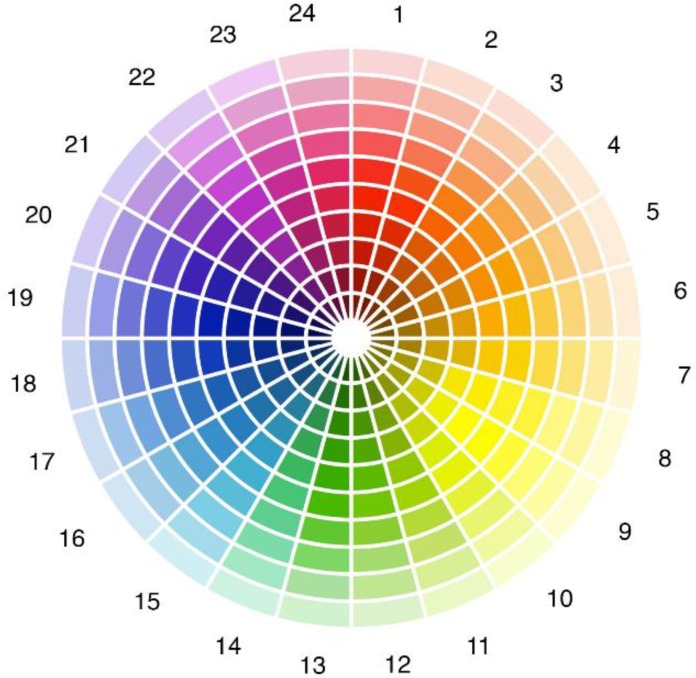
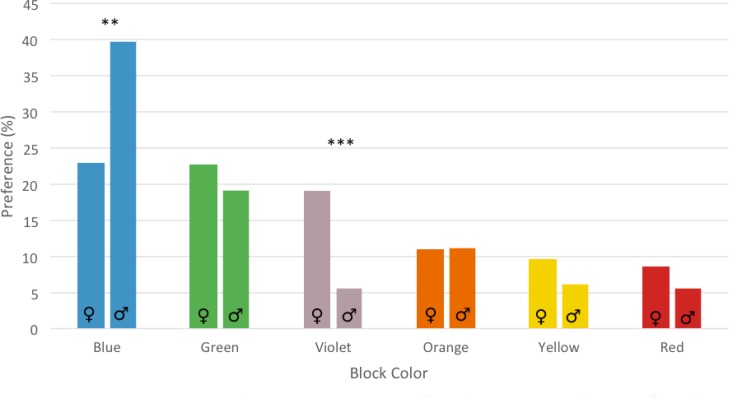
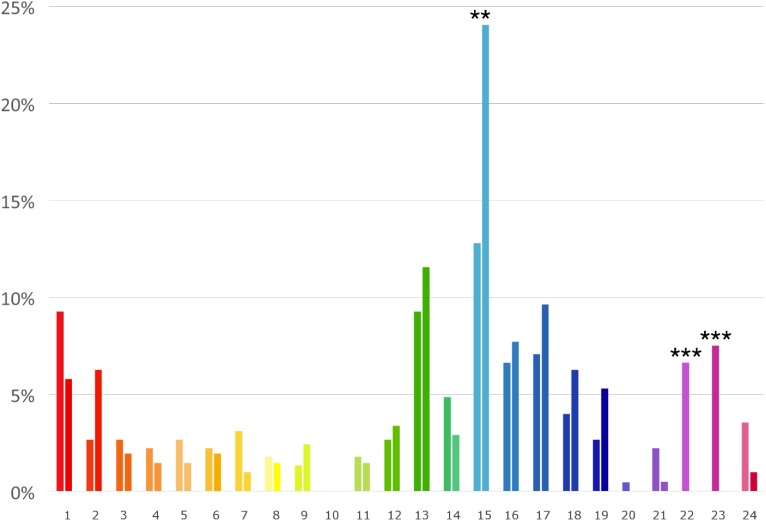
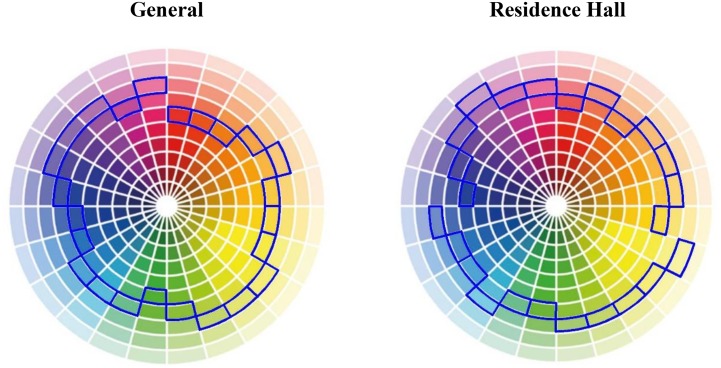
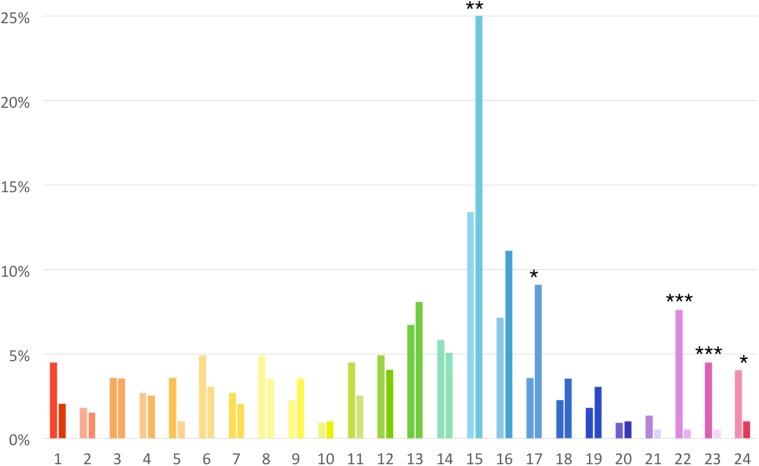
The research exploited a unique architectural setting of a university residence hall composed by six separate buildings that matched for every architectural detail and differed only for the interior color (violet, blue, green, yellow, orange, and red). Four hundred and forty-three students living in the six buildings for an average of 13.33 months participated in a study that assessed color preference (hue and lightness), lightness preference, and the effects of color on studying and mood. The results showed a preference for blue interiors, followed by green, violet, orange, yellow, and red. A preference bias was found for the specific color in which the student lived. Gender differences emerged for the preference of blue and violet. Room-lightness was significantly affected by the interior color. Room ceiling was preferred white. Blue as interior color was considered to facilitate studying activity. The use of differentiated colors in the six buildings was evaluated to significantly facilitate orienting and wayfinding. A significant relation was found between a calm mood and preference for blue.
该研究利用了大学宿舍独特的建筑环境,该宿舍由六座独立的建筑组成,每座建筑在建筑细节上都相互匹配,仅内部颜色不同(紫色、蓝色、绿色、黄色、橙色和红色)。居住在这六座建筑中的443名学生平均居住了13.33个月,他们参与了一项研究,该研究评估了颜色偏好(色调和明度)、明度偏好以及颜色对学习和情绪的影响。结果显示,学生们更喜欢蓝色内饰,其次是绿色、紫色、橙色、黄色和红色。发现学生对自己居住的特定颜色存在偏好偏差。在蓝色和紫色的偏好上出现了性别差异。房间的明度受内部颜色的显著影响。房间天花板更喜欢白色。蓝色作为内部颜色被认为有助于学习活动。评估发现,在六座建筑中使用不同颜色显著便于定位和导航。还发现平静的情绪与对蓝色的偏好之间存在显著关系。