Monell Chemical Senses Center, Philadelphia, Pennsylvania, United States of America.
PLoS One. 2018 Sep 13;13(9):e0202754. doi: 10.1371/journal.pone.0202754. eCollection 2018.
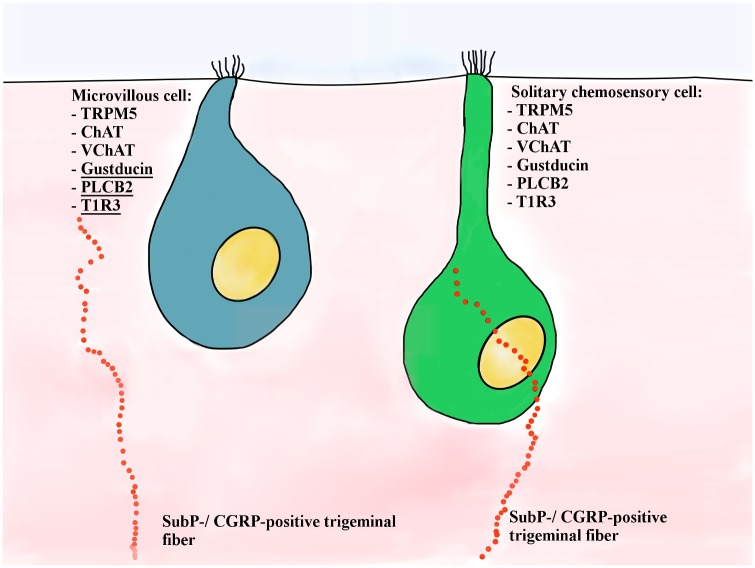
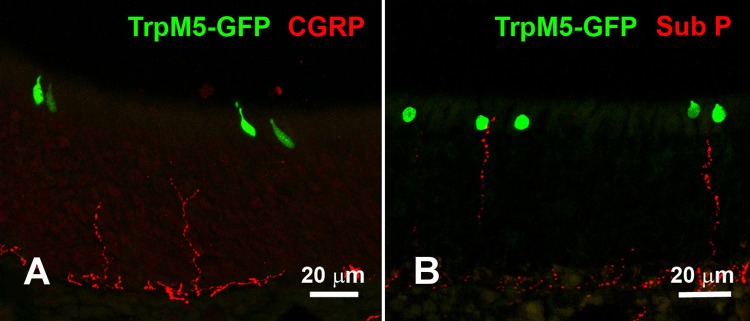
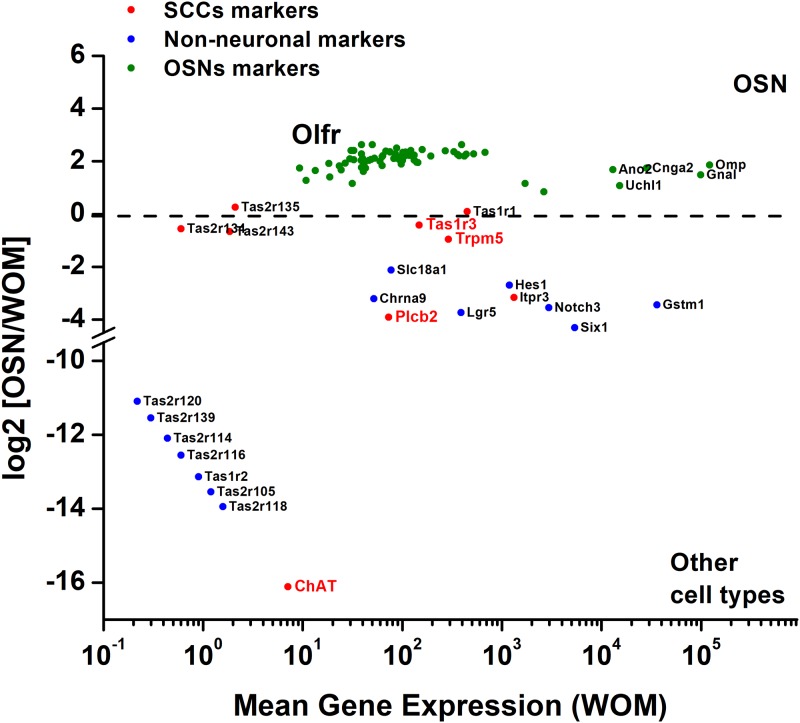
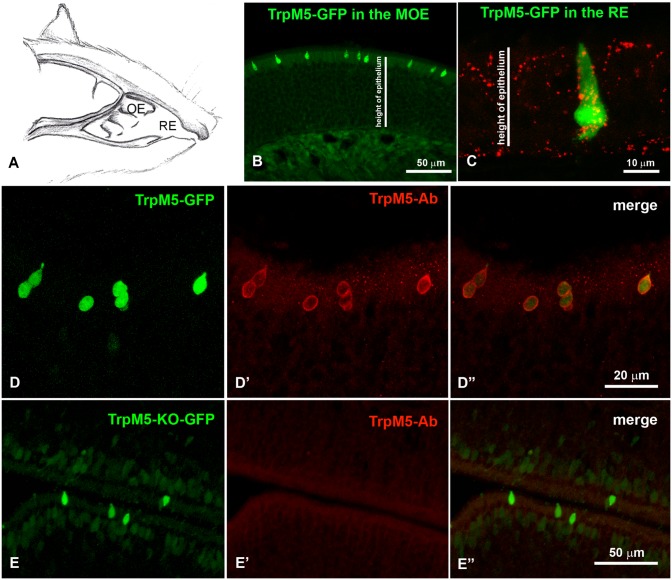
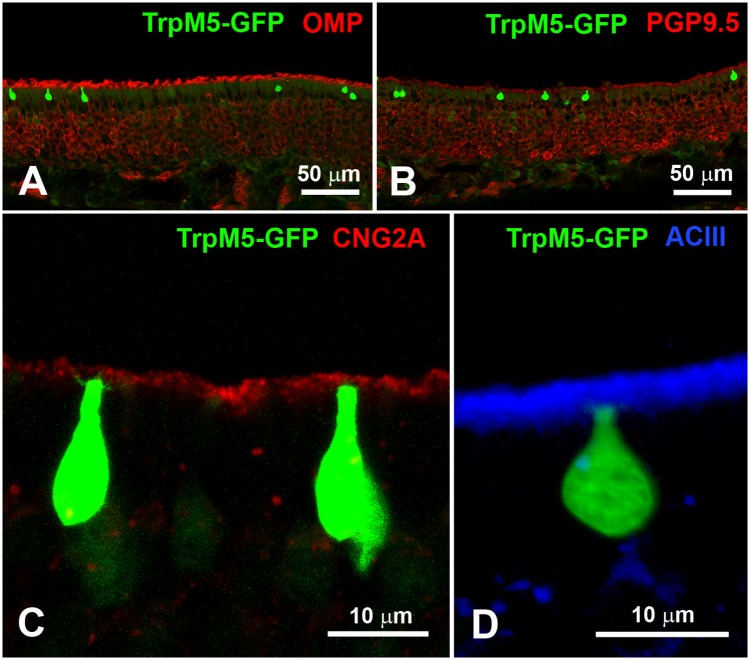
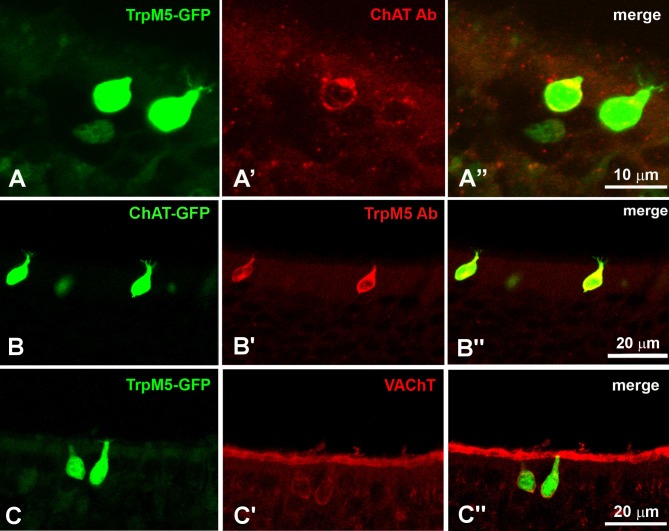
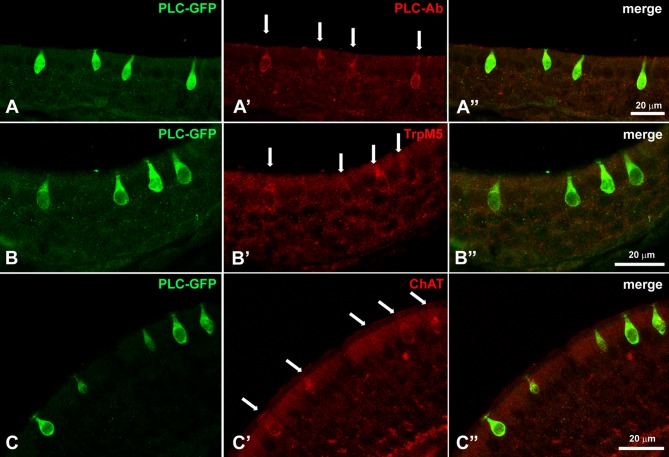
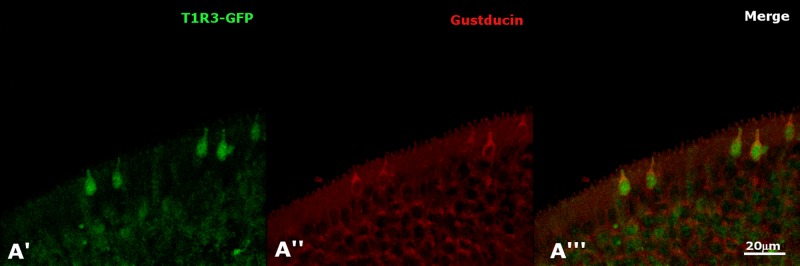
The nasal cavity hosts an array of chemoresponsive cells, including the extended olfactory system and several other cells involved in detection of and responses to irritants. Solitary chemosensory cells (SCCs), which respond to irritants and bacteria, express the transient receptor potential channel TRPM5 an essential element of the taste transduction-signaling cascade. Microvillous cells (MVCs), non-neuronal cells situated in the apical layer of the main olfactory epithelium, also express TRPM5, but their function has not yet been clarified. TRPM5-positive MVCs, like SCCs, show a cholinergic phenotype expressing choline acetyl transferase (ChAT), but none of the other elements of the bitter taste transduction cascade could be detected. We reexamined TRPM5-positive MVCs with more sensitive gene expression and staining techniques to clarify whether they rely only on TRPM5 and ChAT or express other elements of the taste/SCC transduction cascade. Analyzing existing RNA sequencing data from whole olfactory mucosa and isolated olfactory sensory neurons, we determined that several elements of the taste/SCC transduction cascade, including taste receptors, are expressed in the olfactory mucosa in cells other than olfactory sensory neurons. Immunostaining confirmed the presence TRPM5 and ChAT in a subset of cells of the olfactory mucosa, which also showed the expression of PLCB2, gustducin, and T1R3. Specifically, these cells were identified as TRPM5-positive MVCs. Furthermore, we examined whether MVCs are innervated by trigeminal fibers, similarly to SCCs. Using antibodies against trigeminal nerve markers calcitonin gene-related peptide and substance P, we determined that, despite the cholinergic phenotype, most MVCs in the olfactory mucosa lacked consistent trigeminal innervation. Our findings indicate that MVCs, like SCCs, express all the elements of the bitter taste transduction cascade but that, unlike SCCs, they possess only sparse trigeminal innervation. The cholinergic phenotype of MVCs suggests a modulatory function of the surrounding olfactory epithelium, through the release of acetylcholine.
鼻腔内存在着一系列化学感受细胞,包括扩展的嗅觉系统和其他几种参与检测和响应刺激物的细胞。对刺激物和细菌有反应的孤立化学感觉细胞(SCCs)表达瞬时受体电位通道 TRPM5,这是味觉转导信号级联的一个基本元素。位于主嗅觉上皮层顶膜的微绒毛细胞(MVCs)也表达 TRPM5,但它们的功能尚未阐明。TRPM5 阳性的 MVCs 与 SCCs 一样,表现出胆碱能表型,表达胆碱乙酰转移酶(ChAT),但无法检测到苦味转导级联的其他成分。我们使用更敏感的基因表达和染色技术重新检查了 TRPM5 阳性的 MVCs,以阐明它们是否仅依赖于 TRPM5 和 ChAT,还是表达味觉/SCC 转导级联的其他成分。分析来自整个嗅黏膜和分离的嗅觉感觉神经元的现有 RNA 测序数据,我们确定味觉/SCC 转导级联的几个成分,包括味觉受体,在嗅黏膜中的非嗅觉感觉神经元细胞中表达。免疫染色证实了 TRPM5 和 ChAT 在嗅黏膜的一部分细胞中存在,这些细胞还表达了 PLCB2、gustducin 和 T1R3。具体而言,这些细胞被鉴定为 TRPM5 阳性的 MVCs。此外,我们还研究了 MVCs 是否像 SCCs 一样被三叉神经纤维支配。使用针对三叉神经标记物降钙素基因相关肽和 P 物质的抗体,我们确定尽管具有胆碱能表型,但嗅黏膜中的大多数 MVCs 缺乏一致的三叉神经支配。我们的研究结果表明,MVCs 与 SCCs 一样,表达苦味转导级联的所有成分,但与 SCCs 不同,它们只具有稀疏的三叉神经支配。MVCs 的胆碱能表型表明,通过释放乙酰胆碱,周围的嗅上皮具有调节功能。