Park Sohyun, Kim Tae-Sung, Kang Se Hun, Kim Hyun Beom, Park Joong-Won, Kim Seok-Ki
Department of Nuclear Medicine Molecular Imaging Branch Center for Liver Cancer, Research Institute and Hospital, National Cancer Center, Goyang, South Korea.
Medicine (Baltimore). 2018 Sep;97(37):e12311. doi: 10.1097/MD.0000000000012311.
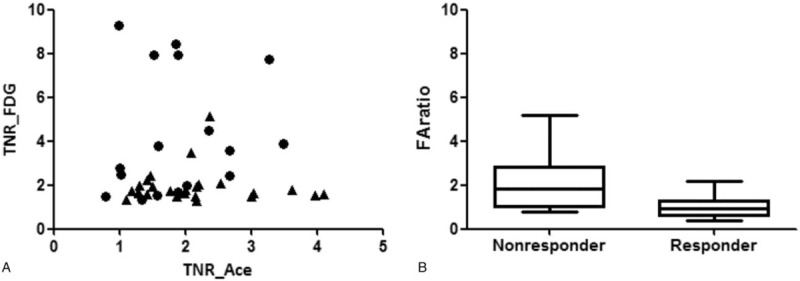
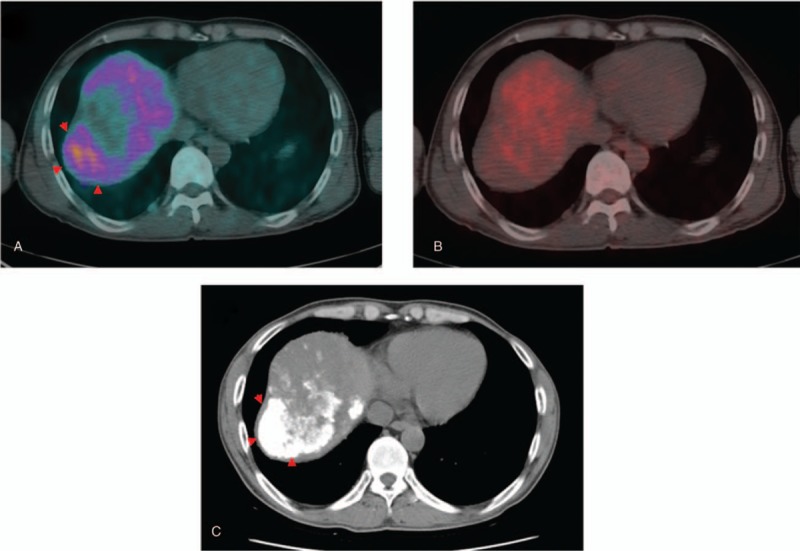
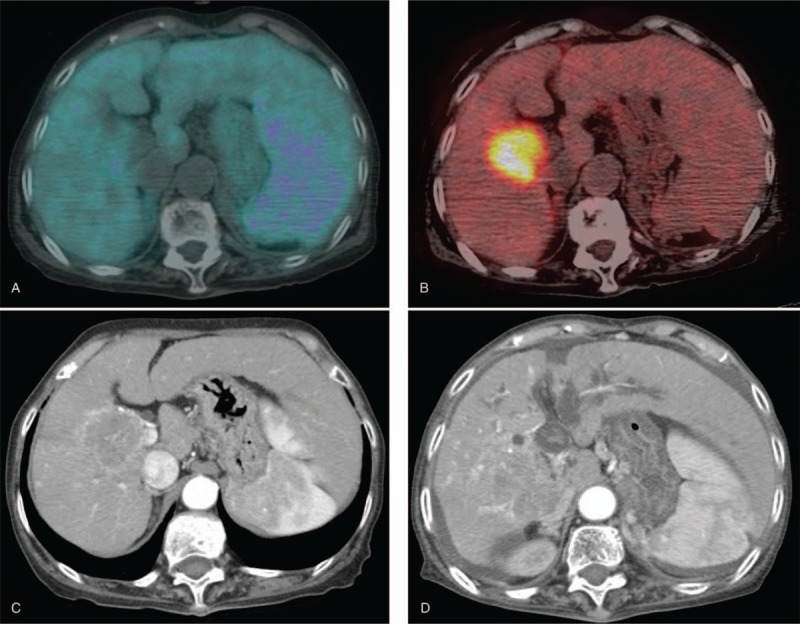
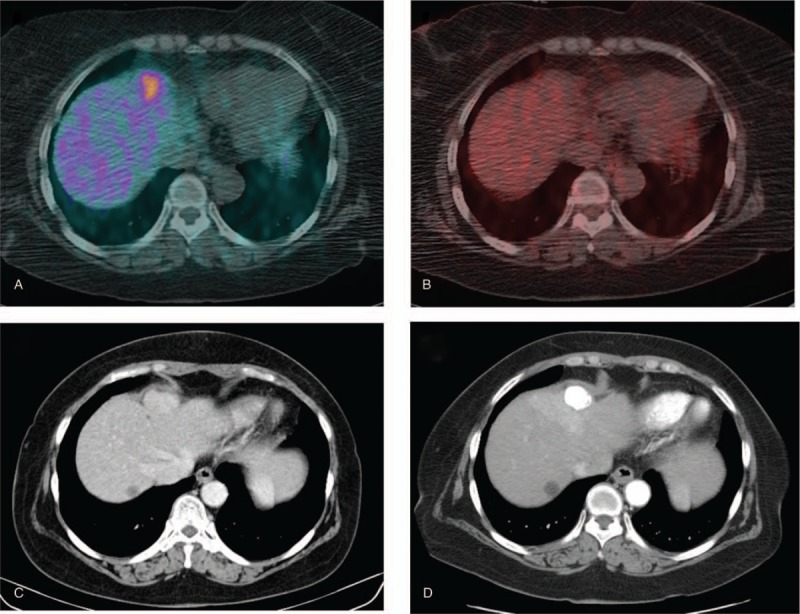
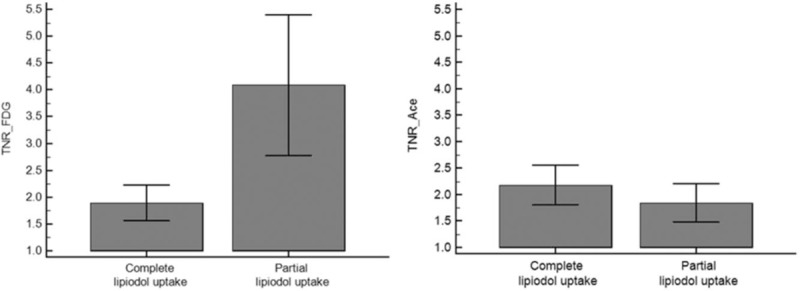
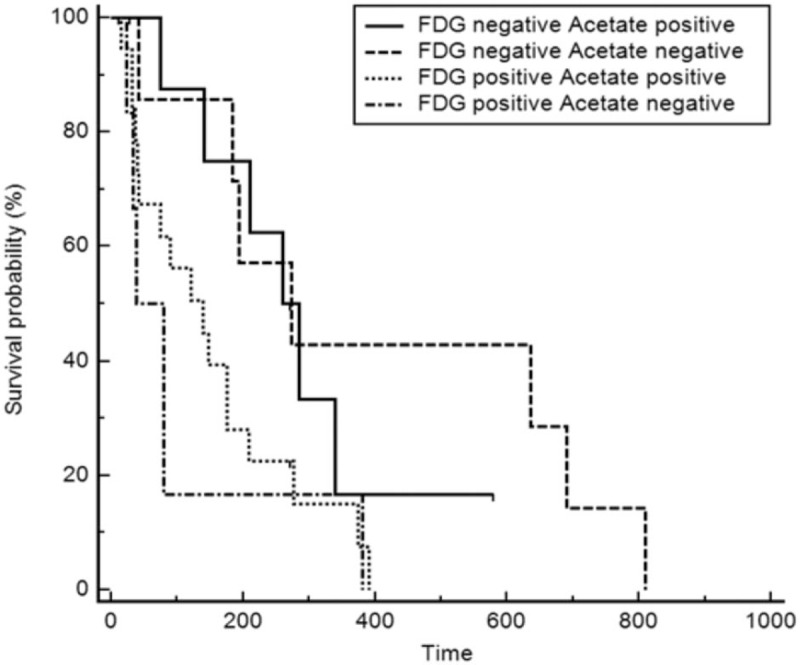
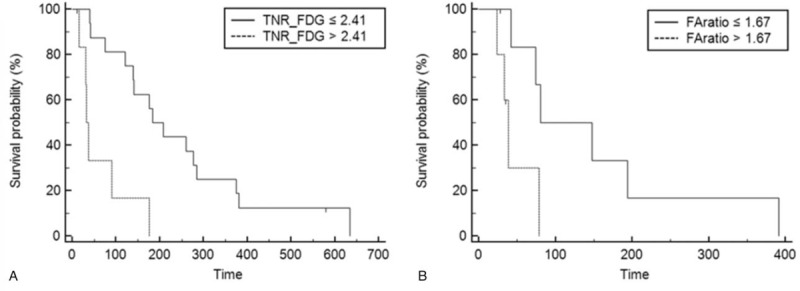
The aim of the present study was to evaluate the clinical significance of dual radiotracer studies, C-acetate and F-fluoro-D-glucose positron emission tomography/computed tomography (F-FDG PET/CT), for the prediction of response and recurrence after transarterial chemoembolization (TACE).This study retrospectively included a total 42 hepatoceullar carcinoma (HCC) patients (median age, 59; range, 34-85 years old) who underwent C-acetate and F-FDG PET/CT concurrently. Tumor uptake normalized by liver uptake (TNR; maximum tumor SUV to mean normal liver SUV ratio) was obtained first. Then, FAratio, which is the ratio of F-FDG TNR (TNR_FDG) to C-acetate TNR, was obtained and correlated with response after TACE and recurrence-free survival (RFS), using a Cox multivariate proportional-hazard model.Among clinical factors, including the Hepatoma Arterial Embolization Prognostic score and positron emission tomography (PET) parameters, multiple regression analysis revealed FAratio and tumor size to be the only significant factors. As a PET parameter, FAratio exhibited the largest area under the curve in the prediction of response after TACE. In the Cox multivariate proportional-hazard model, TNR_FDG was the only significant predictive factor for RFS. In subgroup analysis, TNR_FDG was the only significant predictive factor for recurrence in intermediate stage patients. However, FAratio was the only significant predictive factor for recurrence in advanced stage patients.Dual radiotracer use of C-acetate and F-FDG PET/CT contributed to the prediction of response and recurrence after TACE. Used in addition to F-FDG, C-acetate PET/CT could give additional information in advanced stage patients. Based on the characteristics of tumor metabolism assessed by dual radiotracer PET/CT, treatment plans could be more personalized and optimized.
本研究的目的是评估双示踪剂研究,即碳-醋酸盐和氟-氟代脱氧葡萄糖正电子发射断层扫描/计算机断层扫描(F-FDG PET/CT),对于经动脉化疗栓塞术(TACE)后反应及复发预测的临床意义。本研究回顾性纳入了总共42例肝细胞癌(HCC)患者(中位年龄59岁;范围34 - 85岁),这些患者同时接受了碳-醋酸盐和F-FDG PET/CT检查。首先获得经肝脏摄取标准化的肿瘤摄取量(TNR;最大肿瘤SUV与正常肝脏平均SUV的比值)。然后,计算FAratio,即F-FDG TNR(TNR_FDG)与碳-醋酸盐TNR的比值,并使用Cox多变量比例风险模型将其与TACE后的反应及无复发生存期(RFS)进行关联分析。在包括肝癌动脉栓塞预后评分和正电子发射断层扫描(PET)参数在内的临床因素中,多元回归分析显示FAratio和肿瘤大小是仅有的显著因素。作为PET参数,FAratio在预测TACE后反应方面的曲线下面积最大。在Cox多变量比例风险模型中,TNR_FDG是RFS的唯一显著预测因素。在亚组分析中,TNR_FDG是中期患者复发的唯一显著预测因素。然而,FAratio是晚期患者复发的唯一显著预测因素。碳-醋酸盐和F-FDG PET/CT的双示踪剂应用有助于预测TACE后的反应及复发。除F-FDG外,碳-醋酸盐PET/CT在晚期患者中可提供额外信息。基于双示踪剂PET/CT评估的肿瘤代谢特征,治疗方案可更加个性化和优化。