Khan Muhammad, Lin Jie, Liao Guixiang, Tian Yunhong, Liang Yingying, Li Rong, Liu Mengzhong, Yuan Yawei
1 Department of Radiation Oncology, Affiliated Cancer Hospital & Institute of Guangzhou Medical University, Guangzhou, Guangdong Province, People's Republic of China.
2 Department of Radiation Oncology, Sun Yat-sen University Cancer Center, Sun Yat-sen Medical University, Guangzhou, Guangdong Province, People's Republic of China.
Technol Cancer Res Treat. 2018 Jan 1;17:1533033818798792. doi: 10.1177/1533033818798792.
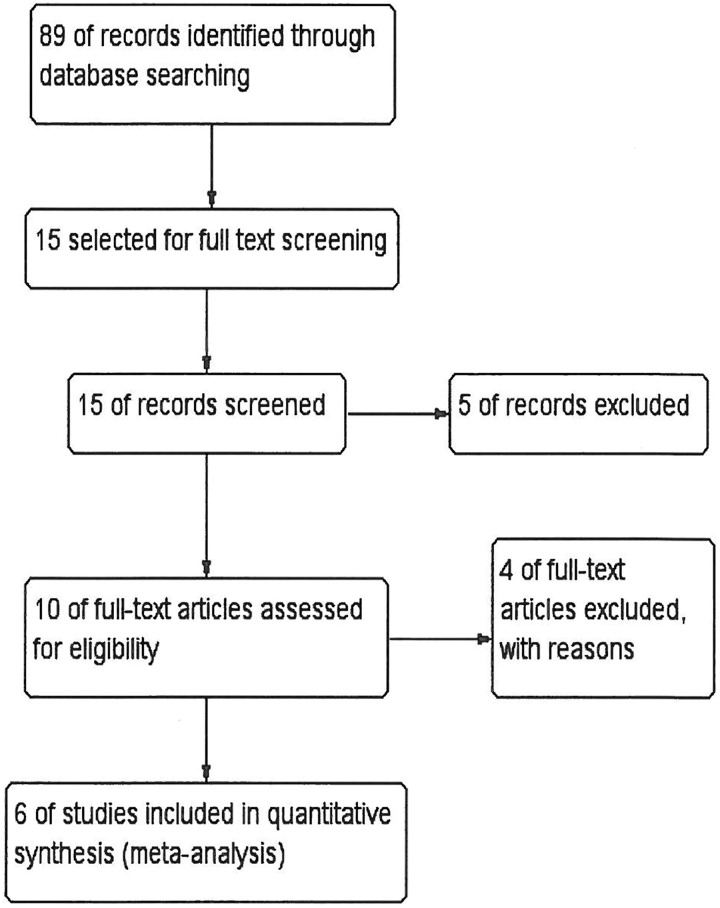
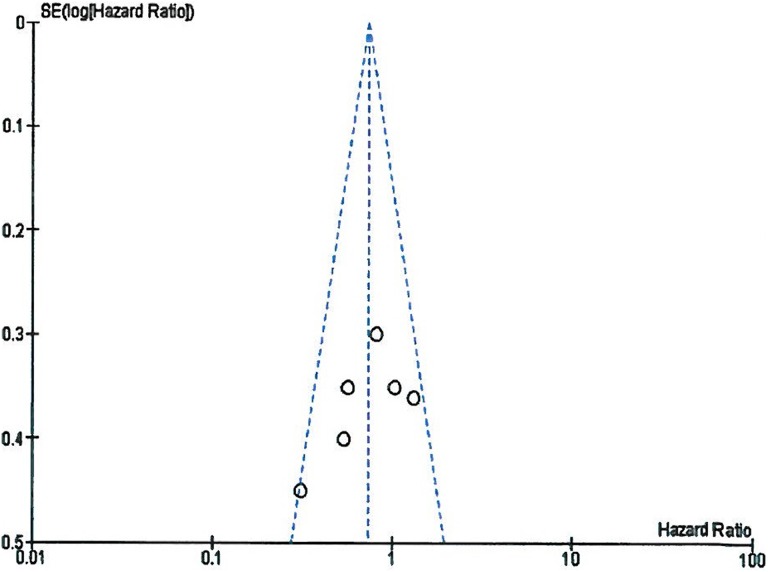
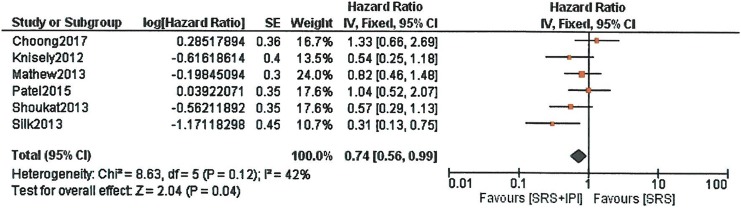
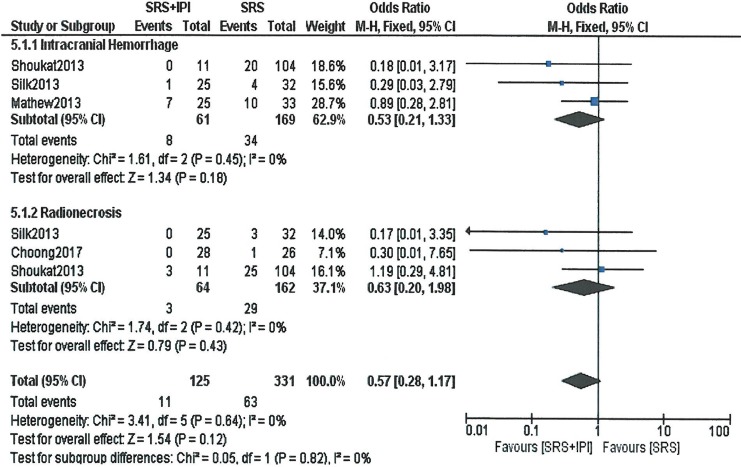
Stereotactic radiosurgery provides effective local control, but high recurrence rate are observed while ipilimumab have shown promising improvements in survival in the treatment of melanoma brain metastases. This meta-analysis was done to review the clinical evidence regarding the combination of stereotactic radiosurgery and ipilimumab in the treatment of brain metastases from melanoma. Comprehensive research of the electronic databases (PubMed and Cochrane Library) was carried out in April 2017. Different combination of MESH headings and words were used. Review Manager was used to analyze the outcome data of interest. According to heterogeneity, fixed effects model or random effects model was adapted. Six retrospective studies comparing stereotactic radiosurgery plus ipilimumab with stereotactic radiosurgery alone were found. Total of 411 participants were included in this meta-analysis. Of that, 128 patients had received stereotactic radiosurgery + ipilimumab, while 283 patients had received stereotactic radiosurgery only. Stereotactic radiosurgery plus ipilimumab significantly improved survival when compared to stereotactic radiosurgery alone (hazard ratio: 0.74 [95% confidence interval: 0.56-0.99, P = .04]), with no significant increase in the incidence of adverse events (odds ratio 0.57 [95% confidence interval: 0.28-1.17, P = .12]). Stereotactic radiosurgery with ipilimumab is safe and effective treatment option and can be recommended for the treatment of brain metastases in patients with melanoma.
立体定向放射外科手术可实现有效的局部控制,但复发率较高,而伊匹单抗在治疗黑色素瘤脑转移方面已显示出有望改善生存率。本荟萃分析旨在回顾关于立体定向放射外科手术与伊匹单抗联合治疗黑色素瘤脑转移的临床证据。2017年4月对电子数据库(PubMed和Cochrane图书馆)进行了全面检索。使用了不同的医学主题词和关键词组合。使用Review Manager分析感兴趣的结局数据。根据异质性,采用固定效应模型或随机效应模型。发现了六项比较立体定向放射外科手术联合伊匹单抗与单纯立体定向放射外科手术的回顾性研究。本荟萃分析共纳入411名参与者。其中,128例患者接受了立体定向放射外科手术+伊匹单抗,而283例患者仅接受了立体定向放射外科手术。与单纯立体定向放射外科手术相比,立体定向放射外科手术联合伊匹单抗显著提高了生存率(风险比:0.74 [95%置信区间:0.56 - 0.99,P = .04]),不良事件发生率无显著增加(优势比0.57 [95%置信区间:0.28 - 1.17,P = .12])。立体定向放射外科手术联合伊匹单抗是一种安全有效的治疗选择,可推荐用于治疗黑色素瘤患者的脑转移。