Normandie Univ, Unicaen, Biotargen, Caen, 14000 Caen, France.
Vetbiobank, 69280, Marcy l'Etoile, France.
Sci Rep. 2018 Sep 14;8(1):13799. doi: 10.1038/s41598-018-28164-9.
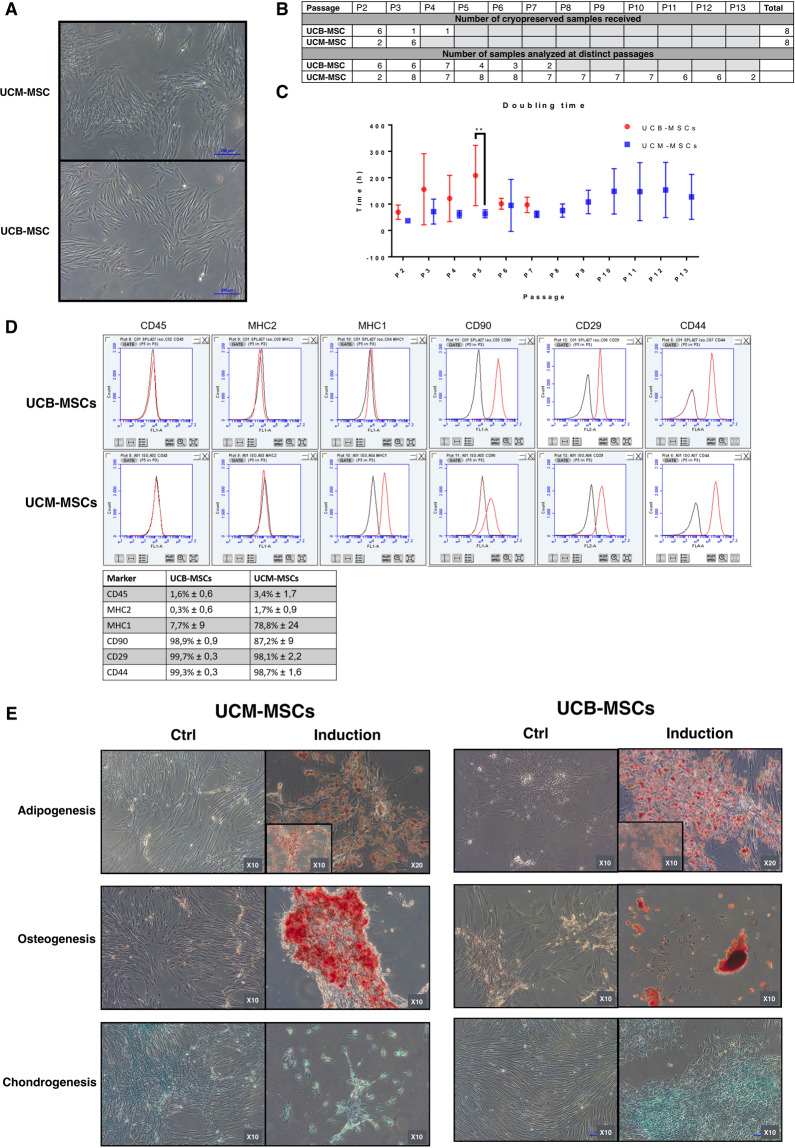
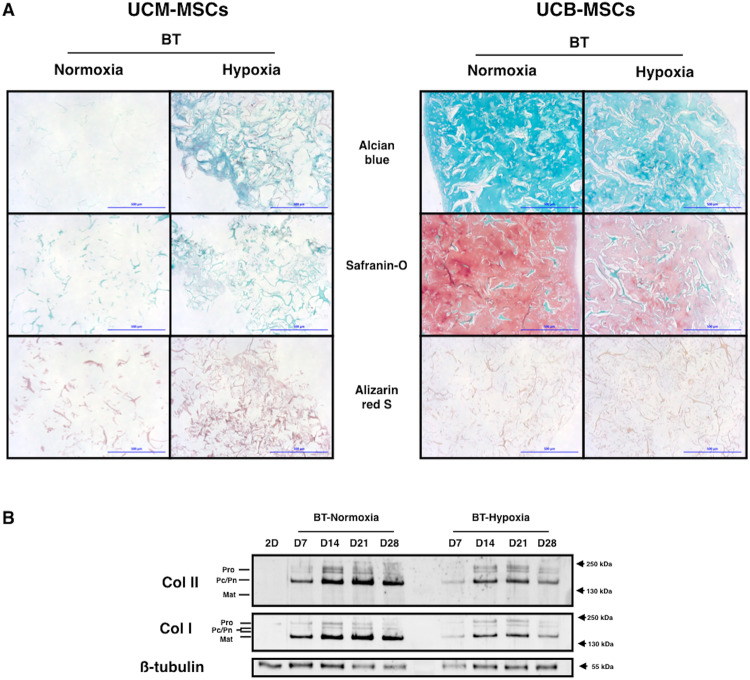
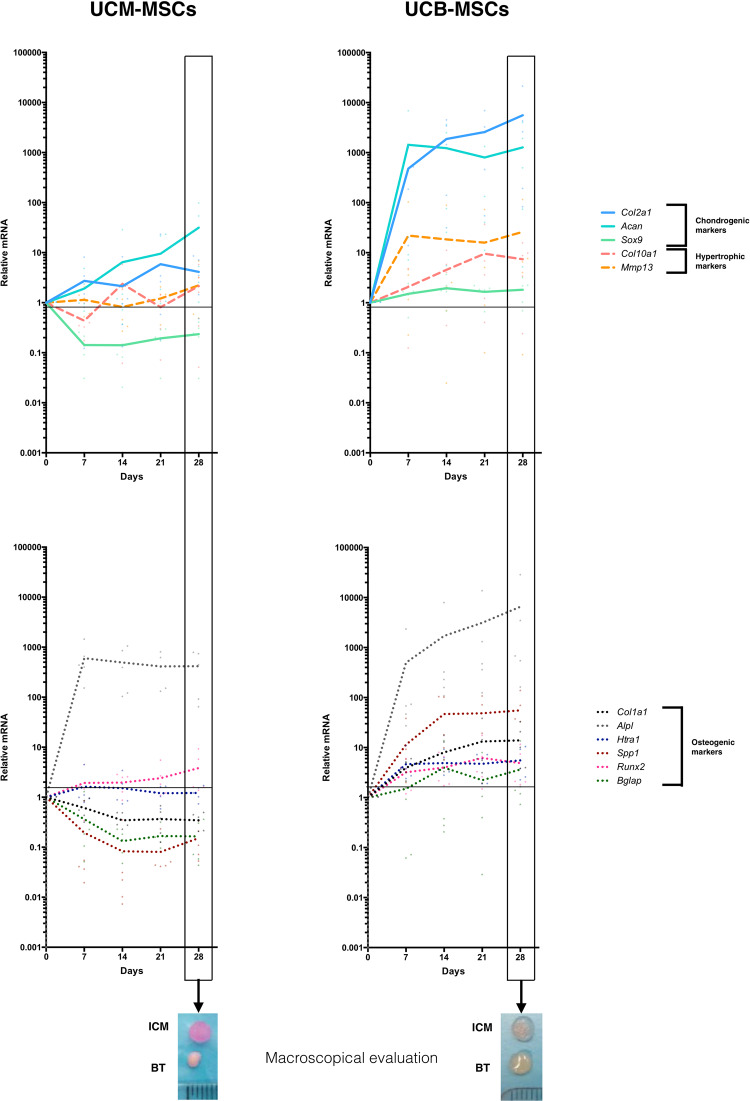
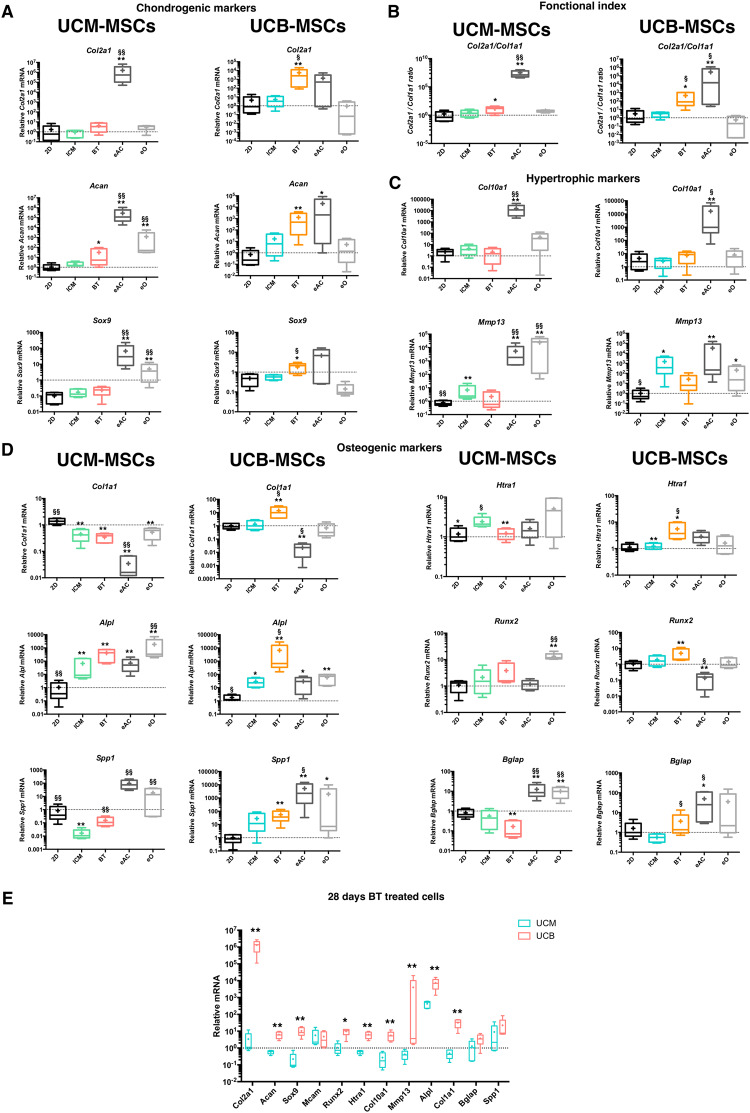
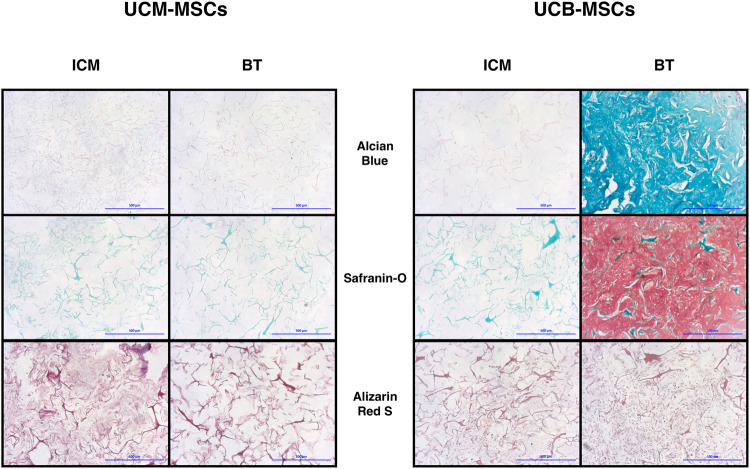
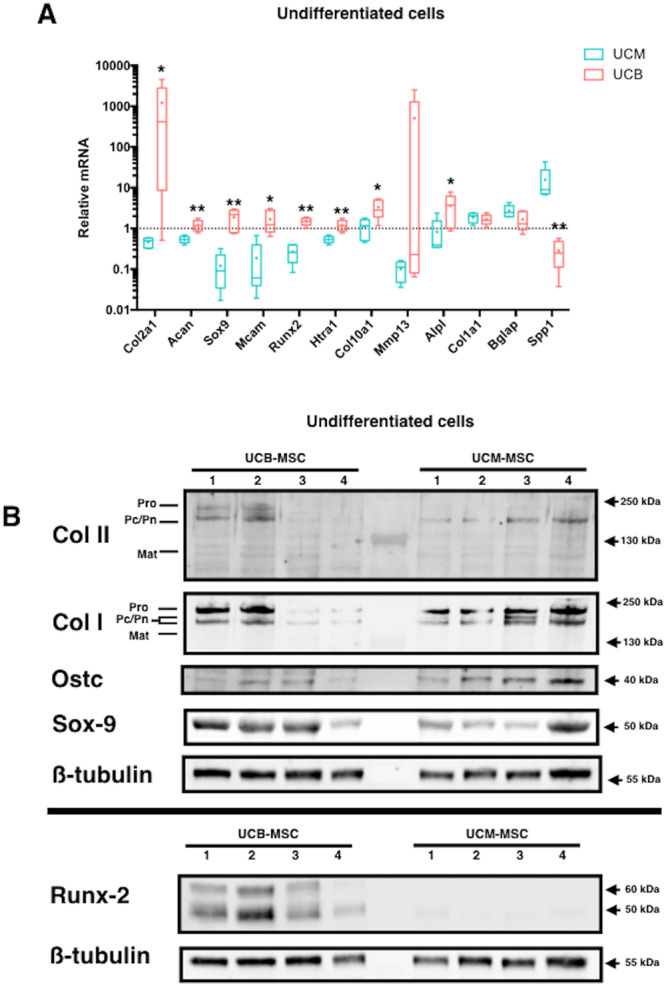
Umbilical cord blood mesenchymal stromal/stem cells (UCB-MSCs) and umbilical cord matrix MSCs (UCM-MSCs) have chondrogenic potential and are alternative sources to standard surgically derived bone marrow or adipose tissue collection for cartilage engineering. However, the majority of comparative studies explore neonatal MSCs potential only on ISCT benchmark assays accounting for some bias in the reproducibility between in vitro and in clinical studies. Therefore, we characterized equine UCB-MSCs and UCM-MSCs and investigated with particular attention their chondrogenesis potential in 3D culture with BMP-2 + TGF-ß1 in normoxia or hypoxia. We carried out an exhaustive characterization of the extracellular matrix generated by both these two types of MSCs after the induction of chondrogenesis through evaluation of hyaline cartilage, hypertrophic and osteogenic markers (mRNA, protein and histology levels). Some differences in hypoxia sensitivity and chondrogenesis were observed. UCB-MSCs differentiated into chondrocytes express an abundant, dense and a hyaline-like cartilage matrix. By contrast, despite their expression of cartilage markers, UCM-MSCs failed to express a relevant cartilage matrix after chondrogenic induction. Both MSCs types also displayed intrinsic differences at their undifferentiated basal status, UCB-MSCs expressing higher levels of chondrogenic markers whereas UCM-MSCs synthesizing higher amounts of osteogenic markers. Our results suggest that UCB-MSCs should be preferred for ex-vivo horse cartilage engineering. How those results should be translated to in vivo direct cartilage regeneration remains to be determined through dedicated study.
脐带血间充质基质/干细胞(UCB-MSCs)和脐带基质 MSC(UCM-MSCs)具有成软骨潜力,是替代标准手术源性骨髓或脂肪组织采集的软骨工程替代来源。然而,大多数比较研究仅探索了新生儿 MSC 在 ISCT 基准测定中的潜力,这导致了体外和临床研究之间的重复性存在一些偏差。因此,我们对马 UCB-MSCs 和 UCM-MSCs 进行了特征描述,并特别关注了它们在常氧或低氧条件下与 BMP-2+TGF-β1 共培养 3D 培养中的成软骨潜力。我们通过评估透明软骨、肥大和成骨标志物(mRNA、蛋白质和组织学水平),对这两种 MSC 诱导成软骨后产生的细胞外基质进行了详尽的特征描述。观察到了在缺氧敏感性和成软骨方面的一些差异。UCB-MSCs 分化为软骨细胞,表达丰富、密集且类似于透明软骨的基质。相比之下,尽管 UCM-MSCs 表达了软骨标志物,但在诱导成软骨后仍未能表达相关的软骨基质。两种 MSC 类型在未分化的基础状态下也表现出内在差异,UCB-MSCs 表达更高水平的软骨生成标志物,而 UCM-MSCs 合成更高水平的成骨标志物。我们的研究结果表明,UCB-MSCs 应优先用于体外马软骨工程。这些结果如何转化为体内直接软骨再生,还需要通过专门的研究来确定。