Center for Gastrointestinal Research, Center for Translational Genomics and Oncology, Baylor Scott & White Research Institute and Charles A Sammons Cancer Center, Baylor University Medical Center, Dallas, Texas, USA.
Baylor Scott & White Research Institute, Baylor University Medical Center, Dallas, Texas, USA.
Sci Rep. 2018 Sep 14;8(1):13869. doi: 10.1038/s41598-018-32267-8.
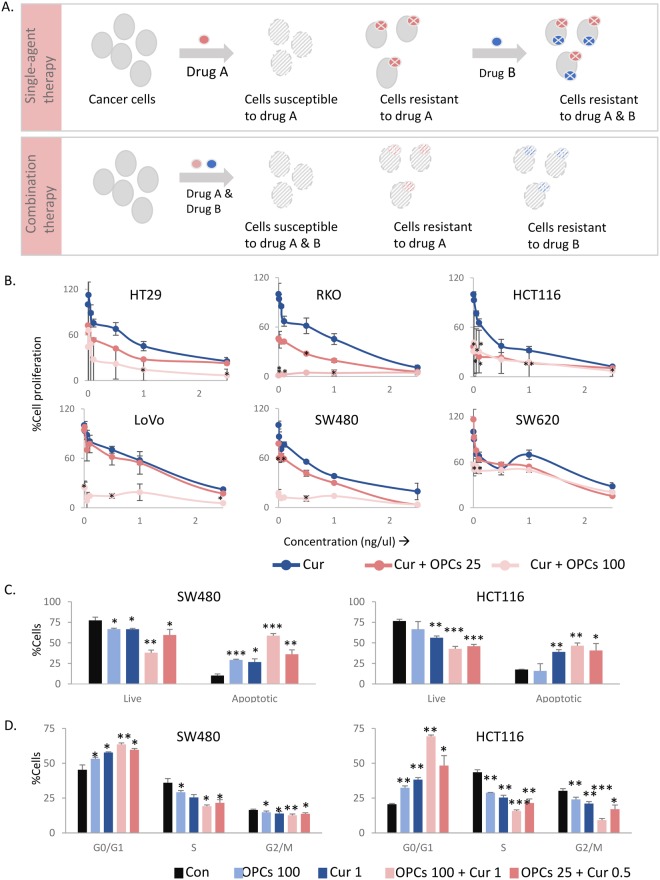
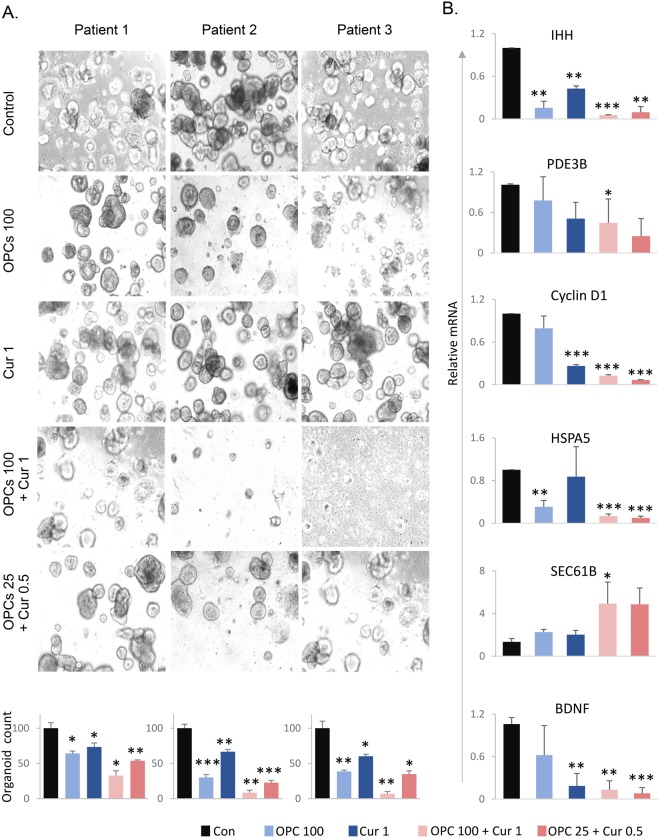
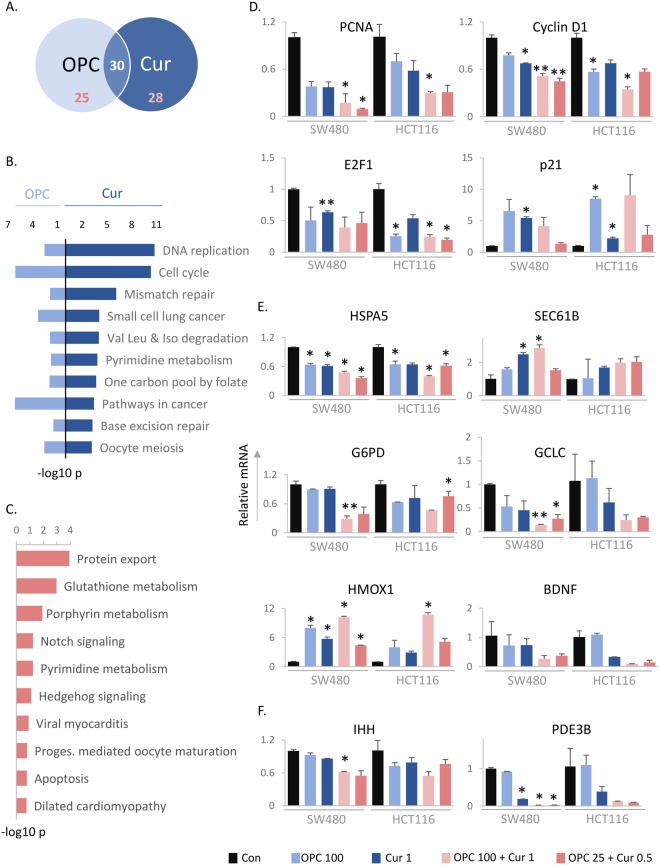
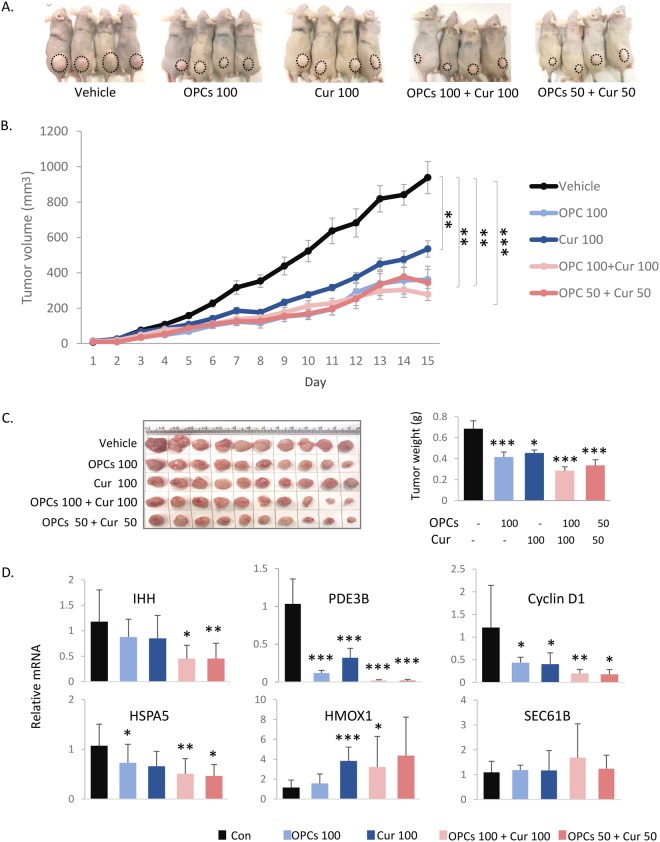
Combining anti-cancer agents in cancer therapies is becoming increasingly popular due to improved efficacy, reduced toxicity and decreased emergence of resistance. Here, we test the hypothesis that dietary agents such as oligomeric proanthocyanidins (OPCs) and curcumin cooperatively modulate cancer-associated cellular mechanisms to inhibit carcinogenesis. By a series of in vitro assays in colorectal cancer cell lines, we showed that the anti-tumorigenic properties of the OPCs-curcumin combination were superior to the effects of individual compounds. By RNA-sequencing based gene-expression profiling in six colorectal cancer cell lines, we identified the cooperative modulation of key cancer-associated pathways such as DNA replication and cell cycle pathways. Moreover, several pathways, including protein export, glutathione metabolism and porphyrin metabolism were more effectively modulated by the combination of OPCs and curcumin. We validated genes belonging to these pathways, such as HSPA5, SEC61B, G6PD, HMOX1 and PDE3B to be cooperatively modulated by the OPCs-curcumin combination. We further confirmed that the OPCs-curcumin combination more potently suppresses colorectal carcinogenesis and modulated expression of genes identified by RNA-sequencing in mice xenografts and in colorectal cancer patient-derived organoids. Overall, by delineating the cooperative mechanisms of action of OPCs and curcumin, we make a case for the clinical co-administration of curcumin and OPCs as a treatment therapy for patients with colorectal cancer.
由于疗效提高、毒性降低和耐药性降低,癌症治疗中联合使用抗癌药物正变得越来越流行。在这里,我们检验了这样一个假设,即膳食因子,如低聚原花青素(OPCs)和姜黄素,可以协同调节与癌症相关的细胞机制,从而抑制癌症的发生。通过一系列在结直肠癌细胞系中的体外检测,我们表明 OPCs-姜黄素联合的抗肿瘤特性优于单一化合物的效果。通过在六种结直肠癌细胞系中基于 RNA 测序的基因表达谱分析,我们确定了关键的癌症相关途径的协同调节,如 DNA 复制和细胞周期途径。此外,包括蛋白质输出、谷胱甘肽代谢和卟啉代谢在内的几种途径,被 OPCs 和姜黄素的组合更有效地调节。我们验证了属于这些途径的基因,如 HSPA5、SEC61B、G6PD、HMOX1 和 PDE3B,它们被 OPCs-姜黄素联合协同调节。我们进一步证实,与单独使用 OPCs 或姜黄素相比,OPCs-姜黄素联合更能有效地抑制结直肠癌的发生,并调节在异种移植小鼠和结直肠癌细胞源性类器官中 RNA 测序鉴定的基因的表达。总的来说,通过描绘 OPCs 和姜黄素的协同作用机制,我们提出了将姜黄素和 OPCs 联合临床给药作为结直肠癌患者治疗的一种治疗方法。