Inflammation, Repair and Development Section, National Heart and Lung Institute, Imperial College London, London, UK.
MRC & Asthma UK Centre in Allergic Mechanisms of Asthma, London, UK.
Allergy. 2019 Apr;74(4):650-662. doi: 10.1111/all.13602. Epub 2018 Nov 12.
Allergic asthma is characterized by chronic inflammation and remodelling of the airways, associated with dysregulated type 2 immune responses and allergen-specific IgE. T follicular helper cells (T ) are crucial in T-dependent B-cell responses and have been implicated in allergic airway disease (AAD). T , unlike other CD4 T cells, are uniquely reliant on continuous ICOS signalling to maintain their phenotype after T-cell priming; therefore, disrupting this signal can impair T responses. However, the contribution of T to disease during chronic aero-allergen exposure and the therapeutic potential of targeting these cells have not been evaluated.
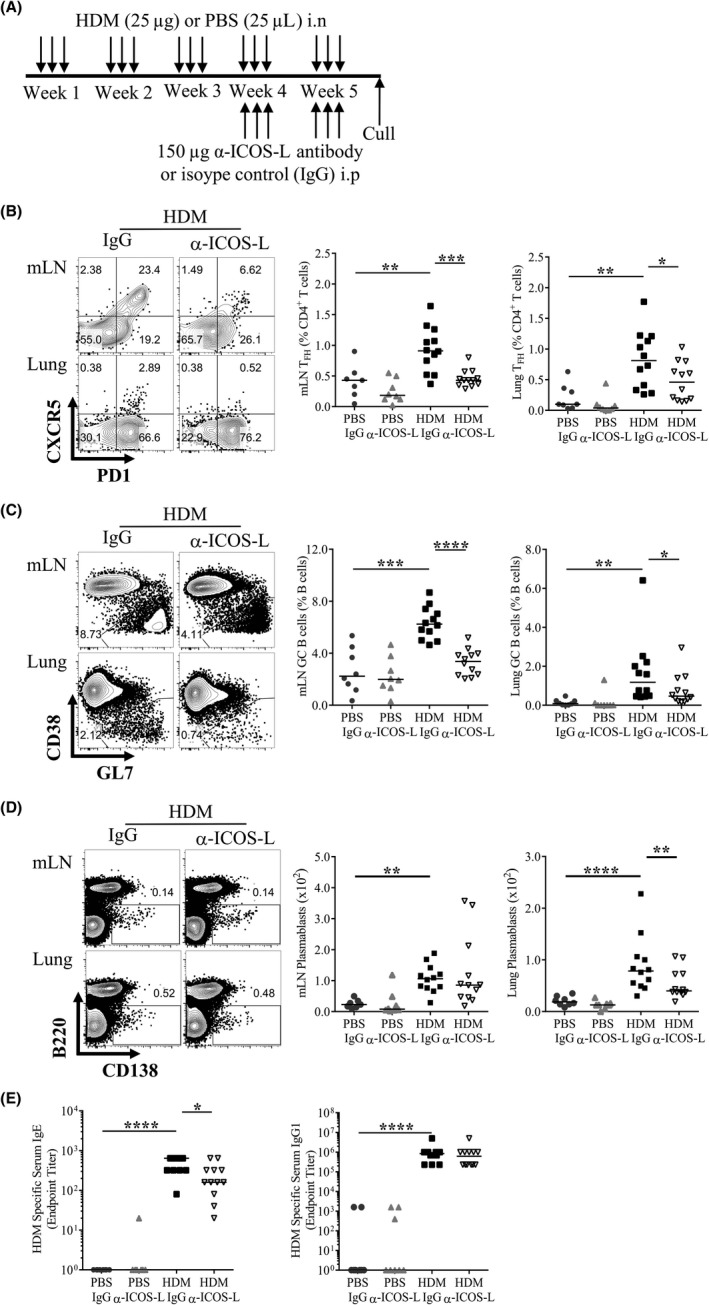
To establish AAD, female BALB/c mice were repeatedly exposed to house dust mite or Alternaria alternata three times a week for up to 5 weeks. To examine the impact of T on AAD, mice were allergen exposed for 5 weeks and co-administered anti-ICOS Ligand-targeted antibodies, three times a week for the last 2 weeks.
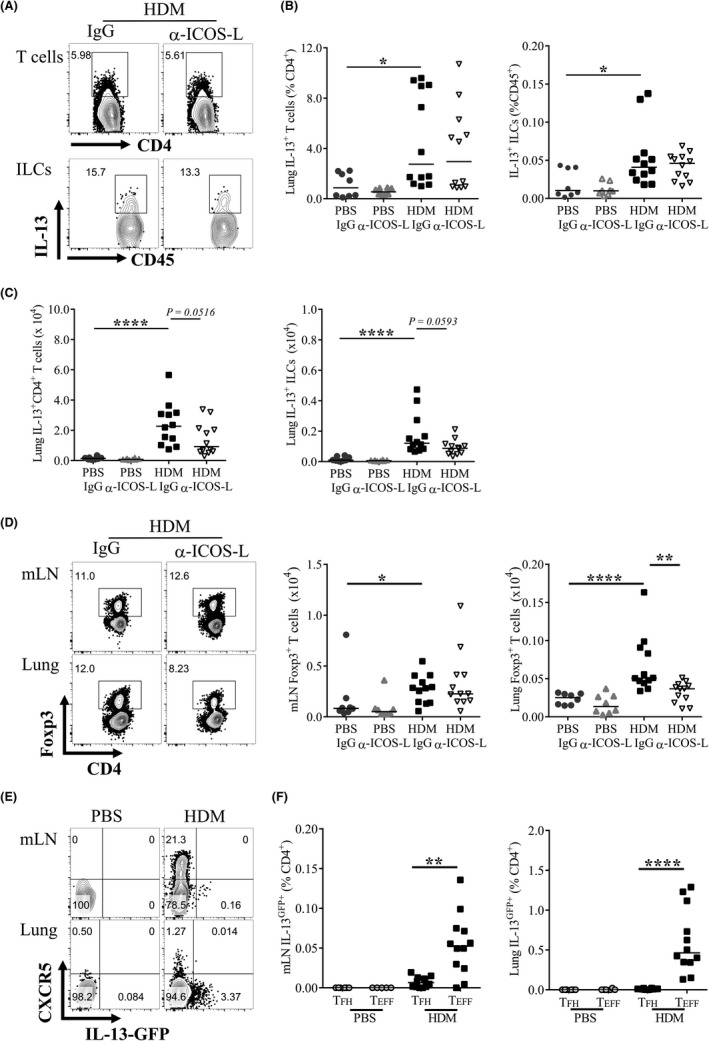
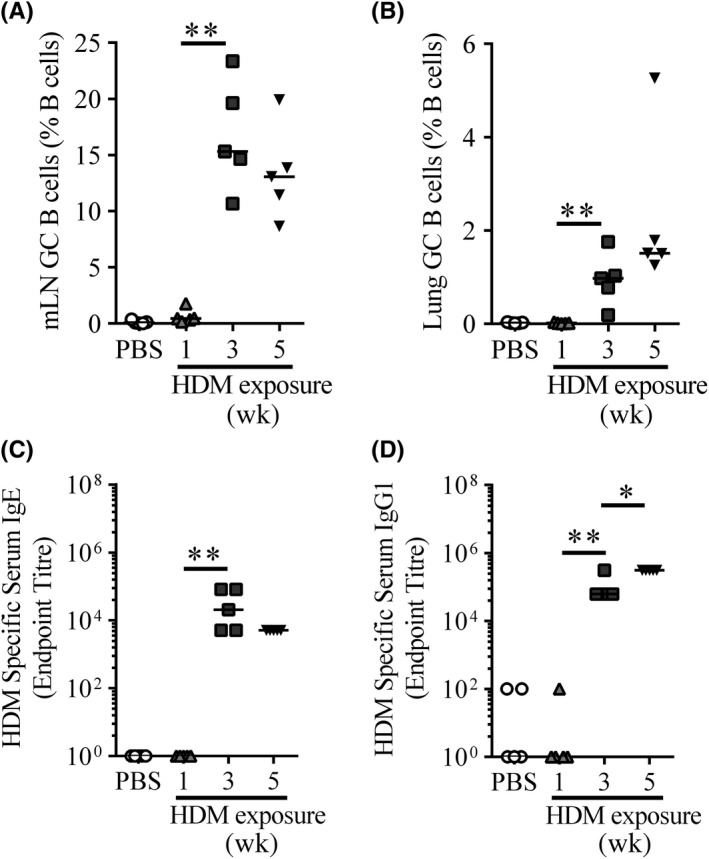
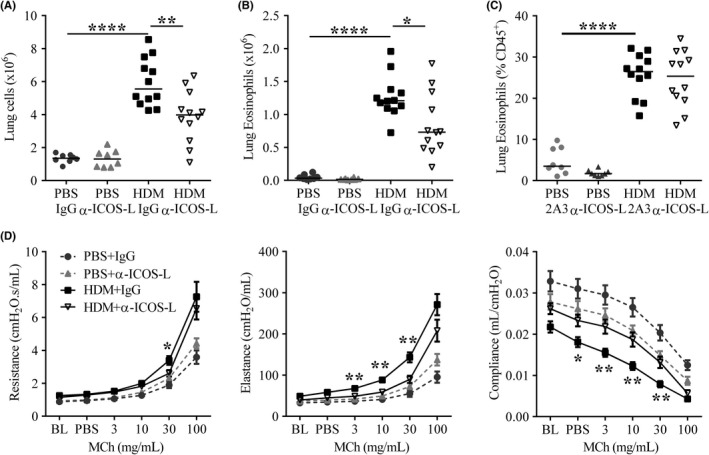
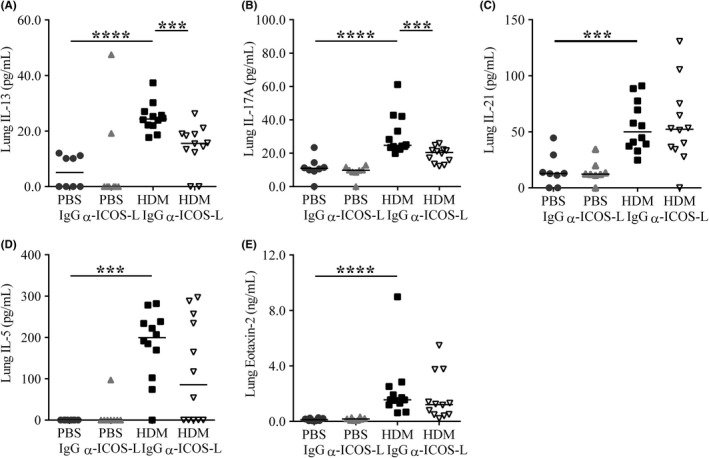
T were first observed in the lung-draining lymph nodes and with further exposure were also found locally within the lungs. T accumulated with sustained allergen exposure, alongside germinal centre (GC) B cells. Blockade of ICOS signalling after AAD establishment successfully depleted T but did not affect the differentiation of other CD4 T-cell subsets. This reduced GC responses, allergen-specific IgE, inflammation, pulmonary IL-13 and airway hyper-responsiveness.
T are crucial in the regulation of AAD and the ICOS/ICOS-L pathway could represent a novel therapeutic target in allergic asthma.
过敏性哮喘的特征是气道的慢性炎症和重塑,与 2 型免疫反应失调和过敏原特异性 IgE 相关。滤泡辅助 T 细胞(Tfh)在 T 细胞依赖性 B 细胞反应中至关重要,并且与过敏性气道疾病(AAD)有关。与其他 CD4 T 细胞不同,Tfh 在 T 细胞初始后维持其表型时,唯一依赖于连续的 ICOS 信号;因此,破坏这种信号会损害 T 细胞反应。然而,T 细胞在慢性气源性过敏原暴露期间对疾病的贡献以及靶向这些细胞的治疗潜力尚未得到评估。
为了建立 AAD,雌性 BALB/c 小鼠每周三次重复暴露于屋尘螨或Alternaria alternata 长达 5 周。为了研究 T 对 AAD 的影响,小鼠在 5 周内进行过敏原暴露,并在最后 2 周内每周三次共给予抗 ICOS 配体靶向抗体。
T 细胞首先在肺引流淋巴结中观察到,随着进一步暴露,也在肺部局部观察到。T 细胞随着持续的过敏原暴露而积累,与生发中心(GC)B 细胞一起。在 AAD 建立后阻断 ICOS 信号成功耗尽了 T 细胞,但不影响其他 CD4 T 细胞亚群的分化。这减少了 GC 反应、过敏原特异性 IgE、炎症、肺内 IL-13 和气道高反应性。
T 细胞在调节 AAD 中至关重要,ICOS/ICOS-L 途径可能成为过敏性哮喘的新治疗靶点。