School of Life Science, National Taiwan Normal University, Postal address: No. 88, Tingchow Rd. Sect. 4, Taipei, 11677, Taiwan.
The Experimental Forest, College of Bio-Resources and Agriculture, National Taiwan University, Taipei, Nantou, 55750, Taiwan.
BMC Plant Biol. 2018 Sep 17;18(1):196. doi: 10.1186/s12870-018-1420-4.
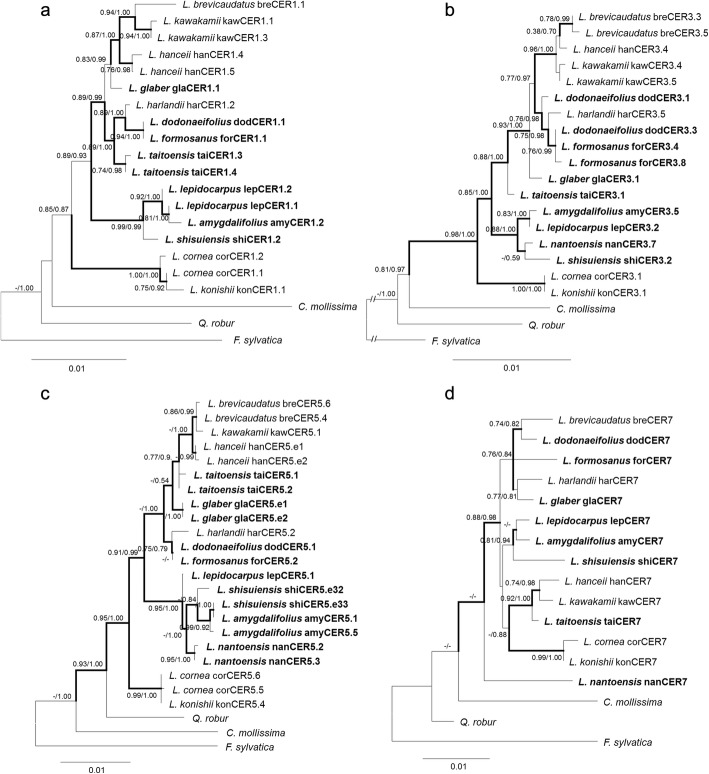
Leaf epicuticular wax is an important functional trait for physiological regulation and pathogen defense. This study tests how selective pressure may have forced the trait of leaf abaxial epicuticular wax crystals (LAEWC) and whether the presence/absence of LAEWC is associated with other ecophysiological traits. Scanning Electron Microscopy was conducted to check for LAEWC in different Lithocarpus species. Four wax biosynthesis related genes, including two wax backbone genes ECERIFERUM 1 (CER1) and CER3, one regulatory gene CER7 and one transport gene CER5, were cloned and sequenced. Ecophysiological measurements of secondary metabolites, photosynthesis, water usage efficiency, and nutrition indices were also determined. Evolutionary hypotheses of leaf wax character transition associated with the evolution of those ecophysiological traits as well as species evolution were tested by maximum likelihood.
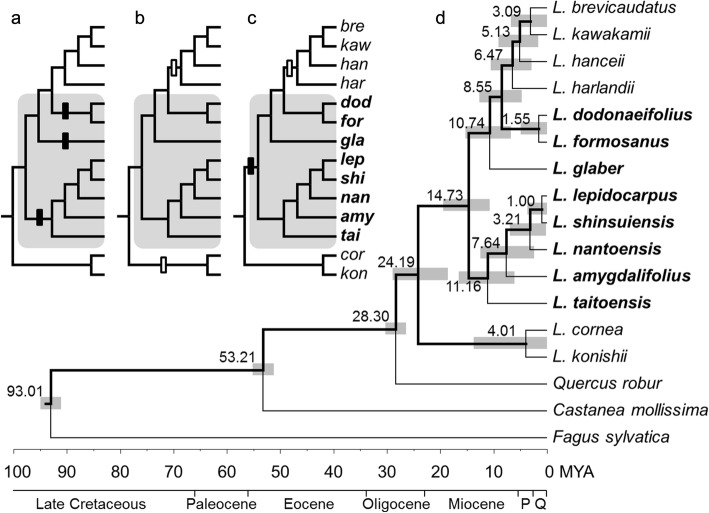
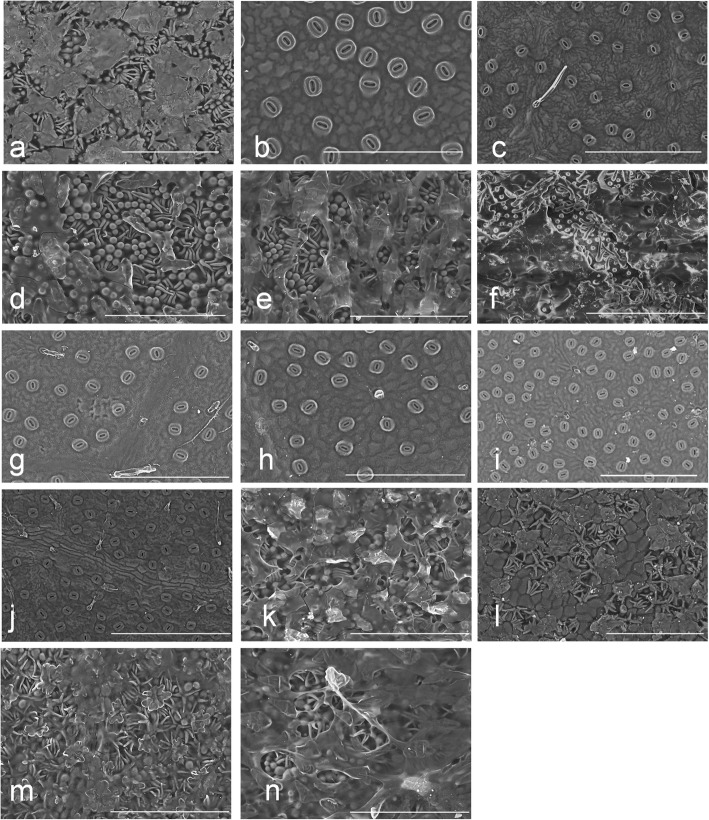
Eight of 14 studied Lithocarpus species have obvious LAEWC appearing with various types of trichomes. Measurements of ecophysiological traits show no direct correlations with the presence/absence of LAEWC. However, the content of phenolic acids is significantly associated with the gene evolution of the wax biosynthetic backbone gene CER1, which was detected to be positively selected when LAEWC was gained during the late-Miocene-to-Pliocene period.
Changes of landmass and vegetation type accelerated the diversification of tropical and subtropical forest trees and certain herbivores during the late Miocene. As phenolic acids were long thought to be associated with defense against herbivories, co-occurrence of LAEWC and phenolic acids may suggest that LAEWC might be an adaptive defensive mechanism in Lithocarpus.
叶表皮蜡质是一种重要的生理调节和病原体防御功能性状。本研究检验了选择性压力如何迫使叶下表皮蜡晶体(LAEWC)的性状发生变化,以及 LAEWC 的存在与否是否与其他生态生理性状相关。通过扫描电子显微镜检查了不同石栎属物种的 LAEWC。克隆并测序了四个与蜡生物合成相关的基因,包括两个蜡质骨架基因 ECERIFERUM 1(CER1)和 CER3、一个调节基因 CER7 和一个运输基因 CER5。还测定了次生代谢物、光合作用、水分利用效率和营养指数等生态生理指标。通过最大似然法检验了与叶蜡质性状进化相关的进化假说,以及物种进化。
在 14 种研究的石栎属物种中,有 8 种具有明显的 LAEWC,且具有不同类型的毛状体。生态生理特征的测量与 LAEWC 的存在与否没有直接的相关性。然而,酚酸含量与蜡生物合成骨架基因 CER1 的基因进化显著相关,当 LAEWC 在中新世晚期到上新世期间获得时,CER1 被检测到是正选择的。
在中新世晚期,陆地面积和植被类型的变化加速了热带和亚热带森林树木和某些食草动物的多样化。由于酚酸长期以来被认为与抵御食草动物有关,LAEWC 和酚酸的共存可能表明 LAEWC 可能是石栎属植物的一种适应性防御机制。