Laboratoire Ecologie et Biologie des Interactions-UMR CNRS 7267, Equipe Ecologie Evolution Symbiose-Batiment B8-B35, Université de Poitiers, 5 rue Albert Turpain, TSA 51106, F-86073, Poitiers Cedex 9, France.
Dipartimento di Biologia e Biotecnologie, Università degli Studi di Pavia, Pavia, Italy.
Microbiome. 2018 Sep 17;6(1):162. doi: 10.1186/s40168-018-0536-y.
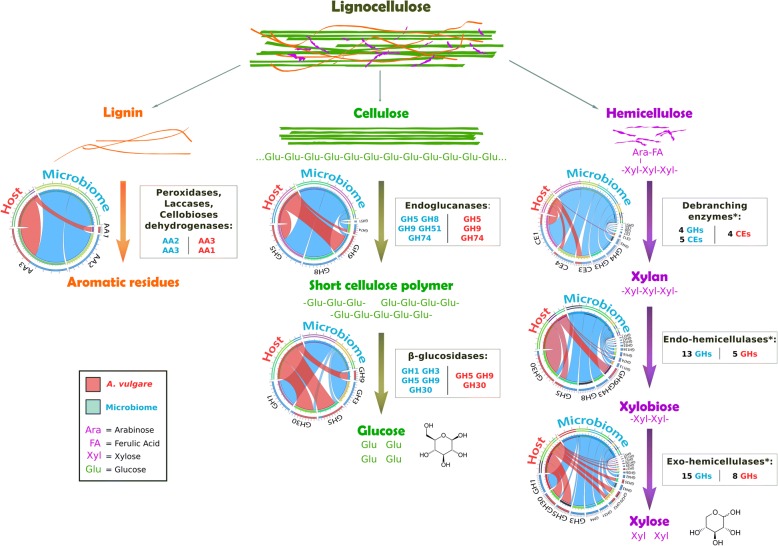
Woodlice are recognized as keystone species in terrestrial ecosystems due to their role in the decomposition of organic matter. Thus, they contribute to lignocellulose degradation and nutrient cycling in the environment together with other macroarthropods. Lignocellulose is the main component of plants and is composed of cellulose, lignin and hemicellulose. Its digestion requires the action of multiple Carbohydrate-Active enZymes (called CAZymes), typically acting together as a cocktail with complementary, synergistic activities and modes of action. Some invertebrates express a few endogenous lignocellulose-degrading enzymes but in most species, an efficient degradation and digestion of lignocellulose can only be achieved through mutualistic associations with endosymbionts. Similar to termites, it has been suspected that several bacterial symbionts may be involved in lignocellulose degradation in terrestrial isopods, by completing the CAZyme repertoire of their hosts.
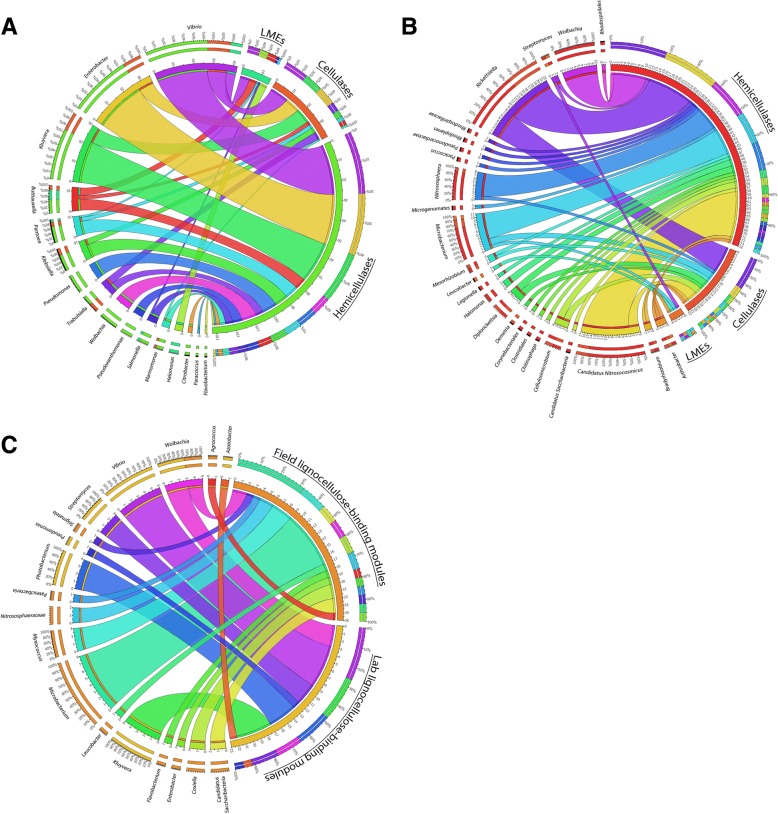
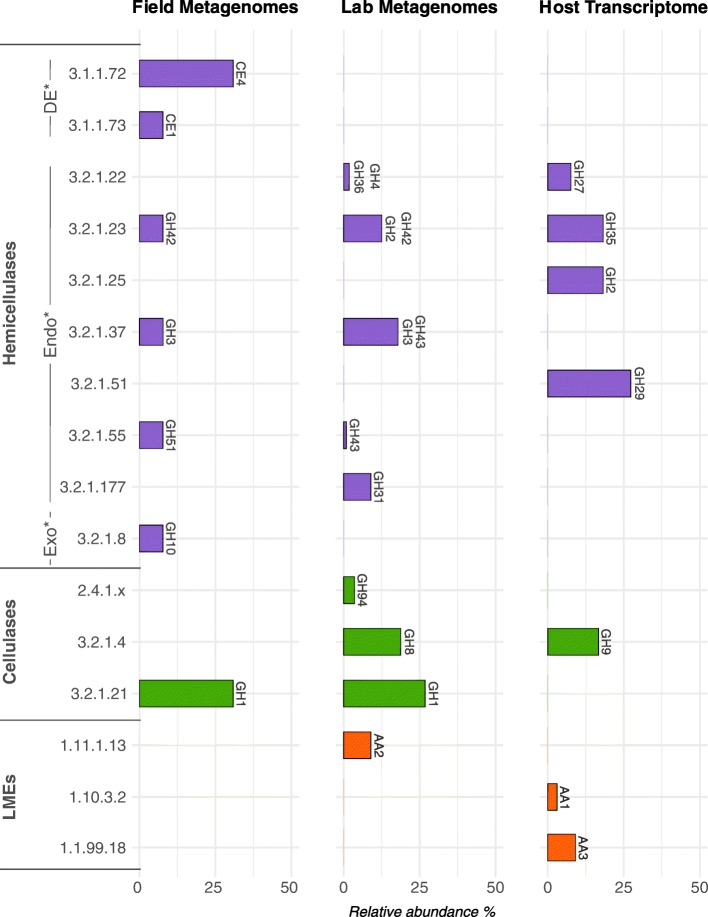
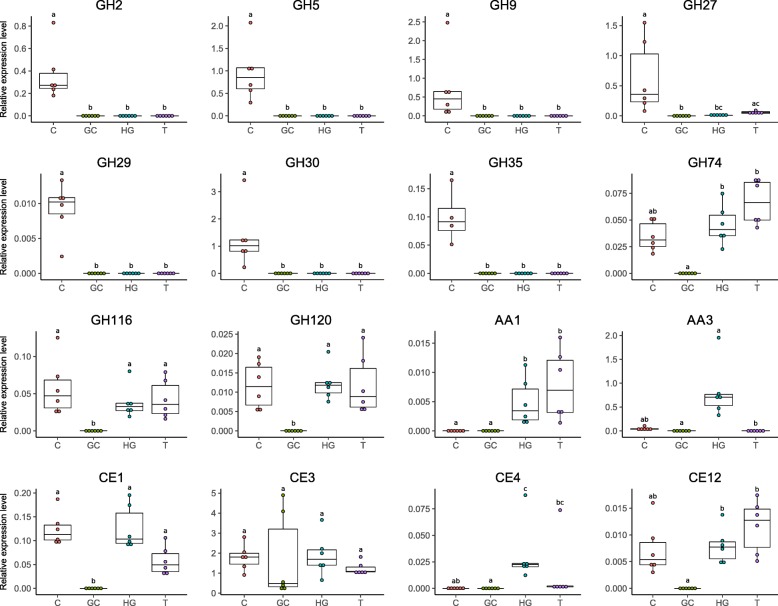
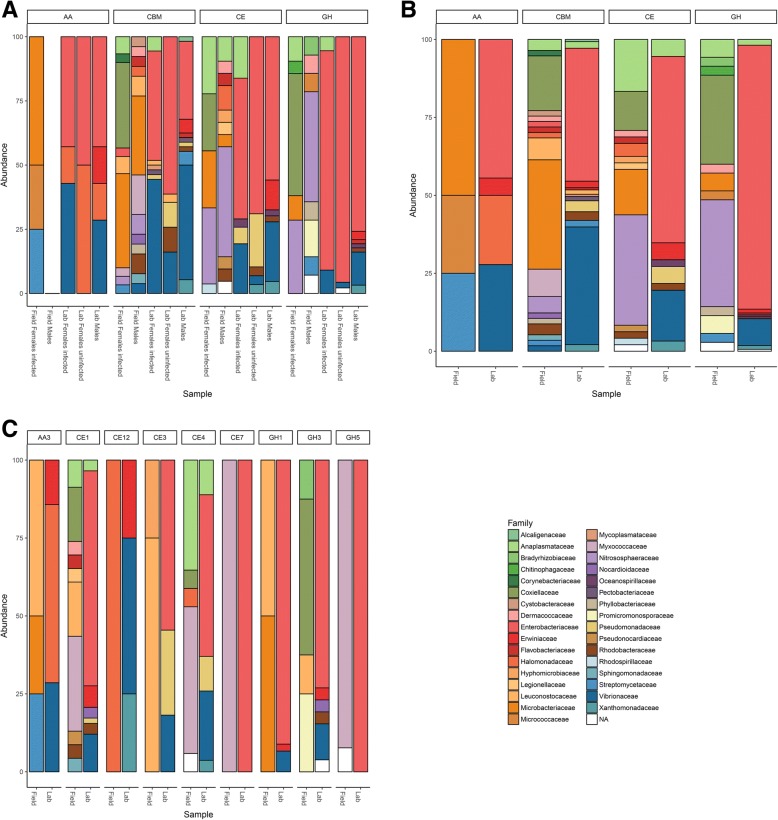
To test this hypothesis, host transcriptomic and microbiome shotgun metagenomic datasets were obtained and investigated from the pill bug Armadillidium vulgare. Many genes of bacterial and archaeal origin coding for CAZymes were identified in the metagenomes of several host tissues and the gut content of specimens from both laboratory lineages and a natural population of A. vulgare. Some of them may be involved in the degradation of cellulose, hemicellulose, and lignin. Reconstructing a lignocellulose-degrading microbial community based on the prokaryotic taxa contributing relevant CAZymes revealed two taxonomically distinct but functionally redundant microbial communities depending on host origin. In parallel, endogenous CAZymes were identified from the transcriptome of the host and their expression in digestive tissues was demonstrated by RT-qPCR, demonstrating a complementary enzyme repertoire for lignocellulose degradation from both the host and the microbiome in A. vulgare.
Our results provide new insights into the role of the microbiome in the evolution of terrestrial isopods and their adaptive radiation in terrestrial habitats.
由于在有机物质分解中所起的作用,木虱被认为是陆地生态系统中的关键物种。因此,它们与其他大型节肢动物一起促进木质纤维素的降解和环境中的养分循环。木质纤维素是植物的主要成分,由纤维素、木质素和半纤维素组成。它的消化需要多种碳水化合物活性酶(称为 CAZymes)的作用,通常作为具有互补、协同作用和作用模式的鸡尾酒一起作用。一些无脊椎动物表达少量内源性木质纤维素降解酶,但在大多数物种中,木质纤维素的有效降解和消化只能通过与内共生体的互利共生关系来实现。与白蚁类似,人们怀疑几种细菌共生体可能通过完成其宿主的 CAZyme 谱来参与陆地等足目动物的木质纤维素降解。
为了验证这一假设,从 Pill Bug Armadillidium vulgare 中获得并研究了宿主转录组和微生物组 shotgun 宏基因组数据集。在几个宿主组织的宏基因组和来自实验室谱系和 A. vulgare 自然种群的标本的肠道内容物中,鉴定出许多具有细菌和古菌来源的编码 CAZymes 的基因。其中一些可能参与纤维素、半纤维素和木质素的降解。根据对木质纤维素降解有贡献的原核分类群重建一个微生物群落,揭示了两个在分类上不同但功能上冗余的微生物群落,这取决于宿主的起源。同时,从宿主转录组中鉴定出内源性 CAZymes,并通过 RT-qPCR 证明了它们在消化组织中的表达,证明了 A. vulgare 中宿主和微生物组对木质纤维素降解的互补酶谱。
我们的研究结果为微生物组在陆地等足目动物的进化及其在陆地生境中的适应性辐射中的作用提供了新的见解。