Saalfeld Vanessa, Ramadan Zeina, Bell Vaughan, Raihani Nichola J
Department of Experimental Psychology, University College London, 26 Bedford Way, London WC1H 0AP, UK.
Division of Psychiatry, University College London, London, UK.
R Soc Open Sci. 2018 Aug 1;5(8):180569. doi: 10.1098/rsos.180569. eCollection 2018 Aug.
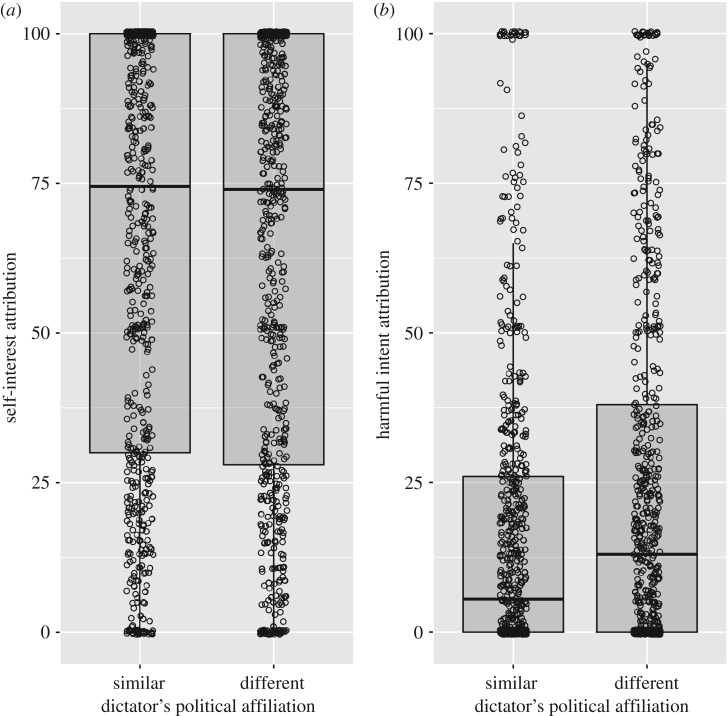
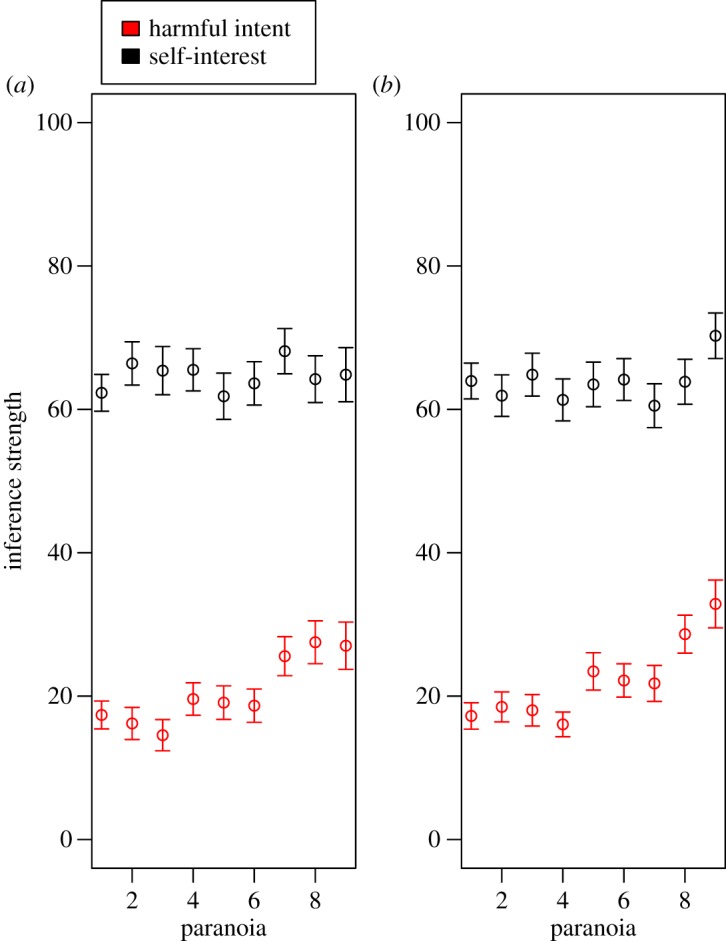
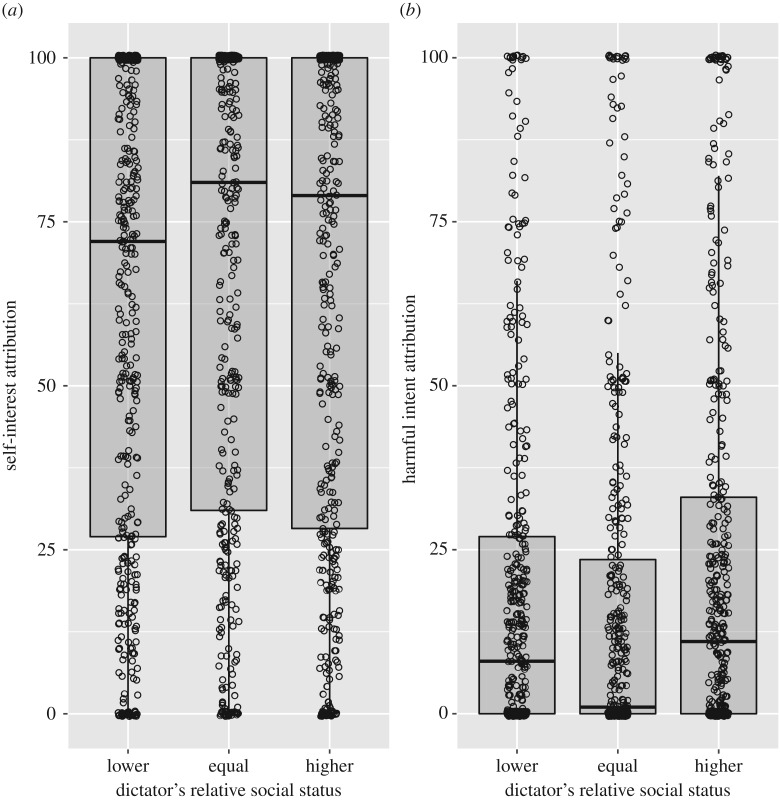
The ability to attribute intentions to others is a hallmark of human social cognition but is altered in paranoia. Paranoia is the most common positive symptom of psychosis but is also present to varying degrees in the general population. Epidemiological models suggest that psychosis risk is associated with low social rank and minority status, but the causal effects of status and group affiliation on paranoid thinking remain unclear. We examined whether relative social status and perceived group affiliation, respectively, affect live paranoid thinking using two large- ( = 2030), pre-registered experiments. Interacting with someone from a higher social rank or a political out-group led to an increase in paranoid attributions of harmful intent for ambiguous actions. Pre-existing paranoia predicted a general increase in harmful intent attribution, but there was no interaction with either type of social threat: highly paranoid people showed the same magnitude of increase as non-paranoid people, although from a higher baseline. We conclude social threat in the form of low social status and out-group status affects paranoid attributions, but ongoing paranoia represents a lowered threshold for detecting social threat rather than an impaired reactivity to it.
将意图归因于他人的能力是人类社会认知的一个标志,但在偏执状态下会发生改变。偏执是精神病最常见的阳性症状,但在普通人群中也有不同程度的存在。流行病学模型表明,精神病风险与社会地位低下和少数群体身份有关,但地位和群体归属对偏执思维的因果影响仍不明确。我们使用两项大型(N = 2030)、预先注册的实验,分别考察了相对社会地位和感知到的群体归属是否会影响实时偏执思维。与社会地位较高的人或政治外群体的人互动,会导致对模糊行为的有害意图的偏执归因增加。先前存在的偏执预测有害意图归因会普遍增加,但与任何一种社会威胁都没有相互作用:高度偏执的人与非偏执的人表现出相同程度的增加,尽管起点更高。我们得出结论,低社会地位和外群体地位形式的社会威胁会影响偏执归因,但持续的偏执代表着检测社会威胁的阈值降低,而不是对其反应受损。