UWA School of Agriculture and Environment, The University of Western Australia, 35 Stirling Highway, Crawley, WA, 6009, Australia.
Department of Plant Sciences, University of Oxford, Oxford, OX1 3RB, UK.
Theor Appl Genet. 2018 Dec;131(12):2543-2554. doi: 10.1007/s00122-018-3171-x. Epub 2018 Sep 17.
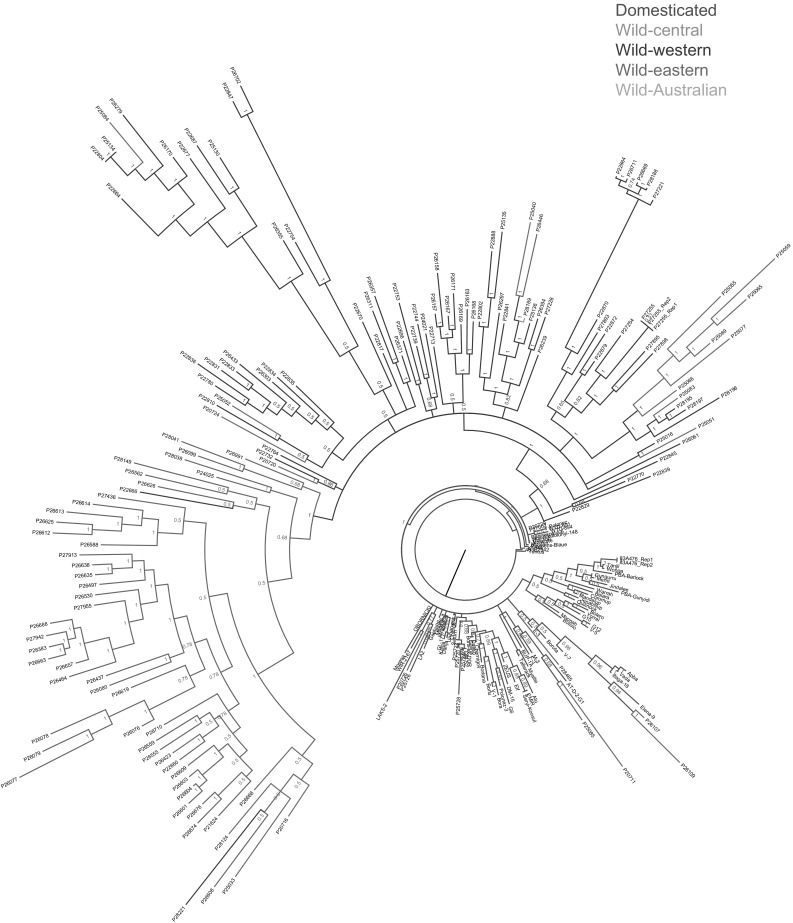
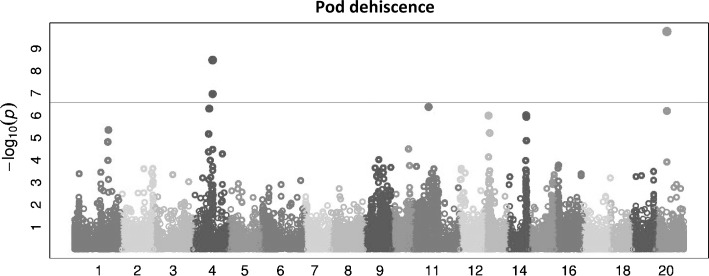
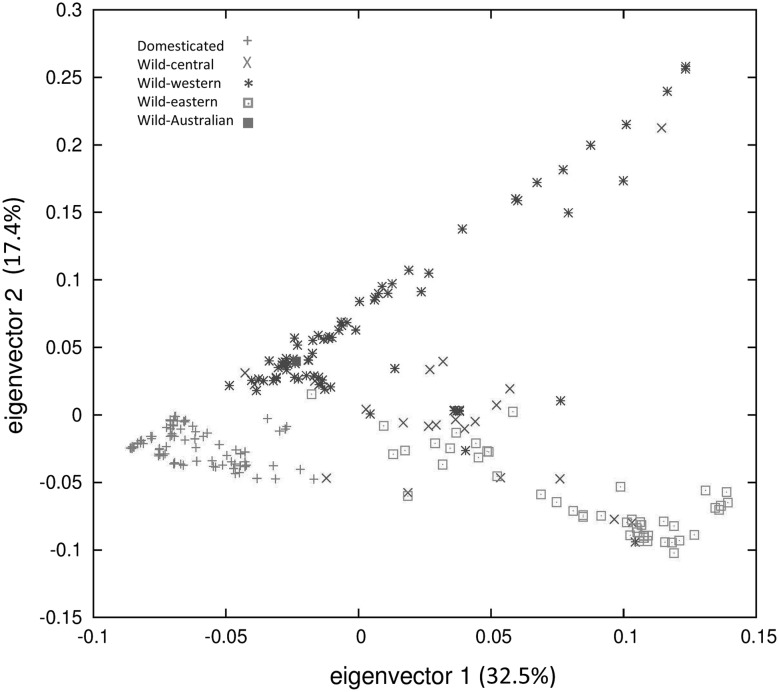
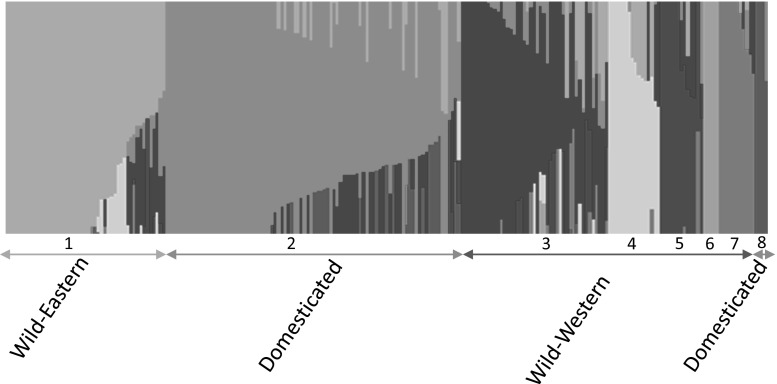
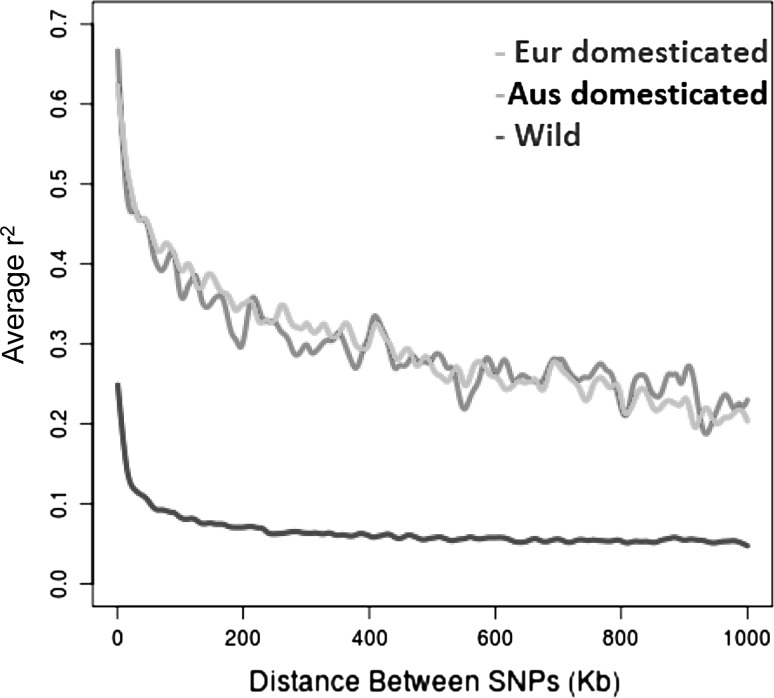
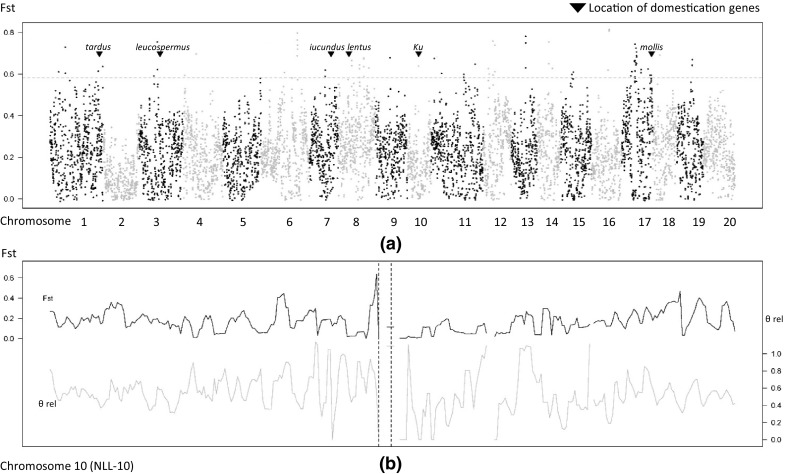
This study revealed that the western Mediterranean provided the founder population for domesticated narrow-leafed lupin and that genetic diversity decreased significantly during narrow-leafed lupin domestication. The evolutionary history of plants during domestication profoundly shaped the genome structure and genetic diversity of today's crops. Advances in next-generation sequencing technologies allow unprecedented opportunities to understand genome evolution in minor crops, which constitute the majority of plant domestications. A diverse set of 231 wild and domesticated narrow-leafed lupin (Lupinus angustifolius L.) accessions were subjected to genotyping-by-sequencing using diversity arrays technology. Phylogenetic, genome-wide divergence and linkage disequilibrium analyses were applied to identify the founder population of domesticated narrow-leafed lupin and the genome-wide effect of domestication on its genome. We found wild western Mediterranean population as the founder of domesticated narrow-leafed lupin. Domestication was associated with an almost threefold reduction in genome diversity in domesticated accessions compared to their wild relatives. Selective sweep analysis identified no significant footprints of selection around domestication loci. A genome-wide association study identified single nucleotide polymorphism markers associated with pod dehiscence. This new understanding of the genomic consequences of narrow-leafed lupin domestication along with molecular marker tools developed here will assist plant breeders more effectively access wild genetic diversity for crop improvement.
本研究表明,地中海西部为栽培窄叶羽扇豆的起源种群,并且在窄叶羽扇豆驯化过程中,遗传多样性显著降低。植物在驯化过程中的进化历史深刻地塑造了当今作物的基因组结构和遗传多样性。下一代测序技术的进步为理解次要作物(占植物驯化的大多数)的基因组进化提供了前所未有的机会。对 231 份野生和栽培窄叶羽扇豆(Lupinus angustifolius L.)进行了测序,使用多样性阵列技术进行了基因型测序。应用系统发育、全基因组分化和连锁不平衡分析来鉴定驯化窄叶羽扇豆的起源种群及其对基因组的全基因组驯化效应。我们发现野生地中海西部种群是驯化窄叶羽扇豆的起源种群。与野生亲缘种相比,驯化种的基因组多样性减少了近三倍。选择扫描分析未在驯化基因座周围检测到显著的选择痕迹。全基因组关联研究鉴定出与荚果开裂相关的单核苷酸多态性标记。本研究对窄叶羽扇豆驯化的基因组后果有了新的认识,并开发了分子标记工具,这将有助于植物育种者更有效地利用野生遗传多样性进行作物改良。