Department of Psychological & Brain Sciences, Indiana University, 1101 E. 10th Street, Bloomington, IN, 47405, USA.
Center for the Integrative Study of Animal Behavior, Indiana University, 1101 E. 10th Street, Bloomington, IN, 47405, USA.
Psychopharmacology (Berl). 2019 Jan;236(1):59-72. doi: 10.1007/s00213-018-5023-4. Epub 2018 Sep 17.
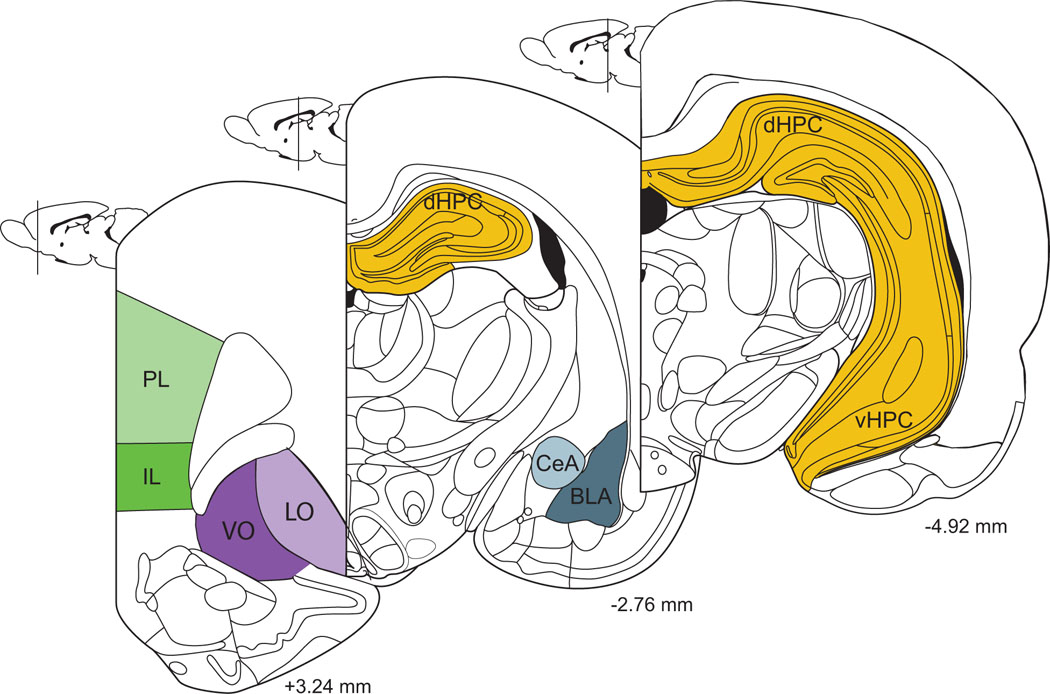
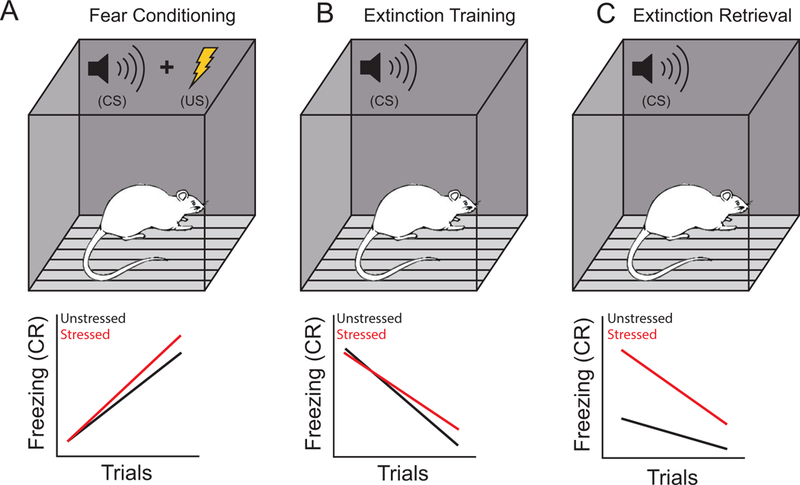
Stress is associated with cognitive and emotional dysfunction, and increases risk for a variety of psychological disorders, including depression and posttraumatic stress disorder. Prefrontal cortex is critical for executive function and emotion regulation, is a target for stress hormones, and is implicated in many stress-influenced psychological disorders. Extinction of conditioned fear provides an excellent model system for examining how stress-induced changes in corticolimbic structure and function are related to stress-induced changes in neural function and behavior, as the neural circuitry underlying this behavior is well characterized.
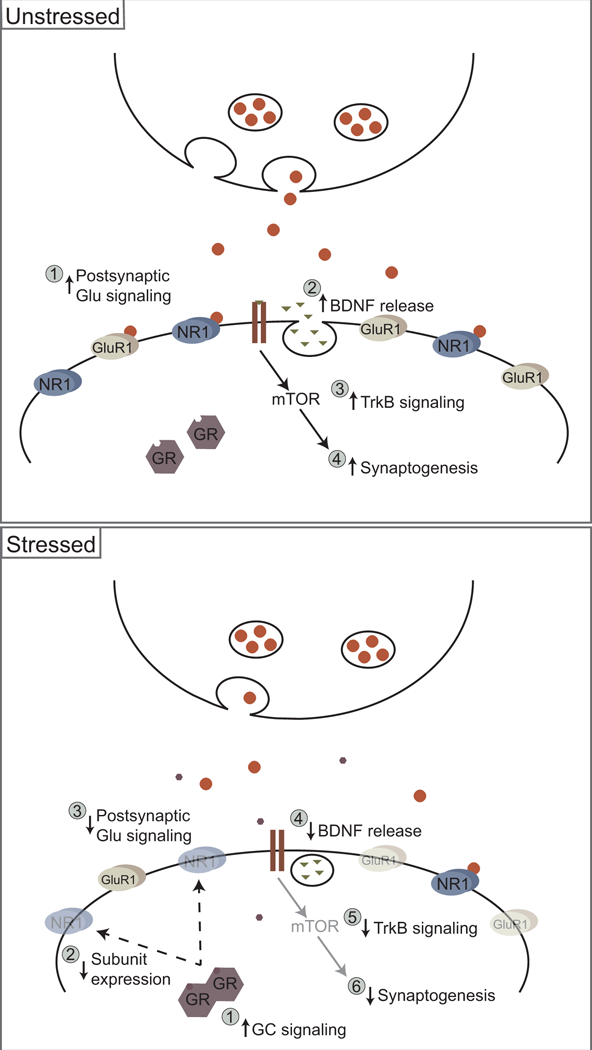
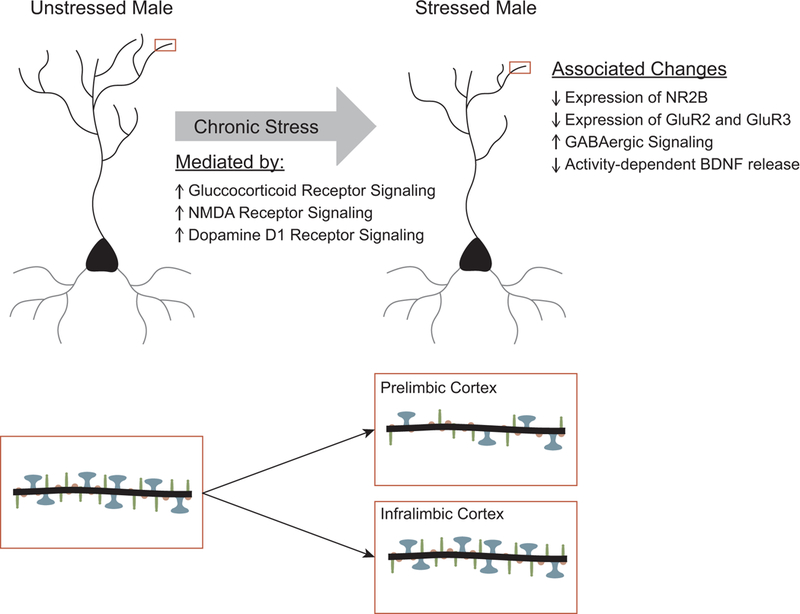
This review examines how acute and chronic stress influences extinction and describes how stress alters the structure and function of the medial prefrontal cortex, a potential neural substrate for these effects. In addition, we identify important unanswered questions about how stress-induced change in prefrontal cortex may mediate extinction deficits and avenues for future research.
A substantial body of work demonstrates deficits in extinction after either acute or chronic stress. A separate and substantial literature demonstrates stress-induced neuronal remodeling in medial prefrontal cortex, along with several key neurohormonal contributors to this remodeling, and there is substantial overlap in prefrontal mechanisms underlying extinction and the mechanisms implicated in stress-induced dysfunction of-and neuronal remodeling in-medial prefrontal cortex. However, data directly examining the contribution of changes in prefrontal structure and function to stress-induced extinction deficits is currently lacking.
Understanding how stress influences extinction and its neural substrates as well as individual differences in this effect will elucidate potential avenues for novel interventions for stress-sensitive disorders characterized by deficits in extinction.
压力与认知和情绪功能障碍有关,并增加了多种心理障碍的风险,包括抑郁症和创伤后应激障碍。前额皮质对于执行功能和情绪调节至关重要,是应激激素的靶标,并且与许多受应激影响的心理障碍有关。条件性恐惧的消除为研究皮质边缘结构和功能的应激诱导变化如何与应激诱导的神经功能和行为变化相关提供了一个极好的模型系统,因为这种行为的神经回路已经得到很好的描述。
本综述探讨了急性和慢性应激如何影响消退,并描述了应激如何改变内侧前额叶皮质的结构和功能,内侧前额叶皮质是这些影响的潜在神经基质。此外,我们还确定了关于应激引起的前额叶皮质变化如何介导消退缺陷以及未来研究方向的一些重要未解决问题。
大量研究表明,无论是急性应激还是慢性应激后,消退都会出现缺陷。另一个重要的文献表明,内侧前额叶皮质存在应激诱导的神经元重塑,以及几个关键的神经激素对这种重塑的贡献,并且在消退的前额叶机制和应激诱导的内侧前额叶皮质功能障碍和神经元重塑的机制之间存在大量重叠。然而,目前缺乏直接研究前额叶结构和功能变化对应激诱导的消退缺陷的贡献的数据。
了解应激如何影响消退及其神经基质,以及这种效应的个体差异,将阐明针对以消退缺陷为特征的应激敏感障碍的新干预措施的潜在途径。