Department of Otorhinolaryngology Head and Neck Surgery, Eye, Ear, Nose, and Throat Hospital, Fudan University, Shanghai 200031, P.R. China.
Oncol Rep. 2018 Nov;40(5):2584-2594. doi: 10.3892/or.2018.6672. Epub 2018 Aug 24.
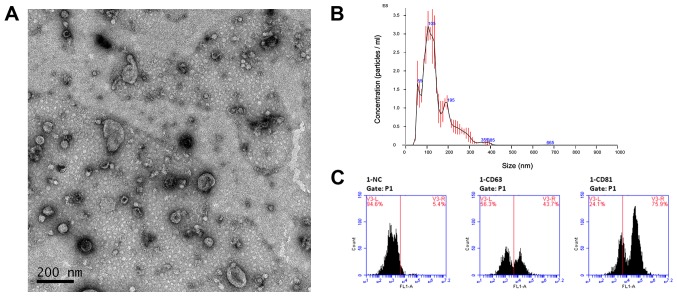
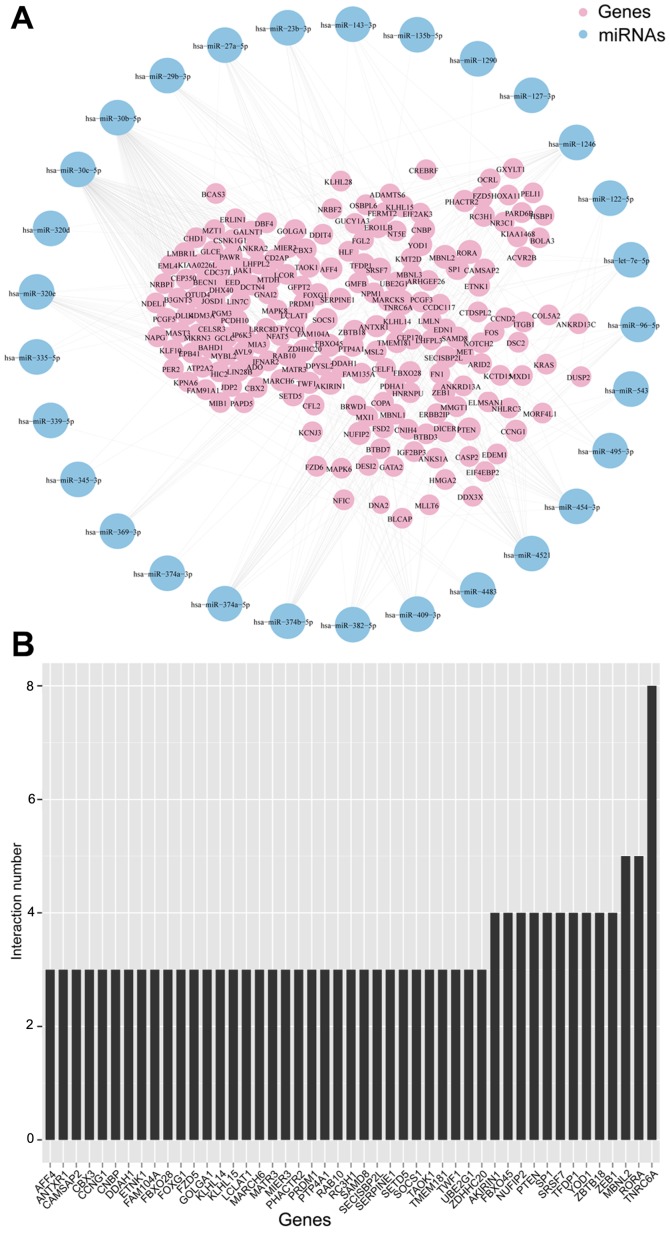
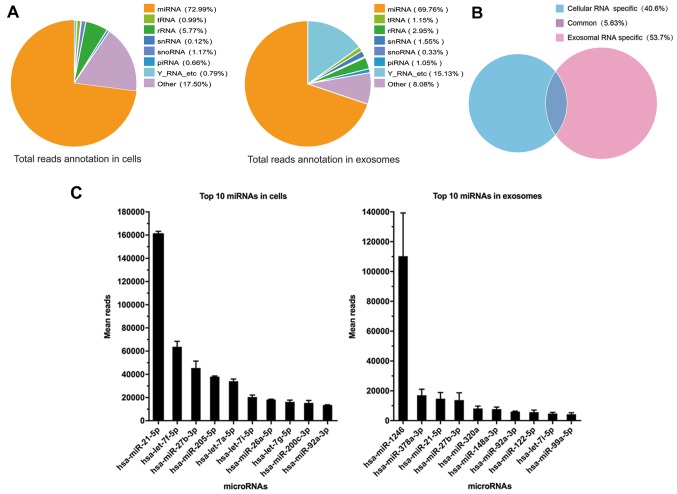
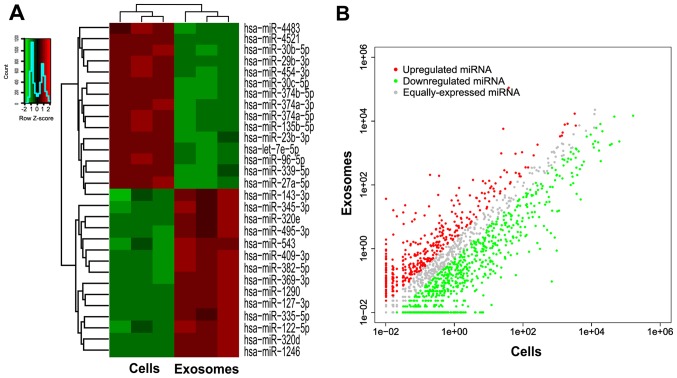
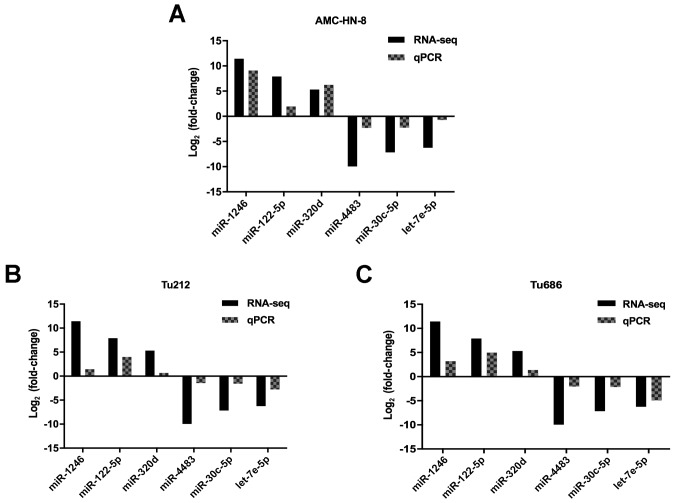
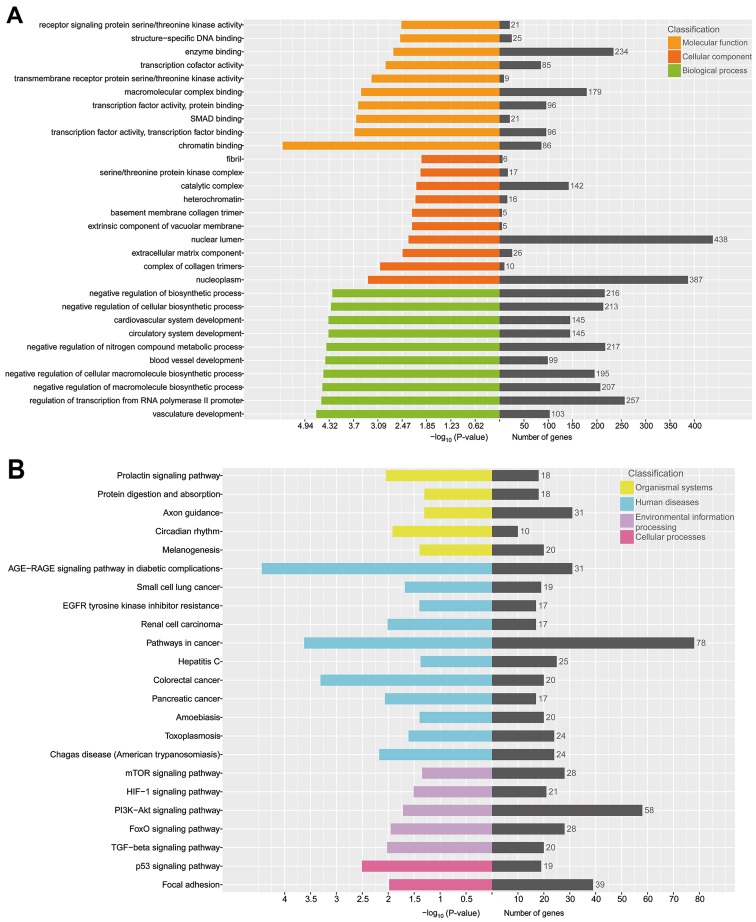
Exosomes are nanometer‑scale extracellular vesicles derived from almost all types of cells and key signaling mediators between cancer cells and their microenvironment. Certain microRNAs (miRNAs) are selected for exosome packing and exclusion from parental cells, while other miRNAs are selectively retained by cells, suggesting a biological role for these miRNAs in tumor malignant progression. In the present study, we isolated and characterized the exosomes derived from the laryngeal squamous cell carcinoma (LSCC) cell line AMC‑HN‑8 for the first time, and identified a subset of miRNAs enriched in the exosomes compared with parental cells, such as miR‑1246, miR‑1290, miR‑335‑5p, miR‑127‑3p and miR‑122‑5p through small RNA sequencing combined with reverse transcription‑quantitative PCR (RT‑qPCR) analysis. Potential target prediction, Gene Ontology (GO) annotation and Kyoto Encyclopedia of Genes and Genomes (KEGG) pathway enrichment analysis revealed possible functions associated with these selective exosomal miRNAs. In conclusion, the present study demonstrated that the LSCC cell line AMC‑HN‑8 can release exosomes and cells can selectively pack certain miRNAs into exosomes.
外泌体是源自几乎所有类型细胞的纳米级细胞外囊泡,是癌细胞与其微环境之间的关键信号介质。某些 microRNAs(miRNAs)被选择用于外泌体包装和与亲本细胞的排除,而其他 miRNAs 则被细胞选择性保留,这表明这些 miRNAs 在肿瘤恶性进展中具有生物学作用。在本研究中,我们首次分离和表征了喉鳞状细胞癌细胞系(LSCC)AMC-HN-8 衍生的外泌体,并通过小 RNA 测序结合逆转录-定量 PCR(RT-qPCR)分析,鉴定出与亲本细胞相比在外泌体中富集的一组 miRNA,如 miR-1246、miR-1290、miR-335-5p、miR-127-3p 和 miR-122-5p。潜在的靶基因预测、基因本体(GO)注释和京都基因与基因组百科全书(KEGG)通路富集分析揭示了这些选择性外泌体 miRNA 可能相关的功能。综上所述,本研究表明 LSCC 细胞系 AMC-HN-8 可以释放外泌体,并且细胞可以选择性地将某些 miRNA 包装到外泌体中。