Department of Gynecology and Obstetrics, The 306 Hospital of PLA, Beijing 100101, P.R. China.
Oncol Rep. 2018 Nov;40(5):2659-2673. doi: 10.3892/or.2018.6707. Epub 2018 Sep 13.
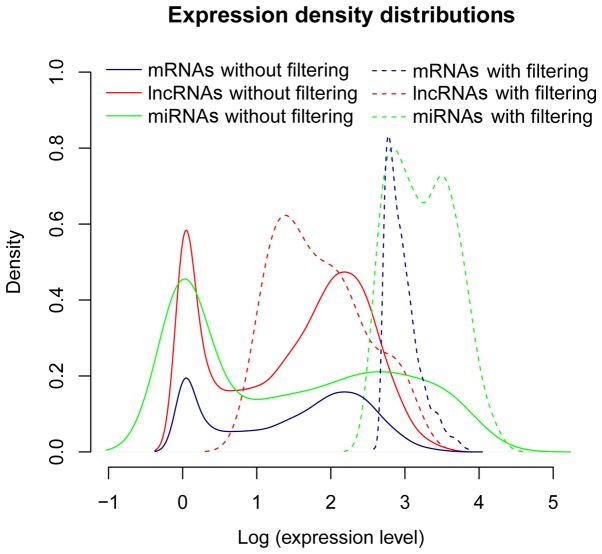
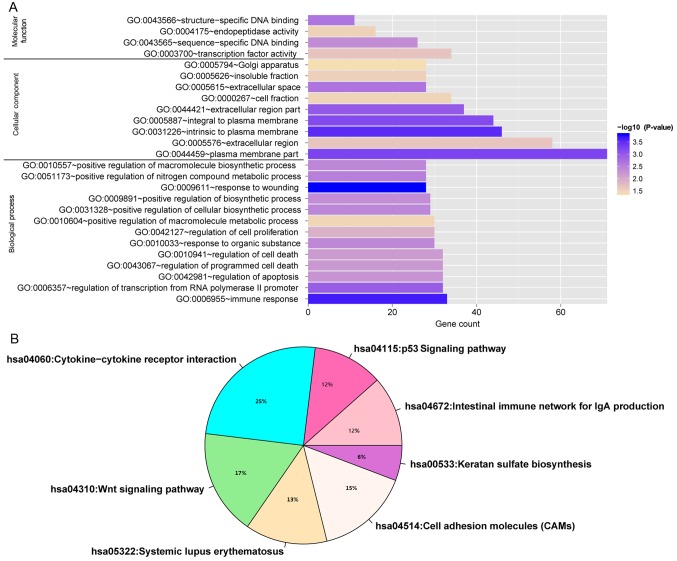
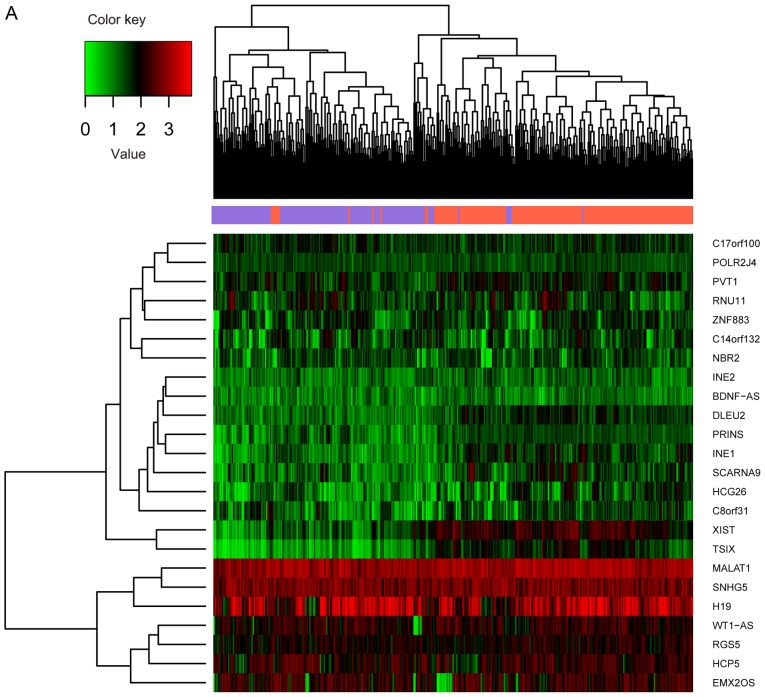
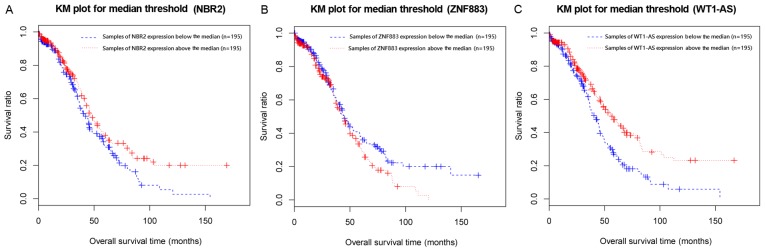
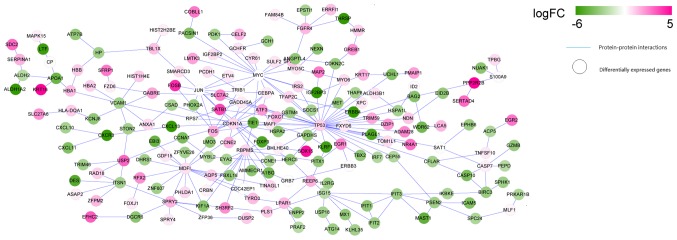
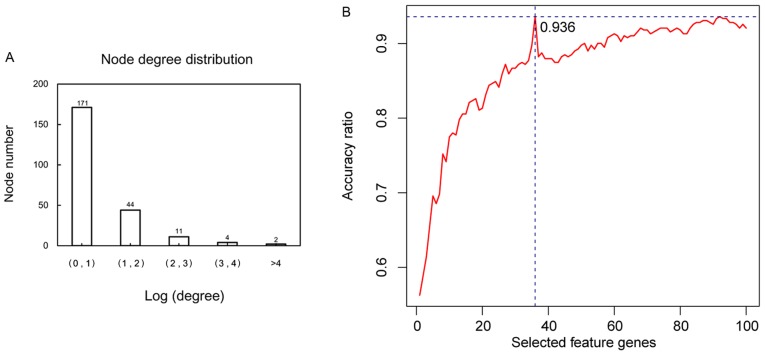
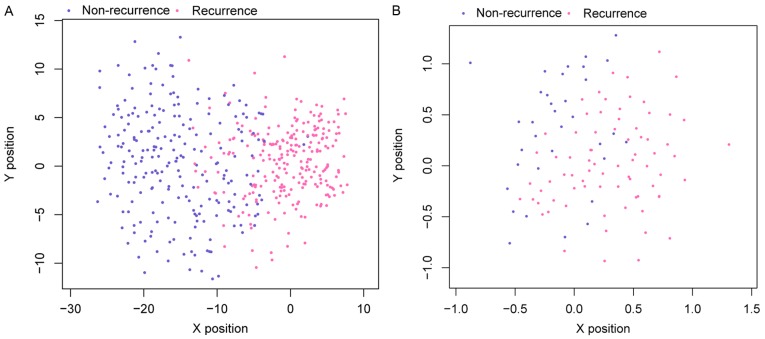
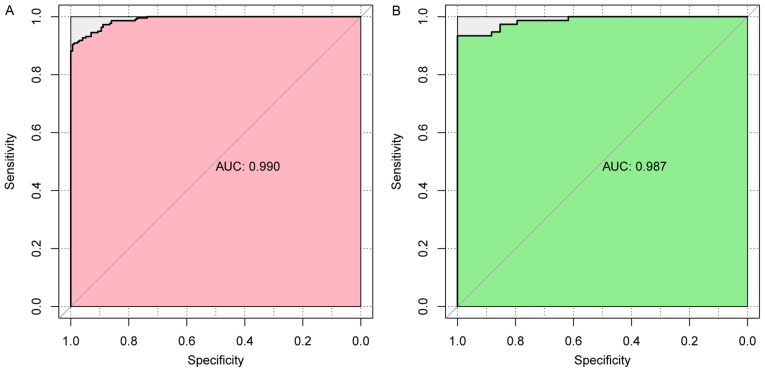
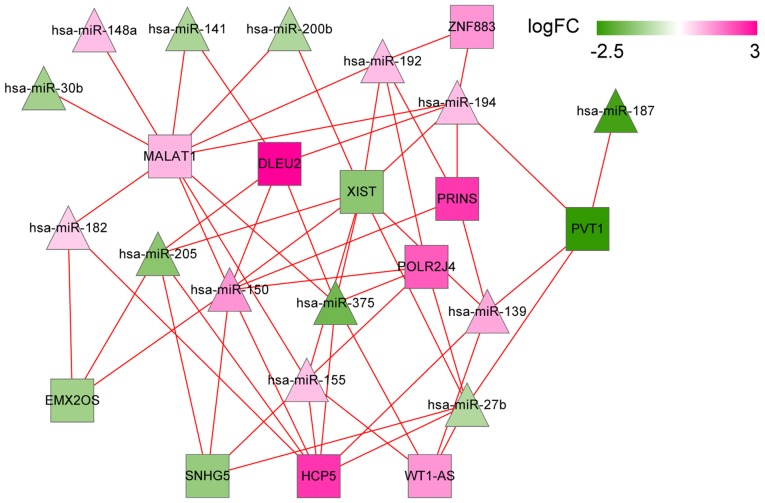
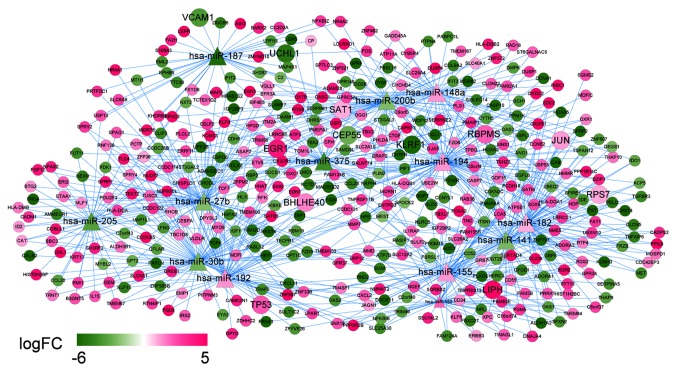
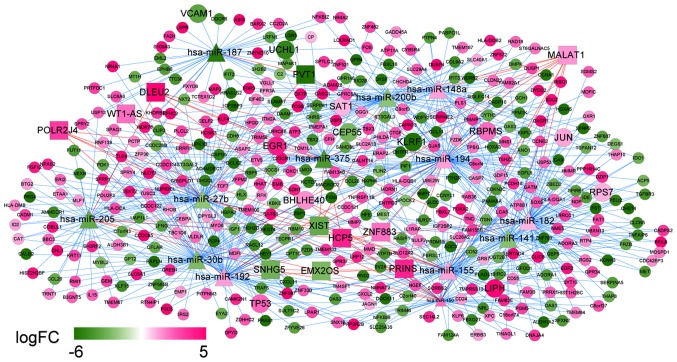
Tumor recurrence hinders treatment of ovarian cancer. The present study aimed to identify potential biomarkers for ovarian cancer recurrence prognosis and explore relevant mechanisms. RNA‑sequencing of data from the TCGA database and GSE17260 dataset was carried out. Samples of the data were grouped according to tumor recurrence information. Following data normalization, differentially expressed genes/micro RNAs (miRNAs)/long non‑coding (lncRNAs) (DEGs/DEMs/DELs) were selected between recurrent and non‑recurrent samples. Their correlations with clinical information were analyzed to identify prognostic RNAs. A support vector machine classifier was used to find the optimal gene set with feature genes that could conclusively distinguish different samples. A protein‑protein interaction (PPI) network was established for DEGs using relevant protein databases. An integrated 'lncRNA/miRNA/mRNA' competing endogenous RNA (ceRNA) network was constructed to reveal potential regulatory relationships among different RNAs. We identified 36 feature genes (e.g. TP53 and RBPMS) for the classification of recurrent and non‑recurrent ovarian cancer samples. Prediction with this gene set had a high accuracy (91.8%). Three DELs (WT1‑AS, NBR2 and ZNF883) were highly associated with the prognosis of recurrent ovarian cancer. Predominant DEMs with their targets were hsa‑miR‑375 (target: RBPMS), hsa‑miR‑141 (target: RBPMS), and hsa‑miR‑27b (target: TP53). Highlighted interactions in the ceRNA network were 'WT1‑AS‑hsa‑miR‑375‑RBPMS' and 'WT1‑AS‑-hsa‑miR‑27b‑TP53'. TP53, RBPMS, hsa‑miR‑375, hsa‑miR‑141, hsa‑miR‑27b, and WT1‑AS may be biomarkers for recurrent ovarian cancer. The interactions of 'WT1‑AS‑hsa‑-miR‑375‑RBPMS' and 'WT1‑AS‑hsa‑miR‑27b‑TP53' may be potential regulatory mechanisms during cancer recurrence.
肿瘤复发阻碍了卵巢癌的治疗。本研究旨在鉴定卵巢癌复发预后的潜在生物标志物,并探讨相关机制。对 TCGA 数据库和 GSE17260 数据集的数据进行 RNA 测序。根据肿瘤复发信息对样本进行分组。在数据归一化后,选择复发和非复发样本之间的差异表达基因/微小 RNA(miRNA)/长非编码(lncRNA)(DEGs/DEMs/DELs)。分析它们与临床信息的相关性,以鉴定预后 RNA。使用支持向量机分类器找到具有特征基因的最佳基因集,这些特征基因可以明确区分不同的样本。使用相关蛋白质数据库为 DEGs 构建蛋白质-蛋白质相互作用(PPI)网络。构建“lncRNA/miRNA/mRNA”竞争内源性 RNA(ceRNA)网络,以揭示不同 RNA 之间潜在的调控关系。我们鉴定了 36 个特征基因(如 TP53 和 RBPMS)用于分类复发和非复发卵巢癌样本。该基因集的预测准确率很高(91.8%)。三个 DELs(WT1-AS、NBR2 和 ZNF883)与复发性卵巢癌的预后高度相关。主要的 DEMs 及其靶标为 hsa-miR-375(靶标:RBPMS)、hsa-miR-141(靶标:RBPMS)和 hsa-miR-27b(靶标:TP53)。ceRNA 网络中突出的相互作用是“WT1-AS-hsa-miR-375-RBPMS”和“WT1-AS-hsa-miR-27b-TP53”。TP53、RBPMS、hsa-miR-375、hsa-miR-141、hsa-miR-27b 和 WT1-AS 可能是复发性卵巢癌的生物标志物。“WT1-AS-hsa-miR-375-RBPMS”和“WT1-AS-hsa-miR-27b-TP53”的相互作用可能是癌症复发过程中的潜在调节机制。