Hunan Key Laboratory of Processed Food for Special Medical Purpose, College of Food Science and Engineering, Central South University of Forestry and Technology, Changsha 410004, China.
College of Life Sciences and Chemistry, Hunan University of Technology, Zhuzhou 412007, China.
Cells. 2021 Dec 23;11(1):25. doi: 10.3390/cells11010025.
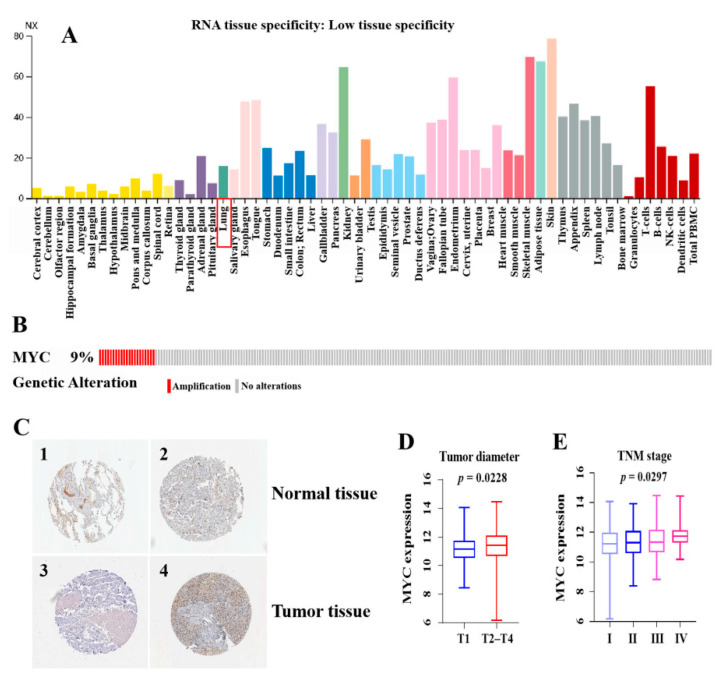
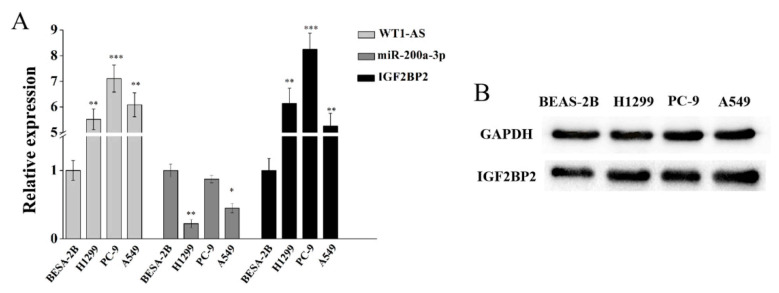
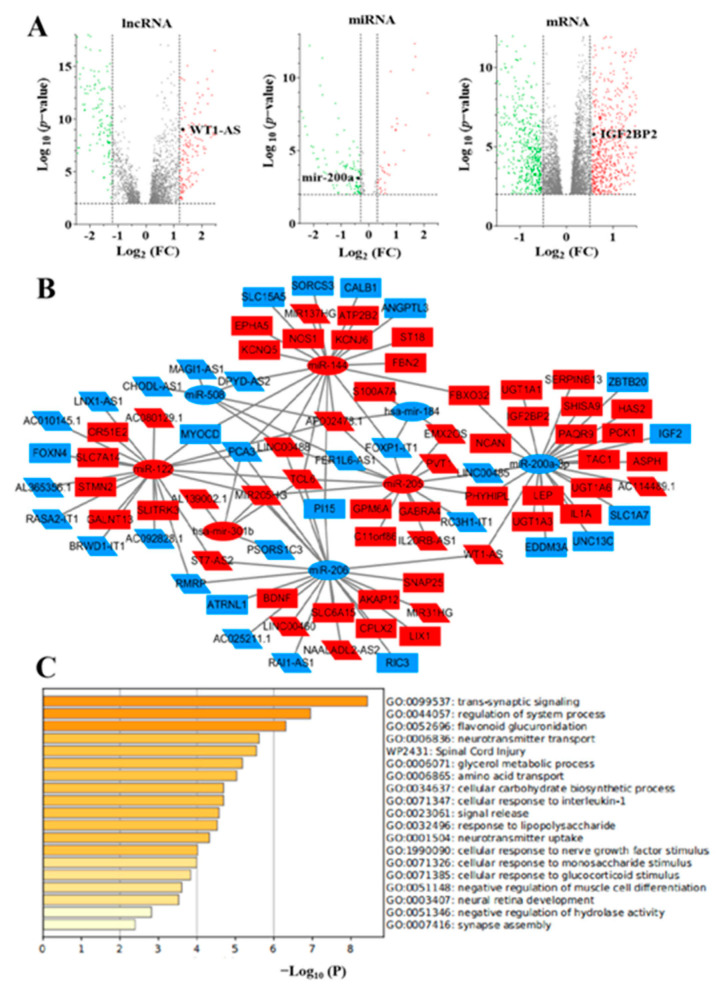
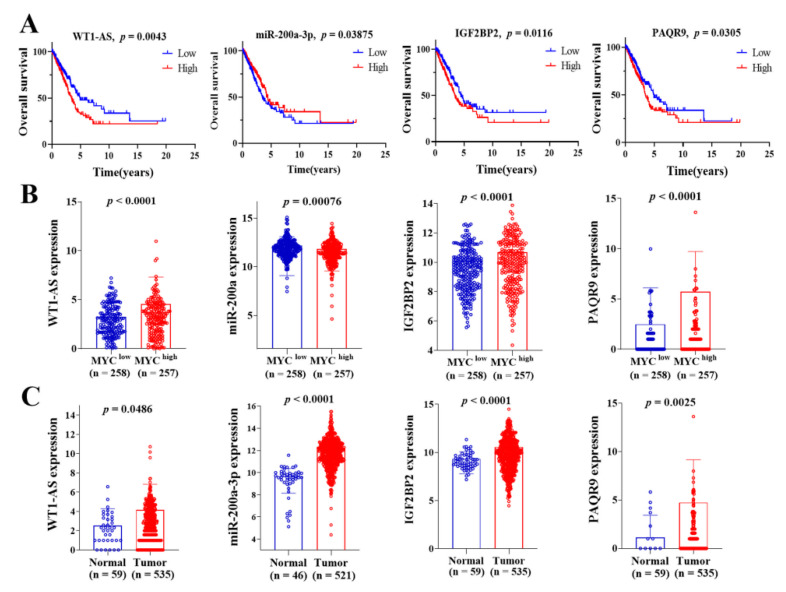
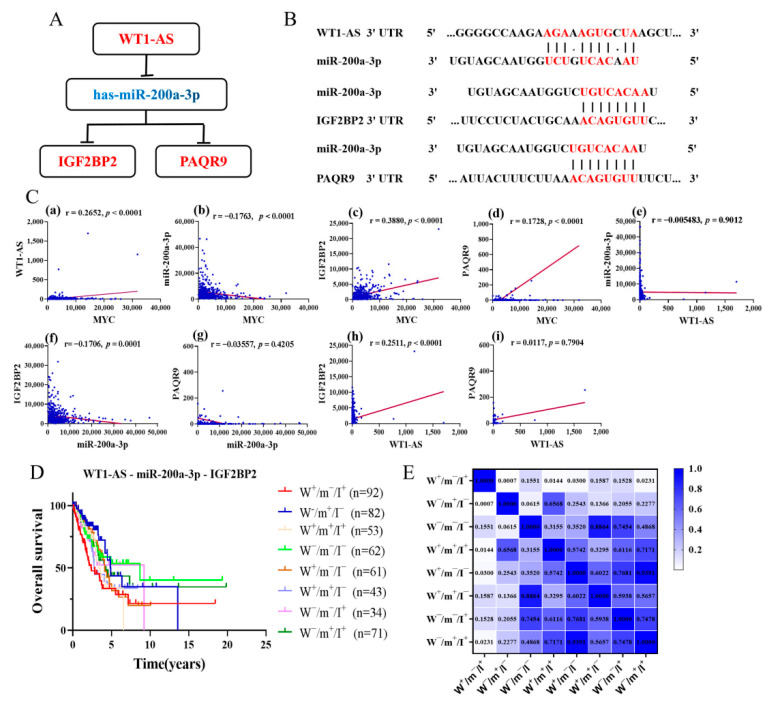
Lung adenocarcinoma (LUAD) is one of the most common malignancies, and there is still a lack of effective biomarkers for early detection and prognostic prediction. Here, we comprehensively analyze the characteristics of. an RNA sequencing data set of LUAD samples. In total, 395 long non-coding RNAs (lncRNAs), 89 microRNAs (miRNAs), and 872 mRNAs associated with c-Myc were identified, which were differentially expressed between tumor and normal tissues. The most relevant pathway was found to be WT1-AS-miR-200a-3p-IGF2BP2 according to the rules of competitive endogenous RNA (ceRNA) regulation. WT1-AS and IGF2BP2 expression were positively correlated and increased in LUAD samples, while miR-200a-3p had relatively low expression. The high expression of WT1-AS and IGF2BP2 was associated with poor prognosis in LUAD patients, while low expression of miR-200a-3p predicted reduced survival ( < 0.05). The analysis of the multi-gene regulation model indicated that the WT1-AS (downregulation)-miR-200a-3p (upregulation)-IGF2BP2 (downregulation) pattern significantly improved the survival of LUAD patients. Finally, reverse transcription-polymerase chain reaction (RT-PCR) and Western blotting were detected in LUAD cells, and the results are consistent with the bioinformatics analysis. In summary, the WT1-AS/IGF2BP2 axis is a potential prognostic biomarker in LUAD and is expected to become an effective target for diagnosis and treatment.
肺腺癌 (LUAD) 是最常见的恶性肿瘤之一,目前仍然缺乏有效的生物标志物用于早期检测和预后预测。在这里,我们全面分析了 LUAD 样本的 RNA 测序数据集的特征。总共鉴定出 395 个长非编码 RNA (lncRNA)、89 个 microRNA (miRNA) 和 872 个与 c-Myc 相关的 mRNA,这些基因在肿瘤组织和正常组织之间存在差异表达。根据竞争内源性 RNA (ceRNA) 调控的规则,发现最相关的通路是 WT1-AS-miR-200a-3p-IGF2BP2。WT1-AS 和 IGF2BP2 的表达在 LUAD 样本中呈正相关且增加,而 miR-200a-3p 的表达相对较低。WT1-AS 和 IGF2BP2 的高表达与 LUAD 患者的预后不良相关,而 miR-200a-3p 的低表达预示着生存时间缩短(<0.05)。多基因调控模型的分析表明,WT1-AS(下调)-miR-200a-3p(上调)-IGF2BP2(下调)模式显著改善了 LUAD 患者的生存。最后,在 LUAD 细胞中进行了逆转录-聚合酶链反应 (RT-PCR) 和 Western blot 检测,结果与生物信息学分析一致。总之,WT1-AS/IGF2BP2 轴是 LUAD 潜在的预后生物标志物,有望成为诊断和治疗的有效靶点。