Department of Cellular and Molecular Biology, Centro Nacional de Biotecnología-Consejo Superior de Investigaciones Científicas, Madrid (Spain).
Department of Macromolecular Structures, Centro Nacional de Biotecnología-Consejo Superior de Investigaciones Científicas, Madrid (Spain).
PLoS Pathog. 2018 Sep 18;14(9):e1007284. doi: 10.1371/journal.ppat.1007284. eCollection 2018 Sep.
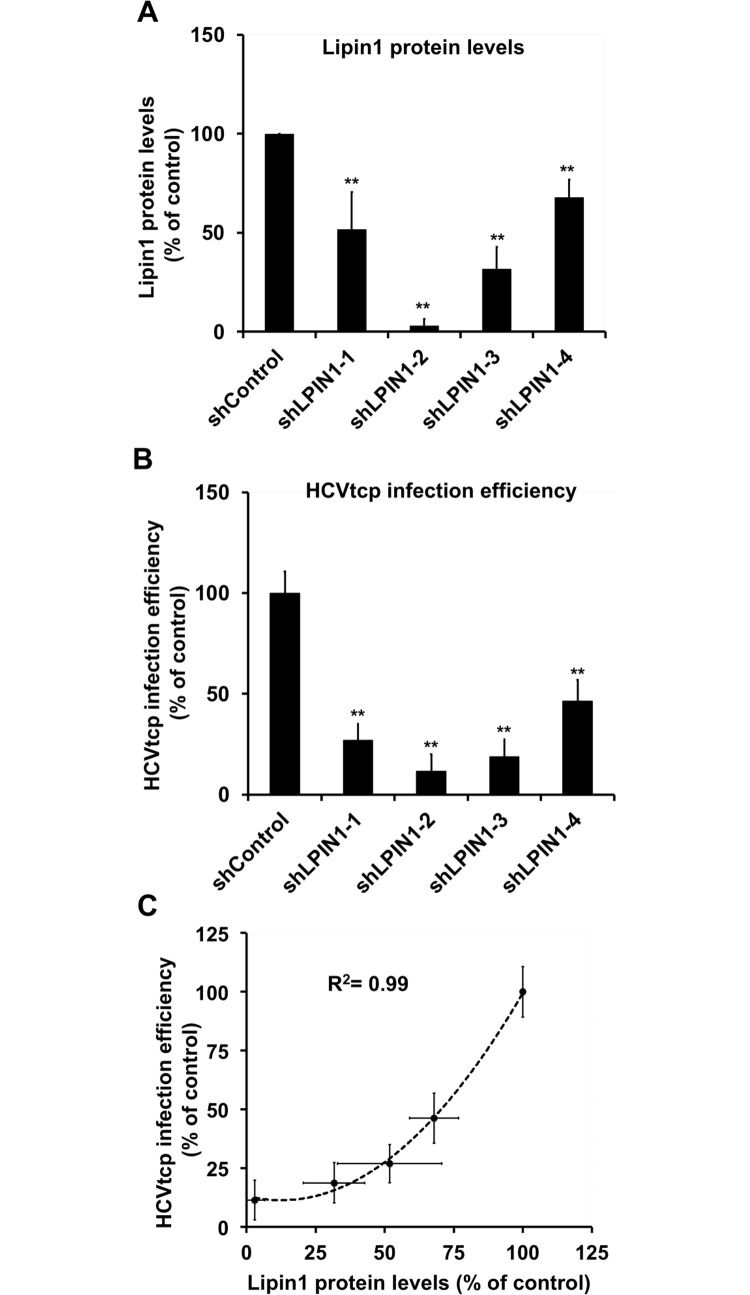
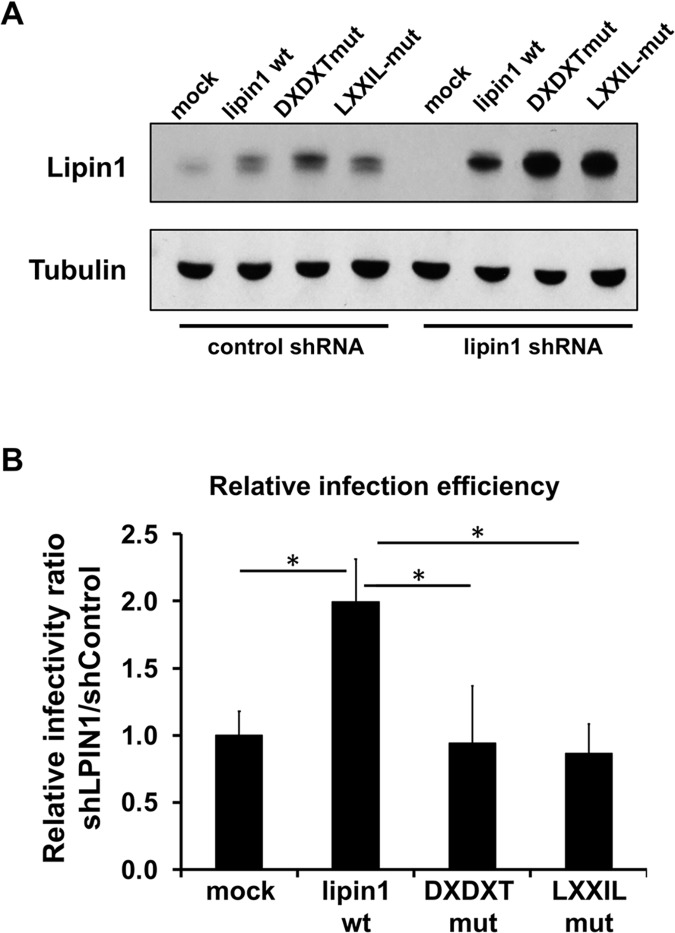
Hepatitis C virus (HCV) infection constitutes a significant health burden worldwide, because it is a major etiologic agent of chronic liver disease, cirrhosis and hepatocellular carcinoma. HCV replication cycle is closely tied to lipid metabolism and infection by this virus causes profound changes in host lipid homeostasis. We focused our attention on a phosphatidate phosphate (PAP) enzyme family (the lipin family), which mediate the conversion of phosphatidate to diacylglycerol in the cytoplasm, playing a key role in triglyceride biosynthesis and in phospholipid homeostasis. Lipins may also translocate to the nucleus to act as transcriptional regulators of genes involved in lipid metabolism. The best-characterized member of this family is lipin1, which cooperates with lipin2 to maintain glycerophospholipid homeostasis in the liver. Lipin1-deficient cell lines were generated by RNAi to study the role of this protein in different steps of HCV replication cycle. Using surrogate models that recapitulate different aspects of HCV infection, we concluded that lipin1 is rate limiting for the generation of functional replicase complexes, in a step downstream primary translation that leads to early HCV RNA replication. Infection studies in lipin1-deficient cells overexpressing wild type or phosphatase-defective lipin1 proteins suggest that lipin1 phosphatase activity is required to support HCV infection. Finally, ultrastructural and biochemical analyses in replication-independent models suggest that lipin1 may facilitate the generation of the membranous compartment that contains functional HCV replicase complexes.
丙型肝炎病毒(HCV)感染是全球范围内的一个重大健康负担,因为它是慢性肝病、肝硬化和肝细胞癌的主要病因。HCV 的复制周期与脂质代谢密切相关,该病毒感染会导致宿主脂质动态平衡发生深刻变化。我们专注于研究磷酸酶磷酸(PAP)酶家族(脂连蛋白家族),该家族介导磷酸酯转化为细胞质中的二酰基甘油,在甘油三酯生物合成和磷脂动态平衡中发挥关键作用。脂连蛋白也可能易位到细胞核,作为涉及脂质代谢的基因的转录调节剂。该家族中研究最充分的成员是脂连蛋白 1,它与脂连蛋白 2合作,维持肝脏中的甘油磷脂动态平衡。通过 RNAi 生成脂连蛋白 1 缺陷细胞系,以研究该蛋白在 HCV 复制周期的不同步骤中的作用。使用再现 HCV 感染不同方面的替代模型,我们得出结论,脂连蛋白 1是功能性复制酶复合物生成的限速因子,在导致早期 HCV RNA 复制的初级翻译的下游步骤中。在过表达野生型或磷酸酶缺陷型脂连蛋白 1 蛋白的脂连蛋白 1 缺陷细胞中的感染研究表明,脂连蛋白 1 的磷酸酶活性对于支持 HCV 感染是必需的。最后,在复制非依赖性模型中的超微结构和生化分析表明,脂连蛋白 1 可能有助于生成包含功能性 HCV 复制酶复合物的膜隔间。