Wong Louise H, Edgar James R, Martello Andrea, Ferguson Brian J, Eden Emily R
UCL Institute of Ophthalmology, London, United Kingdom.
Department of Pathology, University of Cambridge, Cambridge, United Kingdom.
Front Cell Dev Biol. 2021 Mar 18;9:640456. doi: 10.3389/fcell.2021.640456. eCollection 2021.
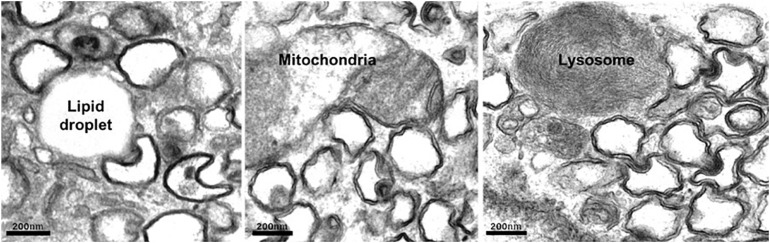
Severe acute respiratory syndrome coronavirus 2 (SARS-CoV-2), the cause of the COVID-19 (coronavirus disease 2019) pandemic, is a positive strand RNA (+RNA) virus. Like other +RNA viruses, SARS-CoV-2 is dependent on host cell metabolic machinery to survive and replicate, remodeling cellular membranes to generate sites of viral replication. Viral RNA-containing double-membrane vesicles (DMVs) are a striking feature of +RNA viral replication and are abundant in SARS-CoV-2-infected cells. Their generation involves rewiring of host lipid metabolism, including lipid biosynthetic pathways. Viruses can also redirect lipids from host cell organelles; lipid exchange at membrane contact sites, where the membranes of adjacent organelles are in close apposition, has been implicated in the replication of several +RNA viruses. Here we review current understanding of DMV biogenesis. With a focus on the exploitation of contact site machinery by +RNA viruses to generate replication organelles, we discuss evidence that similar mechanisms support SARS-CoV-2 replication, protecting its RNA from the host cell immune response.
严重急性呼吸综合征冠状病毒2(SARS-CoV-2)是2019冠状病毒病(COVID-19)大流行的病原体,是一种正链RNA(+RNA)病毒。与其他+RNA病毒一样,SARS-CoV-2依赖宿主细胞代谢机制来生存和复制,重塑细胞膜以产生病毒复制位点。含病毒RNA的双膜囊泡(DMV)是+RNA病毒复制的一个显著特征,在感染SARS-CoV-2的细胞中大量存在。它们的产生涉及宿主脂质代谢的重新布线,包括脂质生物合成途径。病毒还可以从宿主细胞器中重新分配脂质;相邻细胞器膜紧密并置的膜接触位点处的脂质交换与几种+RNA病毒的复制有关。在这里,我们综述了目前对DMV生物发生的理解。我们重点关注+RNA病毒对接触位点机制的利用以产生复制细胞器,并讨论了证据表明类似机制支持SARS-CoV-2复制,保护其RNA免受宿主细胞免疫反应的影响。