Konturek Peter Christopher, Harsch Igor Alexander, Konturek Kathrin, Schink Monic, Konturek Thomas, Neurath Markus F, Zopf Yurdaguel
Department of Internal Medicine 2nd, Thuringia-Clinic Saalfeld, Teaching Hospital of the University of Jena, 68, D-07318 Jena, Germany.
1st Department of Internal Medicine, University Erlangen-Nuremberg, 91054 Erlangen, Germany.
Med Sci (Basel). 2018 Sep 17;6(3):79. doi: 10.3390/medsci6030079.
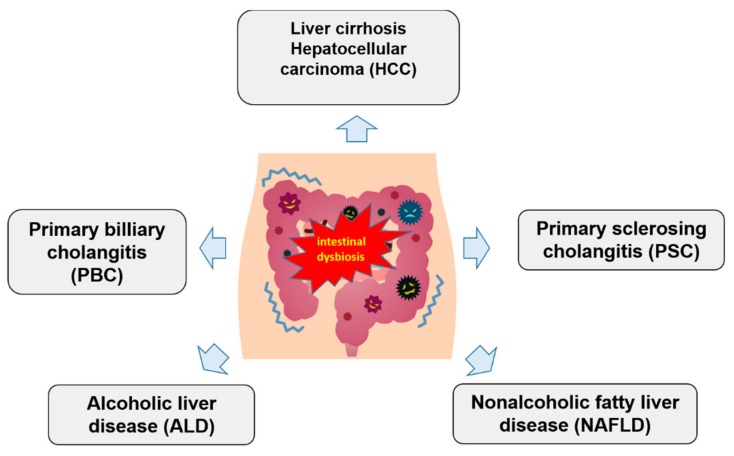
Chronic liver diseases are a major cause of morbidity and mortality worldwide. Recently, gut dysbiosis was identified as an important factor in the pathogenesis of liver diseases. The relationship between gut microbiota and the liver is still not well understood; however, dysfunction of the gut mucosal barrier ("leaky gut") and increased bacterial translocation into the liver via the gut⁻liver axis probably play crucial roles in liver disease development and progression. The liver is an important immunological organ, and, after exposure to gut-derived bacteria via portal circulation, it responds with activation of the innate and adaptive immune system, leading to hepatic injury. A better understanding of the pathophysiological links among gut dysbiosis, the integrity of the gut barrier, and the hepatic immune response to gut-derived factors is essential for the development of new therapies to treat chronic liver diseases.
慢性肝病是全球发病和死亡的主要原因。最近,肠道菌群失调被确定为肝脏疾病发病机制中的一个重要因素。肠道微生物群与肝脏之间的关系仍未得到充分了解;然而,肠道黏膜屏障功能障碍(“肠漏”)以及细菌通过肠-肝轴进入肝脏的增加可能在肝脏疾病的发生和发展中起关键作用。肝脏是一个重要的免疫器官,在通过门静脉循环接触来自肠道的细菌后,它会通过激活先天性和适应性免疫系统做出反应,导致肝损伤。更好地理解肠道菌群失调、肠道屏障完整性以及肝脏对肠道来源因子的免疫反应之间的病理生理联系,对于开发治疗慢性肝病的新疗法至关重要。