Breast Center, Fourth Hospital of Hebei Medical University, Shijiazhuang, 050035, China.
Peking-Tsinghua Center for Life Sciences, Academy for Advanced Interdisciplinary Studies, Peking University, Beijing, 100871, China.
Breast Cancer Res. 2018 Sep 18;20(1):113. doi: 10.1186/s13058-018-1042-7.
Drug resistance of paclitaxel (TAX), the first-line chemotherapy drug for breast cancer, was reported to develop in 90% of patients with breast cancer, especially metastatic breast cancer. Investigating the mechanism of TAX resistance of breast cancer cells and developing the strategy improving its therapeutic efficiency are crucial to breast cancer cure.
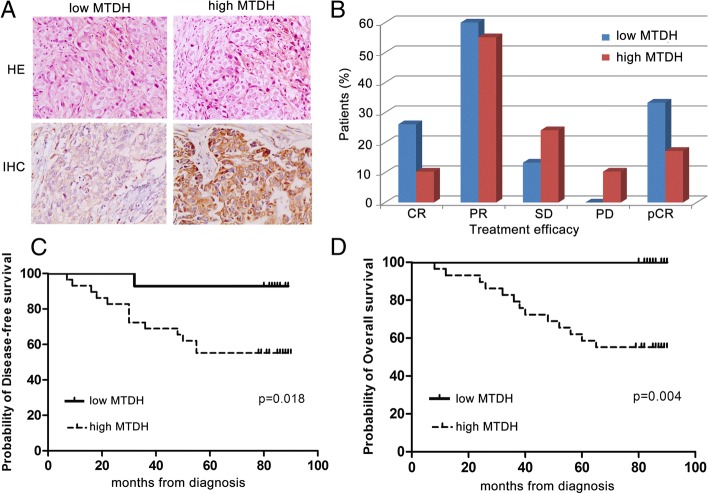
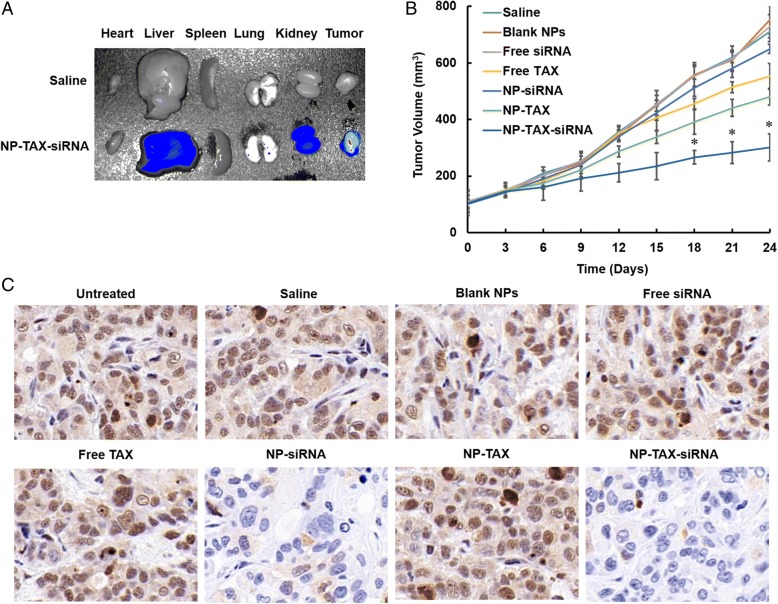
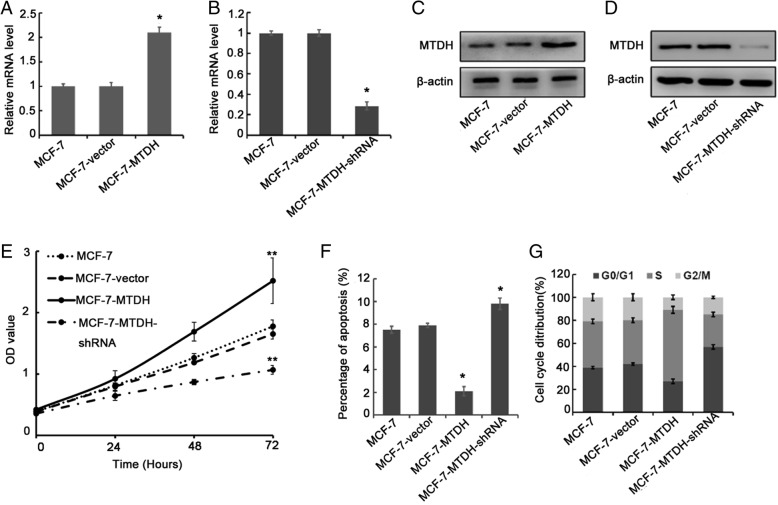
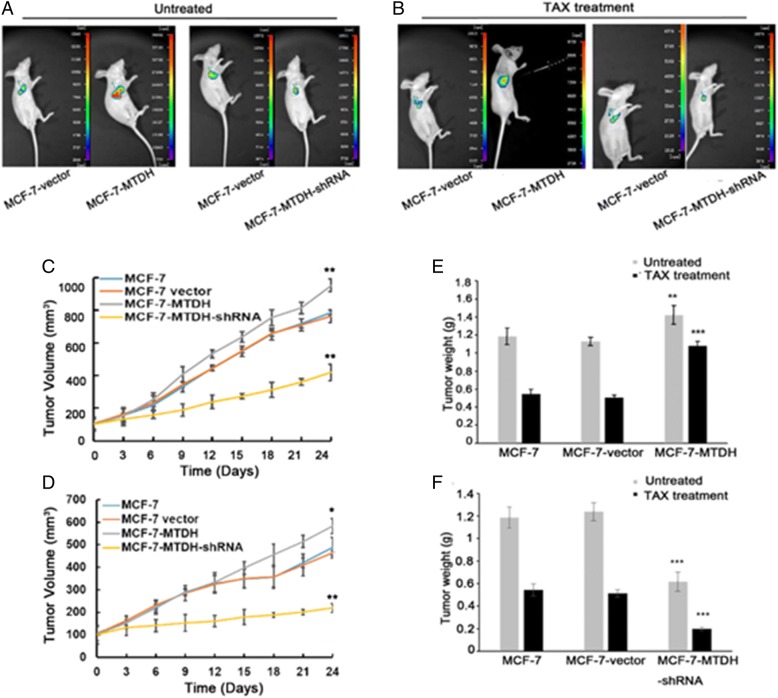
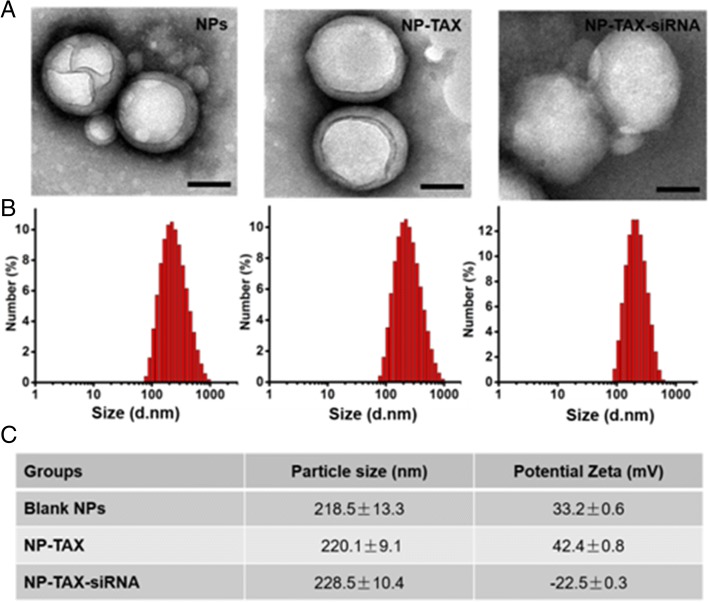
We here report an elegant nanoparticle (NP)-based technique that realizes efficient breast cancer treatment of TAX. Using lentiviral vector-mediated gene knockdown, we first demonstrated that TAX therapeutic efficiency was closely correlated with metadherin (MTDH) gene expression in breast cancer cell lines. This finding was also supported by efficacy of TAX treatment in breast cancer patients from our clinical studies. Specifically, TAX treatment became more effective when MTDH expression was decreased in MCF-7 cancer cells by the blocking nuclear factor-kappa B (NF-κB) pathway. Based on these findings, we subsequently synthesized a polymeric NP that could co-deliver MTDH-small interfering RNA (MTDH-siRNA) and TAX into the breast cancer tumors in tumor-bearing mice. The NPs were composed of a cationic copolymer, which wrapped TAX in the inside and adsorbed the negatively charged siRNA on their surface with high drug-loading efficiency and good stability.
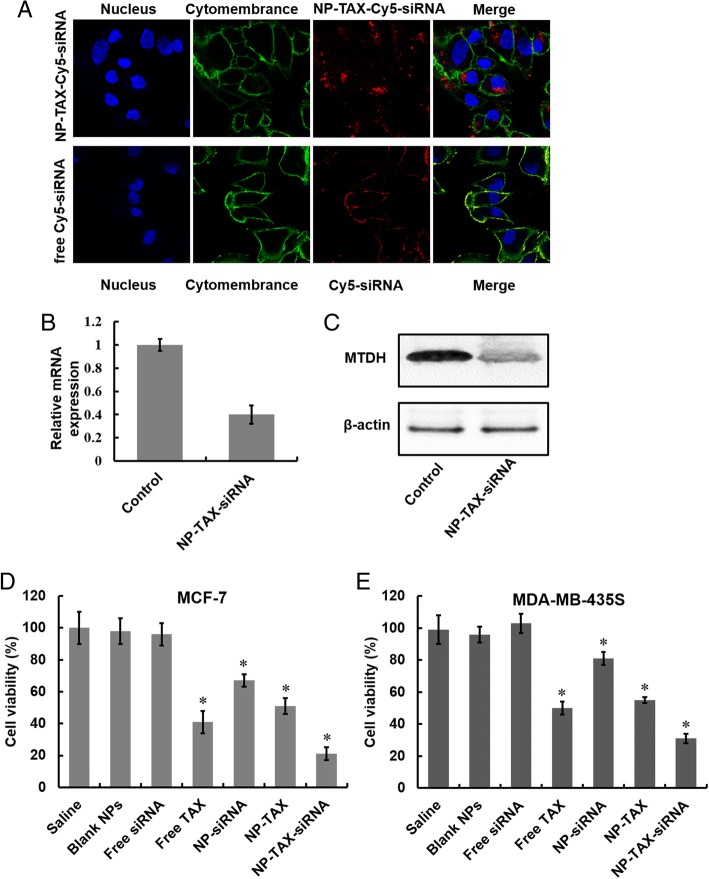
NP-based co-delivery approach can effectively knock down the MTDH gene both in vitro and in vivo, which dramatically inhibits breast tumor growth, achieving effective TAX chemotherapy treatment without overt side effects. This study provides a potential therapeutic strategy for the treatment of a wide range of solid tumors highly expressing MTDH.
紫杉醇(TAX)是乳腺癌的一线化疗药物,据报道其耐药性在 90%的乳腺癌患者中,尤其是转移性乳腺癌患者中发展。研究乳腺癌细胞 TAX 耐药的机制并开发提高其治疗效率的策略对乳腺癌的治愈至关重要。
我们在此报告了一种基于纳米粒子(NP)的技术,该技术可有效治疗乳腺癌的 TAX。我们使用慢病毒载体介导的基因敲低技术,首次证明了 TAX 的治疗效率与乳腺癌细胞系中的间甲基二氢叶酸还原酶(MTDH)基因表达密切相关。这一发现也得到了我们临床研究中乳腺癌患者 TAX 治疗效果的支持。具体而言,当 MCF-7 癌细胞中 MTDH 表达通过阻断核因子-κB(NF-κB)通路而降低时,TAX 治疗变得更加有效。基于这些发现,我们随后合成了一种聚合物 NP,该 NP 可以将 MTDH-小干扰 RNA(MTDH-siRNA)和 TAX 共同递送至荷瘤小鼠的乳腺癌肿瘤中。NP 由阳离子共聚物组成,它将 TAX 包裹在内部,并将带负电荷的 siRNA 吸附在其表面上,具有高载药效率和良好的稳定性。
NP 为基础的共递药方法可以有效地在体外和体内敲低 MTDH 基因,从而显著抑制乳腺癌肿瘤的生长,实现有效的 TAX 化疗治疗而没有明显的副作用。这项研究为治疗广泛表达 MTDH 的实体肿瘤提供了一种潜在的治疗策略。