• 文献检索
  • 文档翻译
  • 深度研究
  • 学术资讯
  • Suppr Zotero 插件Zotero 插件
  • 邀请有礼
  • 套餐&价格
  • 历史记录
应用&插件
Suppr Zotero 插件Zotero 插件浏览器插件Mac 客户端Windows 客户端微信小程序
定价
高级版会员购买积分包购买API积分包
服务
文献检索文档翻译深度研究API 文档MCP 服务
关于我们
关于 Suppr公司介绍联系我们用户协议隐私条款
关注我们

Suppr 超能文献

核心技术专利:CN118964589B侵权必究
粤ICP备2023148730 号-1Suppr @ 2026

文献检索

告别复杂PubMed语法,用中文像聊天一样搜索,搜遍4000万医学文献。AI智能推荐,让科研检索更轻松。

立即免费搜索

文件翻译

保留排版,准确专业,支持PDF/Word/PPT等文件格式,支持 12+语言互译。

免费翻译文档

深度研究

AI帮你快速写综述,25分钟生成高质量综述,智能提取关键信息,辅助科研写作。

立即免费体验

体外细胞定位及单分散壳聚糖纳米粒子标记生物材料的有效积累,阐明药物传递系统的控制释放途径。

In vitro cellular localization and efficient accumulation of fluorescently tagged biomaterials from monodispersed chitosan nanoparticles for elucidation of controlled release pathways for drug delivery systems.

机构信息

Department of Cell and Molecular Biology, Faculty of Biotechnology and Biomolecular Sciences, Universiti Putra Malaysia, Serdang, Selangor, Malaysia,

Material Synthesis and Characterization Laboratory, Institute of Advanced Technology, Universiti Putra Malaysia, Serdang, Selangor, Malaysia,

出版信息

Int J Nanomedicine. 2018 Sep 5;13:5075-5095. doi: 10.2147/IJN.S164843. eCollection 2018.

DOI:10.2147/IJN.S164843
PMID:30233174
原文链接:https://pmc.ncbi.nlm.nih.gov/articles/PMC6130301/
Abstract

BACKGROUND

Inefficient cellular delivery and poor intracellular accumulation are major drawbacks towards achieving favorable therapeutic responses from many therapeutic drugs and biomolecules. To tackle this issue, nanoparticle-mediated delivery vectors have been aptly explored as a promising delivery strategy capable of enhancing the cellular localization of biomolecules and improve their therapeutic efficacies. However, the dynamics of intracellular biomolecule release and accumulation from such nanoparticle systems has currently remained scarcely studied.

OBJECTIVES

The objective of this study was to utilize a chitosan-based nanoparticle system as the delivery carrier for glutamic acid, a model for encapsulated biomolecules to visualize the in vitro release and accumulation of the encapsulated glutamic acid from chitosan nanoparticle (CNP) systems.

METHODS

CNP was synthesized via ionic gelation routes utilizing tripolyphosphate (TPP) as a cross-linker. In order to track glutamic acid release, the glutamic acid was fluorescently-labeled with fluorescein isothiocyanate prior encapsulation into CNP.

RESULTS

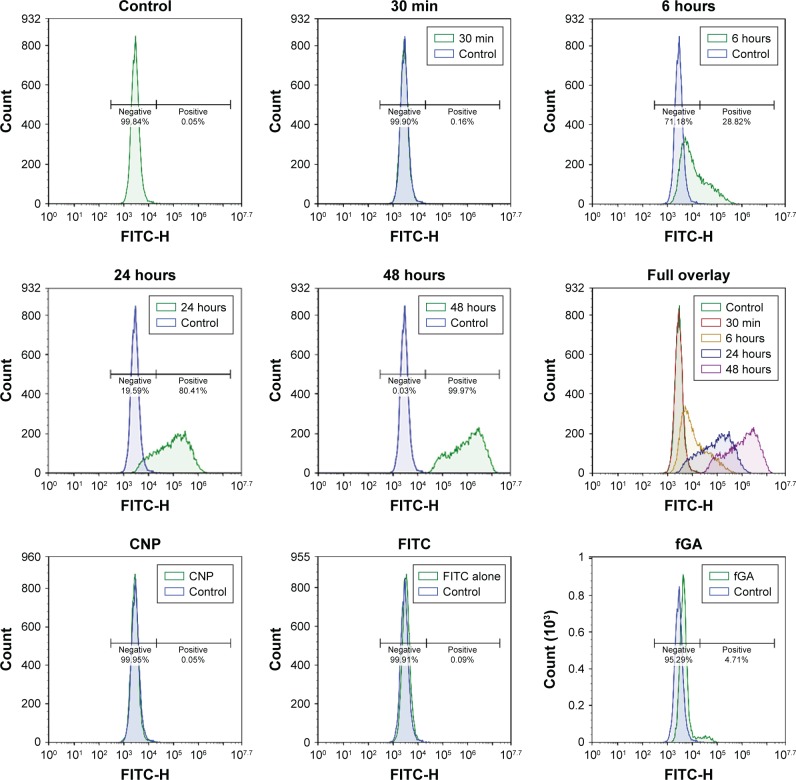
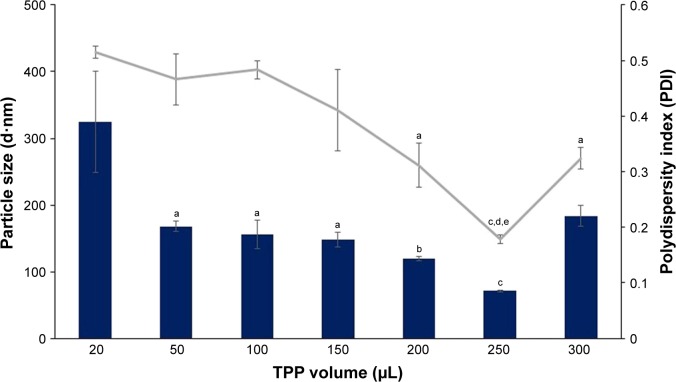
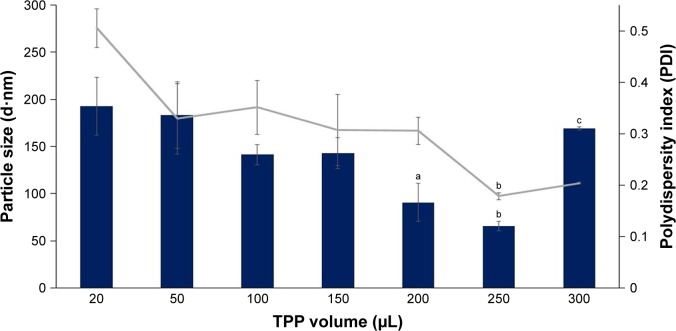
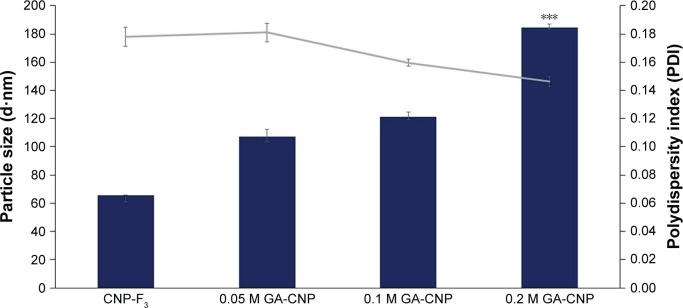
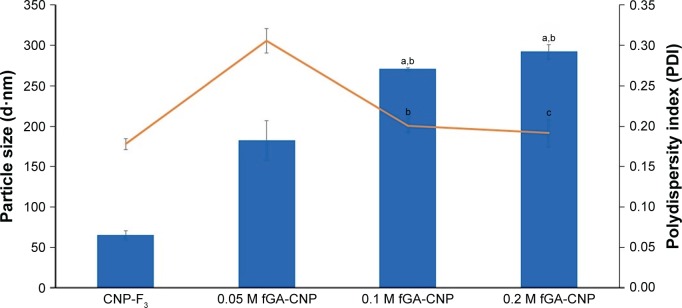
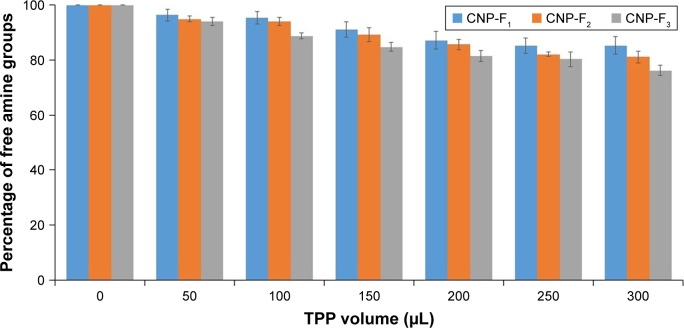
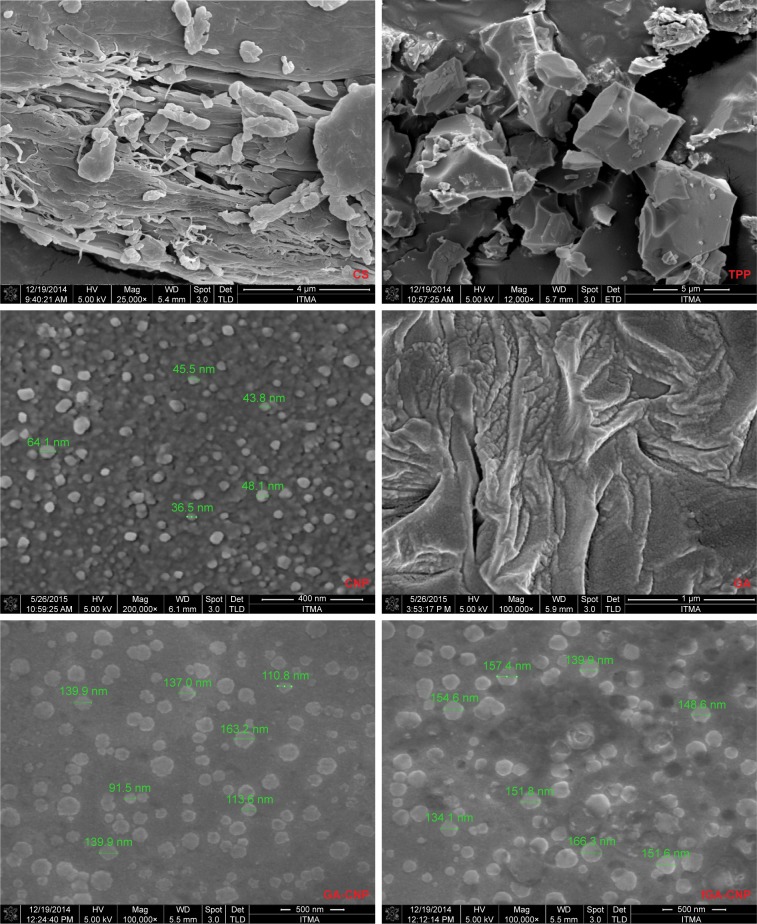
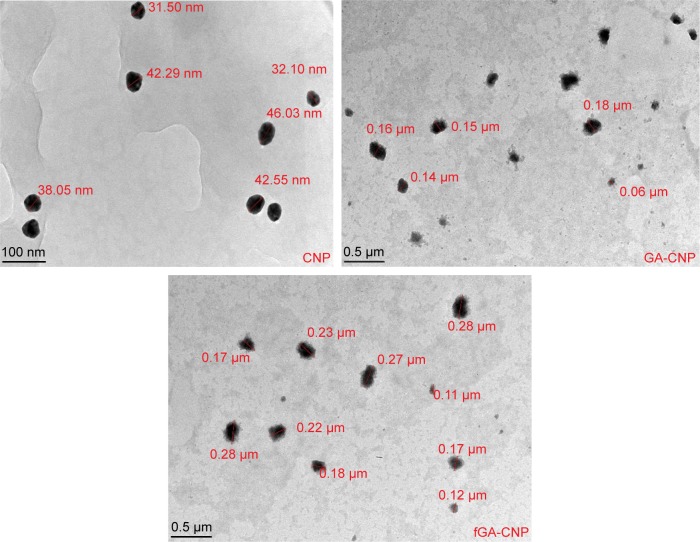
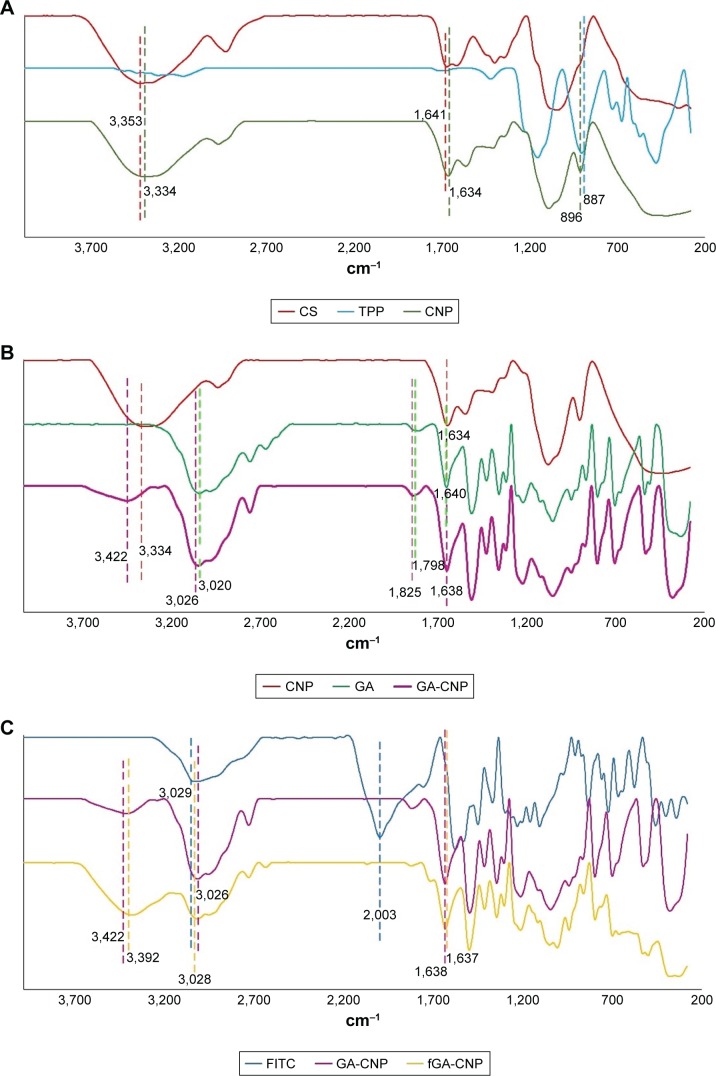
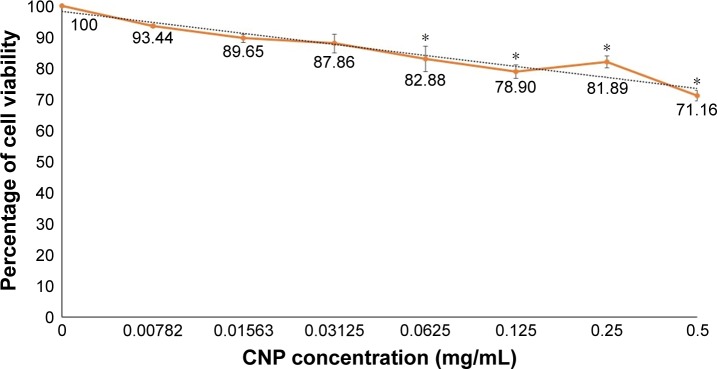
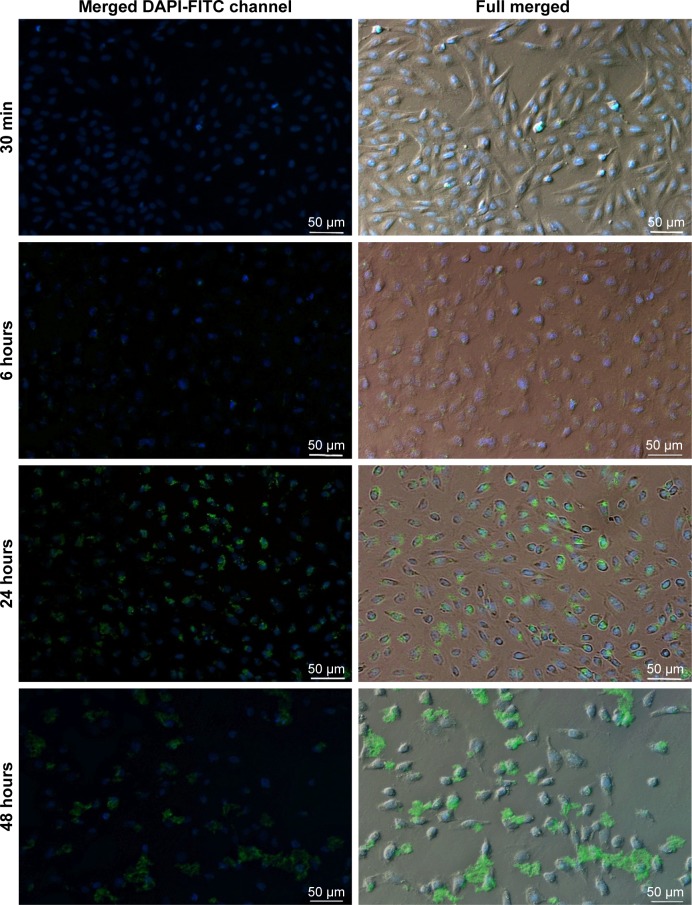
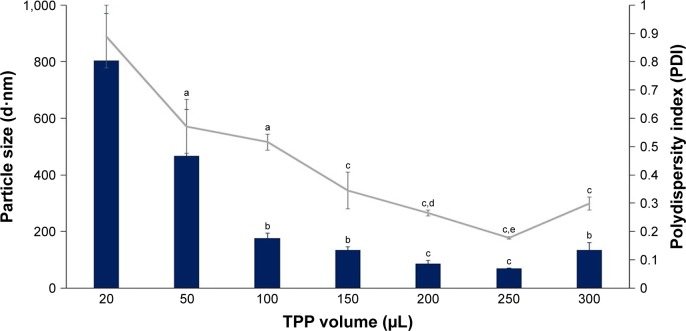
Light Scattering data concluded the successful formation of small-sized and mono-dispersed CNP at a specific volume ratio of chitosan to TPP. Encapsulation of glutamic acid as a model cargo into CNP led to an increase in particle size to >100 nm. The synthesized CNP exhibited spherical shape under Electron Microscopy. The formation of CNP was reflected by the reduction in free amine groups of chitosan following ionic crosslinking reactions. The encapsulation of glutamic acid was further confirmed by Fourier Transform Infrared (FTIR) analysis. Cell viability assay showed 70% cell viability at the maximum concentration of 0.5 mg/mL CS and 0.7 mg/mL TPP used, indicating the low inherent toxicity property of this system. In vitro release study using fluorescently-tagged glutamic acids demonstrated the release and accumulation of the encapsulated glutamic acids at 6 hours post treatment. A significant accumulation was observed at 24 hours and 48 hours later. Flow cytometry data demonstrated a gradual increase in intracellular fluorescence signal from 30 minutes to 48 hours post treatment with fluorescently-labeled glutamic acids encapsulated CNP.

CONCLUSION

These results therefore suggested the potential of CNP system towards enhancing the intracellular delivery and release of the encapsulated glutamic acids. This CNP system thus may serves as a potential candidate vector capable to improve the therapeutic efficacy for drugs and biomolecules in medical as well as pharmaceutical applications through the enhanced intracellular release and accumulation of the encapsulated cargo.

摘要

背景

许多治疗药物和生物分子的细胞递送效率低和细胞内积累差是实现良好治疗反应的主要障碍。为了解决这个问题,纳米颗粒介导的递药载体作为一种有前途的递药策略得到了恰当的探索,该策略能够增强生物分子的细胞定位并提高其治疗效果。然而,目前对于这种纳米颗粒系统中细胞内生物分子释放和积累的动力学仍知之甚少。

目的

本研究旨在利用壳聚糖纳米颗粒作为载体,对谷氨酸进行包裹,作为模型包裹生物分子,以可视化壳聚糖纳米颗粒(CNP)系统中包裹谷氨酸的体外释放和积累。

方法

通过使用三聚磷酸钠(TPP)作为交联剂的离子凝胶化途径合成 CNP。为了跟踪谷氨酸的释放,在将谷氨酸包裹到 CNP 之前,用异硫氰酸荧光素对谷氨酸进行荧光标记。

结果

光散射数据表明,在壳聚糖与 TPP 的特定体积比下,成功形成了小尺寸和单分散的 CNP。将谷氨酸作为模型货物包裹到 CNP 中会导致粒径增加到> 100nm。电子显微镜下合成的 CNP 呈球形。壳聚糖的游离胺基减少反映了离子交联反应后 CNP 的形成。傅里叶变换红外(FTIR)分析进一步证实了谷氨酸的包封。细胞活力测定显示,在使用的最大浓度 0.5mg/mLCS 和 0.7mg/mLTPP 下,细胞存活率为 70%,表明该系统的固有毒性低。使用荧光标记的谷氨酸进行体外释放研究表明,在处理后 6 小时内释放和积累了包裹的谷氨酸。24 小时和 48 小时后观察到明显的积累。流式细胞术数据表明,用荧光标记的谷氨酸包裹的 CNP 处理后 30 分钟至 48 小时,细胞内荧光信号逐渐增加。

结论

这些结果表明 CNP 系统具有增强包裹谷氨酸的细胞内递送和释放的潜力。因此,该 CNP 系统可能是一种有前途的载体,通过增强包裹货物的细胞内释放和积累,能够提高药物和生物分子在医学和制药领域的治疗效果。
https://cdn.ncbi.nlm.nih.gov/pmc/blobs/d807/6130301/b3219f98de2a/ijn-13-5075Fig12.jpg
https://cdn.ncbi.nlm.nih.gov/pmc/blobs/d807/6130301/50c55e10a881/ijn-13-5075Fig1.jpg
https://cdn.ncbi.nlm.nih.gov/pmc/blobs/d807/6130301/721da9558ef5/ijn-13-5075Fig2.jpg
https://cdn.ncbi.nlm.nih.gov/pmc/blobs/d807/6130301/39d5f23923ef/ijn-13-5075Fig3.jpg
https://cdn.ncbi.nlm.nih.gov/pmc/blobs/d807/6130301/286cef46dc39/ijn-13-5075Fig4.jpg
https://cdn.ncbi.nlm.nih.gov/pmc/blobs/d807/6130301/14dcf33908fd/ijn-13-5075Fig5.jpg
https://cdn.ncbi.nlm.nih.gov/pmc/blobs/d807/6130301/6560e57fbb36/ijn-13-5075Fig6.jpg
https://cdn.ncbi.nlm.nih.gov/pmc/blobs/d807/6130301/71ef3d2ad1d2/ijn-13-5075Fig7.jpg
https://cdn.ncbi.nlm.nih.gov/pmc/blobs/d807/6130301/caceff294ee4/ijn-13-5075Fig8.jpg
https://cdn.ncbi.nlm.nih.gov/pmc/blobs/d807/6130301/6187239de8ab/ijn-13-5075Fig9.jpg
https://cdn.ncbi.nlm.nih.gov/pmc/blobs/d807/6130301/1a397ce10340/ijn-13-5075Fig10.jpg
https://cdn.ncbi.nlm.nih.gov/pmc/blobs/d807/6130301/2c0a308474d0/ijn-13-5075Fig11.jpg
https://cdn.ncbi.nlm.nih.gov/pmc/blobs/d807/6130301/b3219f98de2a/ijn-13-5075Fig12.jpg
https://cdn.ncbi.nlm.nih.gov/pmc/blobs/d807/6130301/50c55e10a881/ijn-13-5075Fig1.jpg
https://cdn.ncbi.nlm.nih.gov/pmc/blobs/d807/6130301/721da9558ef5/ijn-13-5075Fig2.jpg
https://cdn.ncbi.nlm.nih.gov/pmc/blobs/d807/6130301/39d5f23923ef/ijn-13-5075Fig3.jpg
https://cdn.ncbi.nlm.nih.gov/pmc/blobs/d807/6130301/286cef46dc39/ijn-13-5075Fig4.jpg
https://cdn.ncbi.nlm.nih.gov/pmc/blobs/d807/6130301/14dcf33908fd/ijn-13-5075Fig5.jpg
https://cdn.ncbi.nlm.nih.gov/pmc/blobs/d807/6130301/6560e57fbb36/ijn-13-5075Fig6.jpg
https://cdn.ncbi.nlm.nih.gov/pmc/blobs/d807/6130301/71ef3d2ad1d2/ijn-13-5075Fig7.jpg
https://cdn.ncbi.nlm.nih.gov/pmc/blobs/d807/6130301/caceff294ee4/ijn-13-5075Fig8.jpg
https://cdn.ncbi.nlm.nih.gov/pmc/blobs/d807/6130301/6187239de8ab/ijn-13-5075Fig9.jpg
https://cdn.ncbi.nlm.nih.gov/pmc/blobs/d807/6130301/1a397ce10340/ijn-13-5075Fig10.jpg
https://cdn.ncbi.nlm.nih.gov/pmc/blobs/d807/6130301/2c0a308474d0/ijn-13-5075Fig11.jpg
https://cdn.ncbi.nlm.nih.gov/pmc/blobs/d807/6130301/b3219f98de2a/ijn-13-5075Fig12.jpg

相似文献

1
In vitro cellular localization and efficient accumulation of fluorescently tagged biomaterials from monodispersed chitosan nanoparticles for elucidation of controlled release pathways for drug delivery systems.体外细胞定位及单分散壳聚糖纳米粒子标记生物材料的有效积累,阐明药物传递系统的控制释放途径。
Int J Nanomedicine. 2018 Sep 5;13:5075-5095. doi: 10.2147/IJN.S164843. eCollection 2018.
2
Increased ROS Scavenging and Antioxidant Efficiency of Chlorogenic Acid Compound Delivered via a Chitosan Nanoparticulate System for Efficient In Vitro Visualization and Accumulation in Human Renal Adenocarcinoma Cells.壳聚糖纳米粒系统递送绿原酸复合物增加 ROS 清除和抗氧化效率,实现人肾腺癌细胞的高效体外可视化和积累。
Int J Mol Sci. 2019 Sep 20;20(19):4667. doi: 10.3390/ijms20194667.
3
PLGA Microparticles Entrapping Chitosan-Based Nanoparticles for the Ocular Delivery of Ranibizumab.包裹基于壳聚糖纳米颗粒的聚乳酸-羟基乙酸共聚物微粒用于雷珠单抗的眼部递送
Mol Pharm. 2016 Sep 6;13(9):2923-40. doi: 10.1021/acs.molpharmaceut.6b00335. Epub 2016 Jun 22.
4
Stability, Intracellular Delivery, and Release of siRNA from Chitosan Nanoparticles Using Different Cross-Linkers.使用不同交联剂的壳聚糖纳米颗粒对siRNA的稳定性、细胞内递送及释放
PLoS One. 2015 Jun 11;10(6):e0128963. doi: 10.1371/journal.pone.0128963. eCollection 2015.
5
Novel amphiphilic chitosan nanocarriers for sustained oral delivery of hydrophobic drugs.用于疏水性药物持续口服递送的新型两亲性壳聚糖纳米载体。
Eur J Pharm Sci. 2017 Mar 1;99:285-291. doi: 10.1016/j.ejps.2016.12.035. Epub 2017 Jan 3.
6
Chitosan nanoparticle as protein delivery carrier--systematic examination of fabrication conditions for efficient loading and release.壳聚糖纳米颗粒作为蛋白质递送载体——高效负载与释放制备条件的系统研究
Colloids Surf B Biointerfaces. 2007 Sep 1;59(1):24-34. doi: 10.1016/j.colsurfb.2007.04.009. Epub 2007 Apr 24.
7
Preparation of collagen peptide functionalized chitosan nanoparticles by ionic gelation method: An effective carrier system for encapsulation and release of doxorubicin for cancer drug delivery.离子凝胶法制备胶原肽功能化壳聚糖纳米粒:一种用于阿霉素包封与释放的癌症药物递送有效载体系统。
Mater Sci Eng C Mater Biol Appl. 2017 Jan 1;70(Pt 1):378-385. doi: 10.1016/j.msec.2016.09.003. Epub 2016 Sep 6.
8
Enzyme nanovehicles: Histaminase and catalase delivered in nanoparticulate chitosan.酶纳米载体:纳米粒壳聚糖中递送的组氨酸酶和过氧化氢酶。
Int J Pharm. 2019 Feb 25;557:145-153. doi: 10.1016/j.ijpharm.2018.12.050. Epub 2018 Dec 28.
9
Modulation of surface charge, particle size and morphological properties of chitosan-TPP nanoparticles intended for gene delivery.用于基因递送的壳聚糖-三聚磷酸钠纳米颗粒的表面电荷、粒径和形态特性的调控。
Colloids Surf B Biointerfaces. 2005 Aug;44(2-3):65-73. doi: 10.1016/j.colsurfb.2005.06.001.
10
Two-step method for encapsulation of oregano essential oil in chitosan nanoparticles: preparation, characterization and in vitro release study.两步法包埋牛至精油于壳聚糖纳米粒中:制备、表征和体外释放研究。
Carbohydr Polym. 2013 Jun 5;95(1):50-6. doi: 10.1016/j.carbpol.2013.02.031. Epub 2013 Feb 26.

引用本文的文献

1
Synthesis of Chitosan Nanoparticles via Microfluidic Approach: The Role of Temperature in Tailoring Aggregation for Enhanced Uniformity.通过微流控方法合成壳聚糖纳米颗粒:温度在调整聚集以提高均匀性中的作用。
Micromachines (Basel). 2025 May 28;16(6):642. doi: 10.3390/mi16060642.
2
Facilitating DNAzyme transport across the blood-brain barrier with nanoliposome technology.利用纳米脂质体技术促进脱氧核酶穿越血脑屏障。
Sci Rep. 2025 May 29;15(1):18914. doi: 10.1038/s41598-025-04433-2.
3
Novel -derived nanoliposomes enhance the inhibition of MCF-7 breast cancer cells by superb intracellular uptake of doxorubicin.

本文引用的文献

1
Increased Loading, Efficacy and Sustained Release of Silibinin, a Poorly Soluble Drug Using Hydrophobically-Modified Chitosan Nanoparticles for Enhanced Delivery of Anticancer Drug Delivery Systems.使用疏水改性壳聚糖纳米颗粒增强难溶性药物水飞蓟宾的负载、疗效及缓释,用于改善抗癌药物递送系统
Nanomaterials (Basel). 2017 Nov 8;7(11):379. doi: 10.3390/nano7110379.
2
Bottom-up synthesis of WS nanosheets with synchronous surface modification for imaging guided tumor regression.用于成像引导肿瘤消退的具有同步表面修饰的 WS 纳米片的自下而上合成。
Acta Biomater. 2017 Aug;58:442-454. doi: 10.1016/j.actbio.2017.06.014. Epub 2017 Jun 10.
3
新型纳米脂质体通过阿霉素卓越的细胞内摄取增强了对MCF-7乳腺癌细胞的抑制作用。
Heliyon. 2024 Sep 26;10(19):e38337. doi: 10.1016/j.heliyon.2024.e38337. eCollection 2024 Oct 15.
4
Targeted chitosan nanobubbles as a strategy to down-regulate microRNA-17 into B-cell lymphoma models.靶向壳聚糖纳米气泡作为下调 B 细胞淋巴瘤模型中 microRNA-17 的策略。
Front Immunol. 2023 Jun 8;14:1200310. doi: 10.3389/fimmu.2023.1200310. eCollection 2023.
5
Imaging-Guided Delivery of a Hydrophilic Drug to Eukaryotic Cells Based on Its Hydrophobic Ion Pairing with Poly(hexamethylene guanidine) in a Maleated Chitosan Carrier.基于疏水离子配对的马来化壳聚糖载体中聚六亚甲基胍对亲水性药物向真核细胞的成像引导递释。
Molecules. 2021 Dec 7;26(24):7426. doi: 10.3390/molecules26247426.
6
Graphene Oxide Loaded with Protocatechuic Acid and Chlorogenic Acid Dual Drug Nanodelivery System for Human Hepatocellular Carcinoma Therapeutic Application.载原儿茶酸和绿原酸的氧化石墨烯双重药物纳米递药系统用于人肝癌的治疗应用。
Int J Mol Sci. 2021 May 28;22(11):5786. doi: 10.3390/ijms22115786.
7
Nanochitin whisker enhances insecticidal activity of chemical pesticide for pest insect control and toxicity.纳米几丁质晶须增强了化学农药对鳞翅目害虫的杀虫活性和毒性。
J Nanobiotechnology. 2021 Feb 16;19(1):49. doi: 10.1186/s12951-021-00792-w.
8
Increased Cytotoxic Efficacy of Protocatechuic Acid in A549 Human Lung Cancer Delivered via Hydrophobically Modified-Chitosan Nanoparticles As an Anticancer Modality.通过疏水改性壳聚糖纳米颗粒递送的原儿茶酸对A549人肺癌细胞的细胞毒性增强,作为一种抗癌方式。
Polymers (Basel). 2020 Aug 28;12(9):1951. doi: 10.3390/polym12091951.
9
Docetaxel-Loaded Chitosan-Cholesterol Conjugate-Based Self-Assembled Nanoparticles for Overcoming Multidrug Resistance in Cancer Cells.基于载有多西他赛的壳聚糖-胆固醇共轭物的自组装纳米颗粒用于克服癌细胞中的多药耐药性
Pharmaceutics. 2020 Aug 19;12(9):783. doi: 10.3390/pharmaceutics12090783.
10
Effects of Surface Characteristics of Polymeric Nanocapsules on the Pharmacokinetics and Efficacy of Antimalarial Quinine.聚合物纳米胶囊表面特性对抗疟药奎宁药代动力学和疗效的影响。
Int J Nanomedicine. 2019 Dec 31;14:10165-10178. doi: 10.2147/IJN.S227914. eCollection 2019.
Factors determining the stability, size distribution, and cellular accumulation of small, monodisperse chitosan nanoparticles as candidate vectors for anticancer drug delivery: application to the passive encapsulation of [(14)C]-doxorubicin.
决定小尺寸、单分散壳聚糖纳米颗粒作为抗癌药物递送候选载体的稳定性、尺寸分布和细胞积累的因素:[(14)C]-阿霉素被动包封的应用
Nanotechnol Sci Appl. 2015 Dec 11;8:67-80. doi: 10.2147/NSA.S91785. eCollection 2015.
4
Delivery of DNAzyme targeting aurora kinase A to inhibit the proliferation and migration of human prostate cancer.递送靶向极光激酶A的脱氧核酶以抑制人前列腺癌的增殖和迁移。
Int J Nanomedicine. 2015 Sep 9;10:5715-27. doi: 10.2147/IJN.S90559. eCollection 2015.
5
Development of a Nanoparticle-Embedded Chitosan Sponge for Topical and Local Administration of Chemotherapeutic Agents.用于化疗药物局部和局部给药的纳米粒子包埋壳聚糖海绵的研制
J Nanotechnol Eng Med. 2014 Nov;5(4):0409051-4090511. doi: 10.1115/1.4030899.
6
Enhanced cellular uptake and gene silencing activity of siRNA molecules mediated by chitosan-derivative nanocomplexes.壳聚糖衍生物纳米复合物介导的siRNA分子增强细胞摄取及基因沉默活性
Int J Pharm. 2014 Oct 1;473(1-2):579-90. doi: 10.1016/j.ijpharm.2014.07.026. Epub 2014 Jul 23.
7
Two-step method for encapsulation of oregano essential oil in chitosan nanoparticles: preparation, characterization and in vitro release study.两步法包埋牛至精油于壳聚糖纳米粒中:制备、表征和体外释放研究。
Carbohydr Polym. 2013 Jun 5;95(1):50-6. doi: 10.1016/j.carbpol.2013.02.031. Epub 2013 Feb 26.
8
Chitosan/TPP microparticles obtained by microemulsion method applied in controlled release of heparin.采用微乳液法制备的壳聚糖/TPP 微球在肝素控制释放中的应用。
Int J Biol Macromol. 2012 Dec;51(5):1127-33. doi: 10.1016/j.ijbiomac.2012.08.032. Epub 2012 Sep 2.
9
Endocytic uptake pathways utilized by CPMV nanoparticles.CPMV 纳米颗粒所利用的内吞摄取途径。
Mol Pharm. 2013 Jan 7;10(1):26-32. doi: 10.1021/mp300238w. Epub 2012 Sep 20.
10
Biodegradable nanoparticles are excellent vehicle for site directed in-vivo delivery of drugs and vaccines.可生物降解的纳米颗粒是药物和疫苗体内靶向递释的优良载体。
J Nanobiotechnology. 2011 Nov 28;9:55. doi: 10.1186/1477-3155-9-55.