Department of Cell Biochemistry, Faculty of Biochemistry, Biophysics and Biotechnology, Jagiellonian University, Kraków, Poland,
Jerzy Haber Institute of Catalysis and Surface Chemistry, Polish Academy of Sciences, Kraków, Poland.
Int J Nanomedicine. 2018 Sep 6;13:5159-5172. doi: 10.2147/IJN.S169120. eCollection 2018.
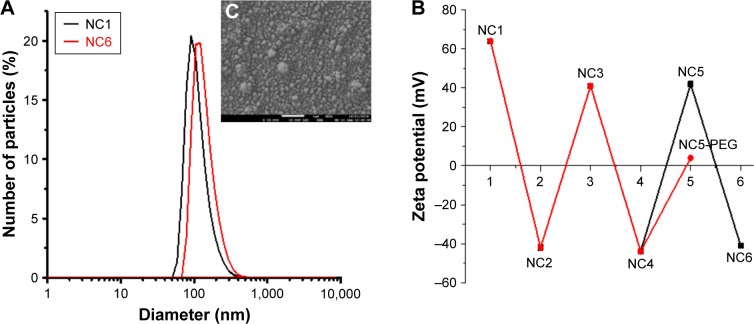
Toxicity of nanomaterials is one of the most important factors limiting their medical application. Evaluation of in vitro nanotoxicity allows for the identification and elimination of most of the toxic materials prior to animal testing. The current knowledge of the possible side effects of biodegradable nanomaterials, such as liposomes and polymeric organic nanoparticles, is limited. Previously, we developed a potential drug delivery system in the form of nanocapsules with polyelectrolyte, biodegradable shells consisting of poly-l-lysine and poly-l-glutamic acid (PGA), formed by the layer-by-layer adsorption technique.
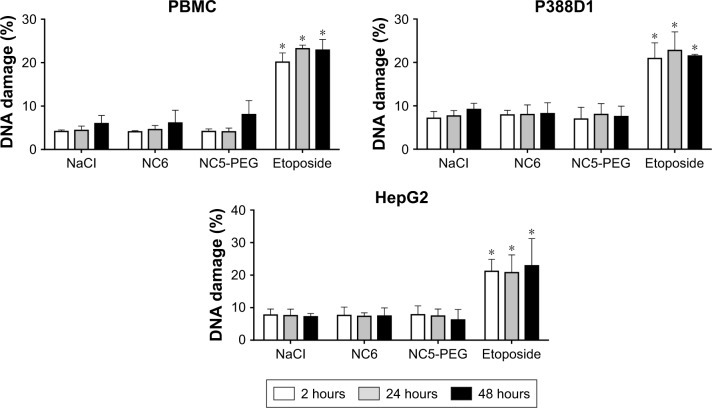
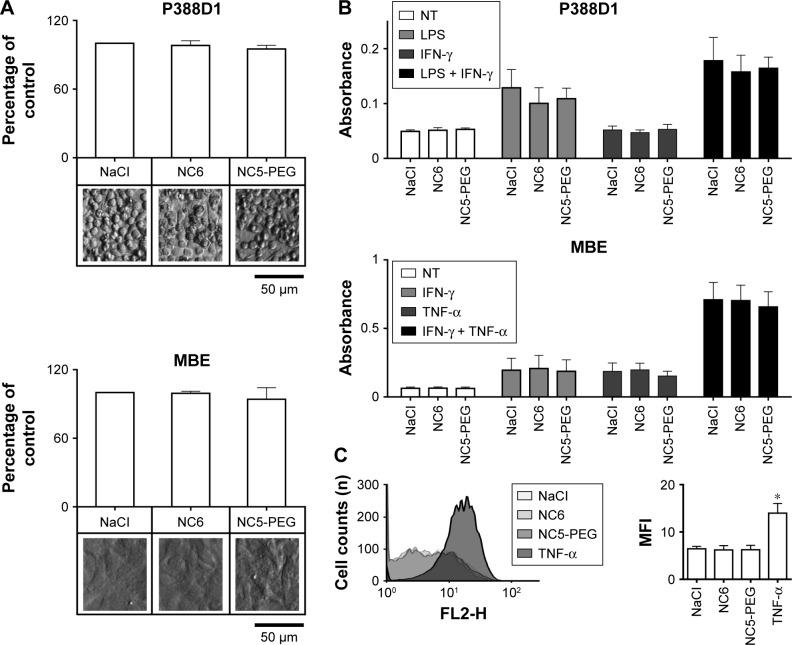
Hemolysis assay, viability tests, flow cytometry analysis of vascular cell adhesion molecule-1 expression on endothelium, analysis of nitric oxide production, measurement of intracellular reactive oxygen species levels, detection of antioxidant enzyme activity, and analysis of DNA damage with comet assay were performed to study the in vitro toxicity of nanocapsules.
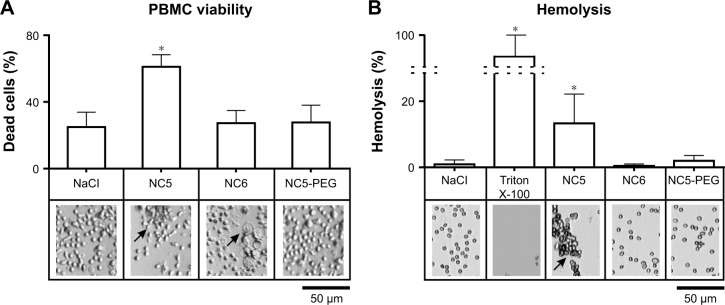
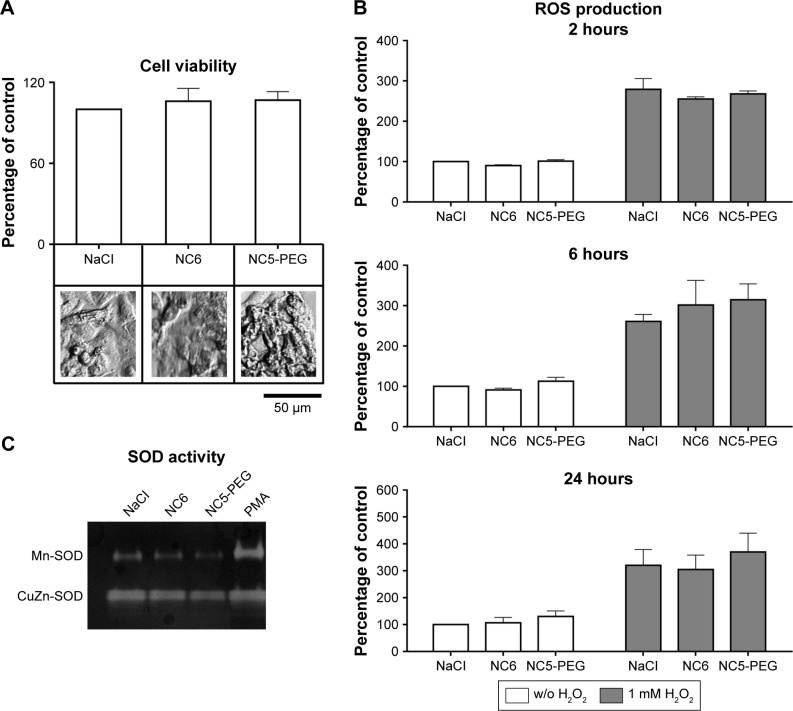
In this work, we present the results of an in vitro analysis of toxicity of five-layer positively charged poly-l-lysine-terminated nanocapsules (NC5), six-layer negatively charged PGA-terminated nanocapsules (NC6) and five-layer PEGylated nanocapsules (NC5-PEG). PGA and polyethylene glycol (PEG) were used as two different "stealth" polymers. Of all the polyelectrolyte nanocapsules tested for blood compatibility, only cationic NC5 showed acute toxicity toward blood cells, expressed as hemolysis and aggregation. Neither NC6 nor NC5-PEG had proinflammatory activity evaluated through changes in the expression of NF-κB-dependent genes, iNOS and vascular cell adhesion molecule-1, induced oxidative stress, or promoted DNA damage in various cells.
Our studies clearly indicate that PGA-coated (negatively charged) and PEGylated polyelectrolyte nanocapsules do not show in vitro toxicity, and their potential as a drug delivery system may be safely studied in vivo.
纳米材料的毒性是限制其医学应用的最重要因素之一。评估体外纳米毒性可以在动物试验之前识别和消除大多数有毒材料。目前对于可生物降解的纳米材料(如脂质体和聚合有机纳米粒子)的潜在副作用的了解有限。此前,我们开发了一种以纳米胶囊为形式的潜在药物递送系统,该系统具有由聚电解质、由聚-l-赖氨酸和聚-l-谷氨酸(PGA)组成的生物可降解壳,通过层层吸附技术形成。
进行了溶血试验、细胞活力试验、血管细胞黏附分子-1在血管内皮细胞上表达的流式细胞术分析、一氧化氮产生分析、细胞内活性氧水平的测定、抗氧化酶活性的检测以及彗星试验检测 DNA 损伤,以研究纳米胶囊的体外毒性。
在这项工作中,我们展示了五层带正电的聚-l-赖氨酸端纳米胶囊(NC5)、六层带负电的 PGA 端纳米胶囊(NC6)和五层 PEG 化纳米胶囊(NC5-PEG)的体外毒性分析结果。PGA 和聚乙二醇(PEG)被用作两种不同的“隐身”聚合物。在所有测试血液相容性的聚电解质纳米胶囊中,只有阳离子 NC5 对血细胞表现出急性毒性,表现为溶血和聚集。NC6 和 NC5-PEG 均未表现出促炎活性,这是通过评估 NF-κB 依赖性基因、iNOS 和血管细胞黏附分子-1 的表达变化、诱导氧化应激或在各种细胞中促进 DNA 损伤来确定的。
我们的研究清楚地表明,PGA 涂层(带负电)和 PEG 化聚电解质纳米胶囊没有表现出体外毒性,并且它们作为药物递送系统的潜力可以在体内安全地进行研究。