Bavelaar Bas M, Lee Boon Q, Gill Martin R, Falzone Nadia, Vallis Katherine A
CR-UK/MRC Oxford Institute for Radiation Oncology, Department of Oncology, University of Oxford, Oxford, United Kingdom.
Front Pharmacol. 2018 Sep 4;9:996. doi: 10.3389/fphar.2018.00996. eCollection 2018.
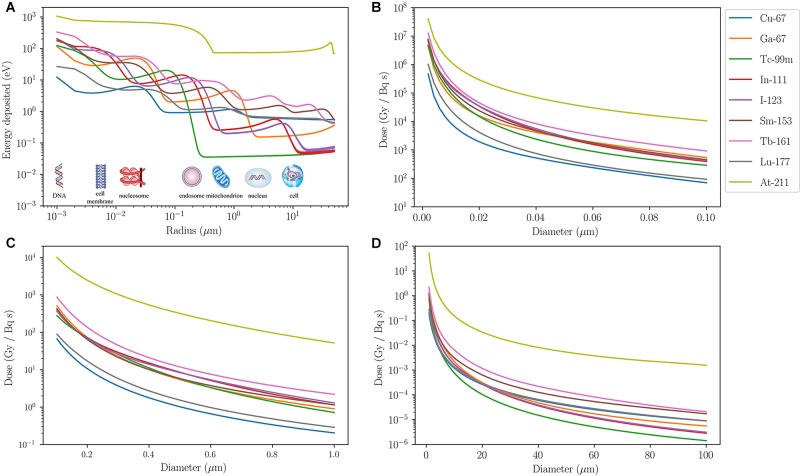
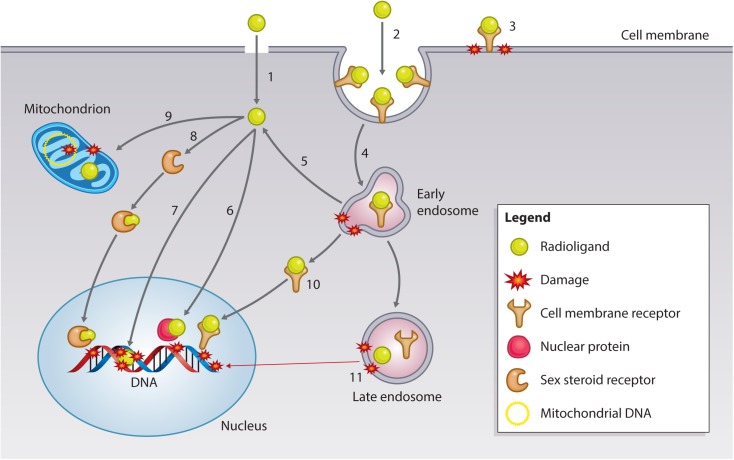
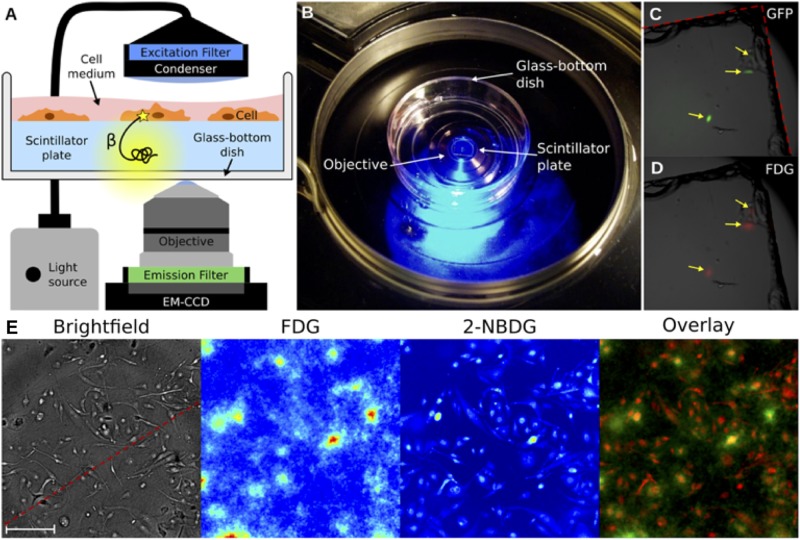
The last decade has seen rapid growth in the use of theranostic radionuclides for the treatment and imaging of a wide range of cancers. Radionuclide therapy and imaging rely on a radiolabeled vector to specifically target cancer cells. Radionuclides that emit β particles have thus far dominated the field of targeted radionuclide therapy (TRT), mainly because the longer range (μm-mm track length) of these particles offsets the heterogeneous expression of the molecular target. Shorter range (nm-μm track length) α- and Auger electron (AE)-emitting radionuclides on the other hand provide high ionization densities at the site of decay which could overcome much of the toxicity associated with β-emitters. Given that there is a growing body of evidence that other sensitive sites besides the DNA, such as the cell membrane and mitochondria, could be critical targets in TRT, improved techniques in detecting the subcellular distribution of these radionuclides are necessary, especially since many β-emitting radionuclides also emit AE. The successful development of TRT agents capable of homing to targets with subcellular precision demands the parallel development of quantitative assays for evaluation of spatial distribution of radionuclides in the nm-μm range. In this review, the status of research directed at subcellular targeting of radionuclide theranostics and the methods for imaging and quantification of radionuclide localization at the nanoscale are described.
在过去十年中,用于多种癌症治疗和成像的治疗诊断放射性核素的使用迅速增长。放射性核素治疗和成像依赖于放射性标记载体来特异性靶向癌细胞。迄今为止,发射β粒子的放射性核素在靶向放射性核素治疗(TRT)领域占据主导地位,主要是因为这些粒子的射程较长(微米-毫米轨迹长度)弥补了分子靶点的异质性表达。另一方面,射程较短(纳米-微米轨迹长度)的发射α粒子和俄歇电子(AE)的放射性核素在衰变部位提供高电离密度,这可能克服许多与β发射体相关的毒性。鉴于越来越多的证据表明,除DNA之外的其他敏感部位,如细胞膜和线粒体,可能是TRT中的关键靶点,因此需要改进检测这些放射性核素亚细胞分布的技术,特别是因为许多发射β粒子的放射性核素也发射AE。成功开发能够以亚细胞精度归巢到靶点的TRT药物需要同时开发用于评估纳米-微米范围内放射性核素空间分布的定量分析方法。在这篇综述中,描述了针对放射性核素治疗诊断亚细胞靶向的研究现状以及纳米级放射性核素定位的成像和定量方法。