Wu Jia-Shun, Zheng Min, Zhang Mei, Pang Xin, Li Li, Wang Sha-Sha, Yang Xiao, Wu Jing-Biao, Tang Ya-Jie, Tang Ya-Ling, Liang Xin-Hua
State Key Laboratory of Oral Diseases, National Clinical Research Center for Oral Diseases, Department of Oral and Maxillofacial Surgery, West China Hospital of Stomatology, Sichuan University, Chengdu, China.
Department of Stomatology, Zhoushan Hospital, Wenzhou Medical University, Zhejiang, China.
Front Microbiol. 2018 Sep 4;9:2081. doi: 10.3389/fmicb.2018.02081. eCollection 2018.
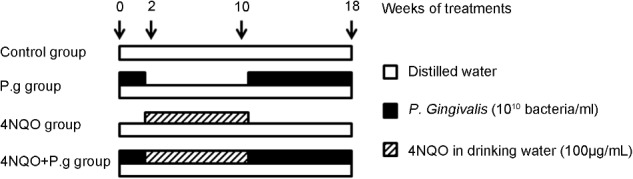
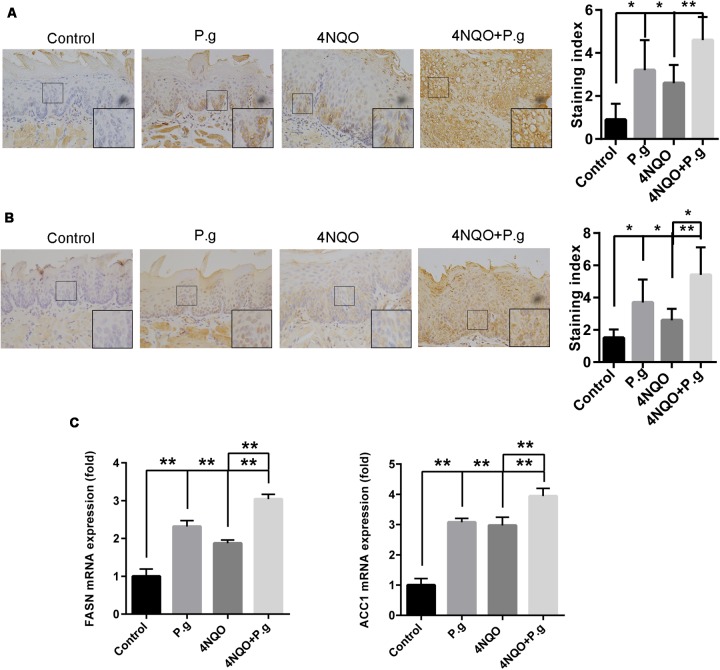
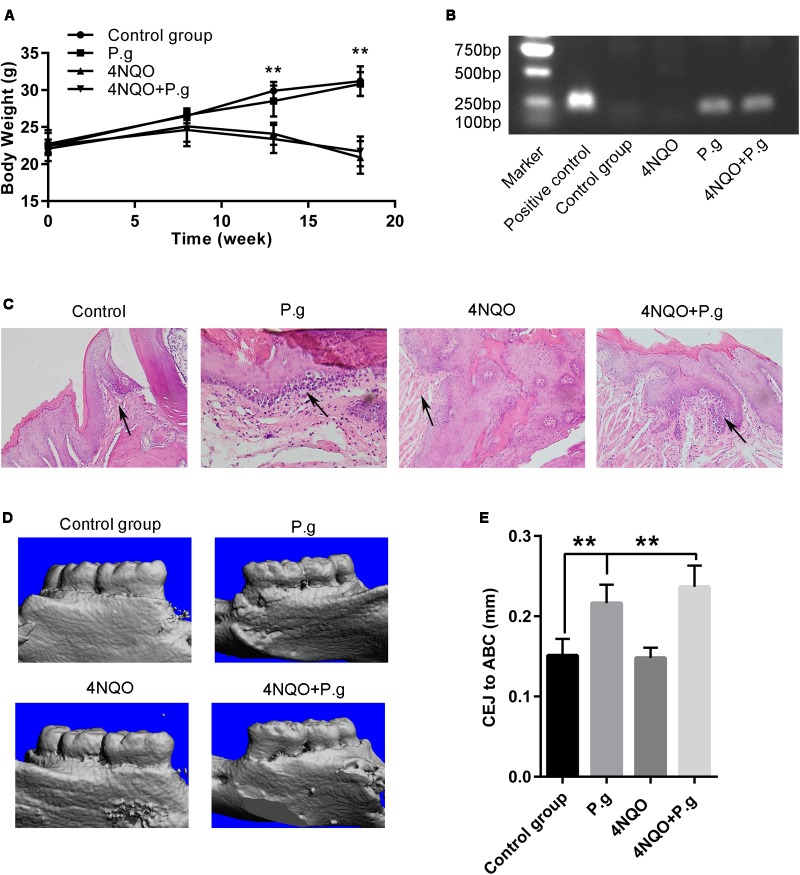
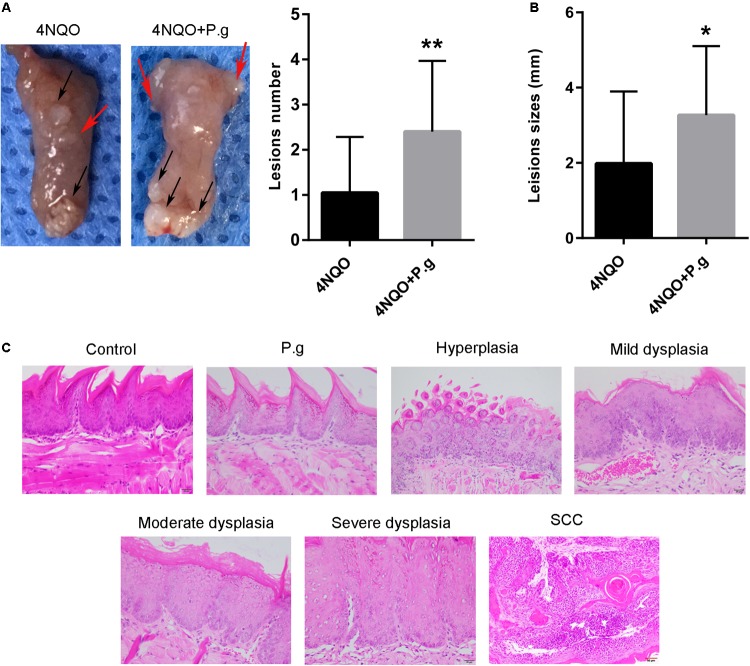
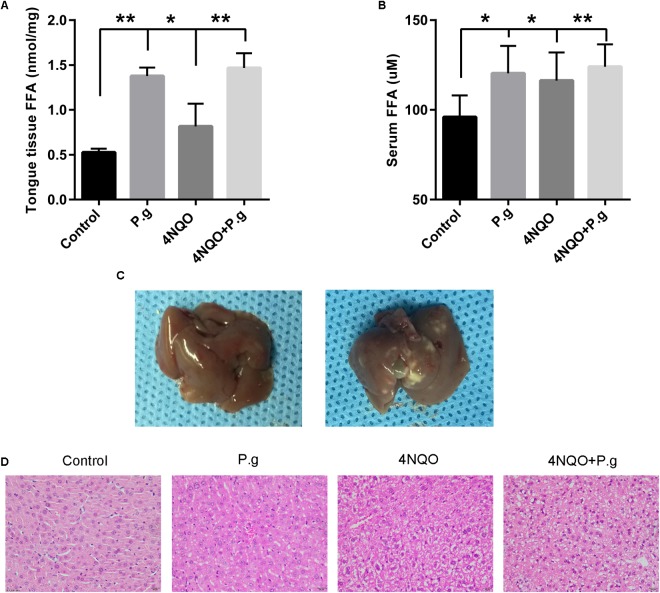
Microbiota has been widely considered to play a critical role in human carcinogenesis. Human papilloma virus, hepatitis B and C virus, and are implicated in the pathogenesis of cancer of uterine cervix, liver, and stomach, respectively. However, whether , a common Gram negative oral bacteria, is associated with oral carcinogenesis still remains unclear and its underlying mechanism needs to be addressed. Here, we established a combined experimental system of 4NQO-induced oral carcinoma model and chronic periodontitis model and investigated the effects of infection on oral carcinogenesis and fatty acid metabolism during oral carcinogenesis. The data showed that in this animal model, infection induced mice periodontitis, increased the tongue lesion size and multiplicity of each mouse and promoted oral cancer development. treatment significantly increased the level of free fatty acids and altered the fatty acid profile in tongue tissues and the serum of mice. And induced the formation of fatty liver of the mice. Besides, immunohistochemical analysis and qRT-PCR showed that the expression of fatty-acid synthase and acetyl-CoA carboxylase 1 were increased in the tongue and liver tissues of 4NQO-treated mice infected with . These results showed that promoted oral carcinogenesis and aggravated disturbance of fatty acid metabolism, indicating a close association among , lipid metabolic and oral carcinogenesis.
微生物群被广泛认为在人类致癌过程中起关键作用。人乳头瘤病毒、乙型和丙型肝炎病毒分别与子宫颈癌、肝癌和胃癌的发病机制有关。然而,一种常见的革兰氏阴性口腔细菌是否与口腔癌发生有关仍不清楚,其潜在机制有待探讨。在此,我们建立了4NQO诱导的口腔癌模型和慢性牙周炎模型的联合实验系统,并研究了该细菌感染对口腔癌发生及口腔癌发生过程中脂肪酸代谢的影响。数据显示,在该动物模型中,该细菌感染诱发小鼠牙周炎,增加每只小鼠的舌部病变大小和病变数量,并促进口腔癌发展。该细菌处理显著提高了游离脂肪酸水平,并改变了小鼠舌组织和血清中的脂肪酸谱。并且该细菌诱导小鼠形成脂肪肝。此外,免疫组化分析和qRT-PCR显示,在感染该细菌的4NQO处理小鼠的舌组织和肝组织中,脂肪酸合酶和乙酰辅酶A羧化酶1的表达增加。这些结果表明,该细菌促进口腔癌发生并加重脂肪酸代谢紊乱,表明该细菌、脂质代谢与口腔癌发生之间存在密切关联。