Intramural Research Program, Synaptic Plasticity Section, National Institute on Drug Abuse, US National Institutes of Health, Baltimore, MD 21224, USA.
Intramural Research Program, Synaptic Plasticity Section, National Institute on Drug Abuse, US National Institutes of Health, Baltimore, MD 21224, USA; Department of Neurology, Johns Hopkins Medicine, Baltimore, MD 21205, USA.
Curr Opin Neurobiol. 2019 Feb;54:66-72. doi: 10.1016/j.conb.2018.08.013. Epub 2018 Sep 17.
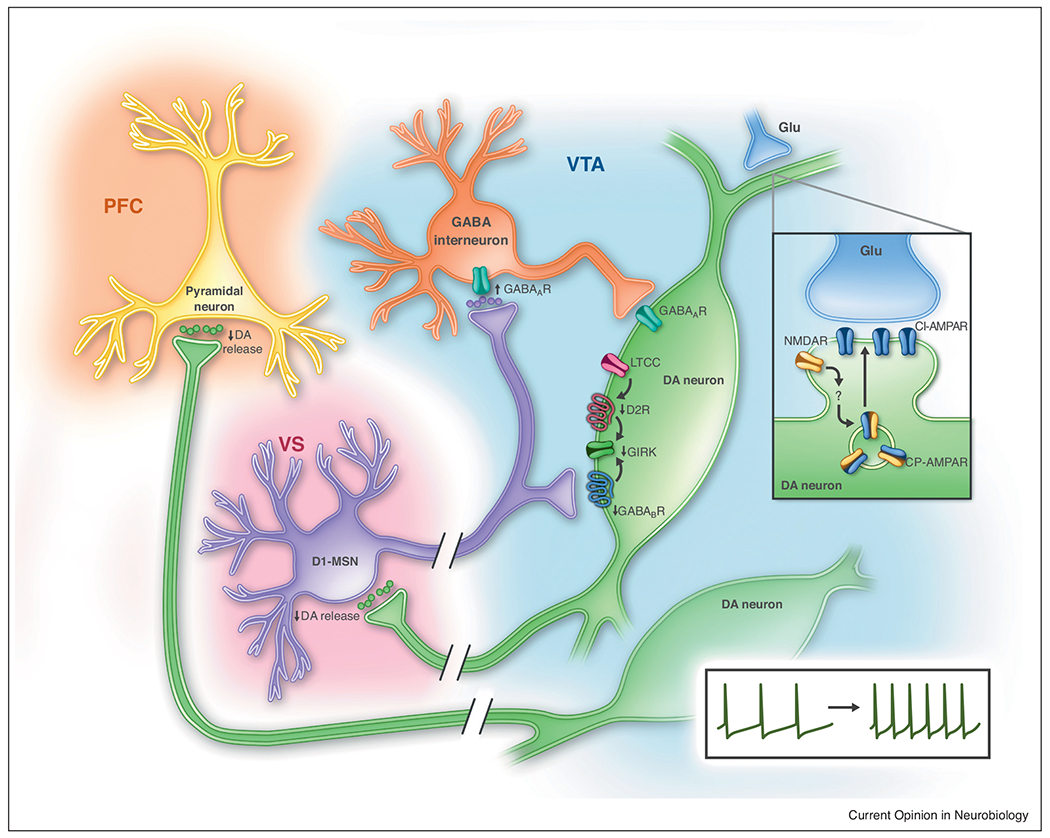
Cocaine exposure induces persistent changes in synaptic transmission and intrinsic properties of ventral tegmental area (VTA) dopamine neurons. Despite significant progress in understanding cocaine-induced plasticity, an effective treatment of cocaine addiction is lacking. Chronic cocaine potentiates excitatory and alters inhibitory transmission to dopamine neurons, induces dopamine neuron hyperexcitability, and reduces dopamine release in projection areas. Understanding how intrinsic and synaptic plasticity interact to control dopamine neuron firing and dopamine release could prove useful in the development of new therapeutics. In this review, we examine recent literature discussing cocaine-induced plasticity in the VTA and highlight potential therapeutic interventions.
可卡因暴露会导致腹侧被盖区(VTA)多巴胺神经元的突触传递和内在特性发生持久变化。尽管在理解可卡因诱导的可塑性方面取得了重大进展,但仍缺乏有效的可卡因成瘾治疗方法。慢性可卡因增强了对多巴胺神经元的兴奋性和改变了抑制性传递,诱导多巴胺神经元过度兴奋,并减少了投射区域的多巴胺释放。了解内在和突触可塑性如何相互作用以控制多巴胺神经元的放电和多巴胺的释放,可能有助于开发新的治疗方法。在这篇综述中,我们检查了最近讨论 VTA 中可卡因诱导的可塑性的文献,并强调了潜在的治疗干预措施。