Wylde Vikki, Beswick Andrew, Bruce Julie, Blom Ashley, Howells Nicholas, Gooberman-Hill Rachael
Musculoskeletal Research Unit, Bristol Medical School, University of Bristol, UK.
National Institute for Health Research Bristol Biomedical Research Centre, University Hospitals Bristol NHS Foundation Trust and University of Bristol, UK.
EFORT Open Rev. 2018 Aug 16;3(8):461-470. doi: 10.1302/2058-5241.3.180004. eCollection 2018 Aug.
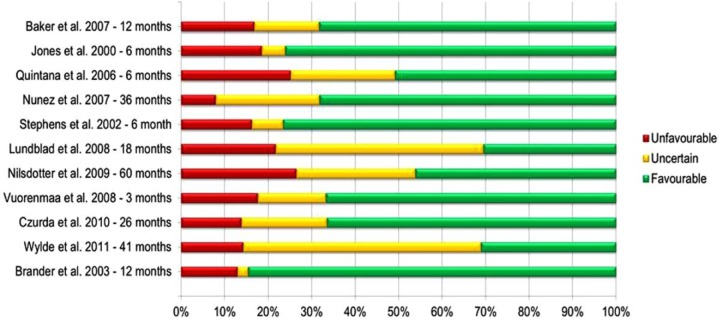
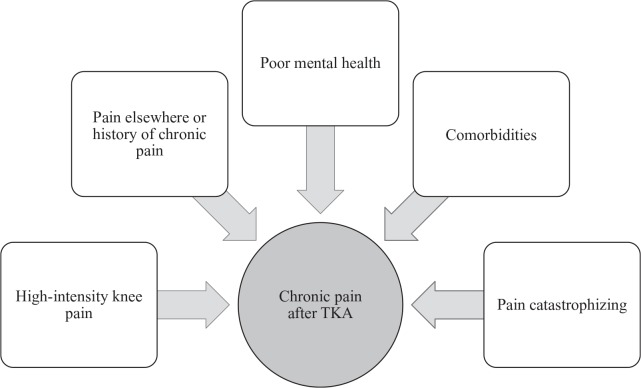
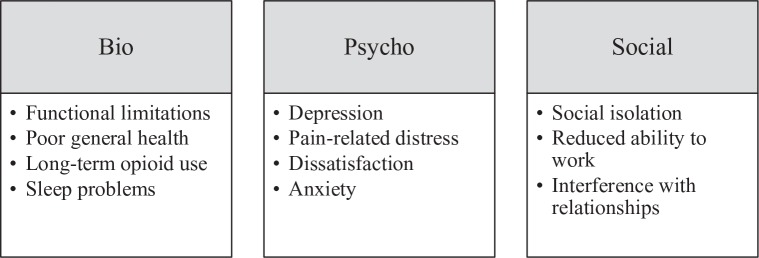
Despite a good outcome for many patients, approximately 20% of patients experience chronic pain after total knee arthroplasty (TKA).Chronic pain after TKA can affect all dimensions of health-related quality of life, and is associated with functional limitations, pain-related distress, depression, poorer general health and social isolation.In both clinical and research settings, the approach to assessing chronic pain after TKA needs to be in-depth and multidimensional to understand the characteristics and impact of this pain. Assessment of this pain has been inadequate in the past, but there are encouraging trends for increased use of validated patient-reported outcome measures.Risk factors for chronic pain after TKA can be considered as those present before surgery, intraoperatively or in the acute postoperative period. Knowledge of risk factors is important to guide the development of interventions and to help to target care. Evaluations of preoperative interventions which optimize pain management and general health around the time of surgery are needed.The causes of chronic pain after TKA are not yet fully understood, although research interest is growing and it is evident that this pain has a multifactorial aetiology, with a wide range of possible biological, surgical and psychosocial factors that can influence pain outcomes.Treatment of chronic pain after TKA is challenging, and evaluation of combined treatments and individually targeted treatments matched to patient characteristics is advocated. To ensure that optimal care is provided to patients, the clinical- and cost-effectiveness of multidisciplinary and individualized interventions should be evaluated. Cite this article: 2018;3:461-470. DOI: 10.1302/2058-5241.3.180004.
尽管许多患者预后良好,但仍有大约20%的患者在全膝关节置换术(TKA)后经历慢性疼痛。TKA后的慢性疼痛会影响健康相关生活质量的各个方面,并与功能受限、疼痛相关困扰、抑郁、较差的总体健康状况和社会隔离相关。在临床和研究环境中,评估TKA后慢性疼痛的方法需要深入且多维度,以了解这种疼痛的特征和影响。过去对这种疼痛的评估并不充分,但使用经过验证的患者报告结局指标的趋势令人鼓舞。TKA后慢性疼痛的风险因素可被视为术前、术中或术后急性期存在的因素。了解风险因素对于指导干预措施的制定和帮助确定护理目标很重要。需要对术前干预措施进行评估,这些措施可在手术前后优化疼痛管理和总体健康状况。虽然研究兴趣日益浓厚,但TKA后慢性疼痛的原因尚未完全明确,显然这种疼痛具有多因素病因,有多种可能的生物学、手术和社会心理因素会影响疼痛结局。TKA后慢性疼痛的治疗具有挑战性,提倡评估与患者特征相匹配的联合治疗和个体化治疗。为确保为患者提供最佳护理,应评估多学科和个体化干预措施的临床和成本效益。引用本文:2018;3:461 - 470。DOI:10.1302/2058 - 5241.3.180004。