Alhusaini Ahlam, Faddaa Laila, Ali Hanaa M, Hassan Iman, El Orabi Nagla F, Bassiouni Yieldiz
Department of Pharmacology and Toxicology, College of Pharmacy, King Saud University, Riyadh, Saudi Arabia.
Common First Year, King Saud University, Riyadh, Saudi Arabia.
Dose Response. 2018 Sep 19;16(3):1559325818800153. doi: 10.1177/1559325818800153. eCollection 2018 Jul-Sep.
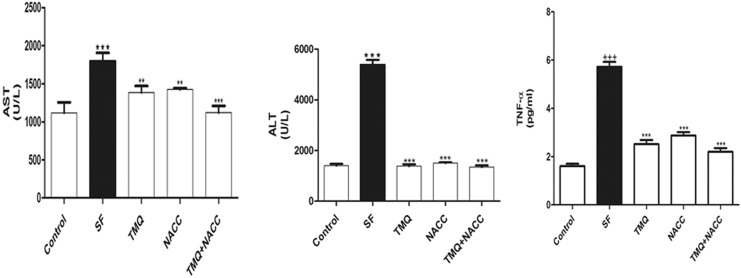
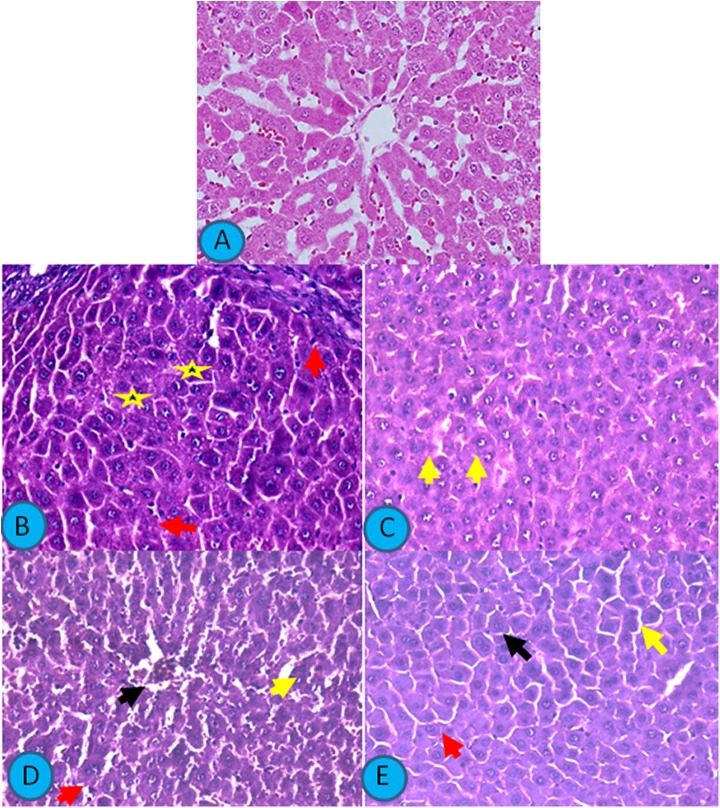
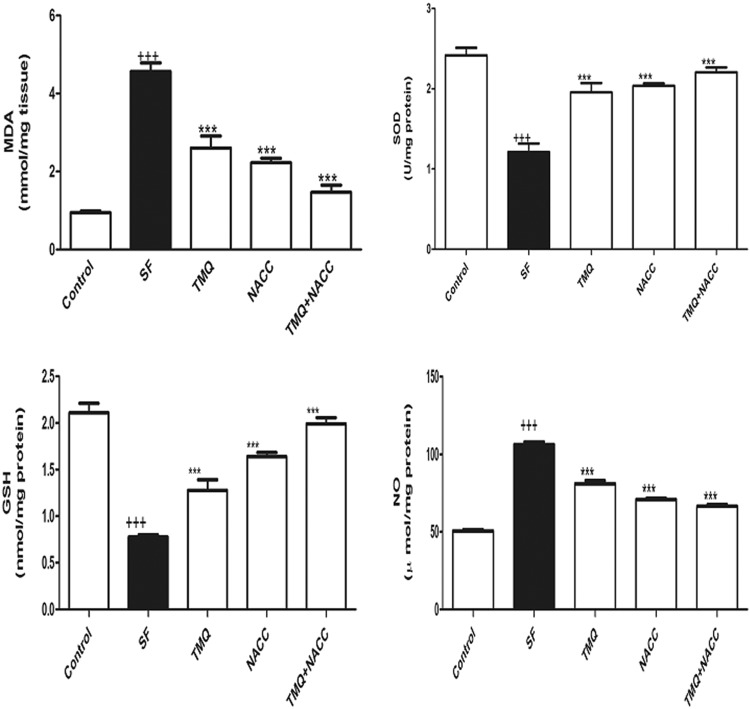
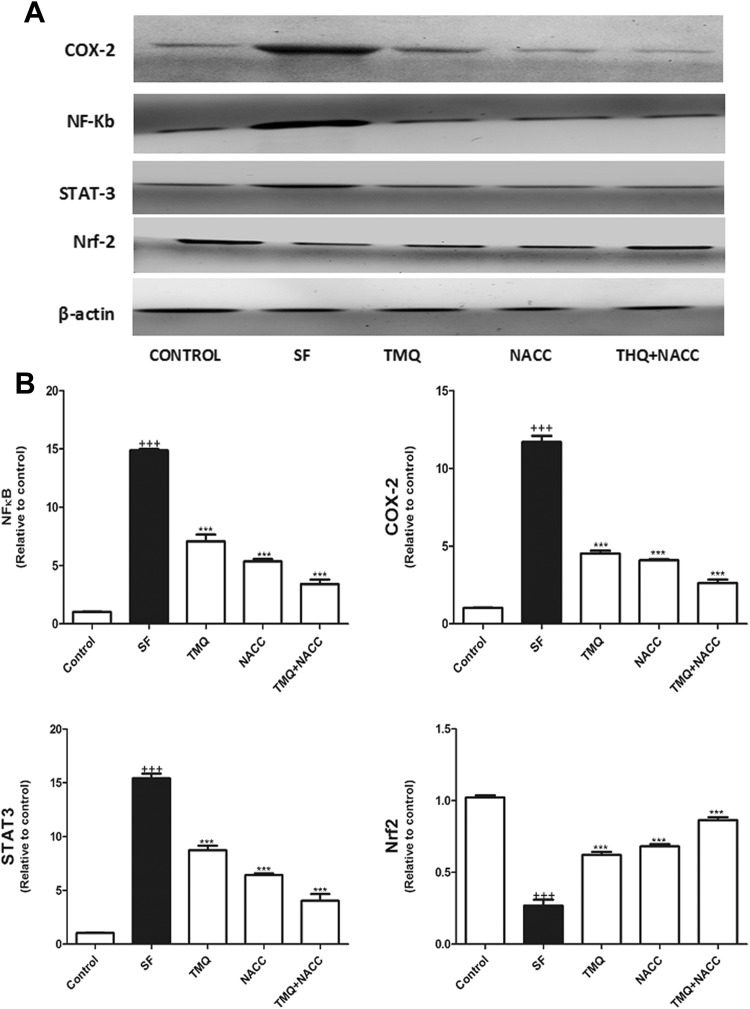
The present study aimed to explore the efficiency of N-acetyl cysteine (NACC) or thymoquinone (TMQ) alone or in combination in the downregulation of inflammatory molecule expression and decreasing hepatic injury in response to sodium fluoride (SF). Sodium fluoride upregulated serum alanine and aspartate transferases activities, tumor necrosis factor α and hepatic malondialdehyde and nitric oxide levels, and the expression of cyclooxygenase 2, nuclear factor κB cell, and signal transducer and activator of transcription 3. In contrast, hepatic glutathione level, superoxide dismutase activity, and nuclear factor erythroid 2-related factor 2 expression were decreased. However, the concurrent treatment with antioxidants, alone or in combination, modulated the levels of these parameters. Histopathological examination revealed that SF treatment resulted in focal areas of massive hepatic degeneration and many degenerated hepatocytes, whereas the treatment with TMQ or NACC exhibited moderate improvement in cellular degeneration of the liver with many abnormal cells. Rats receiving a combination of TMQ and NACC showed marked improvement in cellular degeneration of liver with apparently normal hepatic architecture with very few degenerated hepatocytes. The results also revealed that the combination of TMQ and NACC is the most effective regimen in ameliorating SF toxicity, suggesting their efficacy against the toxicity of fluoride compounds. Their activities might be mediated via multiple molecular pathways.
本研究旨在探讨单独或联合使用N-乙酰半胱氨酸(NACC)或百里醌(TMQ)下调炎症分子表达以及减轻氟化钠(SF)所致肝损伤的效果。氟化钠上调了血清丙氨酸和天冬氨酸转氨酶活性、肿瘤坏死因子α、肝丙二醛和一氧化氮水平,以及环氧合酶2、核因子κB细胞和信号转导及转录激活因子3的表达。相反,肝谷胱甘肽水平、超氧化物歧化酶活性和核因子红细胞2相关因子2表达降低。然而,单独或联合使用抗氧化剂进行联合治疗可调节这些参数的水平。组织病理学检查显示,SF治疗导致大片肝实质变性的局灶区域以及许多变性肝细胞,而TMQ或NACC治疗使肝脏细胞变性有中度改善,仍有许多异常细胞。接受TMQ和NACC联合治疗的大鼠肝脏细胞变性有明显改善,肝结构基本正常,仅有极少数变性肝细胞。结果还显示,TMQ和NACC联合使用是改善SF毒性最有效的方案,表明它们对氟化物化合物毒性有效。它们的活性可能通过多种分子途径介导。