Department of Pharmacy, Health and Nutritional Sciences, Section of Preclinical and Translational Pharmacology, University of Calabria, 87036, Arcavacata di Rende, Italy.
Ophtalmology Unit, Department of Experimental Medicine, University of Rome "Tor Vergata", 00133, Rome, Italy.
Cell Death Dis. 2018 Sep 24;9(10):981. doi: 10.1038/s41419-018-1044-5.
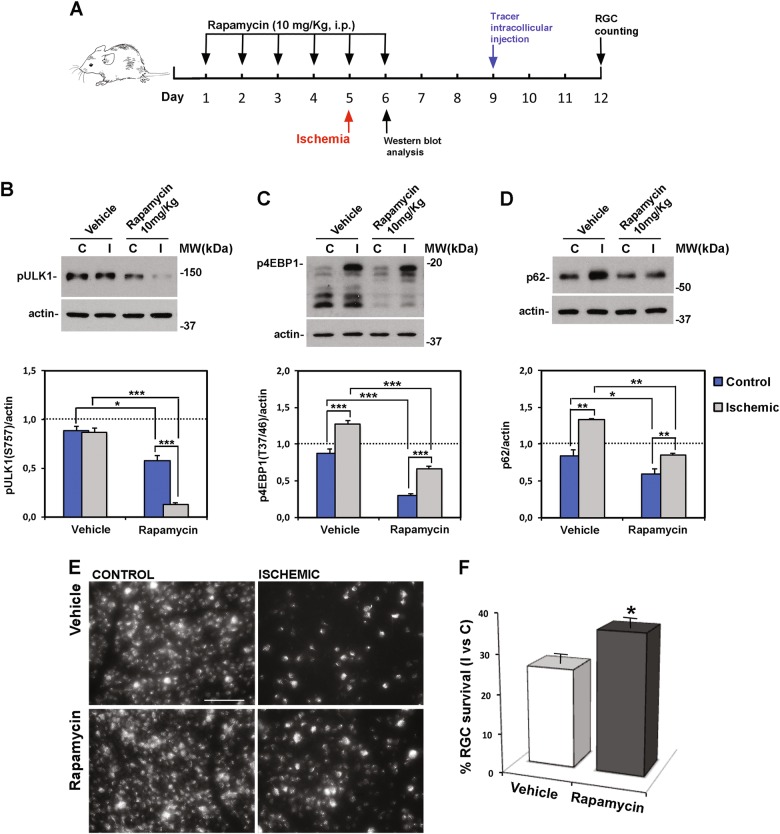
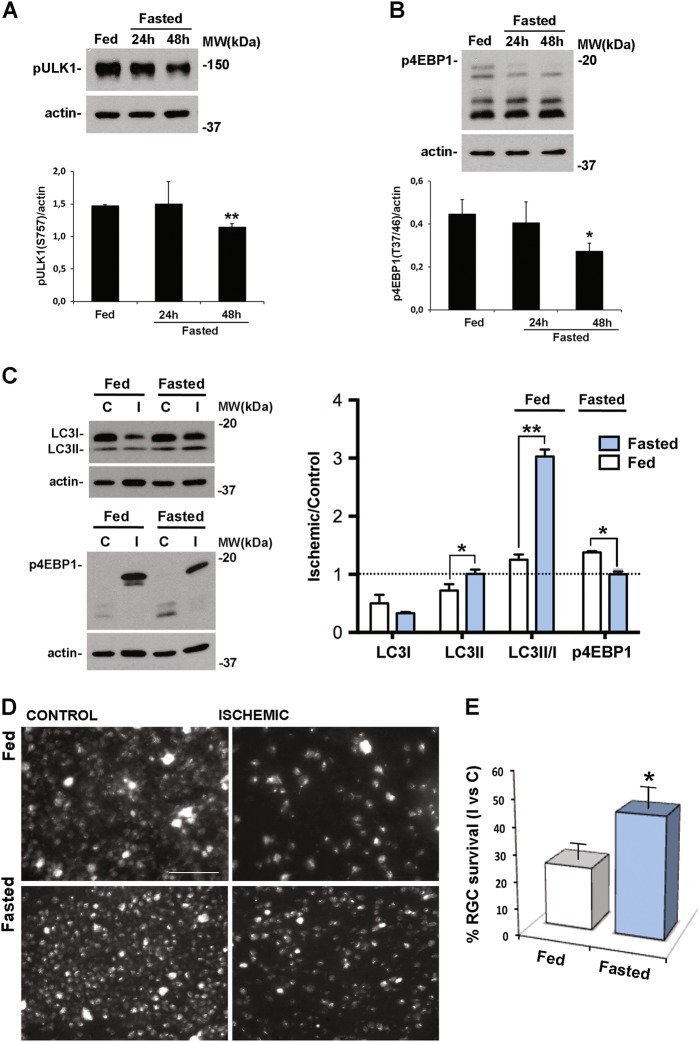
Autophagy, the cellular process responsible for degradation and recycling of cytoplasmic components through the autophagosomal-lysosomal pathway, is fundamental for neuronal homeostasis and its deregulation has been identified as a hallmark of neurodegeneration. Retinal hypoxic-ischemic events occur in several sight-treating disorders, such as central retinal artery occlusion, diabetic retinopathy, and glaucoma, leading to degeneration and loss of retinal ganglion cells. Here we analyzed the autophagic response in the retinas of mice subjected to ischemia induced by transient elevation of intraocular pressure, reporting a biphasic and reperfusion time-dependent modulation of the process. Ischemic insult triggered in the retina an acute induction of autophagy that lasted during the first hours of reperfusion. This early upregulation of the autophagic flux limited RGC death, as demonstrated by the increased neuronal loss observed in mice with genetic impairment of basal autophagy owing to heterozygous ablation of the autophagy-positive modulator Ambra1 (Ambra1). Upregulation of autophagy was exhausted 24 h after the ischemic event and reduced autophagosomal turnover was associated with build up of the autophagic substrate SQSTM-1/p62, decreased ATG12-ATG5 conjugate, ATG4 and BECN1/Beclin1 expression. Animal fasting or subchronic systemic treatment with rapamycin sustained and prolonged autophagy activation and improved RGC survival, providing proof of principle for autophagy induction as a potential therapeutic strategy in retinal neurodegenerative conditions associated with hypoxic/ischemic stresses.
自噬是一种细胞过程,通过自噬体-溶酶体途径负责降解和回收细胞质成分,对于神经元的内稳态至关重要,其失调已被确定为神经退行性变的标志。视网膜缺氧缺血事件发生在几种治疗视力的疾病中,如中央视网膜动脉阻塞、糖尿病视网膜病变和青光眼,导致视网膜神经节细胞的变性和丧失。在这里,我们分析了在眼压短暂升高引起的缺血小鼠视网膜中的自噬反应,报告了该过程的双相和再灌注时间依赖性调节。在视网膜中,缺血损伤引发了自噬的急性诱导,这种诱导持续了再灌注的最初几个小时。这种早期上调的自噬通量限制了 RGC 的死亡,这可以从由于自噬阳性调节剂 Ambra1(Ambra1)的杂合性缺失而导致基础自噬遗传损伤的小鼠中观察到的神经元丢失增加得到证明。自噬诱导在缺血事件后 24 小时耗尽,并且自噬小体周转率的降低与自噬底物 SQSTM-1/p62 的积累、ATG12-ATG5 缀合物、ATG4 和 BECN1/Beclin1 表达的减少有关。动物禁食或亚慢性系统给予雷帕霉素可维持和延长自噬激活并改善 RGC 存活,为自噬诱导作为与缺氧/缺血应激相关的视网膜神经退行性疾病的潜在治疗策略提供了原理证明。