Programa de Pós-Graduação em Ecologia, Universidade Federal de Santa Catarina, Florianópolis, Santa Catarina, Brazil.
Universidade de São Paulo, Escola Superior de Agricultura "Luiz de Queiroz", Laboratório de Ecologia, Manejo e Conservação de Fauna Silvestre (LEMaC), Piracicaba, São Paulo, Brazil.
PLoS One. 2018 Sep 25;13(9):e0204515. doi: 10.1371/journal.pone.0204515. eCollection 2018.
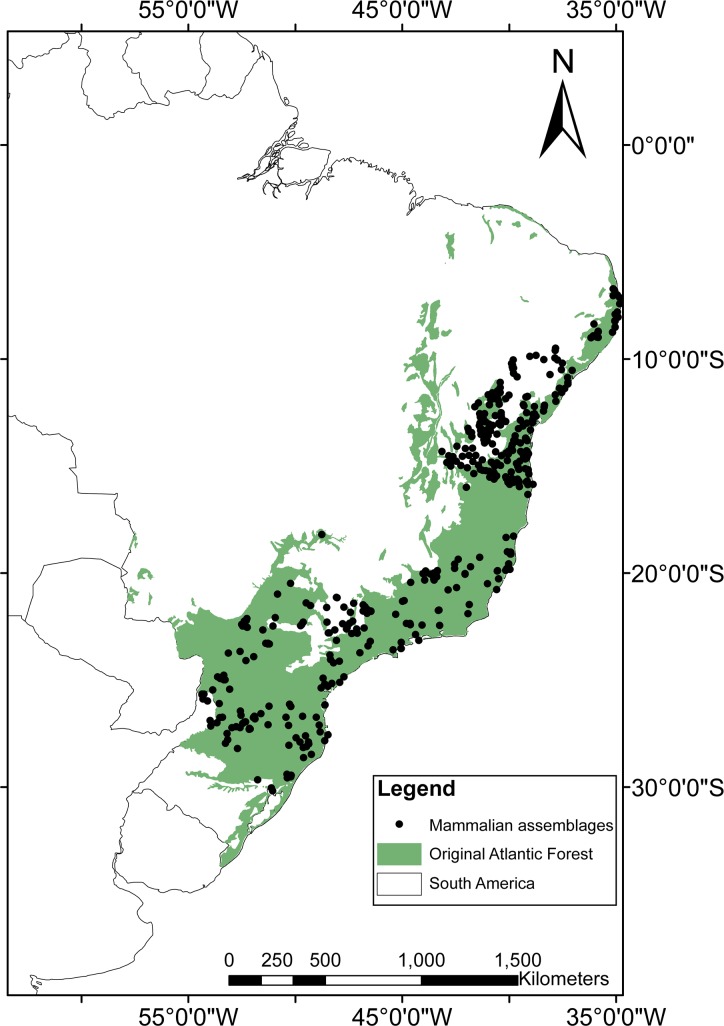
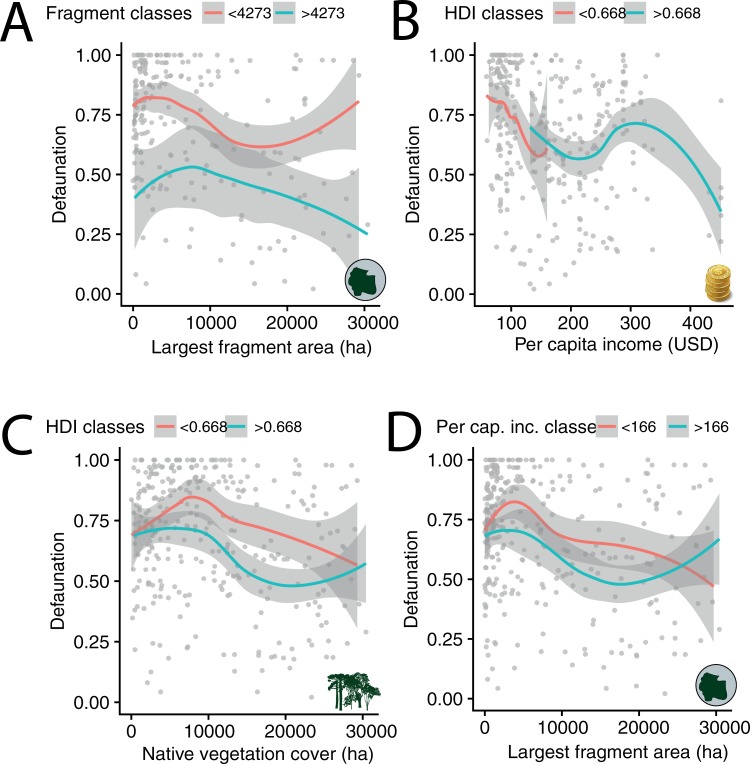
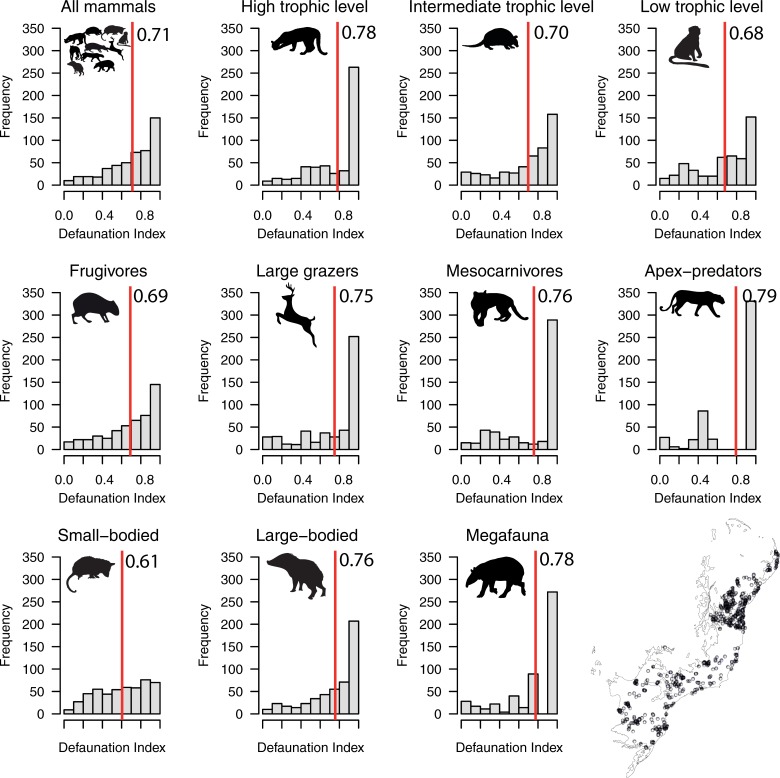
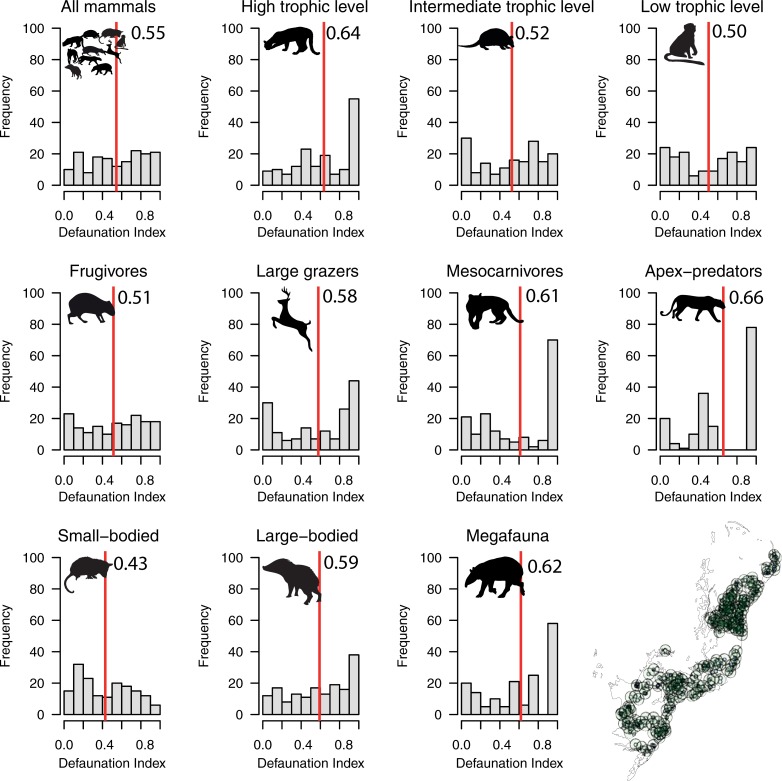
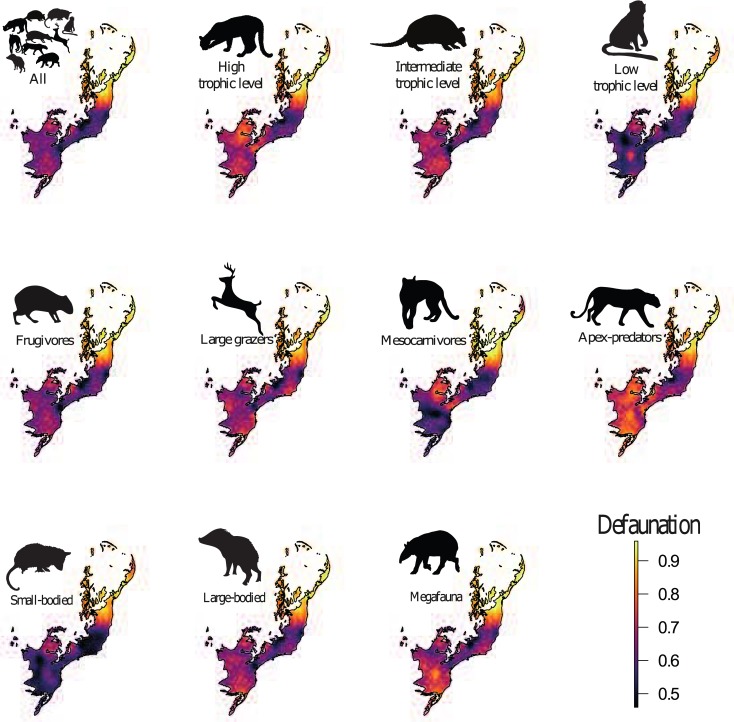
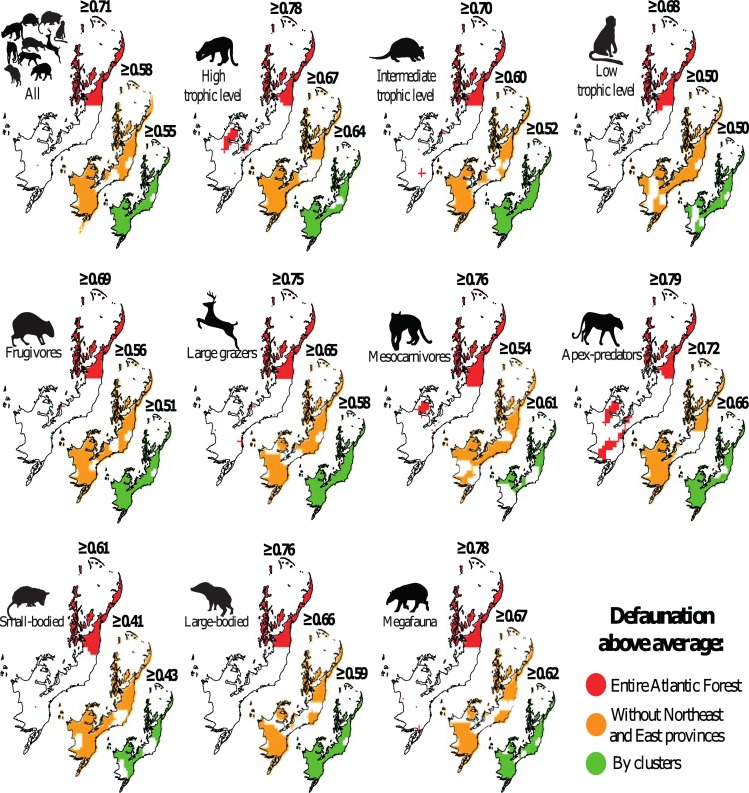
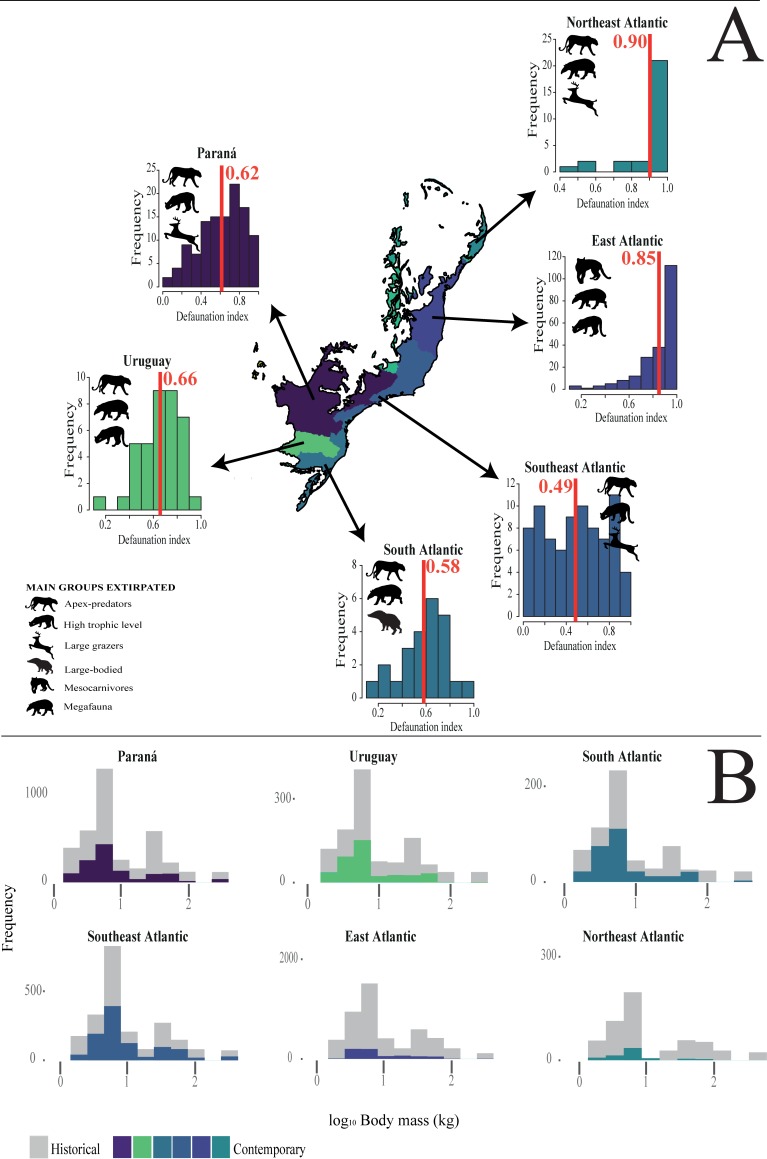
Mammals represent the largest-bodied elements of the world's surviving megafauna and provide several key ecosystems services, yet their populations are often under steep decline throughout the tropics. Anthropogenic defaunation is one the most important contemporary threats to modern mammal faunas. Although the Atlantic Forest biome of South America shows several clear signs of defaunation, the extent to which this biome has lost its mammal fauna remains poorly understood. Here, we collate and analyze a comprehensive body of secondary data to quantitatively assess the spatial patterns of defaunation of all medium- to large-bodied Atlantic Forest mammals which were then classed by morpho-ecological traits. We used a Defaunation Index, which was scaled-up to the entire biome using kriging interpolation, to examine the integrity of site-specific mammal faunas. We further use environmental and socioeconomic predictors to explain the drivers of defaunation. Our results show high levels of defaunation (>0.5) for most of the Atlantic Forest. Apex predators, other carnivores, large-bodied mammals and large herbivores were among the most defaunated functional groups. Remaining native vegetation cover, forest fragment size, and the largest neighboring forest remnant were the main negative predictors of defaunation. We conclude that medium- to large-bodied Atlantic Forest mammals are under high levels of threat due to historical population losses that continue today. A conservation action plan thus becomes imperative to prevent this biome from becoming an even "emptier forest", severely compromising patterns of diversity, ecological processes and ecosystem functioning.
哺乳动物是世界现存巨型动物中体型最大的组成部分,提供了几项关键的生态系统服务,但它们的数量在热带地区经常急剧下降。人为的动物灭绝是现代哺乳动物区系面临的最重要的当代威胁之一。尽管南美洲的大西洋森林生物群系显示出了明显的动物灭绝迹象,但该生物群系失去哺乳动物区系的程度仍知之甚少。在这里,我们整理和分析了大量的二手数据,以定量评估所有中等到大型大西洋森林哺乳动物的灭绝空间模式,然后根据形态生态特征对这些哺乳动物进行分类。我们使用灭绝指数来评估特定地点哺乳动物区系的完整性,该指数使用克里金插值法扩展到整个生物群系。我们还利用环境和社会经济预测因子来解释灭绝的驱动因素。我们的研究结果表明,大多数大西洋森林地区的灭绝程度都很高(>0.5)。顶级掠食者、其他肉食动物、大型哺乳动物和大型草食动物是灭绝程度最高的功能群之一。剩余的原生植被覆盖、森林碎片大小和最大的相邻森林残余是灭绝的主要负面预测因子。我们的结论是,由于历史上的种群损失,中等到大型的大西洋森林哺乳动物正面临着高度的威胁,这些损失至今仍在继续。因此,一项保护行动计划势在必行,以防止这个生物群系成为一个“更空旷的森林”,严重影响多样性、生态过程和生态系统功能的模式。