School of Experimental Psychology, University of Bristol, Bristol BS8 1TU, UK.
MRC Integrative Epidemiology Unit, University of Bristol, Bristol, UK.
BMJ. 2018 Sep 25;362:k3788. doi: 10.1136/bmj.k3788.
To investigate whether the association between subjective wellbeing (subjective happiness and life satisfaction) and cardiometabolic health is causal.
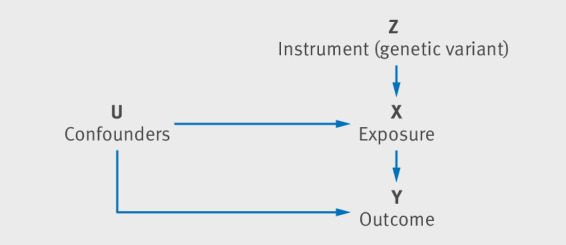
Two sample, bidirectional mendelian randomisation study.
Genetic data taken from various cohorts comprised of the general population (mostly individuals of European ancestry, plus a small proportion of other ancestries); follow-up analysis included individuals from the United Kingdom.
Summary data were used from previous genome wide association studies (number of participants ranging from 83 198 to 339 224), which investigated traits related to cardiovascular or metabolic health, had the largest sample sizes, and consisted of the most similar populations while minimising sample overlap. A follow-up analysis included 337 112 individuals from the UK Biobank (54% female (n=181 363), mean age 56.87 years (standard deviation 8.00) at recruitment).
Subjective wellbeing and 11 measures of cardiometabolic health (coronary artery disease; myocardial infarction; total, high density lipoprotein, and low density lipoprotein cholesterol; diastolic and systolic blood pressure; body fat; waist to hip ratio; waist circumference; and body mass index).
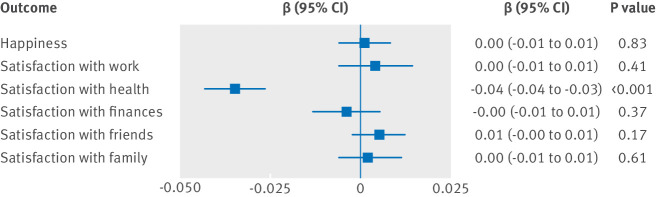
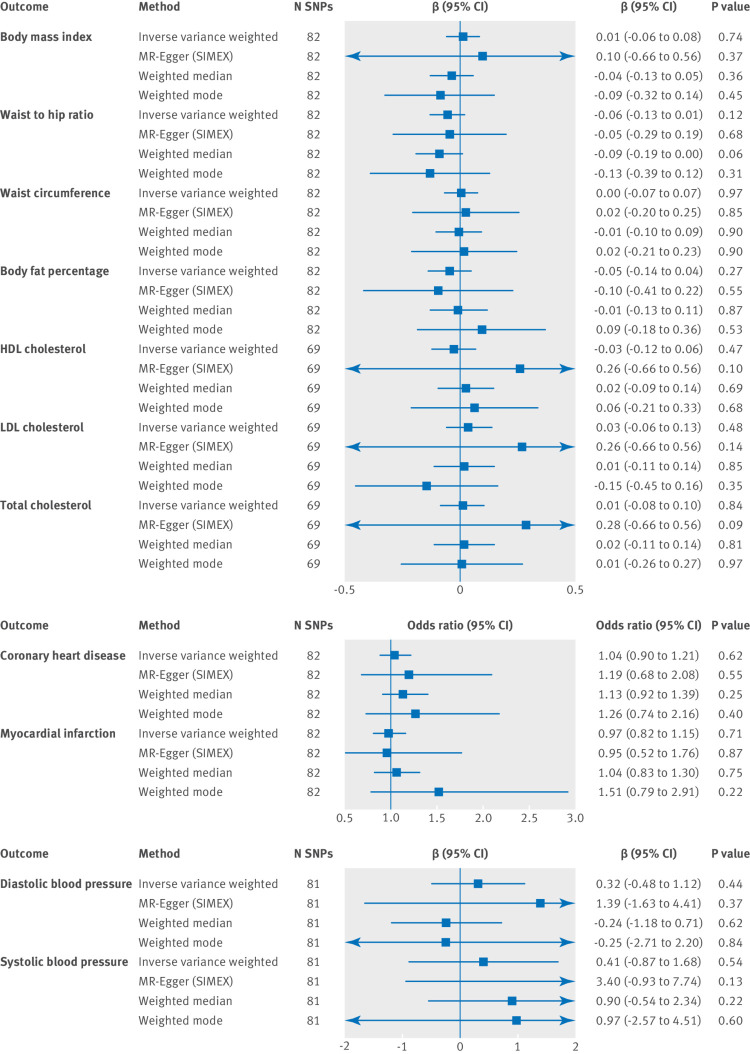
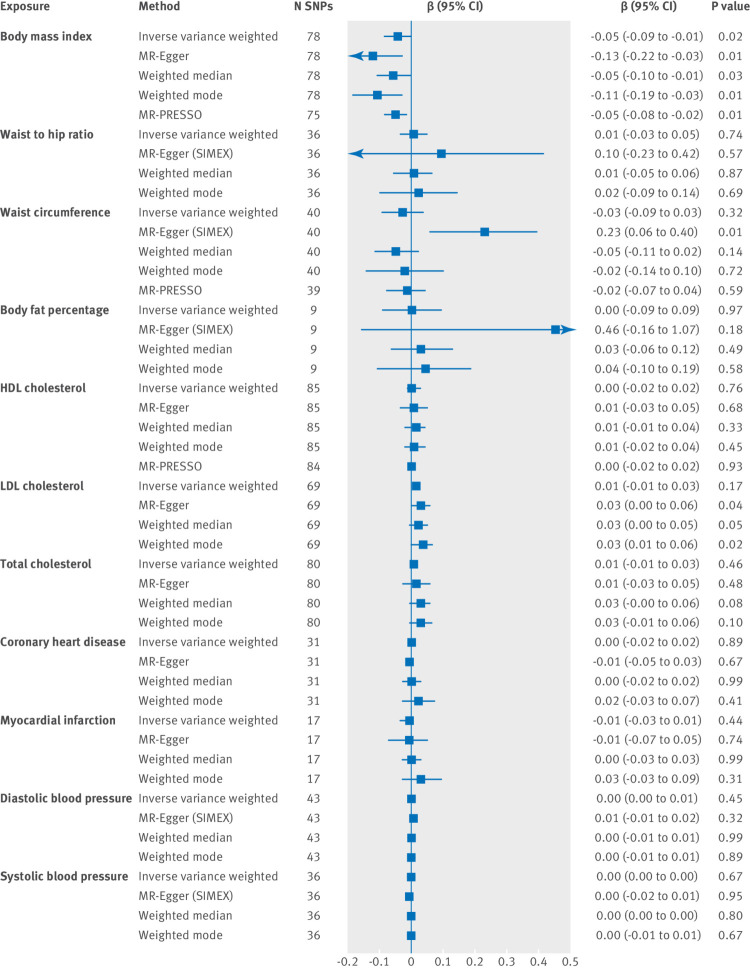
Evidence of a causal effect of body mass index on subjective wellbeing was seen; each 1 kg/m increase in body mass index caused a -0.045 (95% confidence interval -0.084 to -0.006, P=0.02) standard deviation reduction in subjective wellbeing. Follow-up analysis of this association in an independent sample from the UK Biobank provided strong evidence of an effect of body mass index on satisfaction with health (β=-0.035 unit decrease in health satisfaction (95% confidence interval -0.043 to -0.027) per standard deviation increase in body mass index, P<0.001). No clear evidence of a causal effect was seen between subjective wellbeing and the other cardiometabolic health measures, in either direction.
These results suggest that a higher body mass index is associated with a lower subjective wellbeing. A follow-up analysis confirmed this finding, suggesting that the effect in middle aged people could be driven by satisfaction with health. Body mass index is a modifiable determinant, and therefore, this study provides further motivation to tackle the obesity epidemic because of the knock-on effects of higher body mass index on subjective wellbeing.
研究主观幸福感(主观快乐和生活满意度)与心脏代谢健康之间的关联是否存在因果关系。
两样本、双向孟德尔随机化研究。
遗传数据取自各种包含一般人群的队列(主要是欧洲血统的个体,外加一小部分其他血统的个体);随访分析包括来自英国的个体。
使用先前全基因组关联研究的汇总数据(与心血管或代谢健康相关的特征,参与者数量从 83198 到 339224 不等),这些研究具有最大的样本量,并且包含最相似的人群,同时最大限度地减少样本重叠。一项后续分析包括来自英国生物库的 337112 名个体(54%为女性(n=181363),招募时的平均年龄为 56.87 岁(标准差 8.00))。
主观幸福感和 11 项心脏代谢健康指标(冠心病;心肌梗死;总胆固醇、高密度脂蛋白胆固醇和低密度脂蛋白胆固醇;舒张压和收缩压;体脂;腰臀比;腰围;和体重指数)。
有证据表明体重指数对主观幸福感存在因果影响;体重指数每增加 1 公斤/米,主观幸福感的标准偏差就会降低 0.045(95%置信区间-0.084 至-0.006,P=0.02)。在英国生物库的独立样本中对这种关联的后续分析提供了强有力的证据表明体重指数对健康满意度有影响(体重指数每增加一个标准差,健康满意度降低 0.035 个单位(95%置信区间-0.043 至-0.027,P<0.001))。在任何方向上,都没有明确的证据表明主观幸福感与其他心脏代谢健康指标之间存在因果关系。
这些结果表明,较高的体重指数与较低的主观幸福感相关。一项后续分析证实了这一发现,表明中年人的这种影响可能是由对健康的满意度驱动的。体重指数是一个可改变的决定因素,因此,由于较高的体重指数对主观幸福感的连锁影响,这项研究为解决肥胖症流行提供了进一步的动力。