Department of Neurology, Massachusetts General Hospital, Boston, MA, USA.
Harvard Medical School, Boston, MA, USA.
Nat Commun. 2018 Sep 25;9(1):3906. doi: 10.1038/s41467-018-06206-0.
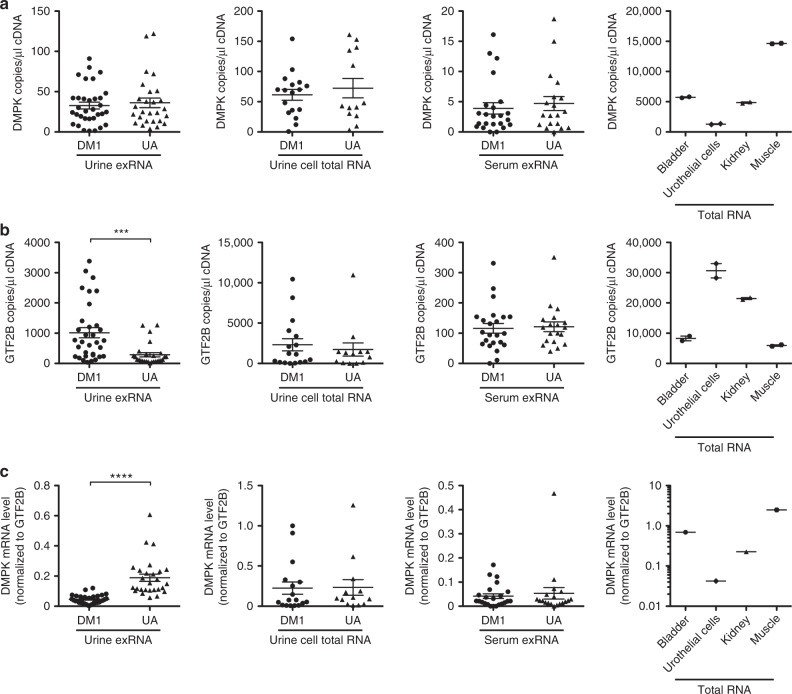
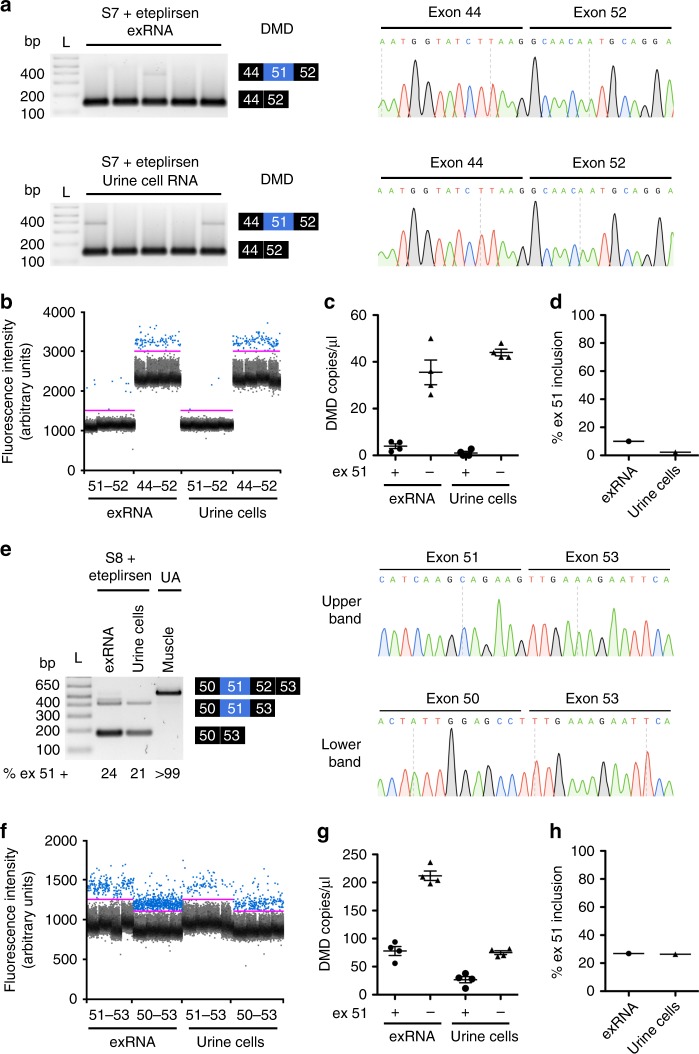
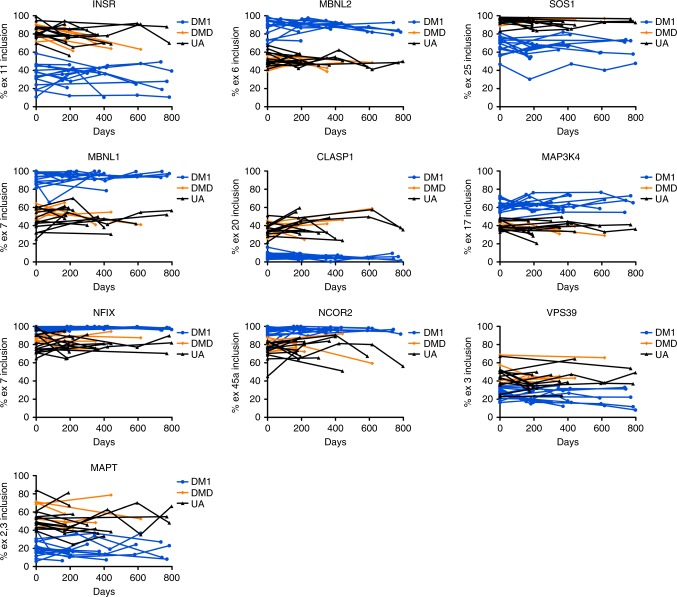
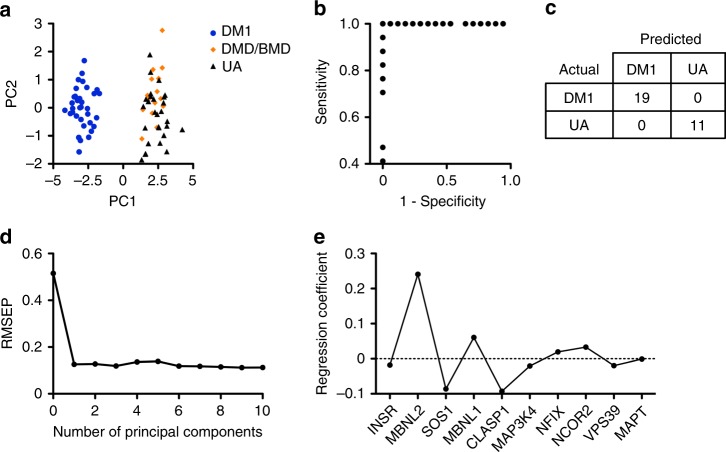
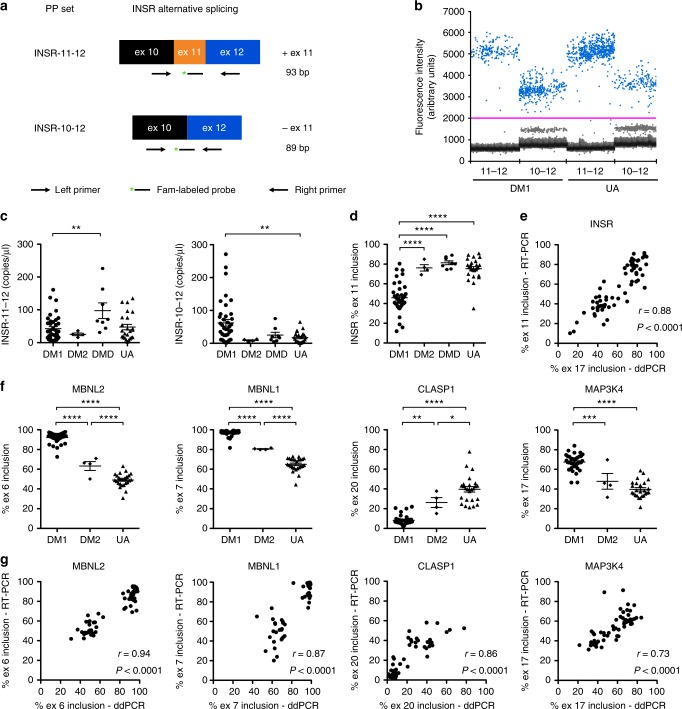
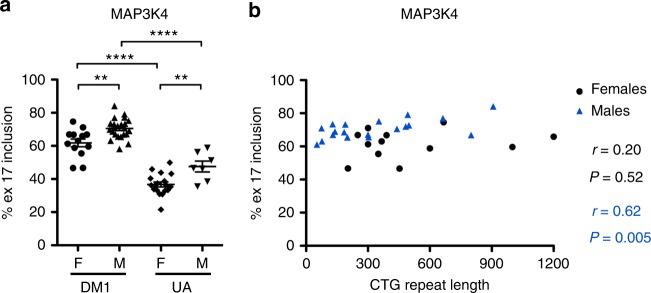
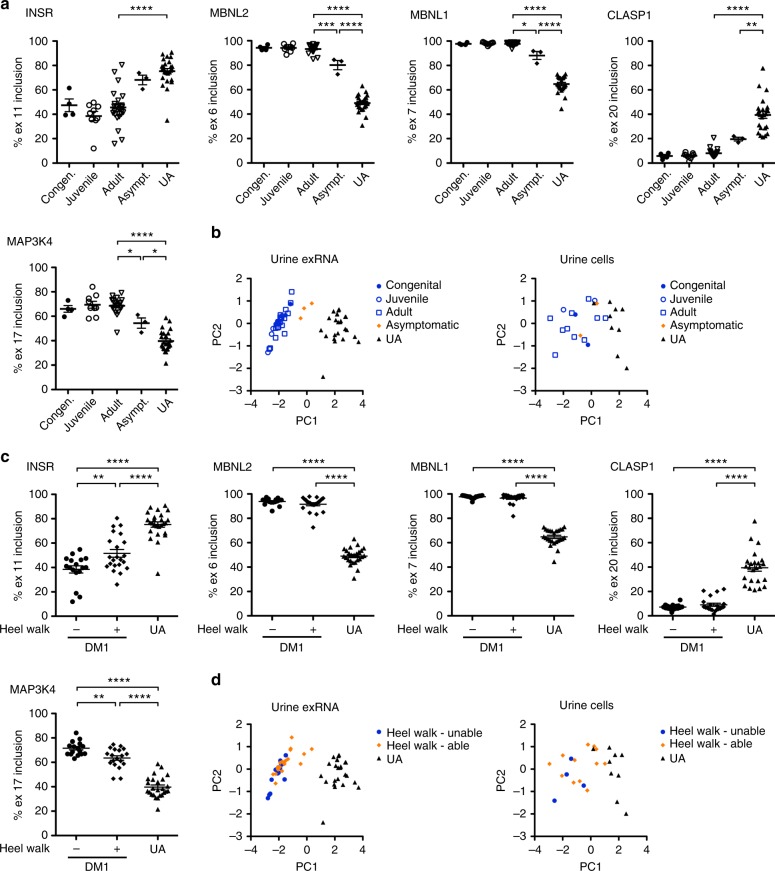
Urine contains extracellular RNA (exRNA) markers of urogenital cancers. However, the capacity of genetic material in urine to identify systemic diseases is unknown. Here we describe exRNA splice products in human urine as a source of biomarkers for the two most common forms of muscular dystrophies, myotonic dystrophy (DM) and Duchenne muscular dystrophy (DMD). Using a training set, RT-PCR, droplet digital PCR, and principal component regression, we identify ten transcripts that are spliced differently in urine exRNA from patients with DM type 1 (DM1) as compared to unaffected or disease controls, form a composite biomarker, and develop a predictive model that is 100% accurate in our independent validation set. Urine also contains mutation-specific DMD mRNAs that confirm exon-skipping activity of the antisense oligonucleotide drug eteplirsen. Our results establish that urine mRNA splice variants can be used to monitor systemic diseases with minimal or no clinical effect on the urinary tract.
尿液中含有尿生殖系统癌症的细胞外 RNA(exRNA)标志物。然而,尿液中的遗传物质识别系统性疾病的能力尚不清楚。在这里,我们将人类尿液中的 exRNA 剪接产物描述为两种最常见的肌肉疾病,即肌强直性营养不良(DM)和杜氏肌营养不良症(DMD)的生物标志物来源。使用训练集、RT-PCR、液滴数字 PCR 和主成分回归,我们确定了 10 个转录本,它们在 DM1 患者尿液 exRNA 中的剪接方式与未受影响或疾病对照组不同,形成了一个复合生物标志物,并开发了一个预测模型,在我们的独立验证集中准确率达到 100%。尿液中还含有突变特异性 DMD mRNA,证实了反义寡核苷酸药物 eteplirsen 的外显子跳跃活性。我们的结果表明,尿液 mRNA 剪接变体可用于监测系统性疾病,对泌尿道几乎没有或没有临床影响。