Department of Pathology, New York University Cancer Institute, New York University School of Medicine, New York, NY, 10016, USA.
Biozentrum, University of Basel, 4056, Basel, Switzerland.
Nat Commun. 2018 Sep 26;9(1):3938. doi: 10.1038/s41467-018-06286-y.
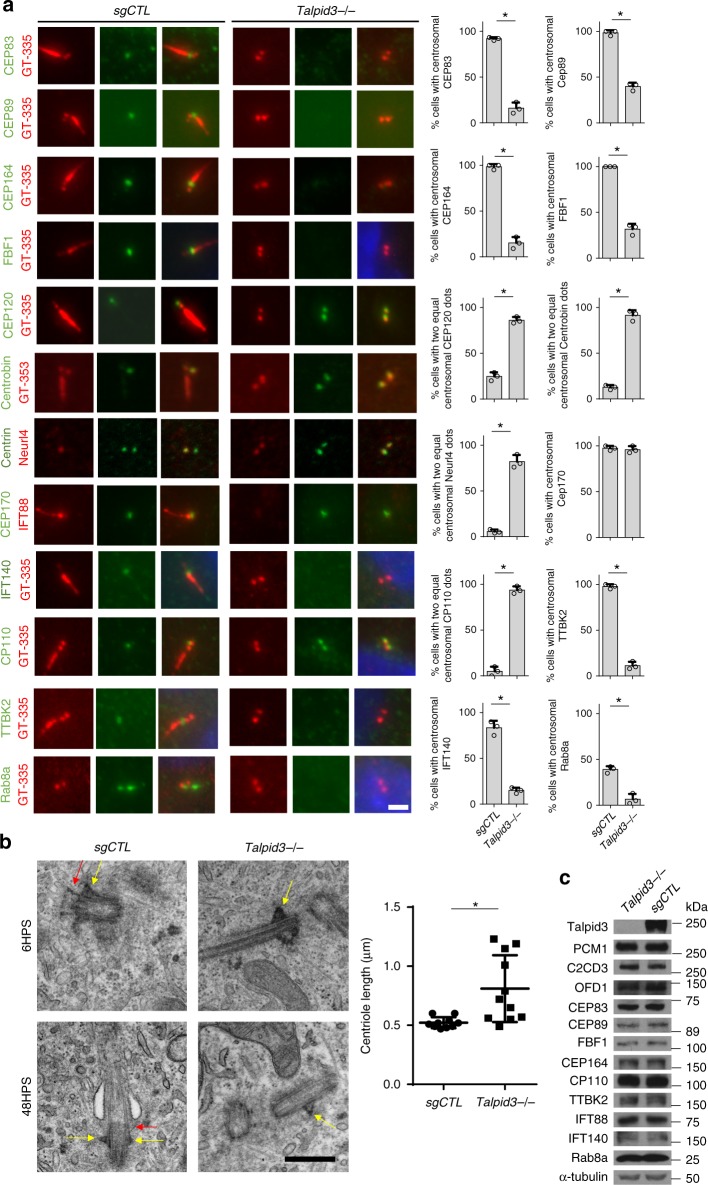
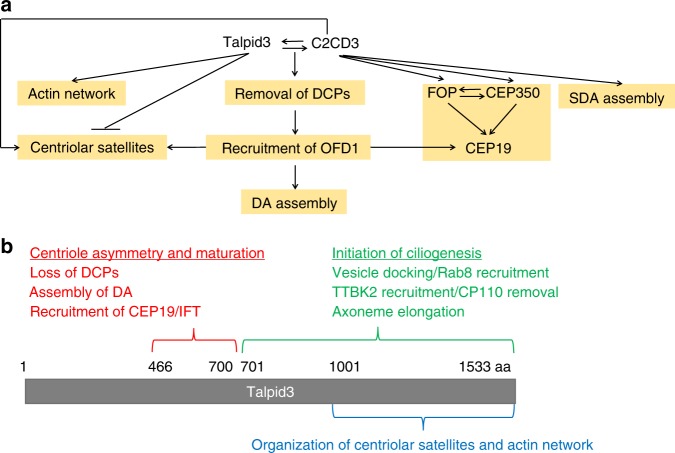
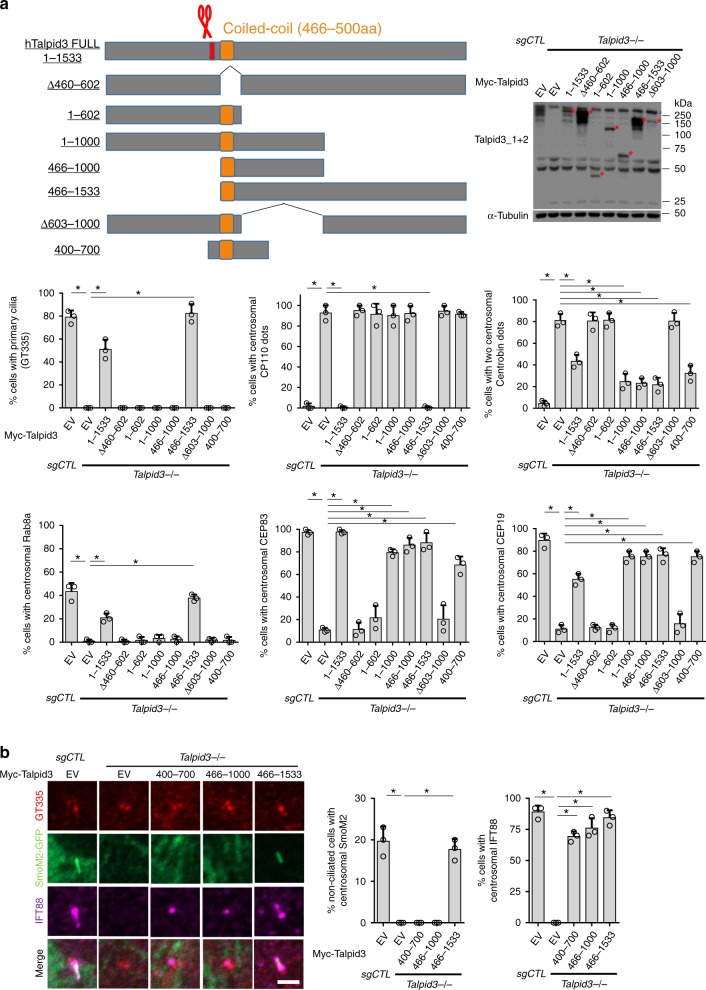
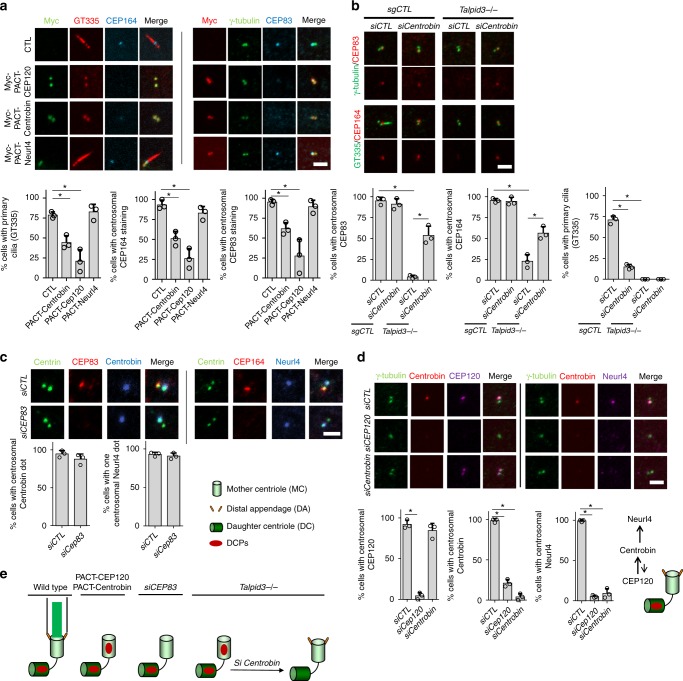
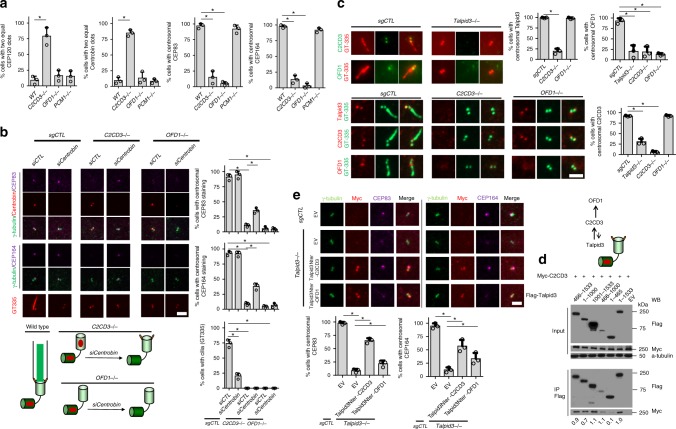
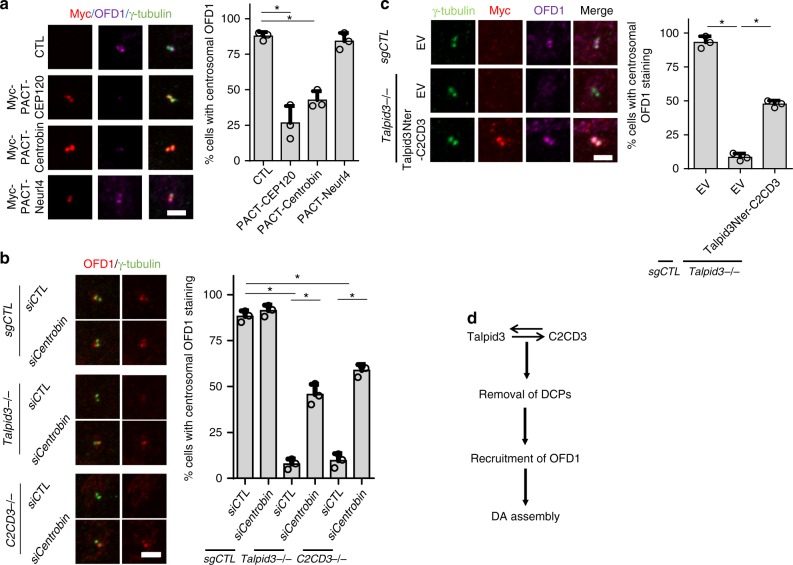
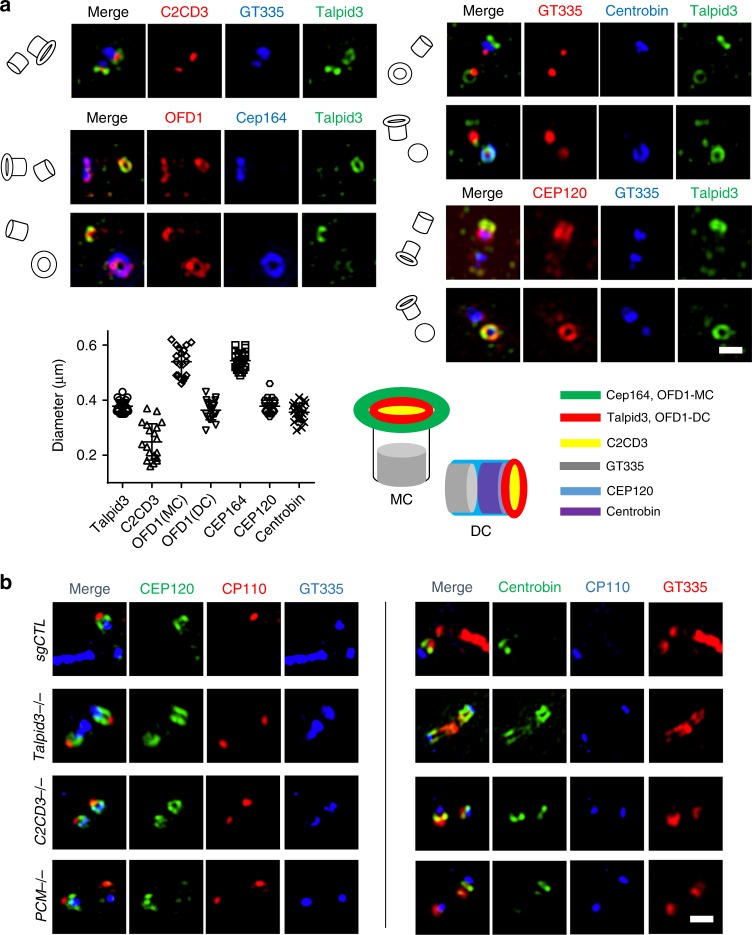
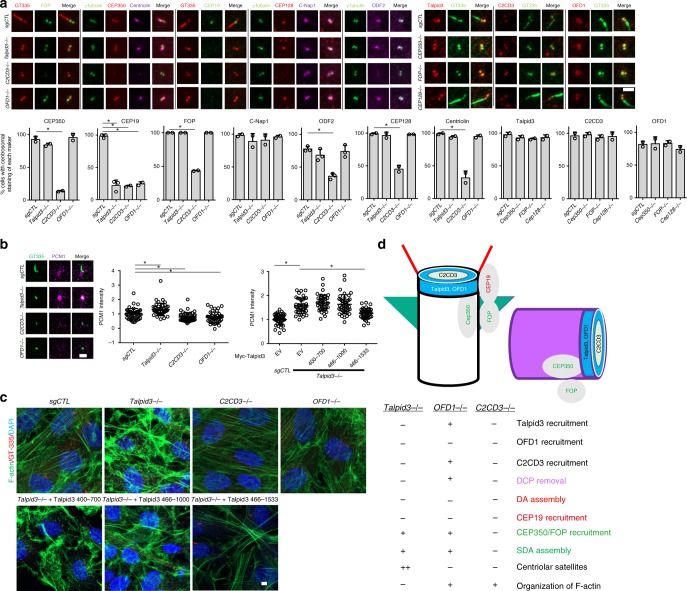
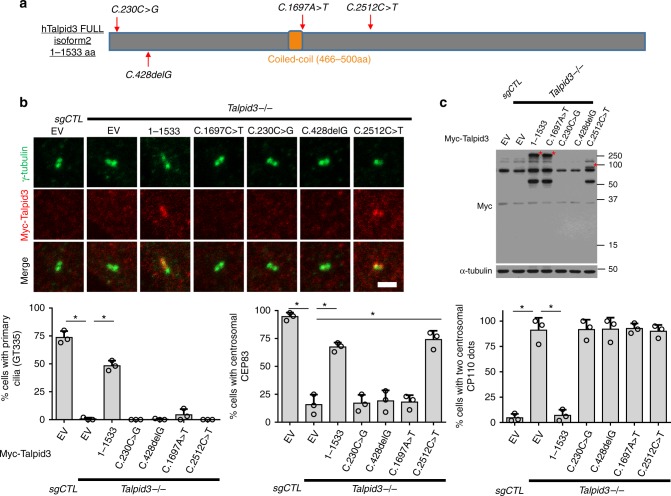
A long-standing mystery in the centrosome field pertains to the origin of asymmetry within the organelle. The removal of daughter centriole-specific/enriched proteins (DCPs) and acquisition of distal appendages on the future mother centriole are two important steps in the generation of asymmetry. We find that DCPs are recruited sequentially, and their removal is abolished in cells lacking Talpid3 or C2CD3. We show that removal of certain DCPs constitutes another level of control for distal appendage (DA) assembly. Remarkably, we also find that Talpid3 forms a distal centriolar multi-functional hub that coordinates the removal of specific DCPs, DA assembly, and recruitment of ciliary vesicles through distinct regions mutated in ciliopathies. Finally, we show that Talpid3, C2CD3, and OFD1 differentially regulate the assembly of sub-distal appendages, the CEP350/FOP/CEP19 module, centriolar satellites, and actin networks. Our work extends the spatial and functional understanding of proteins that control organelle maturation and asymmetry, ciliogenesis, and human disease.
中心体领域长期存在的一个谜团是细胞器内不对称性的起源。子中心体特异性/富集蛋白 (DCP) 的去除和未来母中心体上远端附属物的获得是产生不对称性的两个重要步骤。我们发现 DCP 是顺序募集的,在缺乏 Talpid3 或 C2CD3 的细胞中,它们的去除被废除。我们表明,某些 DCP 的去除构成了远端附属物 (DA) 组装的另一个控制水平。值得注意的是,我们还发现 Talpid3 形成了一个远端中心体多功能枢纽,通过在 ciliopathy 中突变的不同区域协调特定 DCP 的去除、DA 组装以及纤毛小泡的募集。最后,我们表明 Talpid3、C2CD3 和 OFD1 差异调节亚远端附属物、CEP350/FOP/CEP19 模块、中心体卫星和肌动蛋白网络的组装。我们的工作扩展了控制细胞器成熟和不对称性、纤毛发生和人类疾病的蛋白质的空间和功能理解。