Musculoskeletal Biology II, Institute of Ageing and Chronic Disease, Centre for Integrated Research into Musculoskeletal Ageing, University of Liverpool, William Duncan Building, 6 West Derby Street, Liverpool, L7 8TX, UK.
Biogerontology. 2018 Dec;19(6):519-536. doi: 10.1007/s10522-018-9775-3. Epub 2018 Sep 27.
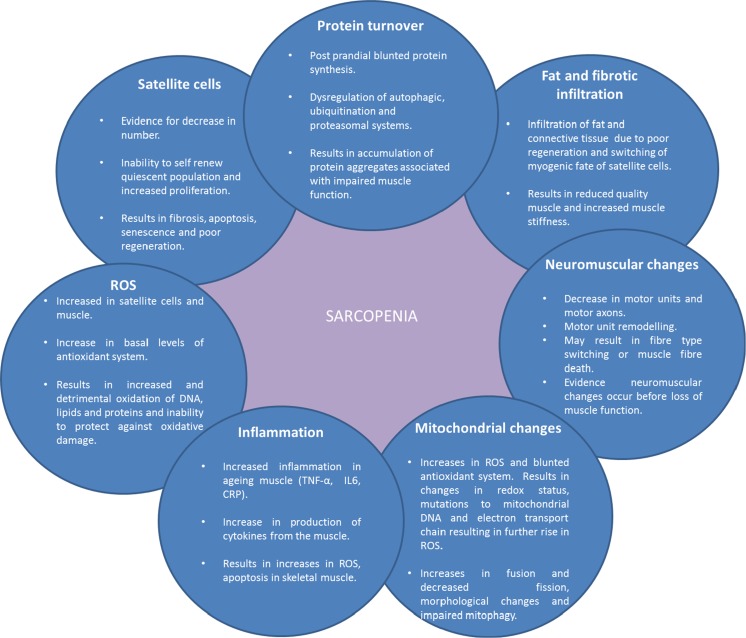
As we age, there is an age-related loss in skeletal muscle mass and strength, known as sarcopenia. Sarcopenia results in a decrease in mobility and independence, as well as an increase in the risk of other morbidities and mortality. Sarcopenia is therefore a major socio-economical problem. The mechanisms behind sarcopenia are unclear and it is likely that it is a multifactorial condition with changes in numerous important mechanisms all contributing to the structural and functional deterioration. Here, we review the major proposed changes which occur in skeletal muscle during ageing and highlight evidence for changes in physical activity and nutrition as therapeutic approaches to combat age-related skeletal muscle wasting.
随着年龄的增长,骨骼肌肉质量和力量会出现与年龄相关的下降,这种现象被称为肌肉减少症。肌肉减少症会导致活动能力和独立性下降,同时增加其他病态和死亡率的风险。因此,肌肉减少症是一个主要的社会经济问题。肌肉减少症的机制尚不清楚,它很可能是一种多因素的疾病,许多重要机制的变化都导致了结构和功能的恶化。在这里,我们回顾了在衰老过程中发生在骨骼肌中的主要变化,并强调了身体活动和营养变化的证据,这些变化是对抗与年龄相关的骨骼肌减少症的治疗方法。