Center for Functional and Molecular Imaging, Georgetown University Medical Center, Interdisciplinary Program in Neuroscience, 3900 Reservoir Road NW, Washington, DC 20057, USA.
Center for Functional and Molecular Imaging, Georgetown University Medical Center, Suite LM-14, 3900 Reservoir Road NW, Washington, DC 20057, USA.
Nutr Neurosci. 2020 Jul;23(7):505-515. doi: 10.1080/1028415X.2018.1525477. Epub 2018 Sep 28.
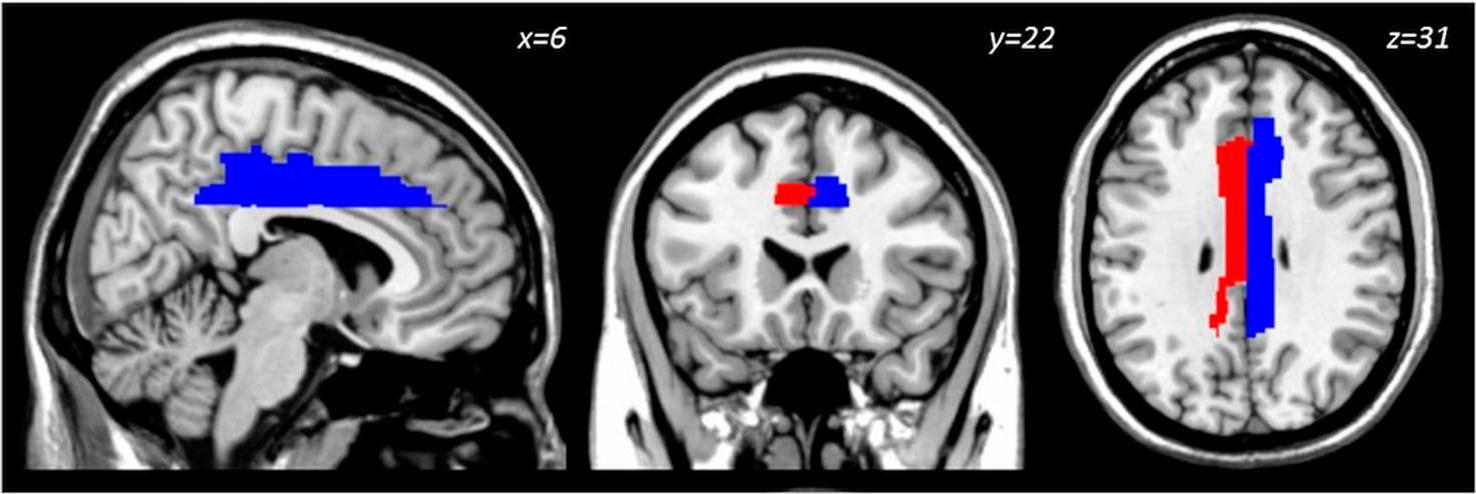
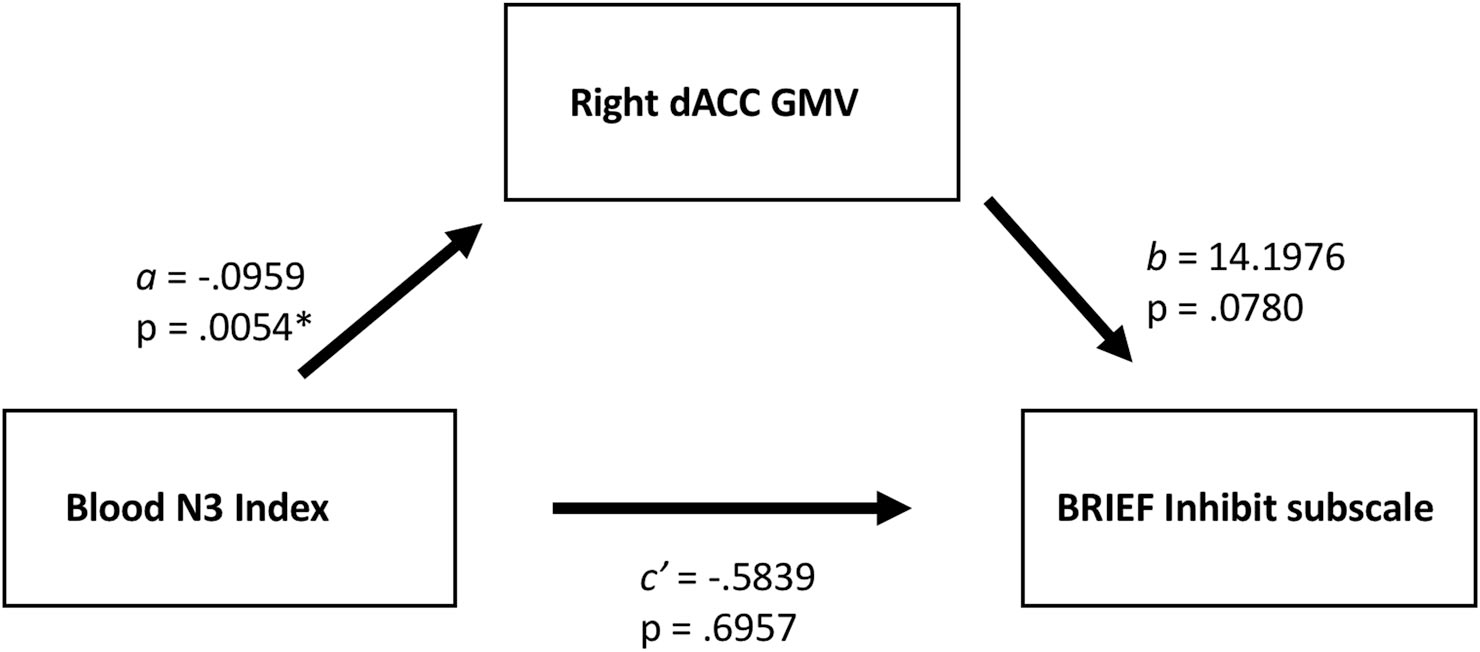
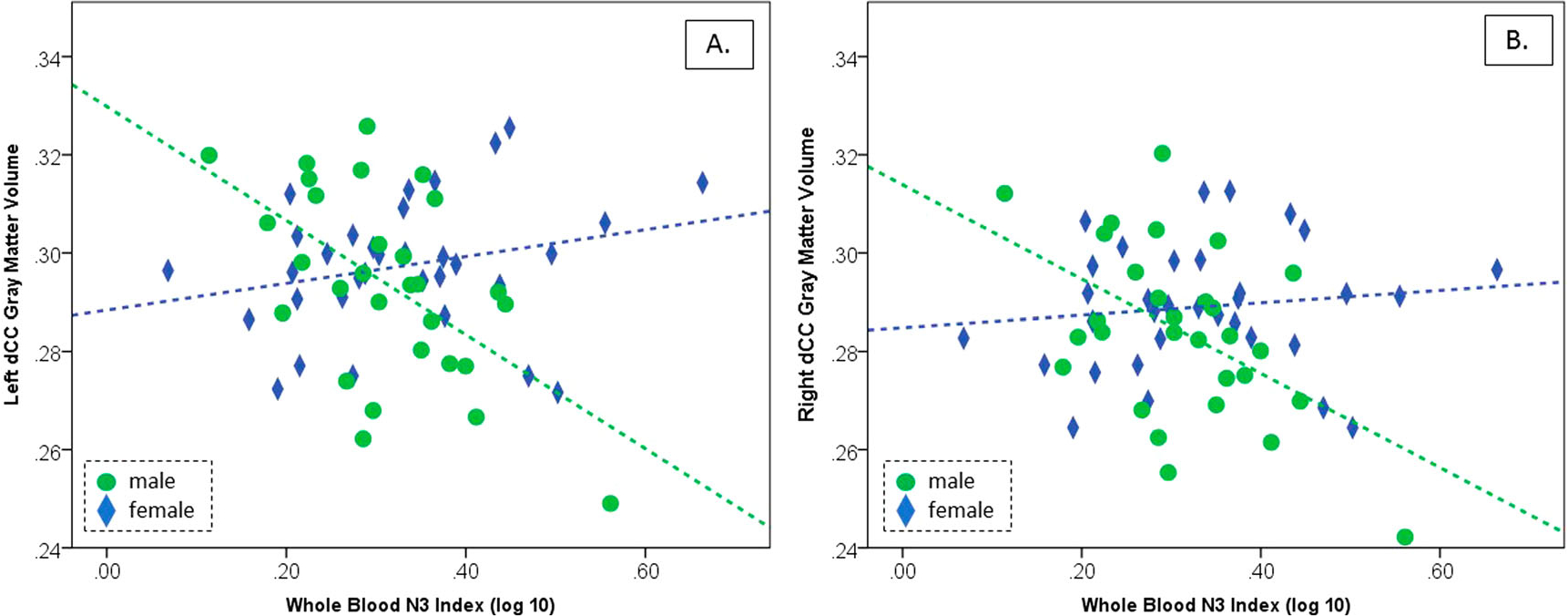
During adolescence, the prefrontal cortex (PFC) undergoes substantial structural development, including cortical thinning, a process associated with improvements in behavioral control. The cingulate cortex is among the regions recruited in response inhibition and mounting evidence suggests cingulate function may be sensitive to availability of an essential dietary nutrient, omega-3 fatty acids (N3; i.e. EPA + DHA). Our primary aim was to investigate the relationship between a biomarker of omega-3 fatty acids -- percent of whole blood fatty acids as EPA + DHA (N3 Index) -- and cingulate morphology, in typically developing adolescent males ( = 29) and females ( = 33). Voxel-based morphometry (VBM) was used to quantify gray matter volume (GMV) in the dorsal region of the cingulate (dCC). Impulse control was assessed via caregiver report (BRIEF) and Go/No-Go task performance. We predicted that greater N3 Index in adolescents would be associated with less dCC GMV and better impulse control. Results revealed that N3 Index was inversely related to GMV in males, but not in females. Furthermore, males with less right dCC GMV exhibited better caregiver-rated impulse control. A simple mediation model revealed that, in males, N3 Index may indirectly impact impulse control through its association with right dCC GMV. Findings suggest a sex-specific link between levels of N3 and dCC structural development, with adolescent males more impacted by lower N3 levels than females. Identifying factors such as omega-3 fatty acid levels, which may modulate the neurodevelopment of response inhibition, is critical for understanding typical and atypical developmental trajectories associated with this core executive function.
在青春期,前额叶皮层(PFC)经历了大量的结构发育,包括皮质变薄,这一过程与行为控制的改善有关。扣带皮层是参与反应抑制的区域之一,越来越多的证据表明扣带皮层功能可能对一种必需的膳食营养素——ω-3 脂肪酸(N3;即 EPA+DHA)的可用性敏感。我们的主要目的是研究 ω-3 脂肪酸的生物标志物——全血脂肪酸中 EPA+DHA 的百分比(N3 指数)与扣带皮层形态之间的关系,研究对象为典型发育中的青少年男性(n=29)和女性(n=33)。基于体素的形态测量学(VBM)用于量化扣带皮层背侧(dCC)的灰质体积(GMV)。冲动控制通过照顾者报告(BRIEF)和 Go/No-Go 任务表现进行评估。我们预测,青少年 N3 指数越高,dCC GMV 越低,冲动控制越好。结果表明,N3 指数与男性的 GMV 呈负相关,但与女性无关。此外,右侧 dCC GMV 较小的男性表现出更好的照顾者评定冲动控制。一个简单的中介模型表明,在男性中,N3 指数可能通过与右侧 dCC GMV 的关联间接影响冲动控制。研究结果表明,N3 水平与 dCC 结构发育之间存在性别特异性联系,与女性相比,男性受 N3 水平较低的影响更大。确定ω-3 脂肪酸等可能调节反应抑制神经发育的因素,对于理解与这一核心执行功能相关的典型和非典型发育轨迹至关重要。