Postgraduate Program in Biophotonics Applied to Health Sciences, Nove de Julho University (UNINOVE), São Paulo 01504000, Brazil.
Department of Oral Pathology, School of Dentistry, University of São Paulo, São Paulo 05508000, Brazil.
Int J Oncol. 2018 Dec;53(6):2458-2472. doi: 10.3892/ijo.2018.4572. Epub 2018 Sep 26.
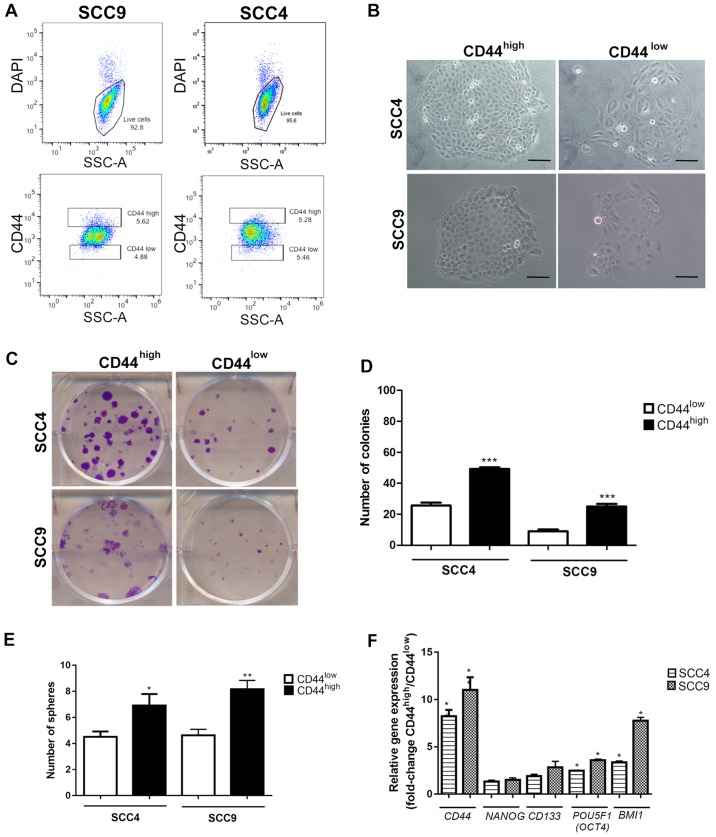
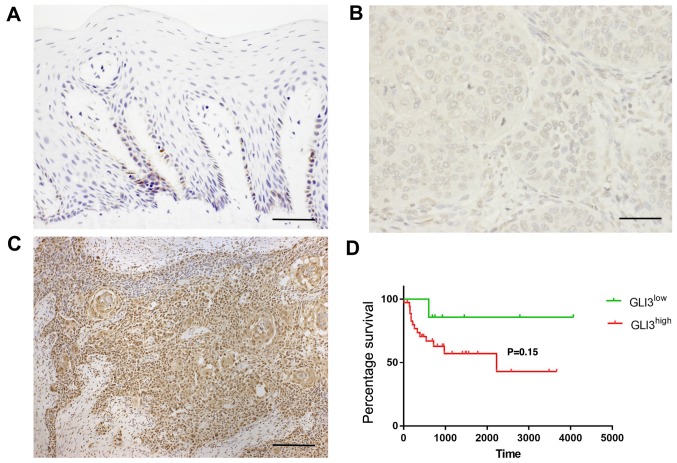
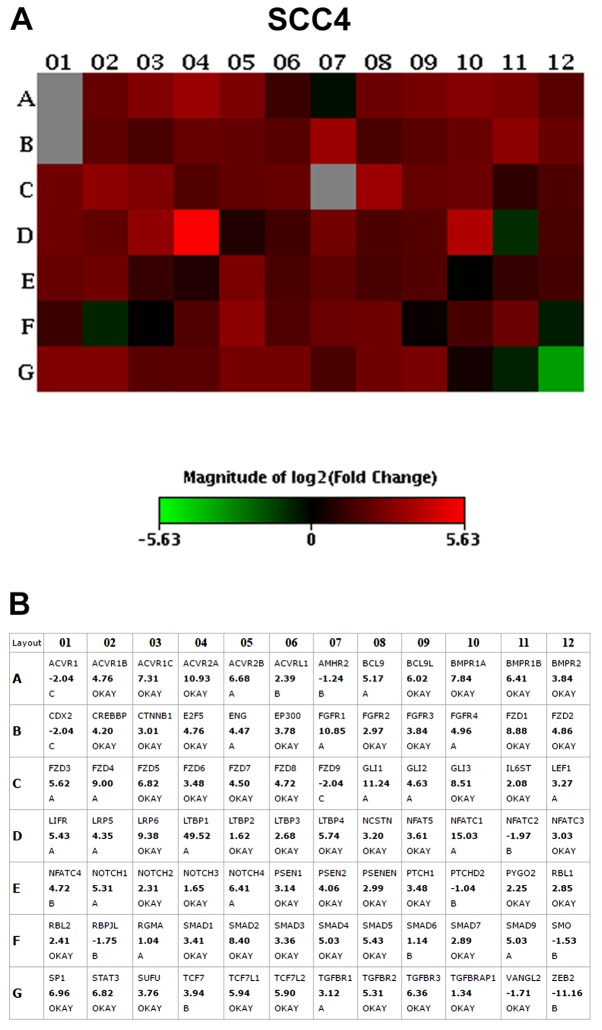
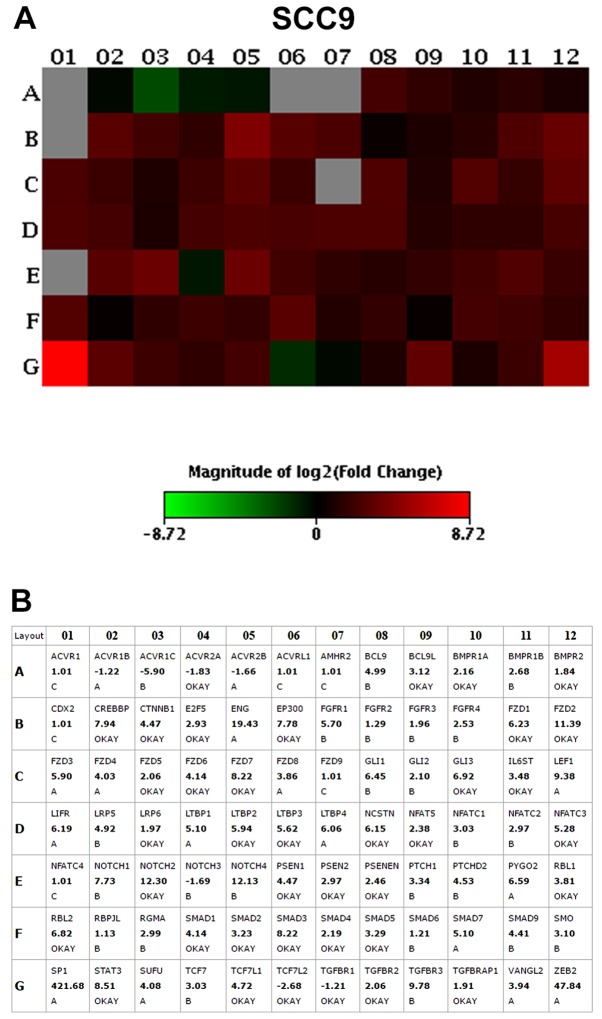
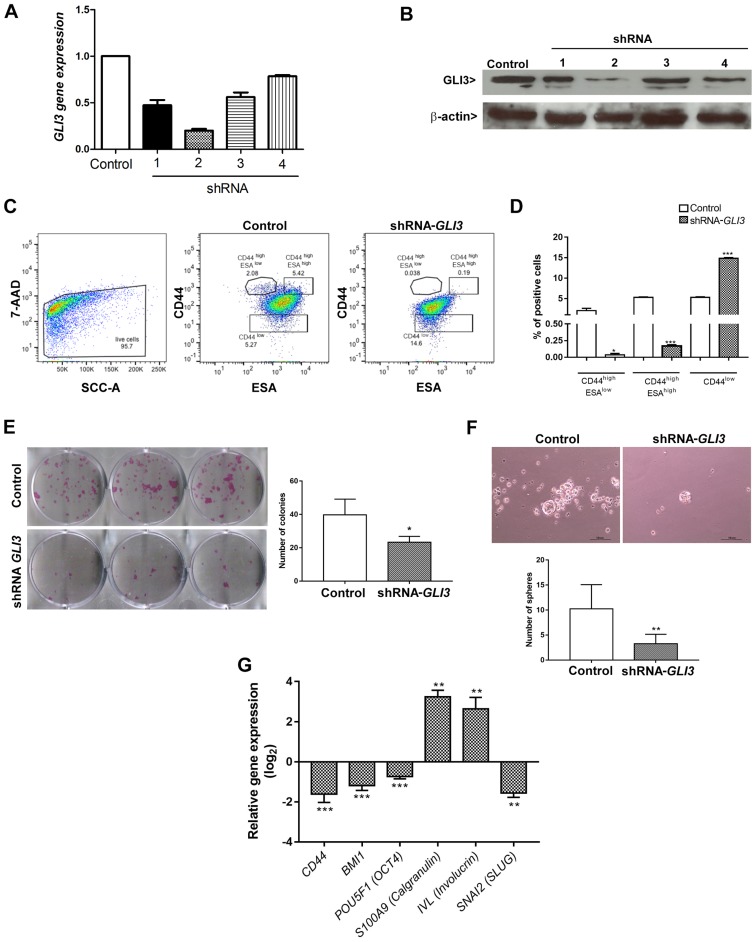
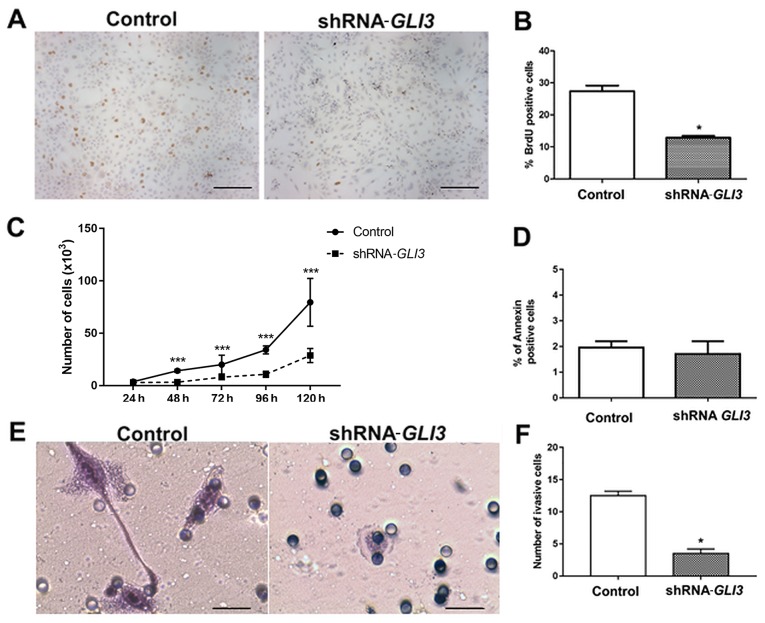
Oral squamous cell carcinoma (OSCC) is an extremely aggressive disease associated with a poor prognosis. Previous studies have established that cancer stem cells (CSCs) actively participate in OSCC development, progression and resistance to conventional treatments. Furthermore, CSCs frequently exhibit a deregulated expression of normal stem cell signalling pathways, thereby acquiring their distinctive abilities, of which self-renewal is an example. In this study, we examined the effects of GLI3 knockdown in OSCC, as well as the differentially expressed genes in CSC-like cells (CSCLCs) expressing high (CD44high) or low (CD44low) levels of CD44. The prognostic value of GLI3 in OSCC was also evaluated. The OSCC cell lines were sorted based on CD44 expression; gene expression was evaluated using a PCR array. Following this, we examined the effects of GLI3 knockdown on CD44 and ESA expression, colony and sphere formation capability, stem-related gene expression, proliferation and invasion. The overexpression of genes related to the Notch, transforming growth factor (TGF)β, FGF, Hedgehog, Wnt and pluripotency maintenance pathways was observed in the CD44high cells. GLI3 knockdown was associated with a significant decrease in different CSCLC fractions, spheres and colonies in addition to the downregulation of the CD44, Octamer-binding transcription factor 4 (OCT4; also known as POU5F1) and BMI1 genes. This downregulation was accompanied by an increase in the expression of the Involucrin (IVL) and S100A9 genes. Cellular proliferation and invasion were inhibited following GLI3 knockdown. In OSCC samples, a high GLI3 expression was associated with tumour size but not with prognosis. On the whole, the findings of this study demonstrate for the first time, at least to the best of our knowledge, that GLI3 contributes to OSCC stemness and malignant behaviour. These findings suggest the potential for the development of novel therapies, either in isolation or in combination with other drugs, based on CSCs in OSCC.
口腔鳞状细胞癌(OSCC)是一种极具侵袭性的疾病,预后不良。先前的研究已经证实,癌症干细胞(CSCs)积极参与 OSCC 的发展、进展和对常规治疗的耐药性。此外,CSCs 通常表现出正常干细胞信号通路的失调表达,从而获得其独特的能力,其中自我更新就是一个例子。在这项研究中,我们研究了 GLI3 敲低对 OSCC 的影响,以及在表达高(CD44high)或低(CD44low)水平 CD44 的 CSC 样细胞(CSCLCs)中差异表达的基因。还评估了 GLI3 在 OSCC 中的预后价值。根据 CD44 表达对 OSCC 细胞系进行分选;使用 PCR 阵列评估基因表达。之后,我们研究了 GLI3 敲低对 CD44 和 ESA 表达、集落和球体形成能力、干细胞相关基因表达、增殖和侵袭的影响。在 CD44high 细胞中观察到与 Notch、转化生长因子β(TGFβ)、FGF、Hedgehog、Wnt 和多能性维持途径相关的基因的过表达。GLI3 敲低与不同 CSCLC 分数、球体和集落的显著减少以及 CD44、八聚体结合转录因子 4(OCT4;也称为 POU5F1)和 BMI1 基因的下调有关。这种下调伴随着 Involucrin(IVL)和 S100A9 基因的表达增加。GLI3 敲低后细胞增殖和侵袭受到抑制。在 OSCC 样本中,高 GLI3 表达与肿瘤大小相关,但与预后无关。总的来说,这项研究的结果至少在我们所知的范围内首次表明,GLI3 有助于 OSCC 干性和恶性行为。这些发现表明,基于 OSCC 中的 CSCs,无论是单独使用还是与其他药物联合使用,都有可能开发出新的治疗方法。