Department of General Surgery, Huashan Hospital, Fudan University, Shanghai, China.
Cancer Metastasis Institute, Fudan University, Shanghai, China.
Cancer Med. 2018 Oct;7(10):5006-5014. doi: 10.1002/cam4.1772. Epub 2018 Sep 12.
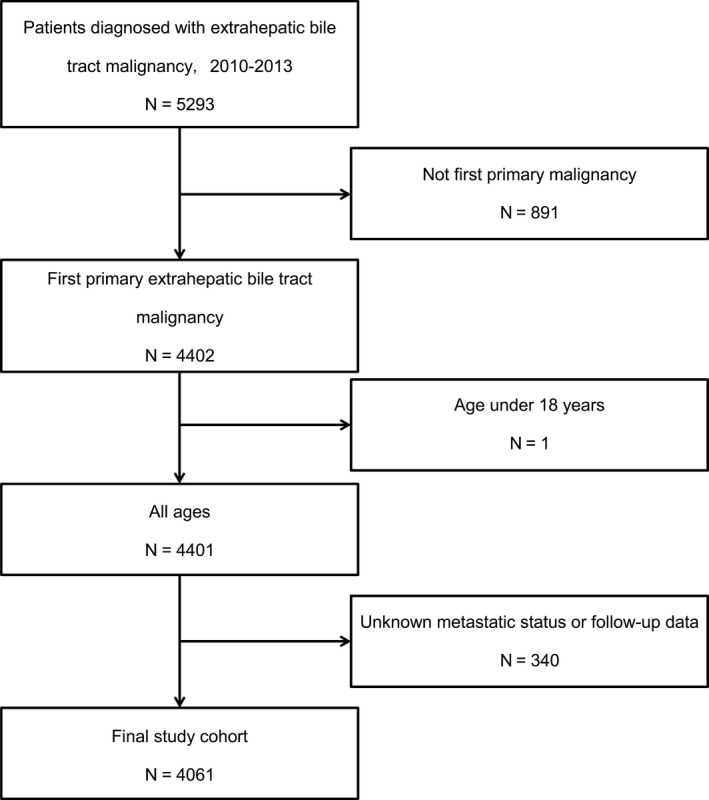
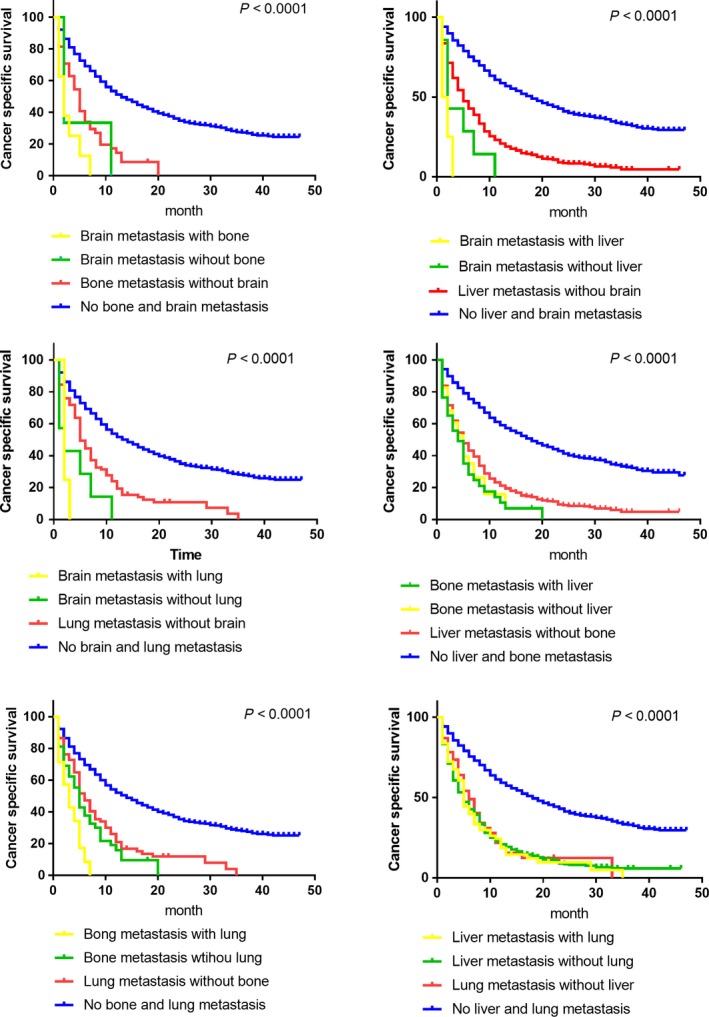
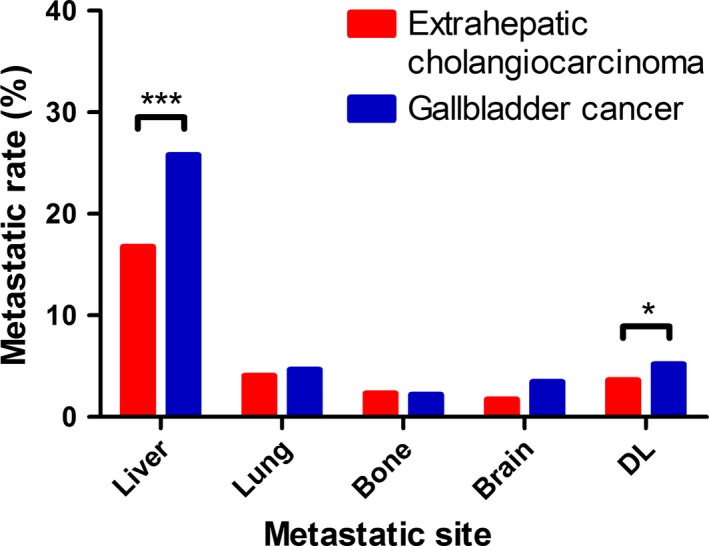
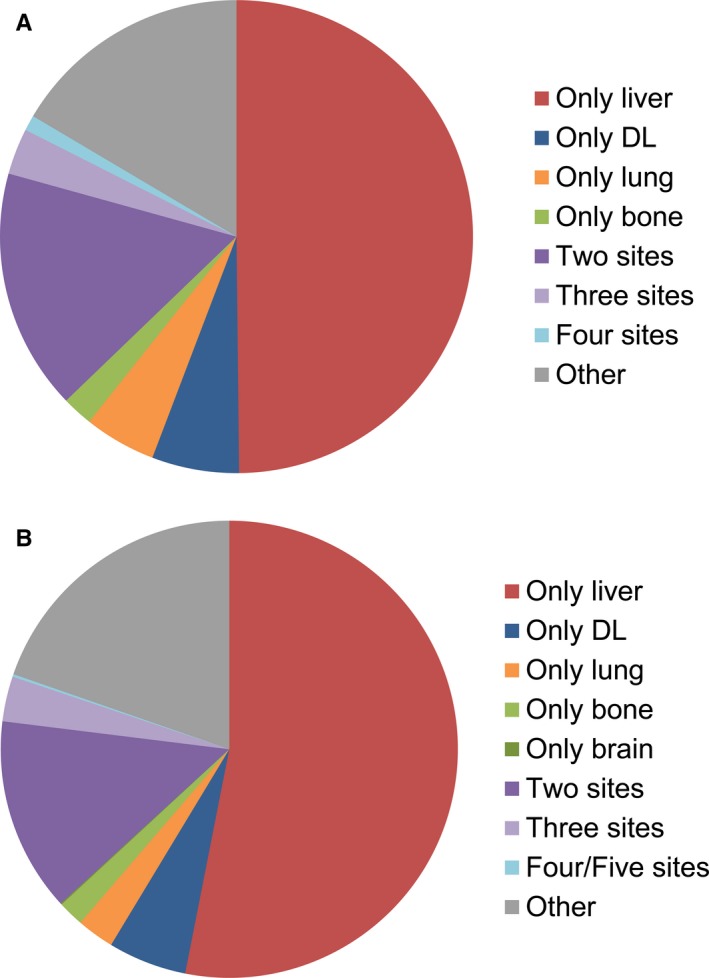
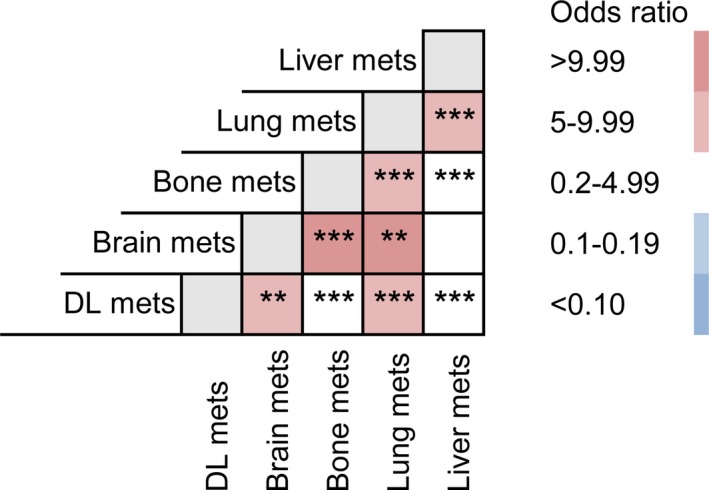
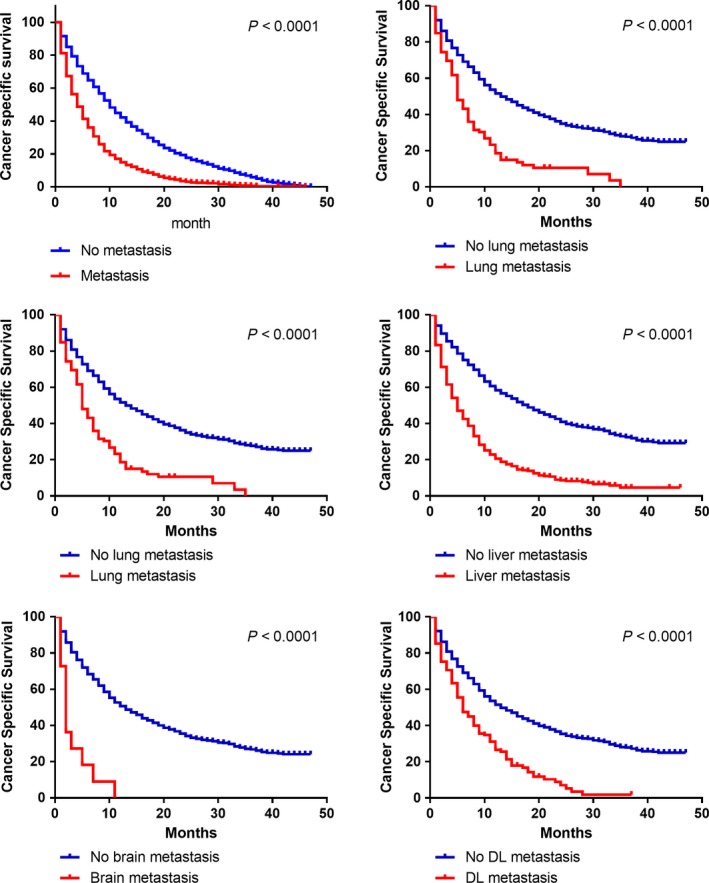
Extrahepatic bile duct cancer (EBDC) is a combined type of malignancy mainly consisting of extrahepatic cholangiocarcinoma and gallbladder cancer. Clinically, it is featured with latent symptoms and early metastasis, leading to a poor prognosis. Therefore, this cohort study aimed to depict the possible metastatic patterns of EBDC of diverse sub-types and evaluate the prognostic significance of diverse metastatic destinations with data from the clinical database. Relevant data of total 4061 confirmed EBDC patients diagnosed between 2010 and 2013 from the Surveillance, Epidemiology and End Results (SEER) database was obtained. We applied t test to describe the baseline data of patients included and used chi-square test to compare the distribution of distant metastatic sites. We further adopted odds ratio assess the combined metastatic patterns and compared survival difference of patients with different distal metastasis organ by Kaplan-Meier analysis. We identified totally 4061 patients over 18 years old diagnosed with extrahepatic bile tract malignancies between 2010 and 2013, with clear metastatic status and follow-up data, without primary malignancies. Liver and distant lymph (DL) are the two most common sites as a single metastasis organ. In combined metastasis patterns, bi-organ is more frequent than the other types. Lung is the organ preferentially for bi-organ metastasis, while bone and distant lymph similarly intend to co-metastasize with brain. Distal metastasis in EBDC patients indicates an extremely poor prognosis. According to the final analysis results, malignancies in extrahepatic bile duct exhibit similar metastatic patterns, suggesting that we can regard them as a unity to assess its development. Profound differences exist in distribution of distant extrahepatic metastatic sites and their combinations. Results from our studies would provide some information for follow-up strategies and future studies.
肝外胆管癌(EBDC)是一种混合性恶性肿瘤,主要由肝外胆管癌和胆囊癌组成。临床上,它以潜伏症状和早期转移为特征,导致预后不良。因此,本队列研究旨在通过临床数据库的数据描绘不同亚型 EBDC 的可能转移模式,并评估不同转移部位的预后意义。从监测、流行病学和最终结果(SEER)数据库中获得了 2010 年至 2013 年间确诊的 4061 例 EBDC 患者的相关数据。我们应用 t 检验描述纳入患者的基线数据,并使用卡方检验比较远处转移部位的分布。我们进一步采用比值比评估联合转移模式,并通过 Kaplan-Meier 分析比较不同远处转移器官患者的生存差异。我们共确定了 4061 例年龄在 18 岁以上的患者,他们在 2010 年至 2013 年间被诊断为肝外胆管恶性肿瘤,有明确的转移状态和随访数据,没有原发性恶性肿瘤。肝脏和远处淋巴结(DL)是单一转移器官中最常见的两个部位。在联合转移模式中,双器官比其他类型更常见。肺是双器官转移的首选器官,而骨和远处淋巴结同样倾向于与脑共同转移。EBDC 患者的远处转移表明预后极差。根据最终分析结果,肝外胆管恶性肿瘤表现出相似的转移模式,表明我们可以将其视为一个整体来评估其发展。远处肝外转移部位及其组合的分布存在显著差异。我们研究的结果将为后续策略和未来研究提供一些信息。