Tan Cheryl M J, Green Peregrine, Tapoulal Nidi, Lewandowski Adam J, Leeson Paul, Herring Neil
Oxford Cardiovascular Clinical Research Facility, Division of Cardiovascular Medicine, Radcliffe Department of Medicine, University of Oxford, Oxford, United Kingdom.
Department of Physiology, Anatomy and Genetics, Burdon Sanderson Cardiac Science Centre, University of Oxford, Oxford, United Kingdom.
Front Physiol. 2018 Sep 19;9:1281. doi: 10.3389/fphys.2018.01281. eCollection 2018.
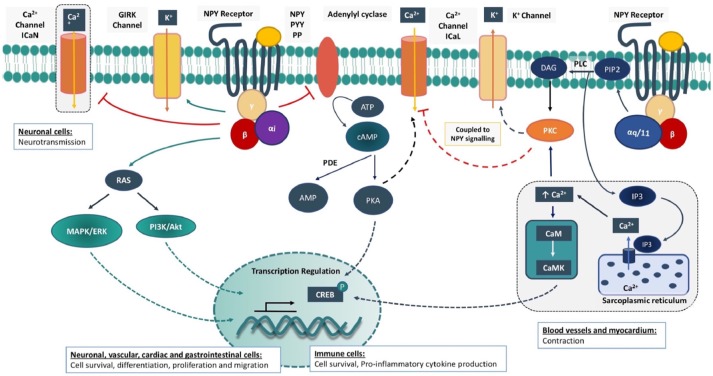
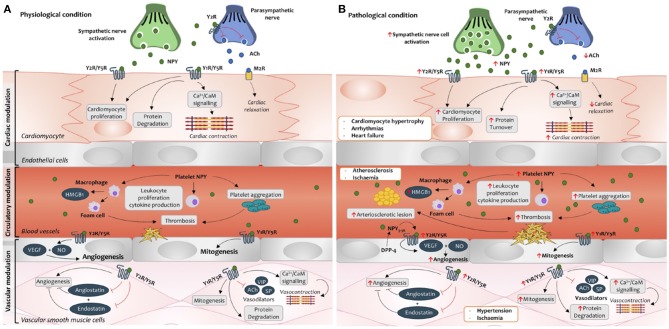
Neuropeptide Y (NPY) is an abundant sympathetic co-transmitter, widely found in the central and peripheral nervous systems and with diverse roles in multiple physiological processes. In the cardiovascular system it is found in neurons supplying the vasculature, cardiomyocytes and endocardium, and is involved in physiological processes including vasoconstriction, cardiac remodeling, and angiogenesis. It is increasingly also implicated in cardiovascular disease pathogenesis, including hypertension, atherosclerosis, ischemia/infarction, arrhythmia, and heart failure. This review will focus on the physiological and pathogenic role of NPY in the cardiovascular system. After summarizing the NPY receptors which predominantly mediate cardiovascular actions, along with their signaling pathways, individual disease processes will be considered. A thorough understanding of these roles may allow therapeutic targeting of NPY and its receptors.
神经肽Y(NPY)是一种丰富的交感神经共递质,广泛存在于中枢和外周神经系统,在多种生理过程中发挥着多样作用。在心血管系统中,它存在于为血管系统、心肌细胞和心内膜供血的神经元中,并参与包括血管收缩、心脏重塑和血管生成在内的生理过程。它也越来越多地与心血管疾病的发病机制相关,包括高血压、动脉粥样硬化、缺血/梗死、心律失常和心力衰竭。本综述将聚焦于NPY在心血管系统中的生理和致病作用。在总结主要介导心血管作用的NPY受体及其信号通路后,将对各个疾病过程进行探讨。深入了解这些作用可能有助于针对NPY及其受体进行治疗。