Department of Anthropology, University of Pennsylvania, Philadelphia, Pennsylvania, United States of America.
PLoS Biol. 2018 Oct 4;16(10):e2007008. doi: 10.1371/journal.pbio.2007008. eCollection 2018 Oct.
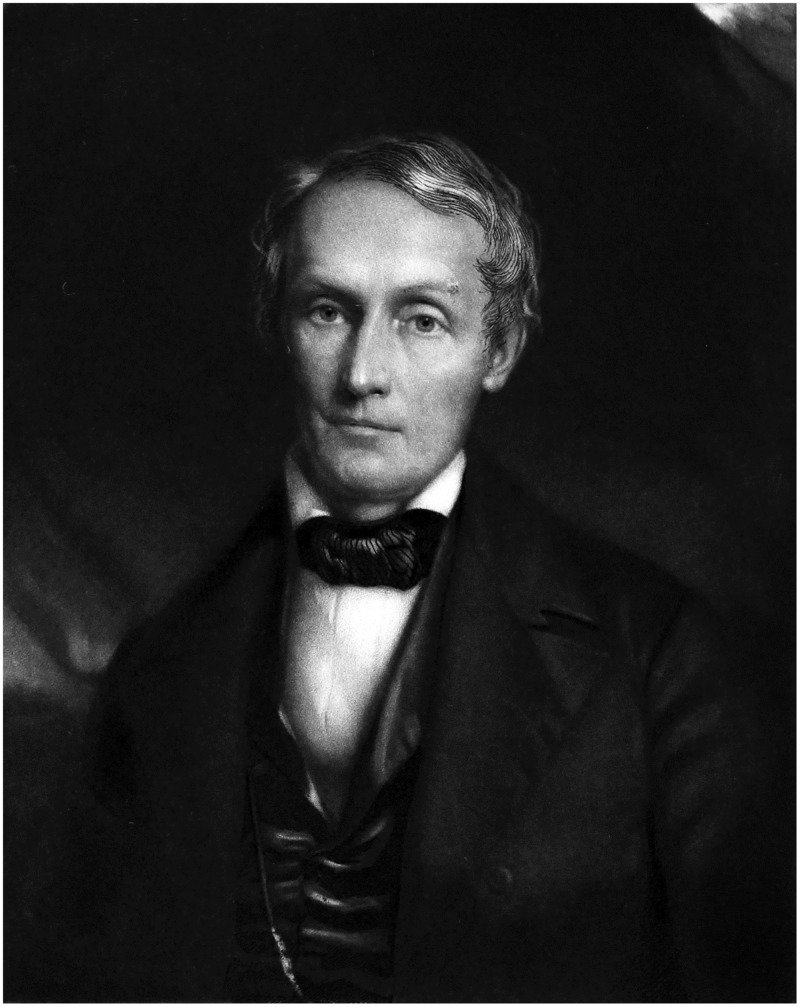
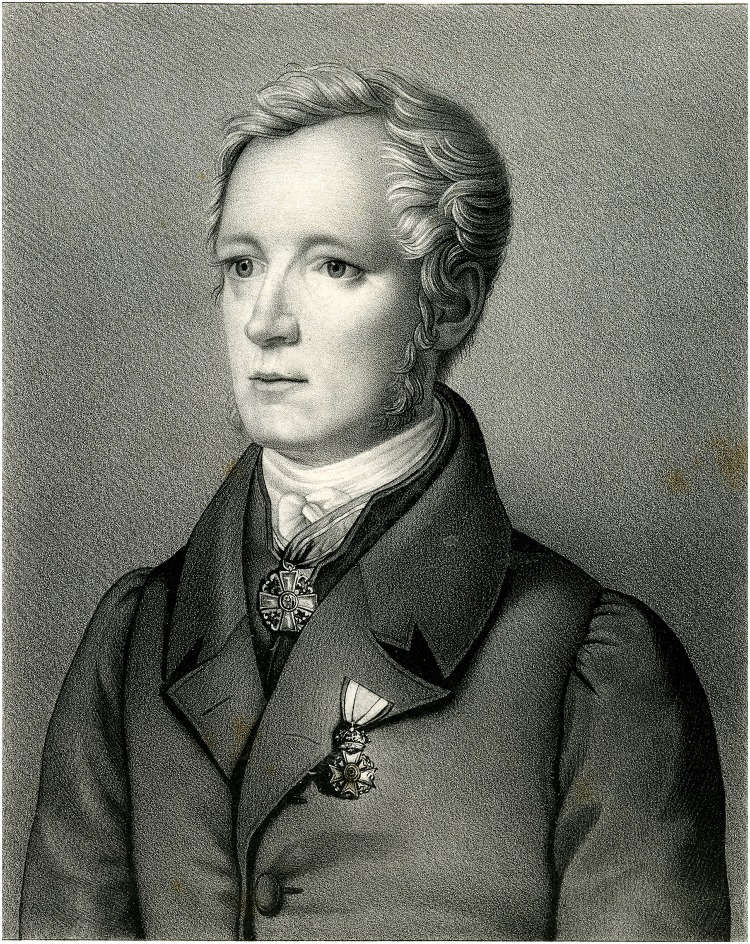
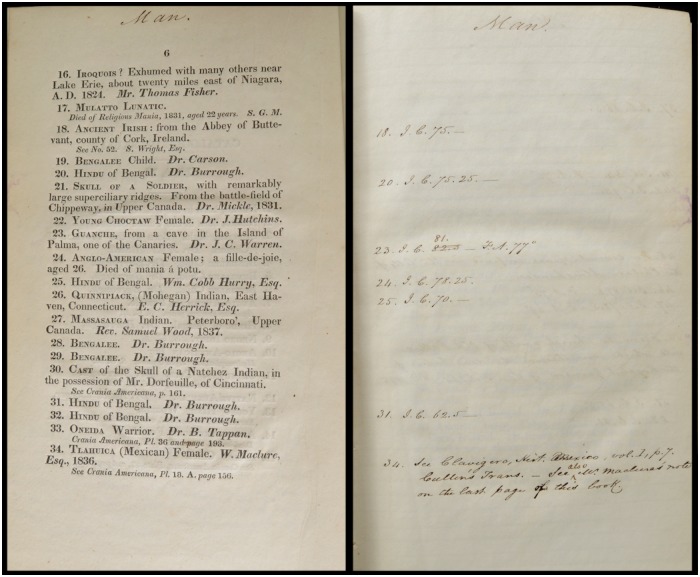
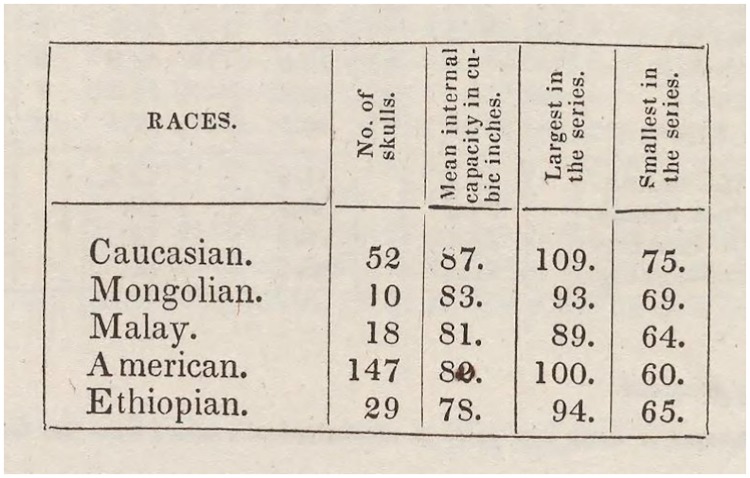
The discovery of nearly 180-year-old cranial measurements in the archives of 19th century American physician and naturalist Samuel George Morton can address a lingering debate, begun in the late 20th century by paleontologist and historian of science Stephen Jay Gould, about the unconscious bias alleged in Morton's comparative data of brain size in human racial groups. Analysis of Morton's lost data and the records of his studies does not support Gould's arguments about Morton's biased data collection. However, historical contextualization of Morton with his scientific peers, especially German anatomist Friedrich Tiedemann, suggests that, while Morton's data may have been unbiased, his cranial race science was not. Tiedemann and Morton independently produced similar data about human brain size in different racial groups but analyzed and interpreted their nearly equivalent results in dramatically different ways: Tiedemann using them to argue for equality and the abolition of slavery, and Morton using them to entrench racial divisions and hierarchy. These differences draw attention to the epistemic limitations of data and the pervasive role of bias within the broader historical, social, and cultural context of science.
19 世纪美国医生和自然学家塞缪尔·乔治·莫顿(Samuel George Morton)的档案中发现了近 180 年前的头颅测量数据,这可以解决一个长期存在的争论,该争论始于 20 世纪后期,由古生物学家和科学史学家斯蒂芬·杰伊·古尔德(Stephen Jay Gould)提出,内容是关于莫顿在人类种族群体的大脑大小比较数据中涉嫌无意识偏见。对莫顿丢失数据和研究记录的分析并不支持古尔德关于莫顿数据收集有偏见的论点。然而,将莫顿与他的科学界同行(尤其是德国解剖学家弗里德里希·蒂德曼(Friedrich Tiedemann))置于历史背景下表明,尽管莫顿的数据可能没有偏见,但他的颅面种族科学并非如此。蒂德曼和莫顿独立地对不同种族群体的人类大脑大小产生了类似的数据,但以截然不同的方式分析和解释了他们几乎相同的结果:蒂德曼用它们来论证平等和废除奴隶制,而莫顿则用它们来加剧种族分裂和等级制度。这些差异引起了人们对数据的认识局限性以及偏见在科学更广泛的历史、社会和文化背景中的普遍作用的关注。