Key Laboratory of Surveillance and Early-warning on Infectious Disease, Division of Infectious Disease, Chinese Center for Disease Control and Prevention, Beijing, China.
World Health Organization, Beijing, China.
BMC Infect Dis. 2018 Oct 4;18(1):502. doi: 10.1186/s12879-018-3422-0.
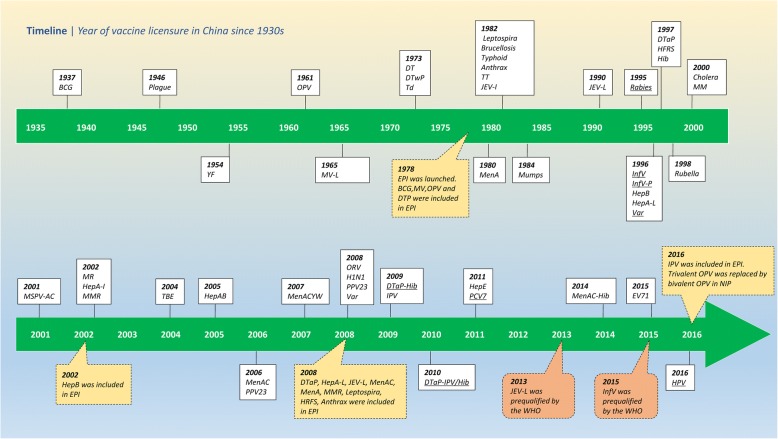
Vaccine regulation in China meets World Health Organization standards, but China's vaccine industry and immunization program have some characteristics that differ from other countries. We described the history, classification, supply and prices of vaccines available and used in China, compared with high-and middle-incomes countries to illustrate the development of Chinese vaccine industry and immunization program.
Immunization policy documents were obtained from the State Council and the National Health and Family Planning Commission (NHFPC). Numbers of doses of vaccines released in China were obtained from the Biologicals Lot Release Program of the National Institutes for Food and Drug Control (NIFDC). Vaccine prices were obtained from Chinese Central Government Procurement (CCGP). International data were collected from US CDC, Public Health England, European CDC, WHO, and UNICEF.
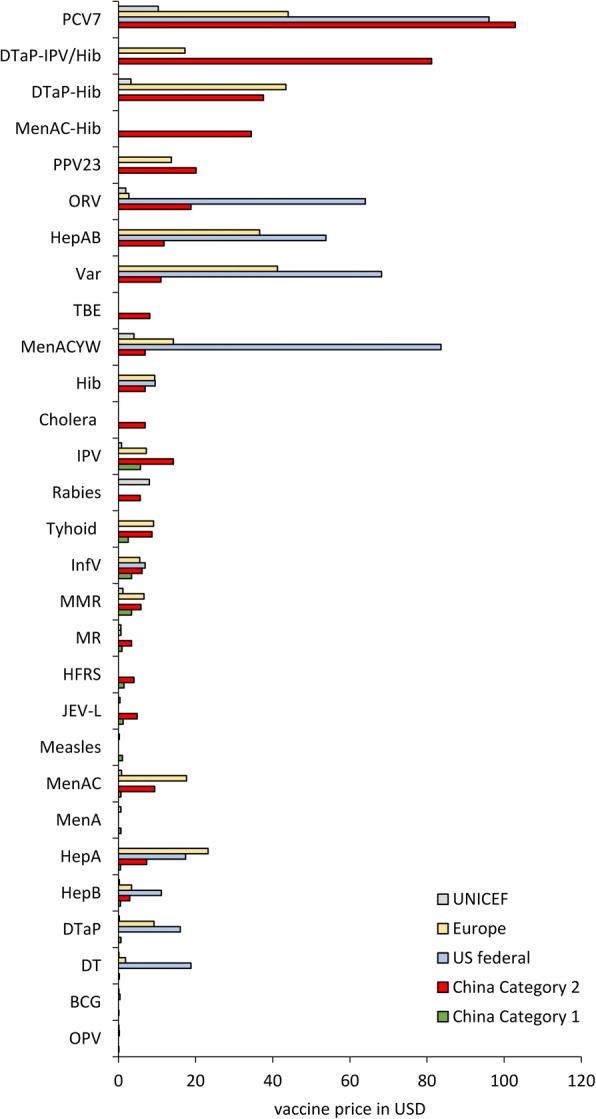
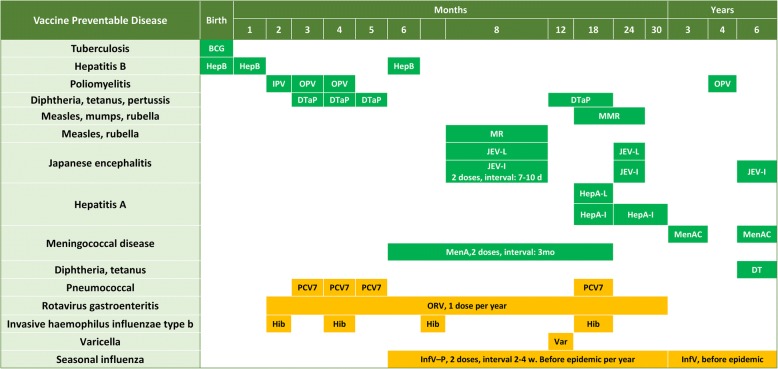
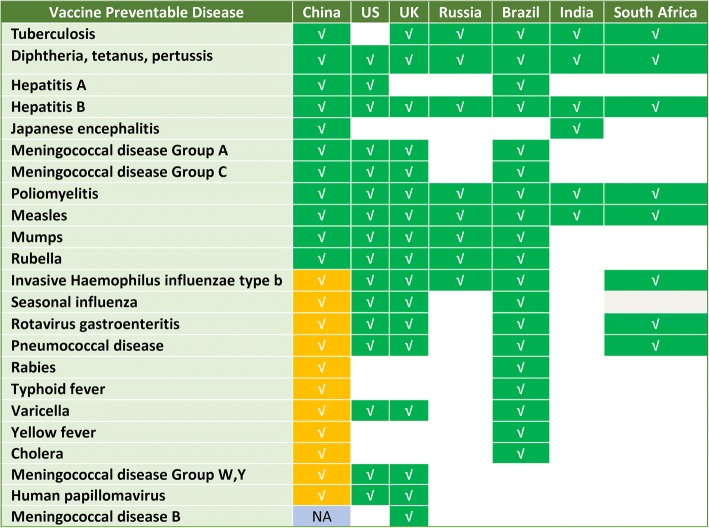
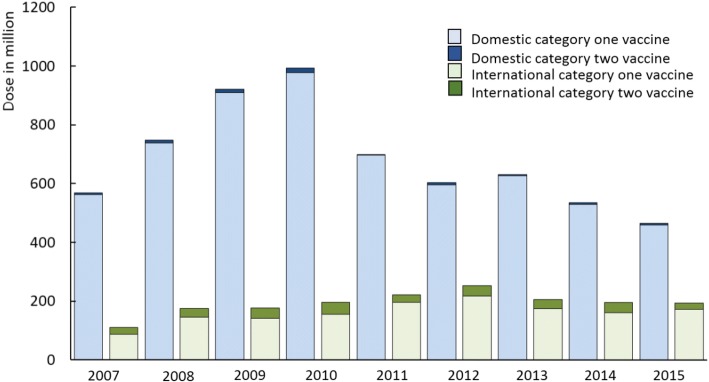
Between 2007 and 2015, the annual supply of vaccines in China ranged between 666 million and 1,190 million doses, with most doses produced domestically. The government's Expanded Program on Immunization (EPI) prevents 12 vaccine preventable diseases (VPD) through routine immunization. China produces vaccines that are in common use globally; however, the number of routinely-prevented diseases is fewer than in high- and middle-income countries. Contract prices for program (EPI) vaccines ranged from 0.1 to 5.7 US dollars per dose - similar to UNICEF prices. Contract prices for private-market vaccines ranged from 2.4 to 102.9 US dollars per dose - often higher than prices for comparable US, European, and UNICEF vaccines.
China is a well-regulated producer of vaccines, but some vaccines that are important globally are not included in China's EPI system in China. Sustained and coordinated effort will be required to bring Chinese vaccine industry and EPI into an era of global leadership.
中国的疫苗监管符合世界卫生组织的标准,但中国的疫苗行业和免疫规划具有一些与其他国家不同的特点。我们描述了中国可用疫苗的历史、分类、供应和价格,并与高收入和中等收入国家进行了比较,以说明中国疫苗行业和免疫规划的发展。
免疫政策文件从国务院和国家卫生和计划生育委员会(NHFPC)获得。中国释放的疫苗剂量数从国家食品药品监督管理总局(NIFDC)的生物制品批放行计划中获得。疫苗价格从中国中央政府采购(CCGP)中获得。国际数据从美国 CDC、英国公共卫生署、欧洲 CDC、世卫组织和儿基会收集。
2007 年至 2015 年,中国每年的疫苗供应量在 6.66 亿至 11.9 亿剂之间,其中大部分是国产疫苗。政府的扩大免疫规划(EPI)通过常规免疫预防 12 种疫苗可预防疾病(VPD)。中国生产的疫苗在全球范围内广泛使用;然而,常规预防疾病的数量少于高收入和中等收入国家。EPI 疫苗的合同价格在 0.1 至 5.7 美元/剂之间,与儿基会的价格相似。私人市场疫苗的合同价格在 2.4 至 102.9 美元/剂之间,通常高于可比的美国、欧洲和儿基会疫苗的价格。
中国是一个监管良好的疫苗生产国,但全球范围内一些重要的疫苗并未纳入中国的 EPI 系统。需要持续和协调的努力,使中国的疫苗行业和 EPI 进入全球领先的时代。