Research group in physical activity, performance and health (GRI-AFIRS), School of Health Sciences, TecnoCampus-Pompeu Fabra University, Ernest Lluch, 32 (Porta Laietana) 08302 Mataró, Barcelona, Spain.
Laboratory of Biomechanics and Exercise Physiology, Department of Physical Activity and Sports Science, Alfonso X El Sabio University, Avenida Universidad, 1, 28691 Villanueva de la Cañada, Madrid, Spain.
J Int Soc Sports Nutr. 2018 Oct 4;15(1):49. doi: 10.1186/s12970-018-0255-6.
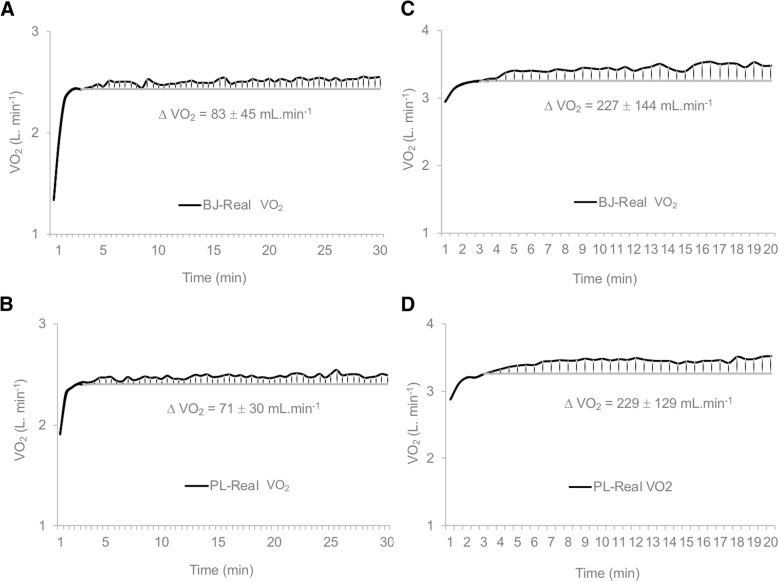
Beetroot juice (BJ) is classified as a high-level supplement for improving sports performance. There is some controversy over the benefits of BJ supplementation for endurance exercise performance, especially when referring to well-trained athletes. This study examines the effects of acute BJ supplementation on cardioventilatory responses, exercise economy/efficiency, slow component of oxygen uptake, time trial performance, blood lactate, energy consumption, and carbohydrate and fat oxidation.
Twelve well-trained, male triathletes (aged 21-47 yr) were assigned in a randomized, double-blind, crossover design to receive 70 ml of BJ (6.5 mmol NO) or placebo (PL). Three hours after taking the supplement, participants completed an endurance test on a cycle ergometer at a constant work rate (W) corresponding to first ventilatory threshold (VT1) (30 min) and second ventilatory threshold (VT2) time trial (~ 15 min).
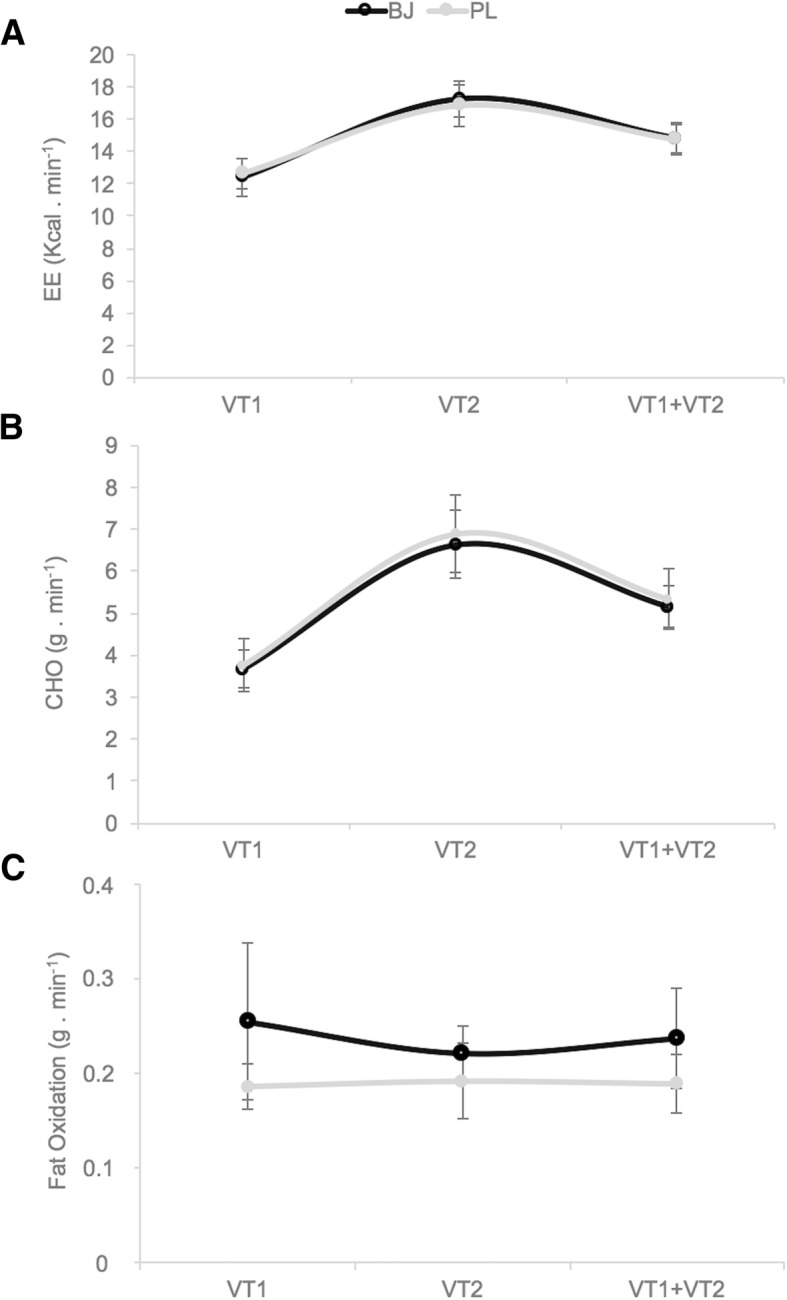
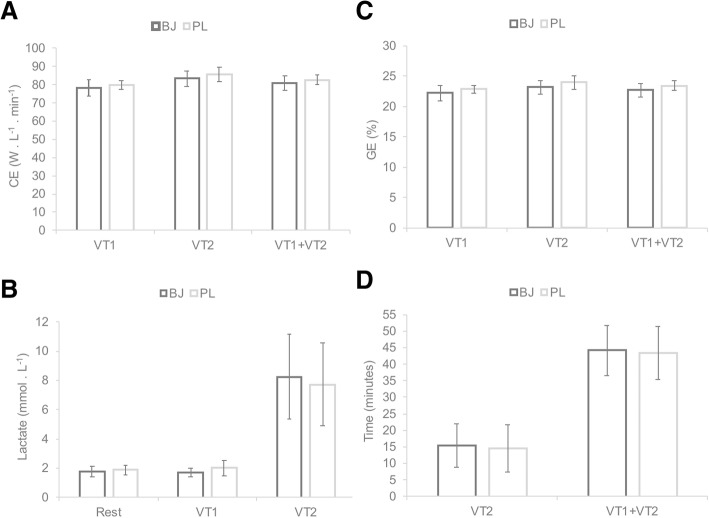
Maximal oxygen uptake was 54.78 ± 3.13 mL·min·kg, and gross efficiency was > 22% at each load intensity and experimental condition. No significant interaction effect (supplement*intensity) was observed on any of the cardioventilatory variables, efficiency/economy, VT2 time trial, energy expenditure, carbohydrate oxidation and fat oxidation (p > 0.05).
Our findings do not support an improvement in the variables examined in response to acute BJ supplementation. Probably, higher doses are needed for improving time trial performance in male triathletes during a cycle ergometer test conducted at a load intensity equivalent to the first and second ventilatory threshold.
甜菜根汁(BJ)被归类为一种高水平的补充剂,可提高运动表现。关于 BJ 补充剂对耐力运动表现的益处存在一些争议,尤其是在涉及训练有素的运动员时。本研究考察了急性 BJ 补充对心血管反应、运动经济性/效率、氧摄取的缓慢成分、计时赛表现、血乳酸、能量消耗以及碳水化合物和脂肪氧化的影响。
12 名训练有素的男性三项全能运动员(年龄 21-47 岁)按随机、双盲、交叉设计分为两组,分别服用 70ml BJ(6.5mmolNO)或安慰剂(PL)。补充剂服用 3 小时后,参与者在固定功率自行车上以恒定工作率(W)完成耐力测试,该工作率对应于第一通气阈值(VT1)(30 分钟)和第二通气阈值(VT2)计时赛(~15 分钟)。
最大摄氧量为 54.78±3.13mL·min·kg,在每个负荷强度和实验条件下,总效率均超过 22%。在任何心血管变量、效率/经济性、VT2 计时赛、能量消耗、碳水化合物氧化和脂肪氧化方面,补充剂*强度的交互作用均不显著(p>0.05)。
我们的研究结果不支持急性 BJ 补充对所检查变量的改善。可能需要更高剂量才能提高男性三项全能运动员在相当于第一和第二通气阈值的负荷强度下进行的自行车计时赛测试中的计时赛表现。