Miranda-Castro Stéfani, Aidar Felipe J, de Moura Samara Silva, Marcucci-Barbosa Lucas, Lobo Lázaro Fernandes, de Assis Dias Martins-Júnior Francisco, da Silva Filha Roberta, Vaz de Castro Pedro Alves Soares, Simões E Silva Ana Cristina, da Glória de Souza Danielle, da Silva Siomara Aparecida, de Castro Pinto Kelerson Mauro, de Paula Costa Guilherme, Silva Ana Filipa, Clemente Filipe Manuel, Pereira William Valadares Campos, Nunes-Silva Albená
Laboratory of Exercise Inflammation and Immunology, School of Physical Education, Federal University of Ouro Preto (LABIIEX/EEF-UFOP), Ouro Preto 35400-000, Brazil.
Graduate Health and Nutrition Program, Federal University of Ouro Preto (PPGSN/UFOP), Ouro Preto 35400-000, Brazil.
Biology (Basel). 2022 Apr 10;11(4):573. doi: 10.3390/biology11040573.
to evaluate the effects of one week of supplementation with curcumin combined with piperine on physical performance, immune system cell counts, muscle damage, and plasma levels of inflammatory markers after a treadmill running training session.
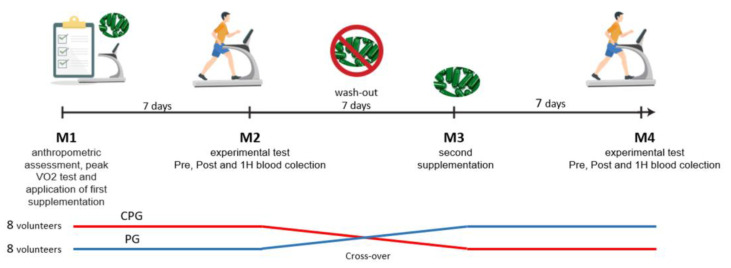
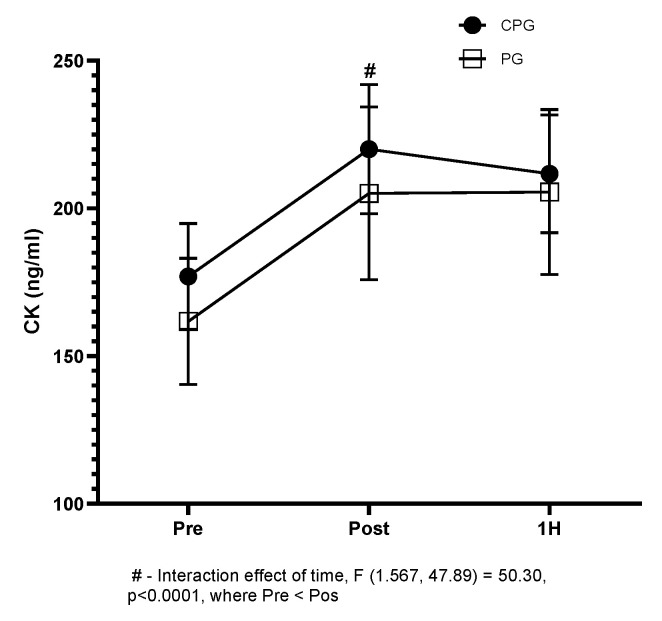
This study is a double-blind, crossover-balanced clinical trial with a three-week intervention. Sixteen male runners with a mean age of 36 ± 9 years and VO2 max of 60.6 ± 9.03 mL.kg min were recruited and randomly divided into 2 groups: the first group (CPG) was supplemented daily for 7 days with 500 mg of curcumin + 20 mg piperine, and the second group (PG) was supplemented with 540 mg of cellulose. After the 7th day of supplementation, the volunteers participated in the experimental running protocol, where blood samples were collected before, after, and one hour after exercise for analysis of the number of leukocytes, creatine kinase, and cytokine concentration (IL-2, TNF-α, IFN, IL-6, and IL-10) using flow cytometry. This process was repeated, reversing the supplementation offered to the groups.
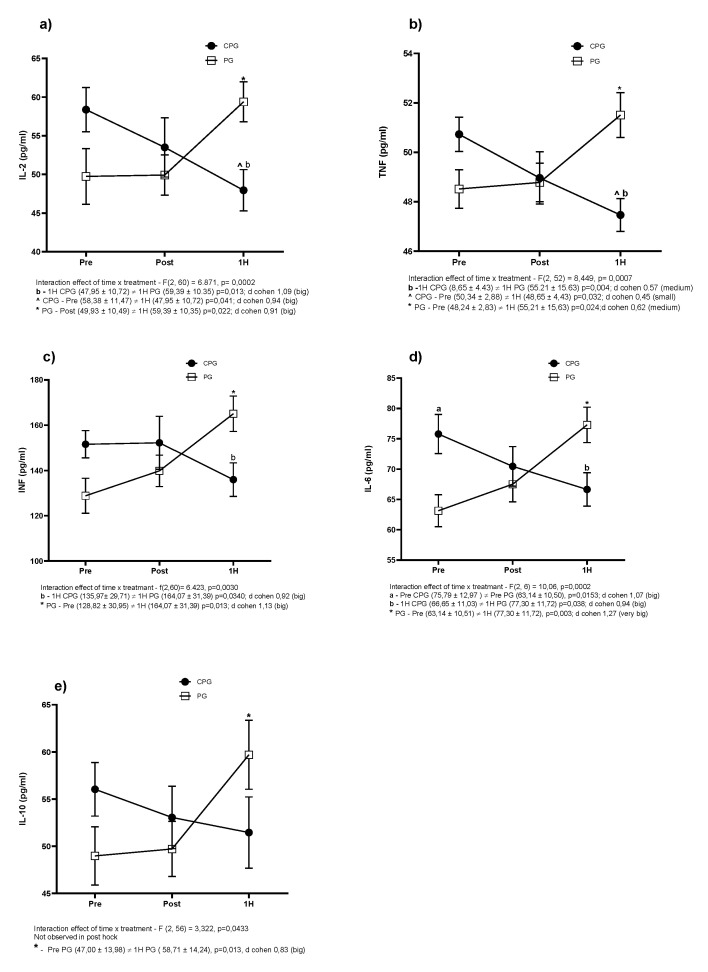
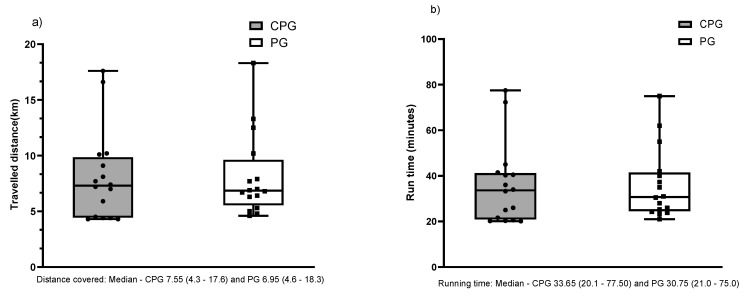
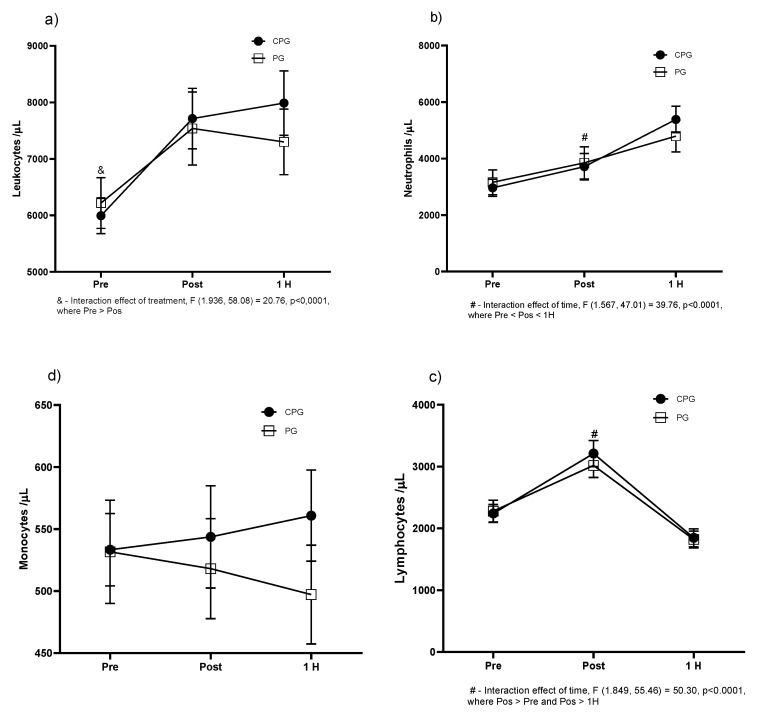
curcumin and piperine supplementation could not change the physical performance, immune cell counts, and muscle damage; however, the aerobic fatiguing exercise protocol inhibited the elevation of the plasmatic levels of some cytokines. The running exercise protocol could elevate the circulating levels of IL-2 (from 49.7 to 59.3 pg/mL), TNF-α (from 48.5 to 51.5 pg/mL), INF (from 128.8 to 165.0 pg/mL), IL-6 (from 63.1 to 77.3 pg/mL), and IL-10 (from 48.9 to 59.6 pg/mL) 1 h after the end of the running protocol. However, the curcumin and piperine supplementation could inhibit this elevation.
curcumin and piperine supplementation had no effect on physical performance, immune cell counts, or muscle damage; however, the supplementation could modulate the kinetics of IL-2, TNF-α, INF, IL-6, and IL-10 1 h after the end of exercise.
评估姜黄素与胡椒碱联合补充一周对跑步机跑步训练后身体机能、免疫系统细胞计数、肌肉损伤及炎症标志物血浆水平的影响。
本研究是一项为期三周干预的双盲、交叉平衡临床试验。招募了16名平均年龄为36±9岁、最大摄氧量为60.6±9.03 mL·kg-1·min-1的男性跑步者,并随机分为两组:第一组(CPG)每天补充500毫克姜黄素+20毫克胡椒碱,共7天;第二组(PG)补充540毫克纤维素。在补充的第7天之后,志愿者参与实验跑步方案,在运动前、运动后及运动后1小时采集血样,使用流式细胞术分析白细胞数量、肌酸激酶和细胞因子浓度(IL-2、TNF-α、IFN、IL-6和IL-10)。此过程重复进行,两组的补充剂进行对换。
姜黄素与胡椒碱补充剂无法改变身体机能、免疫细胞计数及肌肉损伤;然而,有氧疲劳运动方案抑制了某些细胞因子血浆水平的升高。跑步运动方案可使跑步方案结束后1小时IL-2(从49.7升至59.3 pg/mL)、TNF-α(从48.5升至51.5 pg/mL)、INF(从128.8升至165.0 pg/mL)、IL-6(从63.1升至77.3 pg/mL)和IL-10(从48.9升至59.6 pg/mL)的循环水平升高。然而,姜黄素与胡椒碱补充剂可抑制这种升高。
姜黄素与胡椒碱补充剂对身体机能、免疫细胞计数或肌肉损伤无影响;然而,补充剂可在运动结束后1小时调节IL-2、TNF-α、INF、IL-6和IL-10的动力学。